To set up a successful off-grid greenhouse, you need sustainable materials, reliable renewable energy like solar and wind, and effective water management such as rainwater harvesting and greywater recycling. Maintain proper climate control with shading, ventilation, and monitoring systems. Focus on soil health with organic amendments and pest control using natural methods. Prioritize durability in your design for long-term success. Keep exploring to discover all the key components for your off-grid greenhouse journey.
Key Takeaways
- Renewable energy systems like solar panels and wind turbines ensure reliable power for lighting, heating, and equipment.
- Efficient water management with rainwater harvesting and greywater recycling maintains consistent supply and reduces external dependency.
- Soil health practices, including organic amendments and soil testing, promote resilient, nutrient-rich growing conditions.
- Climate control features such as solar shading, ventilation, and monitoring systems optimize environment stability.
- Durable, sustainable materials like reclaimed wood and biodegradable plastics enhance long-term greenhouse resilience.
off-grid solar panel kit for greenhouse
As an affiliate, we earn on qualifying purchases.
As an affiliate, we earn on qualifying purchases.
What Do You Need to Build a Solid Off-Grid Greenhouse?
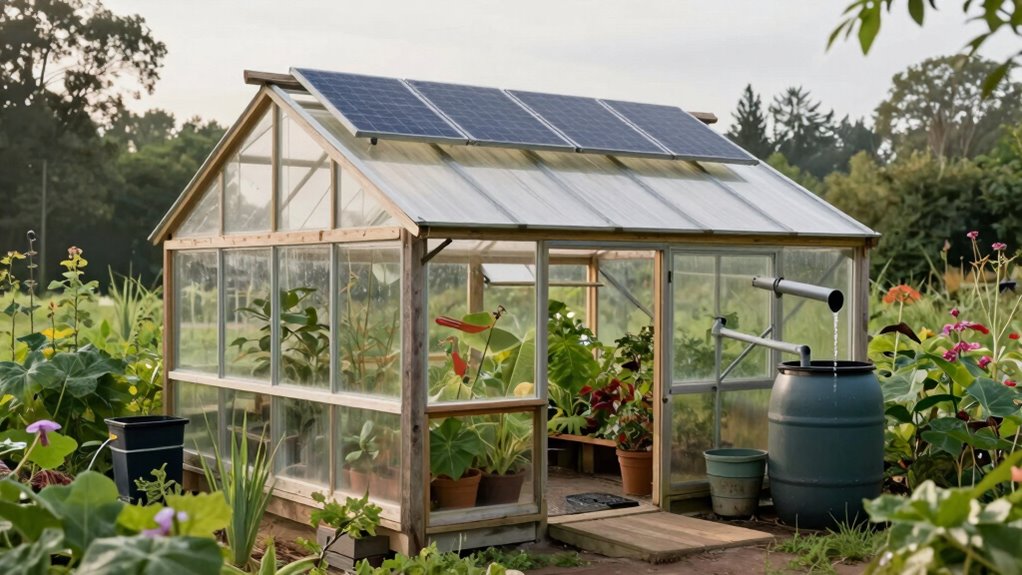
To build a solid off-grid greenhouse, you need to start with fundamental materials and systems that guarantee durability and independence. Focus on soil health, as healthy soil is essential for vigorous plant growth and resilience against pests. Use organic compost and proper soil amendments to enrich your soil naturally. Pest control is equally critical; incorporate physical barriers like mesh screens to prevent insects from entering and disturbing your crops. Avoid chemical pesticides that can harm your ecosystem. Choose sturdy, weather-resistant materials for your greenhouse structure, ensuring it withstands harsh conditions. Proper soil management and pest control methods create a strong foundation for your off-grid setup. Additionally, selecting appropriate pest control methods can significantly reduce pest problems without relying on chemicals, promoting a healthier environment. Implementing sustainable practices can further enhance the resilience and productivity of your greenhouse. Incorporating soil testing helps monitor nutrient levels and pH, ensuring optimal conditions for your plants. Regularly assessing soil health through soil analysis allows you to make informed adjustments tailored to your specific environment. Maintaining consistent soil moisture levels is also essential for healthy plant growth and to prevent issues like root rot. With these essentials, you’ll promote healthy plants and reduce reliance on external inputs, making your greenhouse truly self-sufficient.
How to Choose the Right Renewable Energy Systems for Off-Grid Growing?
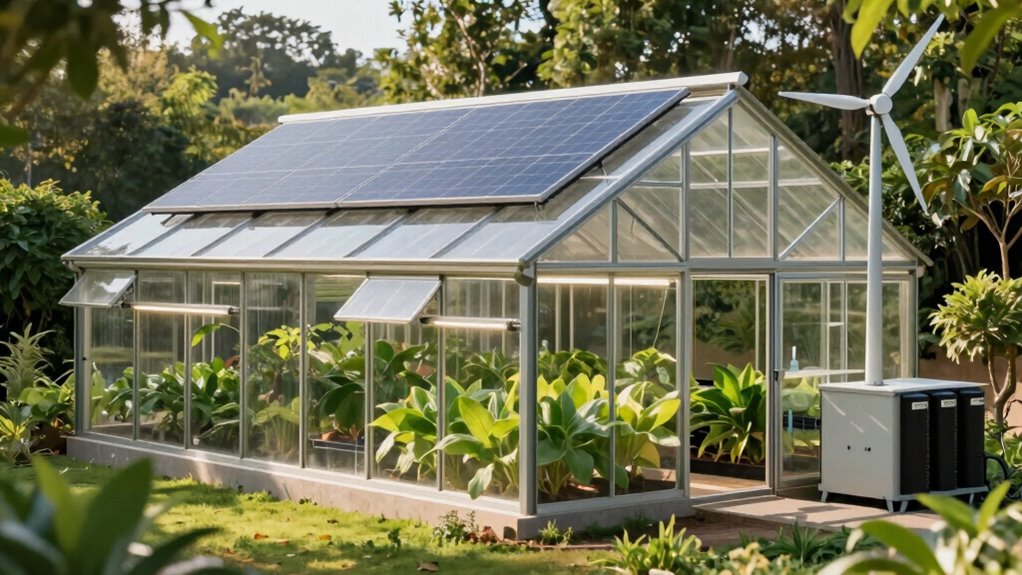
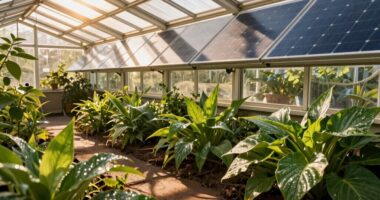
Choosing the right renewable energy systems for off-grid growing hinges on understanding your specific power needs and local conditions. Start by calculating your daily energy consumption for lighting, heating, and equipment. If you have consistent sunlight, solar panels paired with solar batteries can store excess energy for cloudy days or nighttime use. Wind turbines are ideal if you’re in a windy area, providing a steady energy supply when the wind blows. Combining both systems can assure a reliable energy source, reducing reliance on backup generators. Properly selecting and sizing these systems guarantees a sustainable, efficient off-grid greenhouse. Additionally, considering solar system safety measures such as proper placement and snow management ensures the longevity and safety of your setup. Incorporating energy efficiency strategies within your greenhouse can further optimize your renewable system’s performance and longevity. Understanding fandom’s past, present, and future can also inform innovative approaches to sustainable growing practices and community support. To optimize your setup, exploring technology integration options can help you monitor and manage energy use more effectively. Moreover, understanding off-grid energy solutions can help you adapt your system to changing conditions and advancements in renewable technology.
Essential Water Management Strategies for Off-Grid Greenhouses?
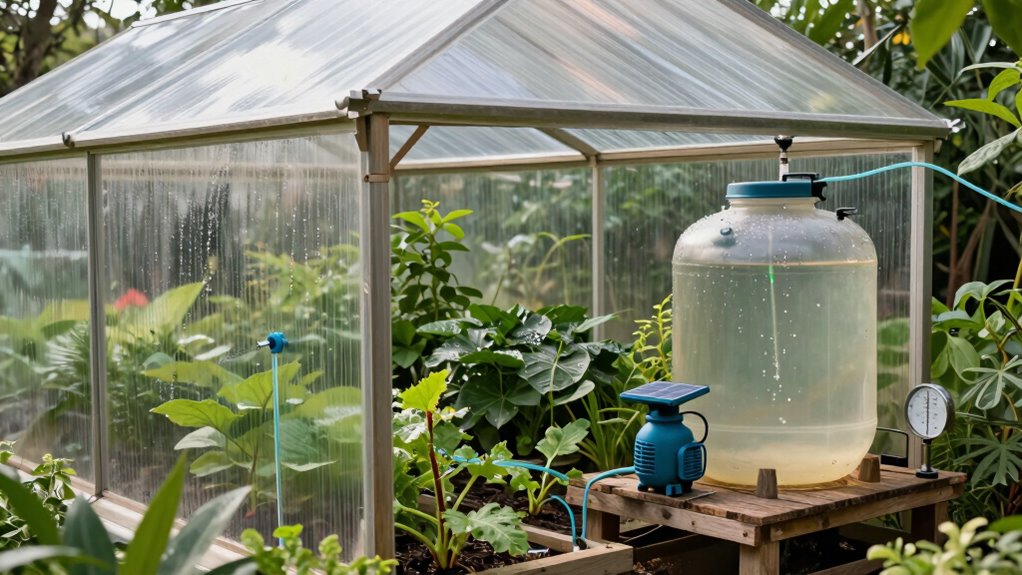
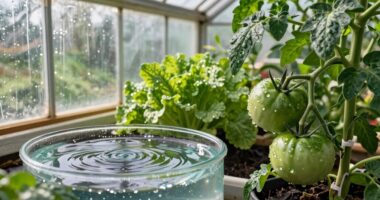
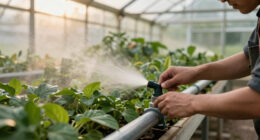
What makes water management critical for off-grid greenhouses? Without a reliable water system, your plants can quickly suffer, especially where no municipal supply exists. Rainwater harvesting provides a sustainable source, capturing rain from roofs and storing it for dry spells. Installing gutters and collection tanks allows you to maximize rainwater use efficiently. Greywater recycling is equally essential, enabling you to reuse water from sinks or washing areas for irrigation, reducing waste and conserving resources. Proper filtration and treatment guarantee this water is safe for plants. Incorporating water quality considerations ensures your system remains effective and safe for your crops. Regularly monitoring battery health and maintaining appropriate charger settings can prevent system failures and prolong the lifespan of your off-grid power supply. Additionally, understanding cookie management and user privacy considerations can help you optimize your environmental control systems and ensure sustainable, responsible operation. Implementing water conservation techniques further enhances the resilience of your water management approach, reducing overall consumption and environmental impact. Properly managing water storage capacity is also vital to accommodate fluctuations in rainfall and ensure a steady water supply during dry periods.
Climate Control Tips for Year-Round Greenhouse Success?
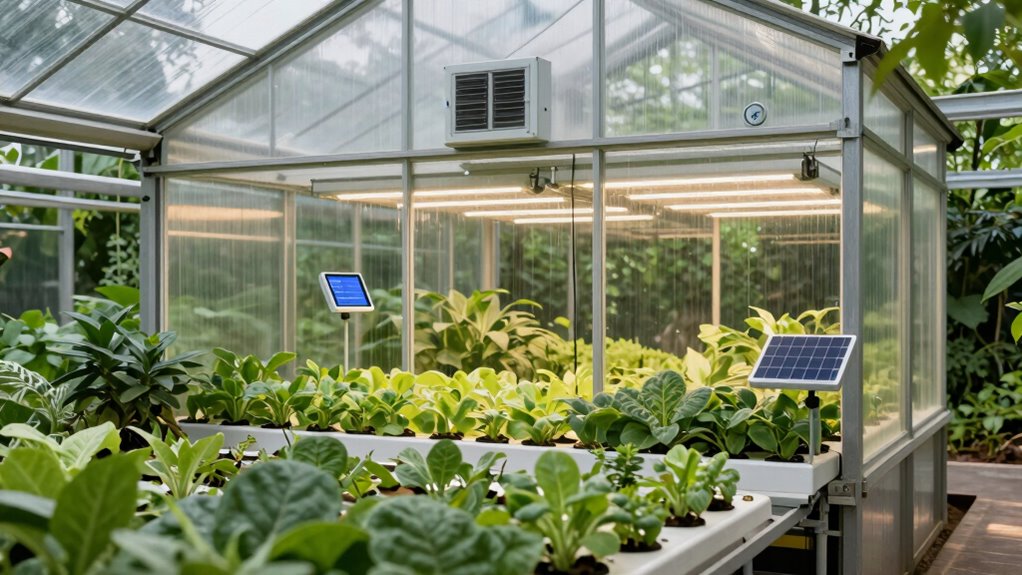
Maintaining consistent climate conditions is essential for year-round greenhouse success, especially when outside weather fluctuates. To achieve this, consider these climate control tips.
- Use solar shading to regulate heat and light, preventing overheating during hot days and maintaining ideal temperatures.
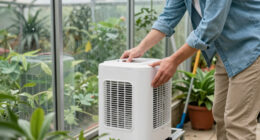
- Install proper ventilation to control humidity and reduce pest prevention issues, which thrive in damp environments.
- Monitor and adjust your environment regularly, keeping track of temperature and moisture levels to prevent stress on plants. A balanced environment supports healthy growth and reduces the risk of disease.
- Utilizing advanced AI tools can help optimize environmental controls through real-time data analysis and automation.
- Incorporating climate monitoring systems that leverage data-driven insights can further enhance your ability to maintain stable conditions throughout the year. Additionally, understanding the importance of climate control can help you select the best equipment for your setup.
Sustainable Materials and Design Tips for Long-Term Off-Grid Greenhouses?
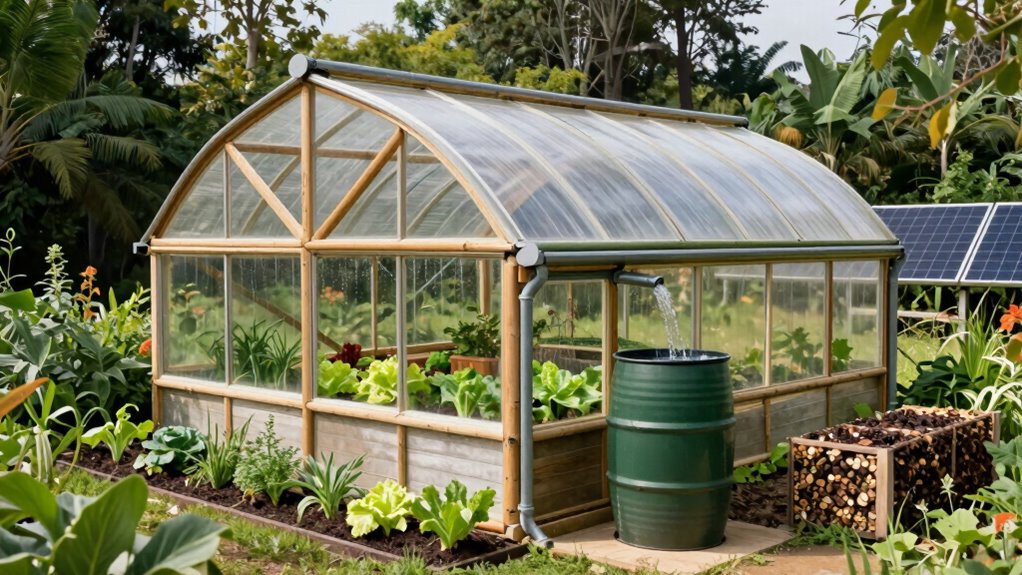
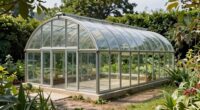
Selecting sustainable materials and thoughtful design strategies can considerably extend the lifespan and efficiency of your off-grid greenhouse. Use biodegradable plastics for glazing or liners—these break down naturally, reducing environmental impact. Incorporate natural pest control methods, like companion planting and beneficial insects, to minimize chemical use and promote a healthy ecosystem. Opt for locally sourced, durable materials such as reclaimed wood or bamboo, which are eco-friendly and resilient. Proper insulation and ventilation also improve energy efficiency. Here’s a quick comparison:
| Material Type | Benefits | Tips |
|---|---|---|
| Biodegradable plastics | Eco-friendly, renewable | Use for coverings or liners |
| Natural pest control | Reduces chemicals, sustainable | Integrate companion plants |
| Reclaimed/bamboo | Durable, low-impact resource | Use for framing or shelving |
This approach guarantees your greenhouse remains sustainable and productive for years. Additionally, selecting materials with long-term durability ensures your setup withstands environmental challenges over time.
Frequently Asked Questions
How Do I Finance an Off-Grid Greenhouse Project?
You can finance your off-grid greenhouse project by exploring grants and loans focused on renewable energy and sustainable farming. Consider crowdfunding or community-supported agriculture programs to raise funds. Additionally, look into low-interest loans or private investors interested in eco-friendly projects. Budget for water management systems and renewable energy sources, as these are critical investments that can attract funding and reduce long-term costs, making your project more financially sustainable.
What Are Common Challenges Faced in Off-Grid Greenhouse Setups?
Ever face the storm of challenges in your off-grid greenhouse? Balancing sustainable energy and water conservation can be tricky, but it’s essential. You’ll likely encounter issues like inconsistent power for climate control and water shortages. To conquer these, optimize solar energy use and implement rainwater harvesting. Stay adaptable, and remember, every problem is just a green opportunity in disguise, pushing your off-grid setup toward resilience and self-sufficiency.
How Long Does It Take to Establish an Off-Grid Greenhouse?
Establishing an off-grid greenhouse typically takes a few months, depending on your planning and resources. You’ll need time to design your setup, install solar heating systems, and set up rainwater harvesting. Expect to spend several weeks sourcing materials, constructing the greenhouse, and integrating sustainable systems. With careful planning, you can efficiently create a self-sufficient environment that harnesses solar energy and captures rainwater for watering your plants.
Are There Legal Restrictions for Off-Grid Greenhouse Construction?
Yes, there are legal restrictions for off-grid greenhouse construction. You need to check local zoning regulations to verify your greenhouse complies with land use rules. Additionally, you might require building permits before starting construction, especially if your greenhouse is large or permanent. Failing to obtain permits or ignoring zoning laws can lead to fines or the need to dismantle your greenhouse, so always do your research beforehand.
What Are the Best Plants for Off-Grid Greenhouse Cultivation?
You should cultivate hardy, drought-tolerant plants like herbs, lettuce, tomatoes, and peppers. Prioritize water conservation by choosing plants that thrive with minimal watering and implement pest management strategies such as natural predators or organic repellents. These plants adapt well to off-grid conditions and help you maximize your limited resources, ensuring a sustainable harvest while keeping your greenhouse eco-friendly and productive.
Conclusion
Just like Icarus dared to soar toward the sun, your off-grid greenhouse can reach new heights with the right tools and strategies. By choosing sustainable materials, harnessing renewable energy, and mastering water and climate control, you set yourself up for year-round success. Remember, the journey of building an off-grid greenhouse is an ongoing adventure—embrace it with passion and care, and you’ll cultivate not just plants, but a thriving sustainable paradise.