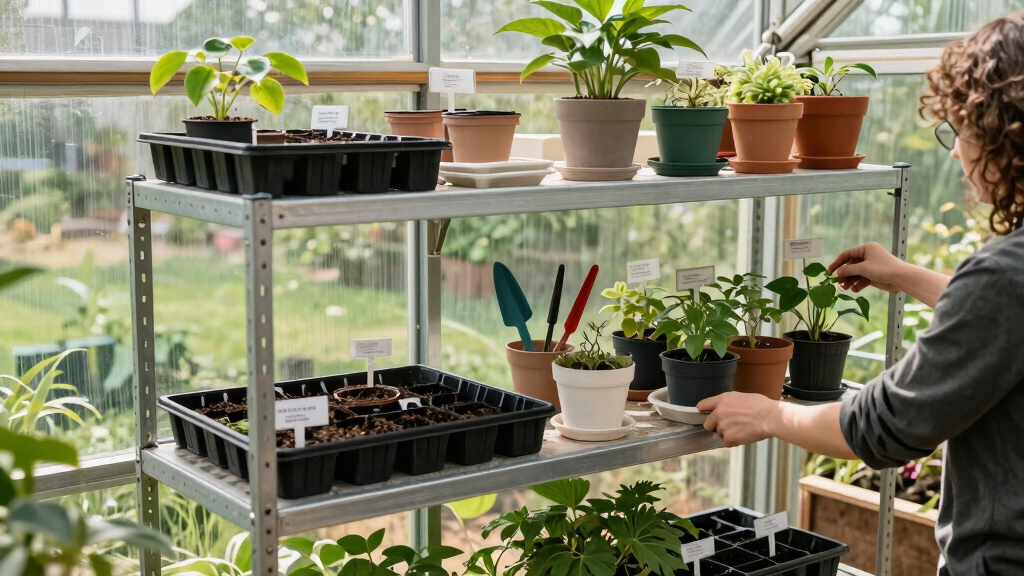

Greenhouse shelving organizers are essential for maximizing space and maintaining order in a gardening environment. The choice often boils down to durability versus flexibility. Heavy-duty metal shelving is ideal for users prioritizing longevity and load capacity, suitable for large or heavy plant pots. Plastic tiered shelving, on the other hand, offers lightweight convenience and easier setup, perfect for smaller or mobile setups. This comparison helps gardeners and greenhouse owners decide which type aligns best with their needs and budget.
At a Glance
| Criteria | Heavy-Duty Metal Shelving | Plastic Tiered Shelving Units | Winner |
|---|---|---|---|
| Material & Durability | Powder-coated steel, highly durable | High-quality plastic, moderate durability | A |
| Weight Capacity | Up to 300 lbs per shelf | Up to 50 lbs per shelf | B |
| Ease of Installation | Requires tools, more complex | Simple assembly, tool-free | B |
| Adjustability | Fixed shelves, less flexible | Adjustable shelves | Depends |
| Cost | $$$ | $$ | B |
| Weather Resistance | Excellent weather resistance | Moderate weather resistance | A |
| Mobility | Less mobile, heavier | Highly mobile | B |
| Aesthetics | Industrial look, sleek finish | Colorful, modern appearance | Depends |

INTER HUT 4 Tier Foldable Greenhouse Shelving Unit, Heavy Duty Steel Plant Stand Storage Rack, No Assembly Required, 130lbs Per Shelf Capacity, 28"x14.6"x44.7”, 1 Pack, Black
- No Assembly Required: Instant foldable setup for quick use
- Heavy Duty Capacity: Supports 520 lbs total, 130 lbs per shelf
- Ideal Shelf Dimensions: 28"L x 14.6"W x 44.7"H fits standard greenhouses
As an affiliate, we earn on qualifying purchases.
As an affiliate, we earn on qualifying purchases.
Key Differences
Choosing between heavy-duty metal and plastic shelving hinges on the user’s priorities. Metal shelving excels in durability and weight capacity, making it suitable for heavy or high-frequency use. It’s less flexible regarding repositioning and can be heavier to move. Plastic tiered units, however, emphasize ease of setup, adjustability, and lightweight convenience, ideal for gardeners who need flexibility or temporary setups. The tradeoff involves paying more for longevity versus saving time and effort with easier installation and mobility.
Detailed Comparison
Material & Durability (Heavy-Duty Metal Shelving wins — major)
Metal shelving offers superior strength and longevity, resistant to wear over time, making it suitable for heavy-duty use. Plastic shelving, while durable enough for lighter loads, may degrade faster under constant exposure to moisture or UV rays. For long-term, high-intensity use, metal clearly wins, but for short-term or less demanding scenarios, plastic suffices.
Weight Capacity (Heavy-Duty Metal Shelving wins — major)
Metal shelves can support significantly more weight, making them ideal for large pots, tools, or multiple plants. Plastic shelves are limited in capacity, best for lightweight items. For gardeners with heavy or bulky plants, metal is necessary; casual or hobbyist growers may prefer plastic for smaller loads.
Ease of Installation (Plastic Tiered Shelving Units wins — moderate)
Plastic tiered shelving typically assembles quickly with minimal tools, appealing to users who want quick setup. Metal shelving usually requires more tools and time, but results in a more stable, permanent fixture. The choice depends on whether quick setup or a sturdy, long-term solution is prioritized.
Adjustability (Plastic Tiered Shelving Units wins — moderate)
Plastic shelves often feature adjustable tiers, allowing customization to fit various plant sizes or arrangements. Metal shelving, especially fixed models, offers little to no adjustability, but some modular options exist. For users needing customization, plastic is advantageous; others might prefer fixed, stable metal units.
Cost (Plastic Tiered Shelving Units wins — minor)
Plastic shelving units are generally less expensive upfront, making them accessible for budget-conscious gardeners. Heavy-duty metal shelves cost more, reflecting their durability and load capacity. Price considerations should match intended use and longevity expectations.
Weather Resistance (Heavy-Duty Metal Shelving wins — moderate)
Metal shelving with proper coating resists moisture and rust, suitable for outdoor or humid environments. Plastic shelves are inherently resistant to moisture but may degrade under prolonged UV exposure. For outdoor use, metal is more durable over time if properly treated.
Mobility (Plastic Tiered Shelving Units wins — moderate)
Plastic units are lightweight and often designed to be moved easily, ideal for flexible setups. Metal shelving tends to be heavier and less mobile once installed, better suited for permanent arrangements. Choose plastic if frequent repositioning is needed.
Aesthetics (Plastic Tiered Shelving Units wins — minor)
Plastic shelving often offers a more modern, colorful look that can complement casual or decorative greenhouse designs. Metal shelving has a more industrial, sturdy appearance, fitting more utilitarian or professional settings.
Heavy-Duty Metal Shelving: Pros and Cons
Pros:
- Exceptional durability and longevity
- High weight capacity supports heavy plants and tools
- Weather resistant and suitable for outdoor use
- Stable and permanent installation
Cons:
- Heavier and harder to move
- More complex installation process
- Higher initial cost
- Less flexible for repositioning
Plastic Tiered Shelving Units: Pros and Cons
Pros:
- Easy and quick to assemble
- Adjustable shelves for customization
- Lightweight and portable
- Lower upfront cost
Cons:
- Limited weight capacity
- Potential for faster wear in outdoor conditions
- Less sturdy for heavy-duty use
- May need replacement sooner in harsh environments
Who Should Choose What
Choose Heavy-Duty Metal Shelving if:
- Your greenhouse requires heavy-duty support for large or heavy plants
- You prioritize longevity and weather resistance over ease of mobility
- You want a permanent, stable shelving solution
Choose Plastic Tiered Shelving Units if:
- You need flexible, adjustable shelving for different plant sizes
- Ease and speed of setup are important
- You prefer lightweight, portable options for seasonal or movable arrangements
Value for Money
Heavy-duty metal shelving justifies its higher price if durability, long-term stability, and outdoor resilience are key. Plastic units are better value for casual gardeners or those needing quick, flexible setups without heavy investment. Ultimately, pay more only if you need the strength and permanence metal provides; otherwise, plastic offers sufficient functionality at a lower cost.
Final Verdict
Choose heavy-duty metal shelving if you want a durable, weather-resistant, and permanent solution capable of supporting heavy loads. Opt for plastic tiered shelving if you need lightweight, adjustable, and easy-to-assemble units for smaller or temporary setups. The biggest factor is whether long-term stability or flexibility suits your gardening style.
Frequently Asked Questions
Which shelving type lasts longer outdoors?
Metal shelving with proper coating generally lasts longer outdoors due to its resistance to rust and weather, whereas plastic may degrade faster under UV exposure.
Can plastic shelving support heavy plants?
While some high-quality plastic shelves offer decent support, they typically cannot hold as much weight as metal shelving and are better suited for lightweight plants and accessories.
Is it easy to move metal shelving once installed?
No, metal shelving is usually heavier and less mobile, so it’s best for permanent setups. Plastic units are lightweight and designed for easy repositioning.
Which option is more cost-effective in the long run?
Metal shelving may cost more initially but lasts longer, making it more cost-effective for long-term use. Plastic is cheaper upfront but may need replacement sooner, especially in outdoor conditions.