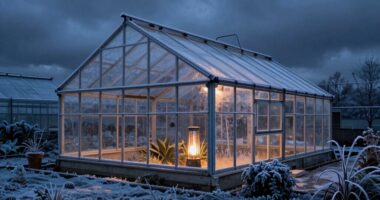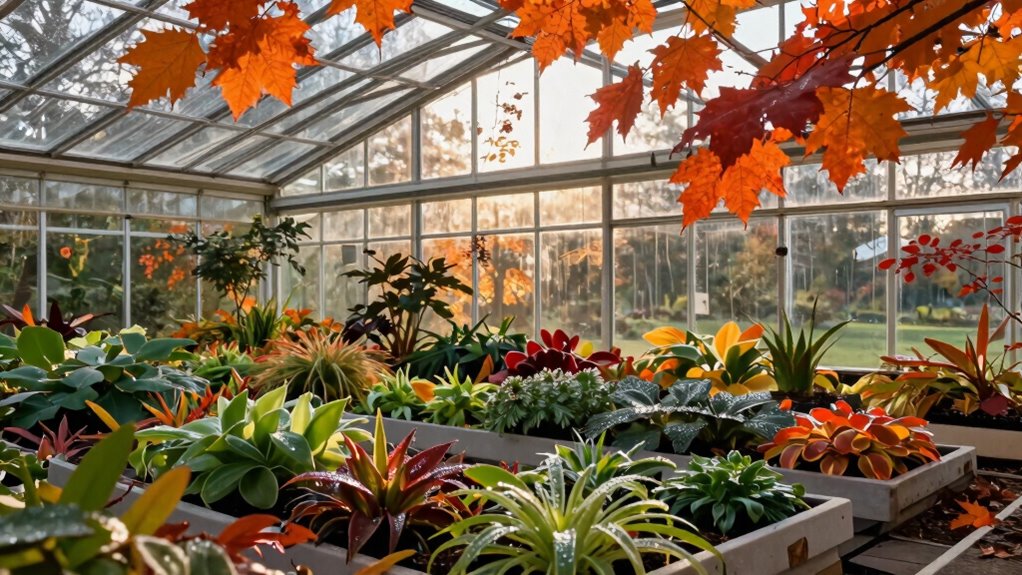

Fall is the best time to rethink your greenhouse layout because it allows you to assess past successes and failures, making adjustments for the upcoming season. You can optimize space, improve airflow, and enhance pest management strategies without ongoing plant pressure. Rethinking now helps you streamline operations, increase energy efficiency, and prepare the environment for healthy crop growth. Keep exploring to discover how these tweaks can boost your greenhouse’s productivity and resilience.

Get garden gear delivered free with Prime
- Fast, free delivery on millions of items
- Prime Video, Amazon Music and more included
- Member-only deals all year
Key Takeaways
- Fall allows for comprehensive assessment and planning without ongoing plant growth pressure.
- It provides time to optimize layout for improved efficiency and space utilization before the next planting season.
- Seasonal pest activity hotspots are easier to identify and manage during fall.
- Fall offers an ideal window to enhance airflow, ventilation, and climate control systems proactively.
- Implementing integrated pest management strategies in fall strengthens greenhouse resilience ahead of future growth.
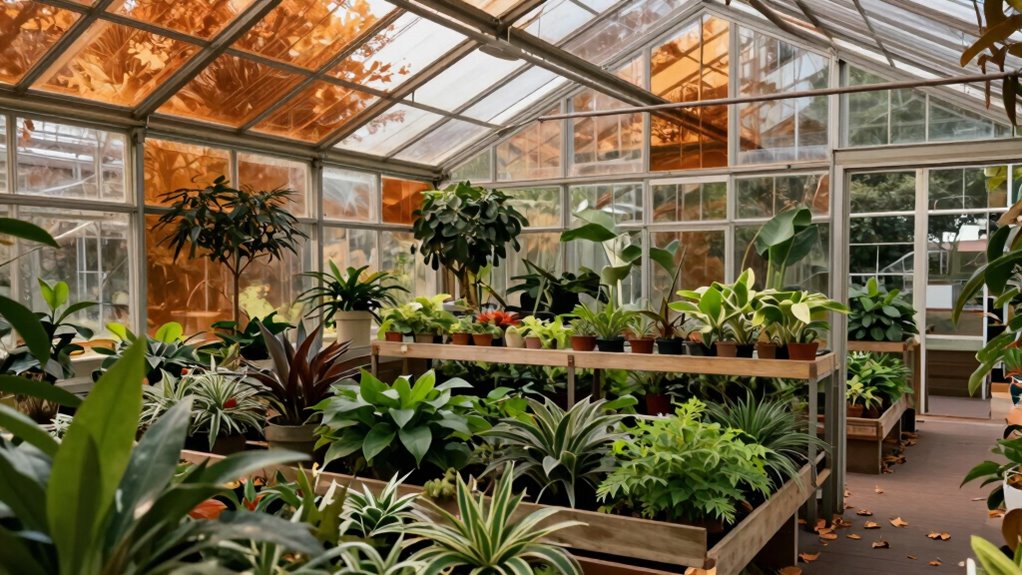
As fall approaches, it’s the perfect time to rethink your greenhouse layout to maximize efficiency and prepare for the upcoming planting season. This season offers a strategic window to assess what worked and what didn’t while giving you the chance to enhance your space for better yields. One of the key aspects to focus on is seasonal crop planning. By analyzing past successes and failures, you can decide which crops to prioritize next year and how to arrange them for peak growth. Planning now allows you to stagger planting schedules, ensuring a steady supply of produce and reducing the risk of crop failure. Adjusting your layout based on these insights helps streamline watering, lighting, and ventilation needs, making your greenhouse more energy-efficient.
Another vital reason to rethink your greenhouse setup in fall is pest management. During the off-season, you can identify pest hotspots and implement control measures without the pressure of ongoing plant growth. Rethinking your layout gives you the opportunity to reposition susceptible plants away from problem areas, reducing pest spread. You can also incorporate pest barriers or beneficial insect habitats into your design, creating a more integrated approach to pest control. Fall is ideal for cleaning and sanitizing surfaces, removing debris where pests can hide, and rearranging plants to improve airflow. Better airflow not only helps prevent disease but also makes it easier to spot and manage pests early. Additionally, evaluating your greenhouse’s ventilation systems can significantly improve airflow and climate control, preventing issues before they arise. Implementing integrated pest management strategies during this period can further enhance your pest control efforts. Exploring different pest control methods can help you develop a comprehensive plan tailored to your specific needs, making your greenhouse more resilient against pests. Incorporating climate control techniques during this time can also optimize conditions for healthy plant growth and reduce pest issues.
As an affiliate, we earn on qualifying purchases.
Frequently Asked Questions
How Does Fall Weather Impact Greenhouse Ventilation Adjustments?
Fall weather impacts your greenhouse ventilation adjustments by requiring you to focus on temperature regulation and humidity control. Cooler outdoor temperatures mean you might open vents less often to retain heat, but you still need to monitor humidity levels to prevent mold or disease. As the weather fluctuates, you’ll need to balance ventilation carefully, ensuring your plants stay healthy without losing too much warmth or moisture.
Are There Specific Plants Better Suited for Fall Greenhouse Redesign?
Imagine your greenhouse as a canvas—fall’s cooler days are your perfect palette. You’re better suited to select hardy plants like leafy greens, root vegetables, and herbs that thrive in cooler weather. Focus on plant selection that adapts well to lower light and temperature, and prepare your soil with compost and organic matter. This season’s change helps you fine-tune your layout, ensuring your plants flourish through the cooler months.
What Are Cost Considerations for a Fall Greenhouse Upgrade?
You should start with a cost analysis to understand your expenses and identify potential savings. Budget planning helps you allocate funds effectively for materials, labor, and unexpected costs. Fall upgrades often cost less since you’re avoiding peak season prices, but you still need to take into account insulation, ventilation, and new equipment. Proper planning ensures your greenhouse redesign fits your financial capacity while optimizing long-term benefits.
How Can Lighting Be Optimized During Fall Reconfigurations?
Sure, because who wouldn’t want to turn their greenhouse into a disco during fall? To optimize lighting, you should tweak your lighting schedules to maximize natural daylight and extend artificial light hours. Use light diffusion techniques, like diffusers or reflective surfaces, to distribute light evenly. This way, your plants get consistent, efficient illumination, ensuring healthy growth as daylight wanes and you’re not left in the dark—literally.
What Safety Precautions Should Be Taken During Fall Modifications?
You should wear protective gear and guarantee all tools are in good condition to prevent accidents. Check the greenhouse’s structural stability before starting, as fall weather can weaken structures. Be vigilant about seasonal pests that might invade during modifications and take action accordingly. Keep the workspace clean and organized to reduce tripping hazards. Always follow safety guidelines and, if needed, consult professionals to avoid damage or injuries during fall modifications.
Conclusion
As autumn leaves fall, so should your old greenhouse layout. Think of fall as a blank canvas, ready for fresh ideas to flourish. Rethinking now allows you to plant seeds of innovation before winter’s chill, ensuring your greenhouse becomes a thriving oasis come spring. Don’t let the season pass like fleeting shadows—seize the moment to craft a space that nurtures growth and inspires, turning your greenhouse into a sanctuary of endless possibilities.
Fall yard work Picks
leaf blowers
As an affiliate, we earn on qualifying purchases.