Choosing the right water storage system, like rain harvesting combined with sustainable design, can dramatically boost your greenhouse’s flexibility. By collecting rainwater from rooftops and ensuring it’s clean with proper filters, you create a reliable, eco-friendly water source. This approach reduces dependence on municipal supplies and helps you adapt to seasonal changes. Effective water storage allows for consistent watering, improves plant health, and supports eco-conscious practices. Keep exploring to discover how you can optimize your system further.

Get garden gear delivered free with Prime
- Fast, free delivery on millions of items
- Prime Video, Amazon Music and more included
- Member-only deals all year
Key Takeaways
- Implementing rain harvesting systems provides a reliable, renewable water source, increasing greenhouse operational flexibility.
- Proper water storage planning ensures consistent water availability during droughts or peak demand periods.
- Using filters and first-flush devices maintains high water quality, reducing plant stress and dependency on external water sources.
- Strategic system design, aligned with climate data, optimizes water use and allows adaptable watering schedules.
- Sustainable water management practices enhance resilience and support year-round greenhouse productivity.
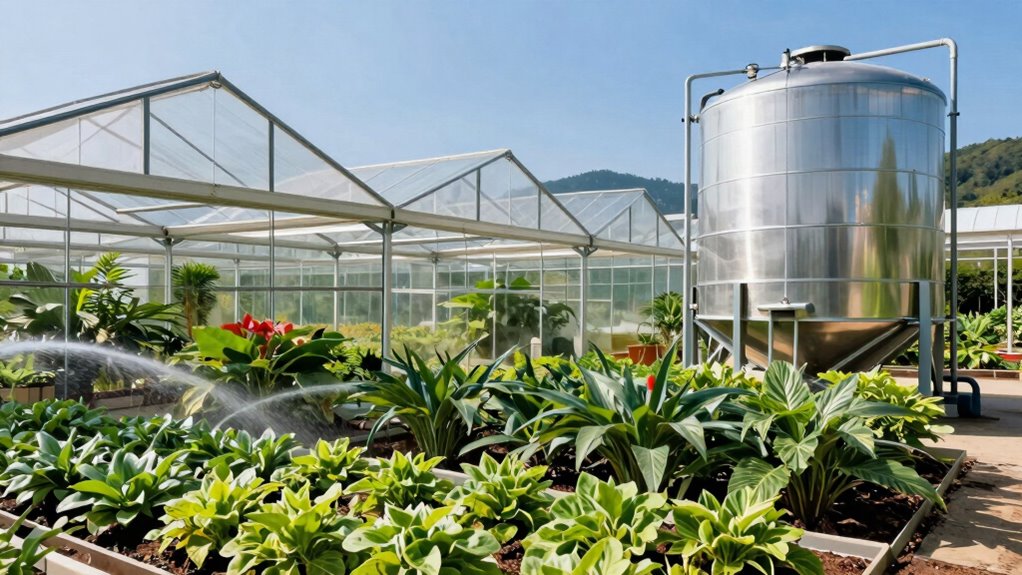
Deciding how to store water effectively is essential for ensuring a reliable supply during emergencies or daily needs. When you plan your water storage, you need to think about both how much water you’ll need and the best methods to keep it safe and accessible. One smart approach is rain harvesting, which involves collecting rainwater from rooftops and other surfaces. This method not only reduces your dependence on municipal water sources but also supports water conservation efforts. By capturing rainwater, you’re making use of a free, renewable resource, especially during rainy seasons, which can notably supplement your water supply in a sustainable way.
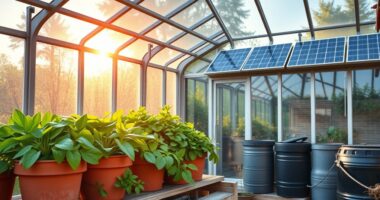
Rain harvesting is particularly beneficial for greenhouses because it allows you to maintain a consistent water source without constantly relying on external supplies. You can install gutters and storage tanks to collect rainwater, ensuring that your plants receive a clean, natural source of hydration. This approach helps you reduce water waste and lowers your utility bills, making your greenhouse operation more eco-friendly and cost-effective. Plus, when you incorporate rain harvesting into your water storage plan, you’re practicing water conservation by capturing and reusing water that would otherwise run off and be lost. Properly designed rain harvesting systems include filters and first-flush devices to keep debris and contaminants out of your storage tanks, ensuring your plants get clean water every time. When combined with water conservation practices—like watering early in the morning or using drip irrigation—you maximize the efficiency of your water use and reduce waste. Additionally, understanding water availability and rainfall patterns in your area can help you optimize your storage capacity and system design for sustainable water management. Knowing the rainfall patterns in your region can also help you determine the most effective placement and size of your water storage system. Incorporating climate data can further enhance your ability to plan for seasonal variations and ensure a steady water supply year-round. Furthermore, utilizing sustainable tech in your system can improve overall efficiency and reduce environmental impact.
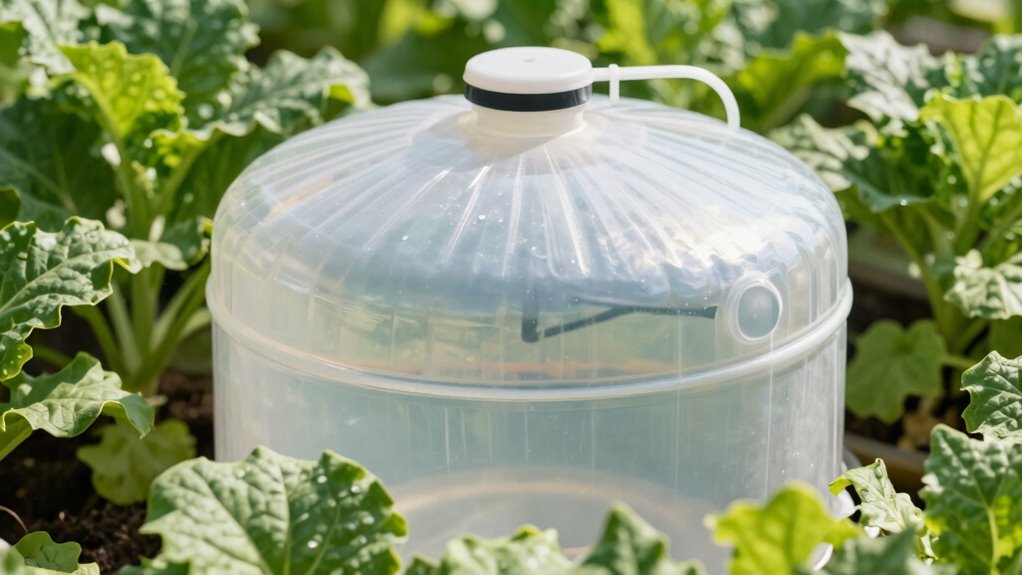
rainwater harvesting system for greenhouse
As an affiliate, we earn on qualifying purchases.
As an affiliate, we earn on qualifying purchases.
Frequently Asked Questions
How Does Water Storage Impact Greenhouse Climate Control?
Water storage plays a vital role in your greenhouse climate control by enabling water conservation and supporting evaporative cooling. When you store water effectively, you can use it to manage humidity levels, reducing temperature fluctuations. This process helps maintain a stable environment, improves plant health, and saves resources. By leveraging stored water for evaporative cooling, you enhance your greenhouse’s efficiency and resilience against climate variations.
What Are the Cost Differences Between Storage Options?
A cost analysis shows that flexible, large-capacity storage options, like underground tanks, initially cost more but offer long-term savings through reduced maintenance and water loss. Smaller or above-ground tanks are cheaper upfront but may require frequent replacements. Your choice depends on storage capacity needs; larger capacity justifies higher costs by increasing efficiency and reducing water management expenses over time.
How Does Water Quality Affect Storage Choices?
Water purity directly influences your storage choices; if your water has contamination risks, you’ll want sealed, opaque tanks to prevent algae growth and block light. For high purity water, consider stainless steel tanks to avoid leaching chemicals. Contamination risks mean you need secure, clean containers, while lower purity water might tolerate more basic options. Always evaluate water quality to guarantee your storage method maintains desired cleanliness and safety standards.
Can Storage Systems Be Expanded Later?
Imagine a sturdy ship ready to sail, its hull designed to handle future storms. Storage systems can indeed be expanded later, offering you expandable capacity for growing needs. You can plan for future upgrades, adding tanks or modules as your greenhouse expands or water demands increase. This flexibility guarantees your system adapts seamlessly over time, preventing costly replacements and keeping your operations smooth and resilient, just like a ship prepared for any voyage.
What Are Maintenance Requirements for Water Storage Tanks?
You should regularly inspect your water storage tanks, regardless of tank materials like plastic, metal, or concrete. Maintenance schedules typically include cleaning to prevent algae buildup, checking for leaks, and guaranteeing fittings are secure. For metal tanks, watch for corrosion, while plastic tanks may need UV protection. Following these routine maintenance steps helps prolong tank lifespan and ensures your water remains clean and safe for your greenhouse needs.
Conclusion
As you stand on the brink of this vital decision, imagine the ripple effects your choice could release. Will you prioritize immediate needs or long-term resilience? The water storage strategy you select now holds the power to shape greenhouse flexibility for years to come. The future hangs in the balance, silent yet waiting—ready to reveal its true potential only when you make that pivotal move. Are you prepared to open what’s next?
Halloween Picks
halloween
As an affiliate, we earn on qualifying purchases.