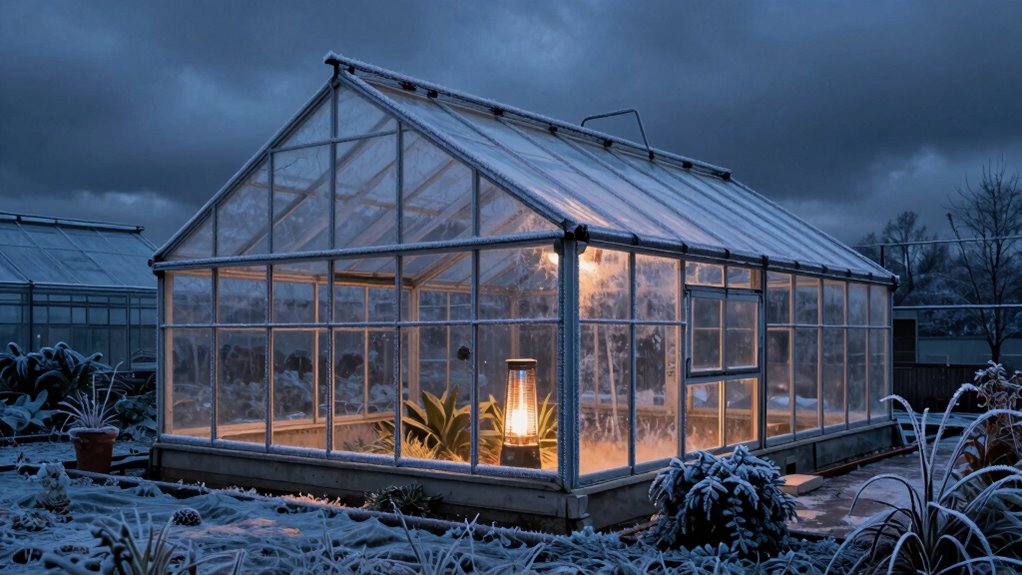
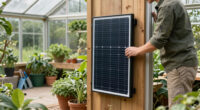
When a surprise frost hits, quickly insulate your greenhouse by covering vulnerable plants with frost blankets or bubble wrap, sealing gaps, and insulating vents. Use active heating like space heaters or heat lamps safely, and keep ventilation controlled to prevent cold drafts. Monitoring outdoor and indoor temperatures helps you respond immediately. Acting fast can save your plants, and if you keep going, you’ll discover more tips to fully safeguard your greenhouse during cold snaps.
Key Takeaways
- Cover plants with frost blankets, thermal curtains, or bubble wrap to trap heat and prevent ice crystal formation.
- Increase ventilation during the day to remove excess humidity, then seal vents and doors at night to preserve heat.
- Use portable heaters or heat lamps safely to provide additional warmth inside the greenhouse.
- Insulate vents, windows, and openings with weatherproof seals or thermal materials to prevent cold drafts.
- Monitor weather forecasts closely and act quickly by covering plants or adjusting heating when frost is imminent.
frost protection greenhouse cover
As an affiliate, we earn on qualifying purchases.
As an affiliate, we earn on qualifying purchases.
Why Frost Can Harm Your Greenhouse and How to Spot the Signs
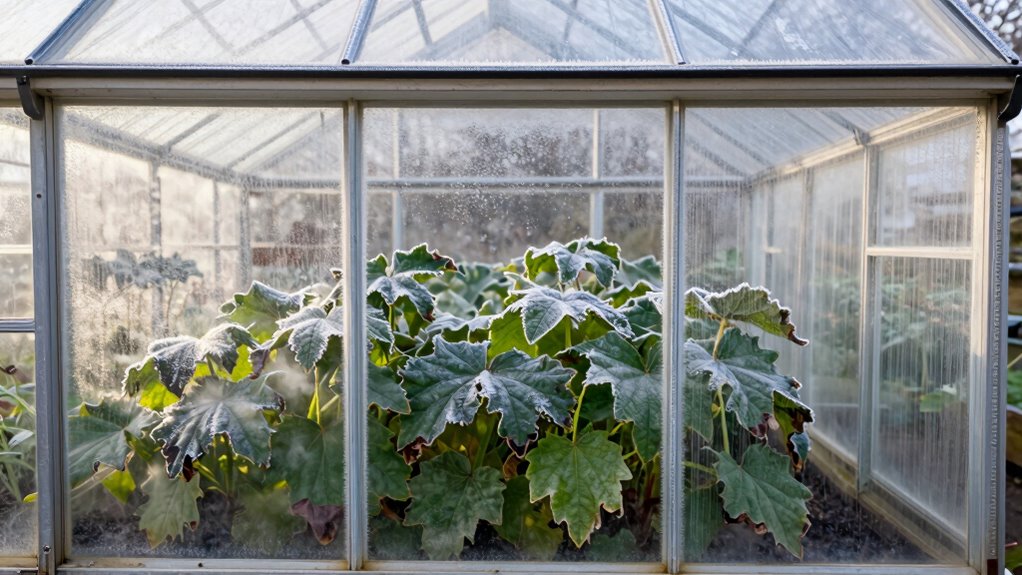
Have you ever wondered how frost can damage your greenhouse? Frost damage occurs when freezing temperatures cause ice crystals to form on plant tissues, breaking cell walls and harming your plants. This process leads to plant stress, weakening their overall health and growth. You might notice wilting, blackened leaves, or sunken spots, which are clear signs of frost damage. Inside your greenhouse, temperature fluctuations can be more sudden, making plants vulnerable even if it doesn’t seem cold outside. Recognizing these signs early helps you understand that frost isn’t just a minor issue—it’s a serious threat to your plants’ essential functions. Being aware of the damage caused by frost can motivate you to take protective measures before the damage becomes irreversible. Regular monitoring of temperature and humidity levels can help you prevent frost damage effectively. Additionally, understanding the effects of frost on plant tissues can better prepare you for implementing suitable protective strategies.
Key Preparations to Protect Your Greenhouse Before a Frost
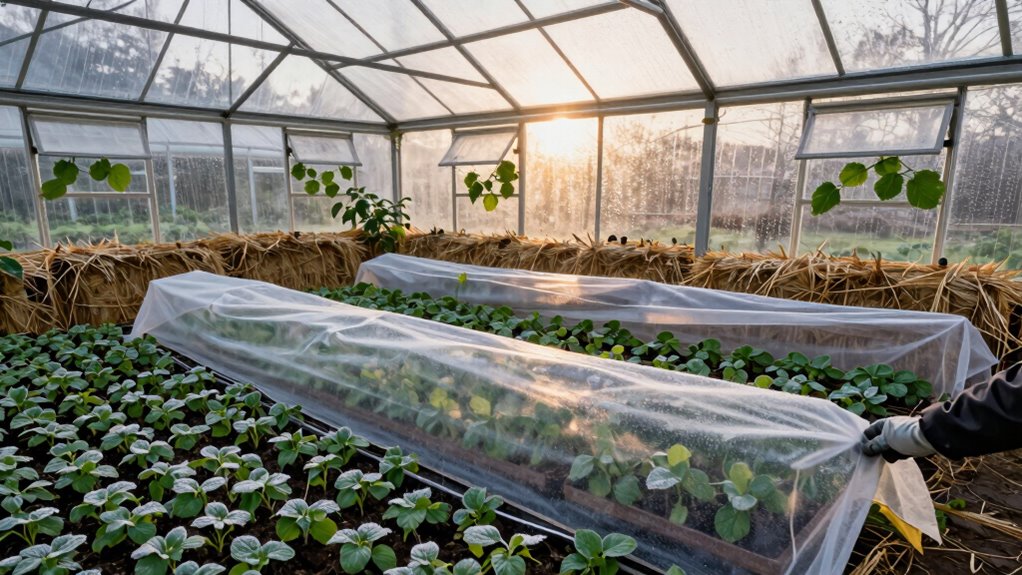
To protect your greenhouse before a frost, you need to insulate it properly to keep heat in. Keep a close eye on weather forecasts so you can act quickly if a cold snap is coming. Taking these steps guarantees your plants stay safe when temperatures drop. Additionally, consider using proper gear care techniques to prevent damage from moisture or cold, ensuring your greenhouse remains in good condition throughout the winter months.
Insulate Greenhouse Properly
Are you prepared to shield your greenhouse from upcoming frost? Proper insulation is vital. First, focus on insulation materials like bubble wrap, foam boards, or thermal blankets that can trap heat and reduce cold air infiltration. Cover windows and vents with these materials to prevent heat loss. Good ventilation management is also essential; while you want to keep heat in, you need to prevent moisture buildup that could cause damage. Use vent covers or temporary barriers that allow controlled airflow, maintaining a balance between insulation and ventilation. Make certain all gaps around doors and panels are sealed tightly. By combining effective insulation materials with smart ventilation management, you create a more stable environment that resists the cold and safeguards your plants during a surprise frost. Additionally, understanding the role of insulation in projectors can help you appreciate how proper thermal management contributes to overall protection and performance.
Monitor Weather Forecasts
Keeping a close eye on weather forecasts allows you to anticipate frost events well in advance. Use reliable forecast alerts to stay informed about upcoming cold snaps, so you can prepare your greenhouse accordingly. Installing weather sensors inside and outside your greenhouse provides real-time data on temperature and humidity, helping you monitor conditions continuously. These sensors can trigger alerts if temperatures drop near freezing, giving you early warning to take action. Regularly check local weather reports and set up digital alerts on your phone or computer for immediate updates. Being proactive with forecast alerts and sensor data lets you implement protective measures like ventilation, heating, or covering plants before frost hits, minimizing damage and ensuring your greenhouse stays protected. Additionally, understanding media literacy can help you critically evaluate weather information sources and avoid false or misleading forecasts, ensuring your preparations are based on accurate data. Recognizing the importance of toilet maintenance in daily routines can also teach you the value of regular checks, similar to monitoring weather conditions for your greenhouse. Keeping track of climate control options available for greenhouses can further enhance your ability to respond effectively to frost threats. Incorporating filter sizing/flow considerations into your climate control systems can improve their efficiency and reliability during critical weather events.
How to Recognize an Imminent Frost and Act Fast

Recognizing an imminent frost early can make all the difference in safeguarding your greenhouse plants. Pay attention to a frost warning issued by local weather services, as it signals a significant temperature drop overnight. Keep an eye on the forecast, especially if clear skies and calm winds are predicted, which often lead to rapid cooling. During the evening, monitor outdoor temperatures closely, as a sudden decline indicates frost risk. If you notice the temperature falling close to freezing, act quickly—cover vulnerable plants, increase ventilation, or employ heating methods. Being alert and proactive allows you to respond swiftly, minimizing damage. The key is to stay informed and prepared so you can implement protective measures before the frost hits.
Top Strategies for Frost Protection During Cold Snaps
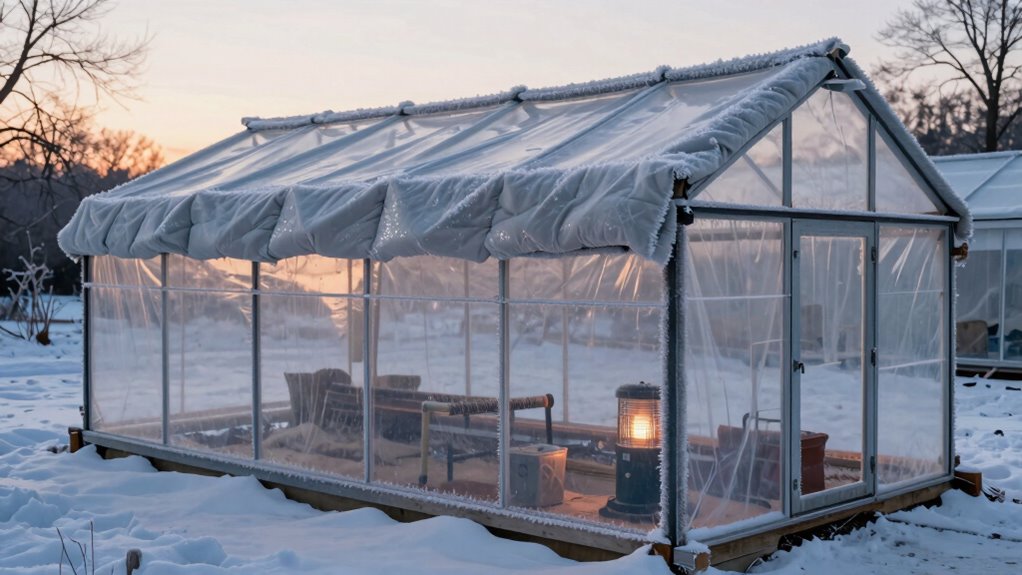
When a cold snap threatens your greenhouse, taking proactive steps can make all the difference in protecting your plants. Knowing your plant hardiness zone helps you understand which plants are most vulnerable and when frost dates typically occur in your area. To guard against unexpected cold, consider using frost covers or blankets that trap heat without damaging plants. Adjust ventilation to prevent cold drafts from entering, especially during the night. Insulating your greenhouse with bubble wrap or thermal curtains adds an extra layer of protection. Monitoring weather forecasts closely allows you to act before frost begins. Understanding climate resilience can also help you develop more effective long-term protection methods. Incorporating advanced protective measures, such as portable heaters or heat lamps, can provide additional security during severe cold spells. Being aware of microclimates around your greenhouse can help you identify the most vulnerable spots to focus your protective efforts. Additionally, understanding plant hardiness zones can guide you in selecting the most suitable plants for your climate and improve your overall frost preparedness.
Safe Ways to Use Heating Devices in Your Greenhouse
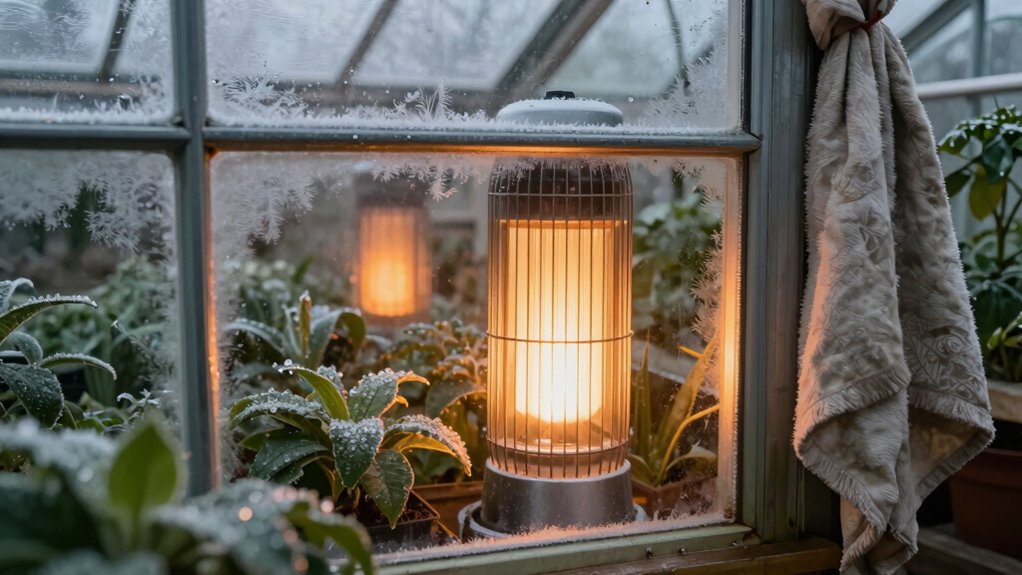
Using heating devices in your greenhouse can effectively protect plants from cold damage, but it’s essential to do so safely to prevent accidents or damage. Choose lighting options like incandescent bulbs or specialized greenhouse heaters that distribute heat evenly without creating fire hazards. Always monitor the temperature with a reliable thermometer to avoid overheating. Keep an eye on plant hydration, as heaters can dry out the air and harm your plants; mist or water them regularly to maintain proper moisture levels. Position heaters away from flammable materials and use them according to the manufacturer’s instructions. Never leave heating devices unattended for long periods. By combining safe heating practices with proper lighting and hydration, you can safeguard your plants during cold snaps effectively. Regularly checking your home heating system can help prevent overheating and ensure consistent temperature control.
Insulating Your Greenhouse to Keep the Cold Out
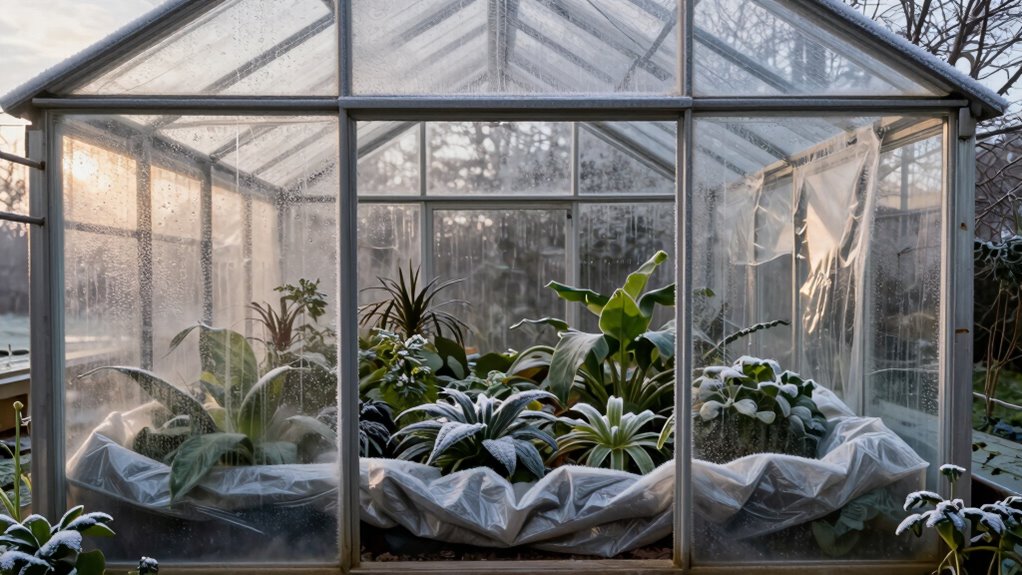
Choosing the right insulation materials is key to keeping your greenhouse warm, so consider options like foam boards or bubble wrap. Proper installation guarantees there are no gaps that allow cold air in, and regular maintenance helps sustain a stable temperature. Additionally, incorporating sustainable practices such as using eco-friendly insulation options can enhance energy efficiency and environmental friendliness. Using natural filtration systems in conjunction with insulation can further improve your greenhouse’s resilience against frost. Implementing energy-efficient solutions can further reduce heating costs and environmental impact. Paying attention to insulation quality ensures your greenhouse maintains consistent temperatures even during unexpected cold snaps, helping your plants thrive. Furthermore, selecting high-performance insulation can significantly improve your greenhouse’s ability to withstand sudden temperature drops.
Selecting Insulation Materials
Have you ever wondered which materials are best for insulating a greenhouse? The key is choosing effective thermal barriers that trap heat and prevent cold air from seeping in. Bubble wrap is a popular option because it creates a layer of trapped air, boosting insulation. Thick polyethylene film also works well to keep warmth inside. Reflective mulches are another smart choice—they reflect heat back into your plants and can be laid over soil or used as coverings. These materials are lightweight, affordable, and easy to install. When selecting insulation, consider the durability and how well it withstands moisture and wind. Using outdoor-grade insulation materials that are designed for outdoor use can enhance your greenhouse’s ability to withstand temperature fluctuations. Additionally, selecting materials with high moisture resistance can prevent mold and deterioration over time. Considering the thermal properties of different materials can help you choose the most effective insulation for your climate. Incorporating thermal barriers effectively helps maintain a stable temperature inside your greenhouse. Combining thermal barriers with reflective mulches provides a thorough approach to protect your plants from surprise frosts.
Proper Installation Techniques
Proper installation is essential to ensuring your greenhouse stays warm and protected from the cold. Start by securing insulation materials tightly to prevent drafts and heat loss. Incorporate effective ventilation strategies to balance airflow and prevent condensation, which can compromise insulation. Proper ventilation also helps regulate humidity and temperature fluctuations. Reinforce the structure with sturdy framing and additional supports if needed, especially in areas prone to high winds or heavy snow. Seal all gaps, joints, and seams thoroughly, ensuring no cold air infiltrates. Use weatherproofing techniques such as door sweeps and window seals to enhance insulation. Additionally, paying attention to insulation effectiveness can significantly improve your greenhouse’s resilience against unexpected frosts. By focusing on these installation details, you create a more resilient greenhouse that effectively retains heat and withstands surprise frosts.
Maintaining Consistent Temperature
Ever wonder how to keep your greenhouse warm during the coldest months? Maintaining a consistent temperature is key. Insulation helps trap heat and prevents cold drafts from sneaking in. To maximize insulation:
- Use bubble wrap on interior walls for extra warmth
- Seal gaps around windows and doors tightly
- Cover soil with mulch to retain heat
- Insulate vents and openings when not in use
- Consider installing thermal curtains at night
Insulation also aids in plant watering, keeping soil moist and stable. Additionally, a warmer environment discourages pests, reducing the need for pest prevention measures. Regularly monitor temperatures to guarantee consistent warmth, adjusting insulation methods as needed. Proper insulation creates a stable microclimate, promoting healthy growth and protecting your plants from surprise frosts.
Monitoring Weather and Staying Informed About Frost Risks
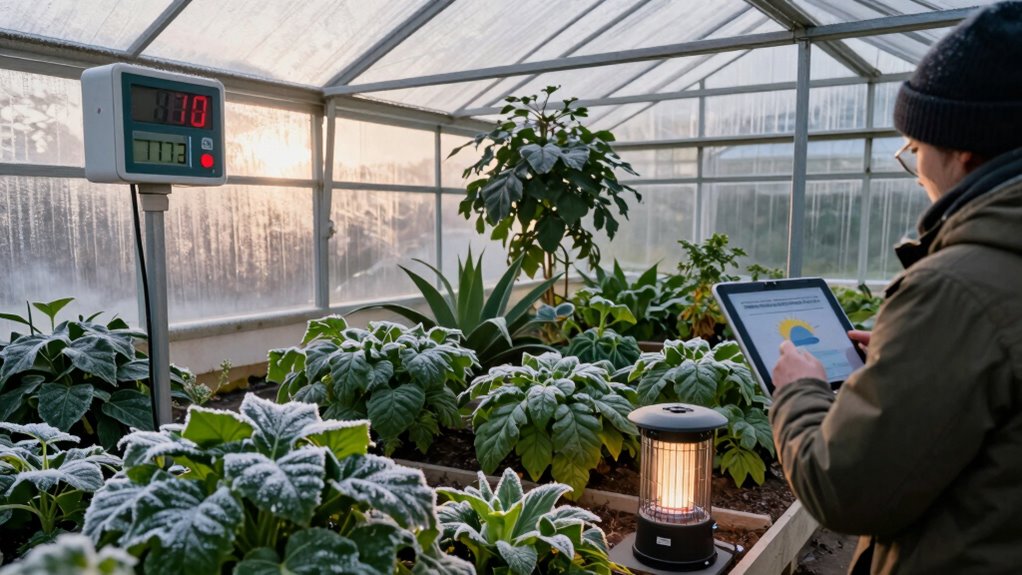
Staying ahead of frost risks requires you to actively monitor weather conditions and stay informed about upcoming temperature drops. Check local forecasts regularly and use weather apps that provide real-time updates. Keep an eye on overnight temperature trends, especially during cold snaps. This allows you to adjust your pest management strategies and watering schedules proactively, preventing stress on your plants. Consider installing a thermometer inside your greenhouse for precise readings. Stay connected with local agricultural extensions or weather services for frost alerts. By staying informed, you can act swiftly—covering plants or activating heating systems—to minimize damage. Regular monitoring helps you anticipate frost events and implement protective measures promptly, ensuring your greenhouse remains secure and your plants stay healthy through unexpected cold spells.
Post-Frost Tips: Help Your Plants Recover and Thrive
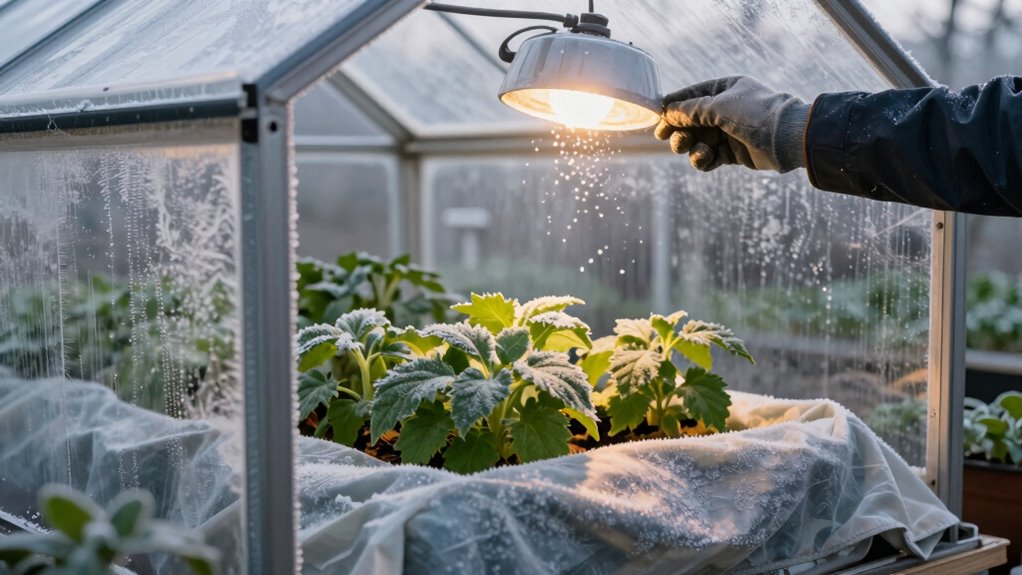
After a frost has passed, your plants may look damaged, but quick action can help them recover and thrive. First, gently remove any dead or damaged leaves through plant pruning to encourage healthy growth. Check for signs of garden pests that might have taken advantage of weakened plants and treat them promptly. Water your plants deeply but avoid overwatering, which can cause further stress. Keep an eye on temperature fluctuations and protect vulnerable new growth. To support recovery, consider adding mulch to retain moisture and insulate roots. finally, monitor your plants closely, adjusting care as needed to promote vigorous growth and prevent future frost damage.
Prompt damaged plants, check for pests, water carefully, mulch for warmth, and monitor growth to ensure recovery after frost.
- Remove damaged foliage promptly
- Inspect for pests regularly
- Adjust watering to avoid overwatering
- Use mulch for insulation and moisture retention
- Support with additional ventilation or shading
Frequently Asked Questions
Can I Use Household Items to Protect My Greenhouse From Frost?
Yes, you can use household remedies to protect your greenhouse from frost. Try DIY insulation by lining the walls with bubble wrap or old blankets to trap heat. You can also use plastic sheeting over the exterior for an extra barrier. Additionally, placing containers of water inside helps as they release heat overnight. These simple household items create a makeshift defense, helping to keep your plants warm during unexpected cold snaps.
How Often Should I Check the Greenhouse During a Frost Warning?
During a frost warning, you should check your greenhouse at least every few hours to guarantee insulation techniques and emergency heating are working effectively. Regular monitoring helps you identify any issues early, like heat loss or equipment failure. Make certain your insulation techniques, such as bubble wrap or thermal blankets, are in place, and your emergency heating system is functioning properly. Staying vigilant keeps your plants safe from damaging cold temperatures.
Are There Specific Plants More Vulnerable to Frost Damage?
Some plants are more vulnerable to frost damage than others, especially those with low plant hardiness like tropical or tender annuals. Think of frost-sensitive plants as delicate glass ornaments—easily shattered by cold. To protect them, opt for frost resistant varieties and monitor weather forecasts closely. When a surprise frost hits, quickly cover vulnerable plants with blankets or frost cloths to prevent irreversible damage, just like shielding fragile treasures.
What’s the Best Way to Ventilate the Greenhouse During a Frost?
You should ventilate your greenhouse during a frost by carefully balancing airflow to prevent temperature drops. Use frost-resistant coverings and thermal insulation techniques like bubble wrap or thermal blankets to retain heat overnight. Open vents gradually during the day to release excess humidity and prevent condensation, then close them as temperatures drop. This approach helps maintain a stable environment, protecting your plants from frost damage while ensuring proper air circulation.
How Can I Prevent Frost Damage if I’M Away During Cold Nights?
When you’re away during cold nights, don’t leave things to chance—frost prevention is key. You can set up automatic heaters or install a reliable thermostat to keep temperatures steady. Additionally, improve greenhouse insulation with bubble wrap or thermal blankets to trap heat. These steps act as a safety net, ensuring your plants stay warm even if you’re not there. Remember, an ounce of prevention is worth a pound of cure.
Conclusion
Think of your greenhouse as a fragile glass dome shielding precious plants from winter’s harsh grip. When a surprise frost strikes, quick action is like adding a warm blanket—keeping your plants safe and thriving. I once watched a fellow gardener rush to cover her tomatoes just in time, and they bounced back stronger than ever. With the right precautions and swift responses, you’ll turn cold surprises into a proof to your gardening resilience.