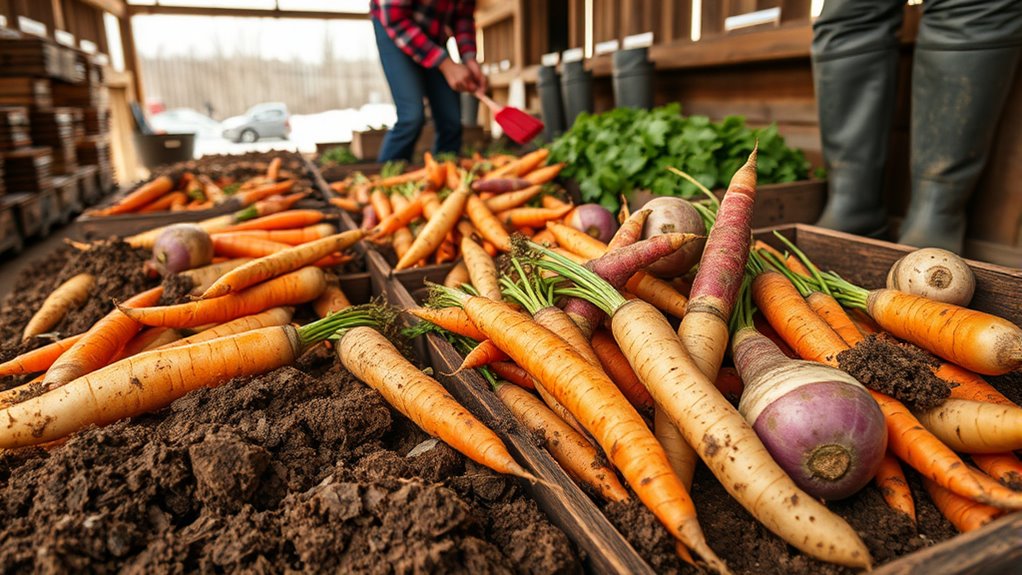

To harvest winter root crops, wait until the tops turn yellow or roots reach your desired size, ideally just before a hard frost and during dry weather. Use gentle tools like a garden fork to loosen soil and carefully lift roots without damage. After harvesting, brush off excess soil without washing, and store in a cool, dark, humid place like a root cellar or fridge, ensuring proper conditions to keep them fresh longer. Keep exploring for more tips on successful curing and storage.
Key Takeaways
- Harvest roots when tops yellow or roots reach desired size, ideally before the first hard frost and in dry weather.
- Loosen soil thoroughly with a fork or spade, remove debris, and handle roots gently to prevent damage.
- Brush off excess soil after harvest and store in cool, dark, humid conditions with good air circulation.
- Avoid washing roots until just before use to prevent excess moisture that promotes rot.
- Regularly inspect stored crops for decay, removing affected items to prolong shelf life.
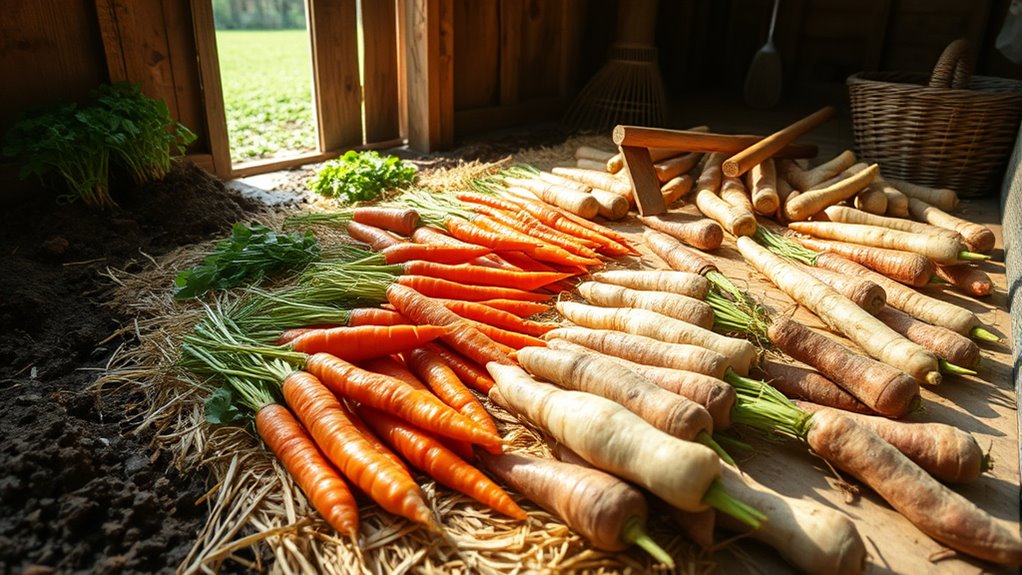
Have you ever wondered when and how to harvest winter root crops at their peak flavor? Timing is essential because harvesting too early can mean underdeveloped roots, while waiting too long risks crop damage from frost or rot. Generally, root crops like carrots, parsnips, turnips, and beets are ready when their tops begin to yellow and die back or when roots reach a desirable size. To get the best flavor and texture, you should plan to harvest during dry weather, as excessive moisture can make the crop more prone to spoilage. Keep an eye on weather forecasts and aim to harvest just before the first hard frost, which can damage the roots and compromise their storage life. Proper soil preparation is fundamental in ensuring a smooth harvest process. Before planting, you should loosen the soil well and remove rocks, debris, or compacted patches. This creates an easy environment for roots to grow straight and develop evenly. Enriching the soil with organic matter like compost improves drainage and provides nutrients, resulting in healthier, tastier roots. During harvest, gentle techniques are best—using a garden fork or a spade to loosen the soil around the crop minimizes root damage. Carefully lift the roots, supporting them to prevent breakage, especially for crops like carrots and parsnips that can be delicate. Harvesting too roughly can cause cuts or bruises, which hasten spoilage and reduce storage life. Additionally, selecting the right soil conditions can significantly impact the ease of harvest and the quality of the roots. Once you’ve harvested your winter root crops, proper storage techniques are essential to maintain their freshness and flavor. After pulling them from the ground, brush off excess soil but avoid washing them until just before use, as moisture can promote rot during storage. Store roots in a cool, dark, and humid environment—like a root cellar, basement, or refrigerator crisper drawer—where temperatures stay between 32°F and 40°F (0°C to 4°C). Place them in perforated containers, mesh bags, or shallow wooden boxes to allow proper air circulation. Keep the roots separate from apples or other ethylene-producing fruits, which can accelerate spoilage. Regularly check your stored crops for signs of decay or mold, and remove affected items immediately. Proper storage techniques can extend their shelf life for several months, allowing you to enjoy fresh, flavorful winter root crops well into the season.
Frequently Asked Questions
How Do I Identify When Root Crops Are Fully Mature?
You can tell your root crops are fully mature by checking maturity indicators like size, color, and firmness. For example, carrots should be about the diameter of a pencil, and beets should have a deep color with a firm texture. Keep an eye on the harvest timing—usually after the growing season ends or when they reach the expected size. When these signs appear, it’s time to harvest your crops.
What Are Common Pests That Affect Winter Root Crops?
Like a watchful gardener in a classic tale, you’ll face pests such as root maggots, aphids, and wireworms that threaten your winter crops. To prevent these, practice pest prevention methods like proper crop rotation, which breaks pest cycles, and maintain healthy soil. Keep a close eye on your crops, inspect regularly, and remove infested plants promptly to safeguard your roots and ensure a bountiful harvest.
Can I Harvest Root Crops After a Heavy Frost?
Yes, you can harvest root crops after a heavy frost if they have good frost resistance. The cold actually helps improve their flavor and sweetness. Be sure to carefully lift the crops to avoid damage. After harvesting, cure them properly for ideal crop storage, which involves keeping them in a cool, dark, and humid environment. This process extends their shelf life and keeps them fresh for months.
What Tools Are Best for Digging up Root Vegetables?
You should use garden trowels and digging forks to dig up root vegetables. Garden trowels are perfect for loosening soil around smaller roots, helping you prevent damage. For larger, stubborn roots, a digging fork provides leverage and stability. Gently loosen the soil, lift the roots carefully, and avoid piercing or breaking them. Using the right tools guarantees clean harvests and healthy storage for your winter crops.
How Do I Prevent Root Crops From Cracking During Harvest?
Ever wonder how to keep your root crops from cracking during harvest? Proper soil preparation is key—ensure it’s loose and well-drained, reducing stress on the roots. Also, practice crop rotation to avoid compacted soil and disease buildup, which can weaken roots. Gently loosen the soil around the crop before harvesting, and avoid pulling too hard. These steps help maintain the integrity of your crops, preventing cracks and ensuring a healthy harvest.
Conclusion
As you finish harvesting and curing your winter root crops, remember that patience and care often reveal the sweetest rewards. Just like the roots you’ve carefully nurtured beneath the soil, life’s most meaningful moments often come from quiet perseverance. The coincidence of these humble roots thriving through winter reminds you that growth and resilience often go hand in hand, waiting to surface when the time is right. Trust the process, and enjoy the harvest of your efforts.