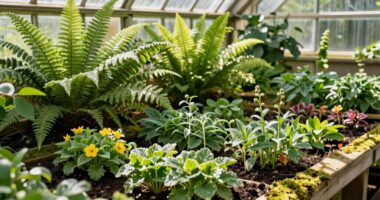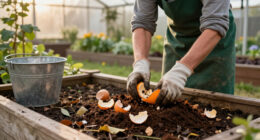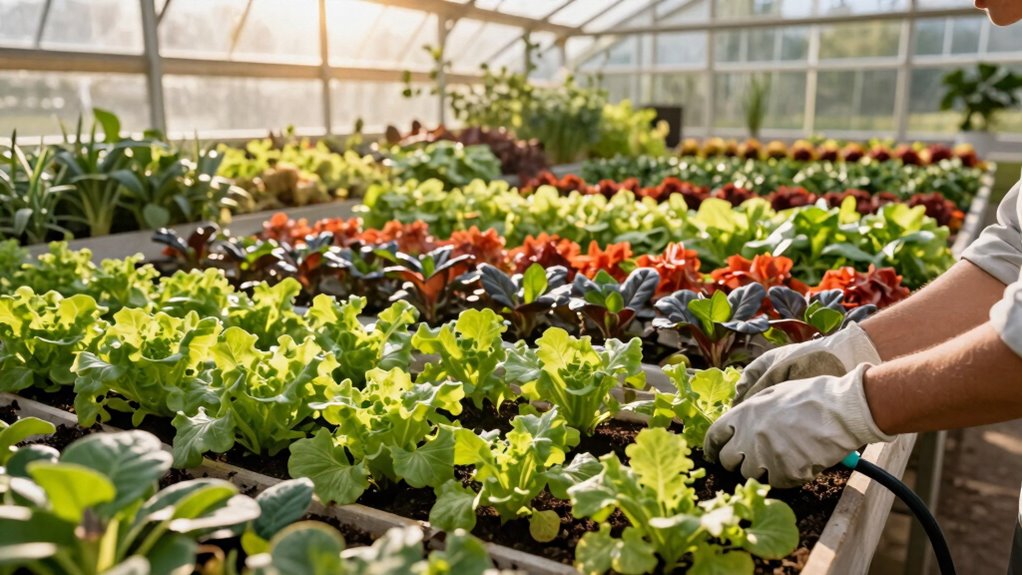

By carefully planning your greenhouse schedule around seasonal cycles, you can avoid common bottlenecks like pest buildup and crop gaps. Rotate crops strategically to maintain soil health and reduce disease risks, while timing plantings to coincide with natural pest declines and ideal growth windows. Starting fast-growing or winter crops during shoulder seasons helps fill gaps and prevent pest establishment. Continue exploring these timing tricks to keep your greenhouse productive and resilient year-round.

Get garden gear delivered free with Prime
- Fast, free delivery on millions of items
- Prime Video, Amazon Music and more included
- Member-only deals all year
Key Takeaways
- Properly aligning planting schedules with seasonal patterns prevents overcrowding and resource shortages, avoiding bottlenecks.
- Using crop rotation and timing strategies maintains soil health and reduces pest buildup, ensuring smooth production flow.
- Starting early crops indoors or in sheltered areas fills gaps and prevents pest establishment during off-peak seasons.
- Maintaining detailed calendars of planting, harvest, and pest cycles allows proactive adjustments to seasonal changes.
- Synchronizing planting and harvesting with seasonal transitions optimizes resource use and minimizes delays.
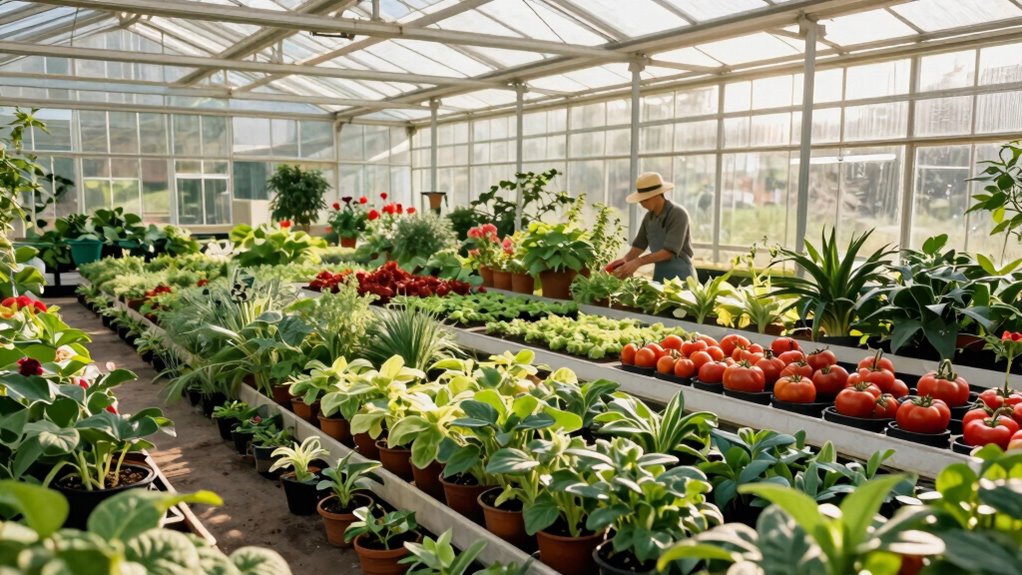
Have you ever wondered how to maximize your greenhouse’s productivity throughout the year? One of the most effective ways is by implementing a seasonal timing trick that helps you avoid bottlenecks in your planting schedule. The key lies in understanding the significance of planning your crop rotation carefully. By rotating crops based on their growth cycles and nutrient needs, you not only improve soil health but also reduce the risk of soil exhaustion. This proactive approach guarantees that your soil remains fertile and productive, allowing you to stagger plantings efficiently. When you plan crop rotation in advance, you can prevent the buildup of pests and diseases specific to certain plant families, which often thrive in the same spot year after year. This strategy minimizes pest management issues and reduces your reliance on chemical controls, making your greenhouse more sustainable.
Timing plays a vital role in this process. By aligning your planting schedule with seasonal changes, you can optimize space and resources, guaranteeing continuous harvests without overwhelming your system. For instance, you might start early crops indoors or in sheltered sections of your greenhouse while waiting for warmer weather to plant others outside. As one crop finishes, you can quickly prepare the bed for the next, avoiding idle periods that could lead to pest infestations or weed overgrowth. Proper timing also helps you manage pests more effectively because you’re not giving them long periods to establish themselves in your greenhouse. You can plan crop rotations so that pest populations decline naturally over time, reducing the need for extensive pest management measures. Additionally, understanding the seasonal patterns of your crops and pests enables you to make more informed decisions about planting and harvesting, further reducing potential bottlenecks. Incorporating sustainable practices into your timing strategy can further enhance soil health and reduce environmental impact. Recognizing these planting windows allows you to better synchronize your efforts and maximize productivity. Moreover, integrating integrated pest management techniques can help you maintain a balanced ecosystem within your greenhouse, further supporting your timing strategy.
Furthermore, by understanding the seasonal patterns of your crops and pests, you can anticipate potential bottlenecks and plan your planting schedule accordingly. For example, planting fast-growing crops during shoulder seasons can fill gaps and prevent pests from settling in. Keeping a detailed calendar that tracks your planting dates, crop rotations, and pest cycles allows you to adapt quickly and keep your greenhouse running smoothly. This approach not only boosts productivity but also creates a more resilient system that can handle unexpected challenges. Incorporating crop planning tools can streamline this process and help you visualize your seasonal strategies more effectively.
Ultimately, this seasonal timing trick isn’t just about avoiding bottlenecks; it’s about creating a well-orchestrated greenhouse operation that maximizes yield while maintaining healthy soil and controlling pests naturally. When you plan your crop rotation and timing carefully, you set yourself up for consistent success throughout the year, making your greenhouse a highly efficient and sustainable space.
greenhouse crop rotation planner
As an affiliate, we earn on qualifying purchases.
As an affiliate, we earn on qualifying purchases.
Frequently Asked Questions
How Do I Determine the Optimal Planting Schedule for My Greenhouse?
You determine the best planting schedule by consulting planting calendars tailored to your crops and climate. Track the growth stages of each plant, noting when they need specific conditions. Adjust your schedule based on this information to guarantee continuous harvests and avoid bottlenecks. By aligning planting times with ideal growth stages, you maximize greenhouse productivity and maintain a steady supply of healthy plants throughout the season.
What Tools Are Best for Tracking Greenhouse Timing Adjustments?
Research shows growth monitoring and climate control tools are your best options for tracking greenhouse timing adjustments. Use digital sensors and data loggers to monitor temperature, humidity, and plant growth stages in real-time. Incorporate climate control systems that automatically adjust conditions based on data insights. These tools help you fine-tune your schedule, prevent bottlenecks, and optimize plant health, ensuring your greenhouse operates smoothly and efficiently.
Can This Timing Trick Work for All Types of Plants?
Yes, this timing trick can work for various plant varieties, but you’ll need to adjust it based on their growth stages. Different plants have unique requirements, so understanding each plant’s specific growth stages helps you optimize timing. By carefully monitoring these stages, you can align your greenhouse schedule, avoid bottlenecks, and guarantee healthy, consistent growth across diverse plant types. Tailoring your approach maximizes success for all your crops.
How Does Weather Variability Affect the Timing Strategy?
Weather variability, like climate unpredictability and temperature fluctuations, can impact your timing strategy considerably. Unexpected cold snaps or heatwaves may delay or speed up plant growth, making your plan less reliable. To stay on track, monitor weather forecasts closely and be ready to adjust your schedule. Flexibility is key, and using protective measures like heaters or shade can help mitigate the effects of unpredictable weather, ensuring your plants thrive.
What Are Common Mistakes to Avoid When Implementing This Trick?
Don’t let your plans stumble like a house of cards. When implementing this trick, avoid rushing plant maturity phases, which can lead to uneven harvests, and neglecting pest management, inviting unwanted trouble. Keep a close eye on growth stages and pest control schedules to maintain smooth operations. Overlooking these details can turn a simple timing tweak into a bottleneck, disrupting your entire greenhouse rhythm. Stay vigilant, and your crops will thank you.
Conclusion
Just like the wise gardener knows when to plant and reap, timing your greenhouse shifts keeps the flow smooth and steady. By mastering this seasonal trick, you avoid bottlenecks that halt your progress, much like the tides that ebb and flow with purpose. Embrace this rhythm, and your greenhouse will flourish in harmony with the seasons, turning chaos into a symphony of growth. Stay attuned to nature’s cues, and success will follow your lead.
Halloween Picks
halloween
As an affiliate, we earn on qualifying purchases.