To boost spring pollination in your greenhouse, actively manage humidity levels to stay between 50% and 70%, using humidifiers or misting systems. Perform hand pollination with a soft brush or gently shake flowers during peak receptivity times, like early morning or late afternoon. Encourage insect pollination by maintaining ideal temperature and humidity. Monitoring your environment regularly ensures success. Keep these tips in mind, and you’ll discover even more ways to improve your crop yields.

Get garden gear delivered free with Prime
- Fast, free delivery on millions of items
- Prime Video, Amazon Music and more included
- Member-only deals all year
Key Takeaways
- Perform pollination during peak flowering, especially in early morning or late afternoon when flowers are most receptive.
- Maintain greenhouse humidity between 50% and 70% to optimize pollen viability and dispersal.
- Use hand pollination with a soft brush or gentle shaking for crops like strawberries and tomatoes.
- Adjust humidifiers or misting systems regularly to keep environmental conditions ideal for pollination.
- Monitor environmental factors closely and record results to refine pollination practices and improve crop yields.
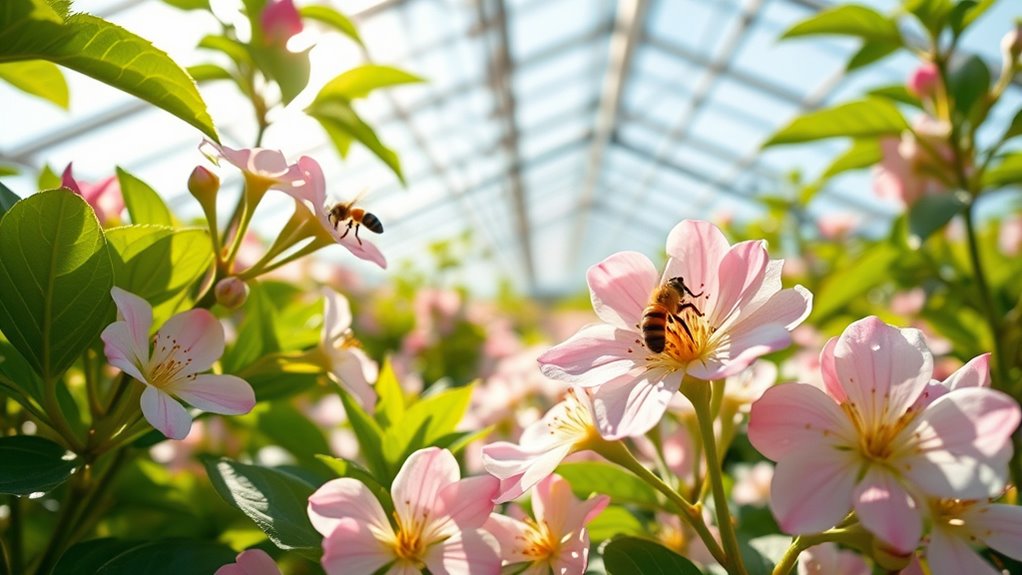
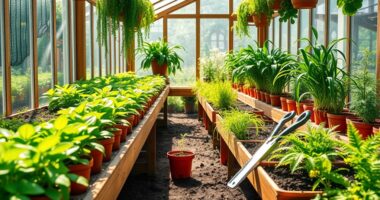
Are you prepared to boost your greenhouse crop yields this spring? One of the most critical steps is ensuring effective pollination. The right pollination techniques can significantly improve fruit set and quality, but it requires more than just leaving flowers to chance. You need to actively manage the environment and employ specific strategies to maximize pollination success. First, understanding how greenhouse humidity influences pollination is essential. High humidity levels can hinder pollen dispersal and reduce pollen viability, while low humidity can cause pollen to dry out too quickly. You should aim for ideal humidity levels—generally between 50% and 70%—to create a balanced environment where pollen can transfer effectively. Using humidifiers or misting systems can help maintain this perfect range, especially during dry spells or if your greenhouse experiences fluctuating conditions. Maintaining optimal pollination conditions is crucial for success.
In addition to controlling humidity, you should incorporate pollination techniques tailored to your crop. For example, hand pollination with a soft brush or gentle shaking can be effective for crops like strawberries or tomatoes. This manual method ensures that pollen reaches the stigma directly, especially when natural pollinators like bees are scarce or ineffective inside the greenhouse. Mechanical pollinators, such as vibrators or oscillating devices, can also be useful for larger setups, providing consistent pollination without exhausting your labor force. If you’re growing crops that benefit from insect pollination, consider introducing or encouraging beneficial insects like bees or bumblebees. Ensuring the greenhouse environment is inviting for these pollinators includes managing temperature, humidity, and providing suitable nesting sites.
Timing is also vital for successful pollination. You should perform pollination activities during the peak flowering period when flowers are most receptive. For crops like cucumbers or melons, that might mean early morning or late afternoon when humidity levels are naturally higher and pollen is more viable. Keep a close eye on flowering stages and adjust your pollination efforts accordingly. When combined with proper greenhouse humidity management, your pollination techniques will become more effective, leading to better fruit development and higher yields. Regularly monitoring and adjusting your environment can dramatically improve pollination success rates.
Finally, monitor your greenhouse environment regularly. Use hygrometers to check humidity levels and adjust your systems as needed. Keep records of your pollination practices and results to refine your approach over time. By actively managing greenhouse humidity and applying targeted pollination techniques, you’ll create ideal conditions for successful pollination, ensuring a productive spring season. With consistent effort and attention to detail, you’ll see improved crop quality and a more bountiful harvest.
As an affiliate, we earn on qualifying purchases.
Frequently Asked Questions
What Are Common Signs of Poor Pollination in Greenhouse Crops?
If you notice poor pollination, you’ll see fewer fruit sets, deformed produce, or empty flowers, which are clear pollination indicators. These signs imply your crop yield might suffer because pollination isn’t happening effectively. You should check if your pollination methods are working properly, like using manual pollination or enhancing airflow. Addressing these issues promptly helps ensure better pollination and maximizes your crop yield.
How Do Temperature Fluctuations Affect Greenhouse Pollination?
Temperature fluctuations cause temperature stress, which can disrupt your greenhouse pollination process. Sudden changes in temperature may delay or advance pollination timing, leading to poor fruit set. To prevent this, you should maintain a stable temperature environment, especially during critical pollination periods. Keeping temperatures consistent helps guarantee ideal pollination conditions, resulting in healthier crops and better yields. Monitoring and adjusting your greenhouse climate is key to successful pollination.
Can Natural Pollinators Be Used Effectively Indoors?
Can natural pollinators effectively work indoors? It’s unlikely, since indoor environments lack the open space and natural conditions they thrive in. Instead, you should consider indoor bee alternatives like bumblebees or using pollination technology advancements such as hand pollination tools and automated systems. These methods can improve pollination efficiency and crop yields, making them better suited for greenhouse settings where natural pollinators struggle to reach.
What Are the Risks of Over-Pollination in Greenhouse Crops?
You risk pollination overload if you don’t control pollination levels, which can lead to crop yield reduction. Too much pollination causes excessive seed production or malformed fruits, wasting resources and reducing overall quality. To avoid this, monitor your plants closely, limit pollination when necessary, and guarantee balanced pollination to optimize fruit set without overwhelming your crops. Proper management helps maintain healthy, high-yielding greenhouse crops.
How Can I Troubleshoot Pollination Failures During Early Spring?
To troubleshoot pollination failures during early spring, first check your humidity control; low humidity can hinder pollen transfer. Make certain you’re timing pollination when flowers are receptive, usually in the morning or early afternoon. If pollination doesn’t occur naturally, try hand pollination or introduce gentle airflow to mimic natural conditions. Regularly monitor environmental factors like temperature and humidity to optimize pollination success and prevent future failures.
Conclusion
Think of pollination as the heartbeat of your greenhouse’s success. When you follow these tips, you’re effectively tuning into nature’s rhythm, ensuring your crops thrive and flourish. With each careful step, you’re planting the seeds for a bountiful harvest, like a conductor guiding an orchestra to harmony. Keep these techniques in mind, stay attentive, and watch your greenhouse transform into a vibrant symphony of blooming life. Your diligent efforts will reap the sweetest rewards.
Halloween Picks
halloween
As an affiliate, we earn on qualifying purchases.