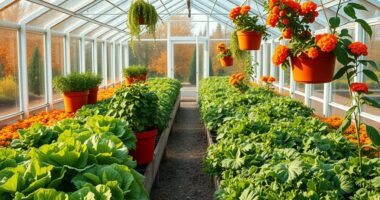

To protect heat-sensitive crops during summer, use shade cloths that block 50-70% of sunlight or create natural shade with taller intercropped plants. Time watering early in the morning or late evening, and employ mulching to retain soil moisture and moderate temperature. Combining shade structures with efficient irrigation and selecting heat-tolerant varieties can boost resilience. Keep exploring for more ways to keep your crops cooler and healthier during hot weather.
Key Takeaways
- Use shade cloths to block 50-70% of sunlight and reduce canopy and soil temperatures.
- Implement natural shading through intercropping with taller plants to protect sensitive crops.
- Mulch and maintain consistent soil moisture with drip irrigation to prevent drought stress.
- Schedule watering during cooler parts of the day to improve water efficiency and minimize heat stress.
- Select heat-tolerant crop varieties and consider reflective coatings to enhance resilience during hot weather.
When summer temperatures soar, heat-sensitive crops can struggle to thrive without proper shade strategies in place. High temperatures increase the risk of drought stress, which can severely impact your crops’ growth and yields. To prevent this, you need to implement effective drought stress prevention methods combined with crop cooling techniques. These approaches help maintain ideal conditions and safeguard your plants from the damaging effects of heat and water scarcity.
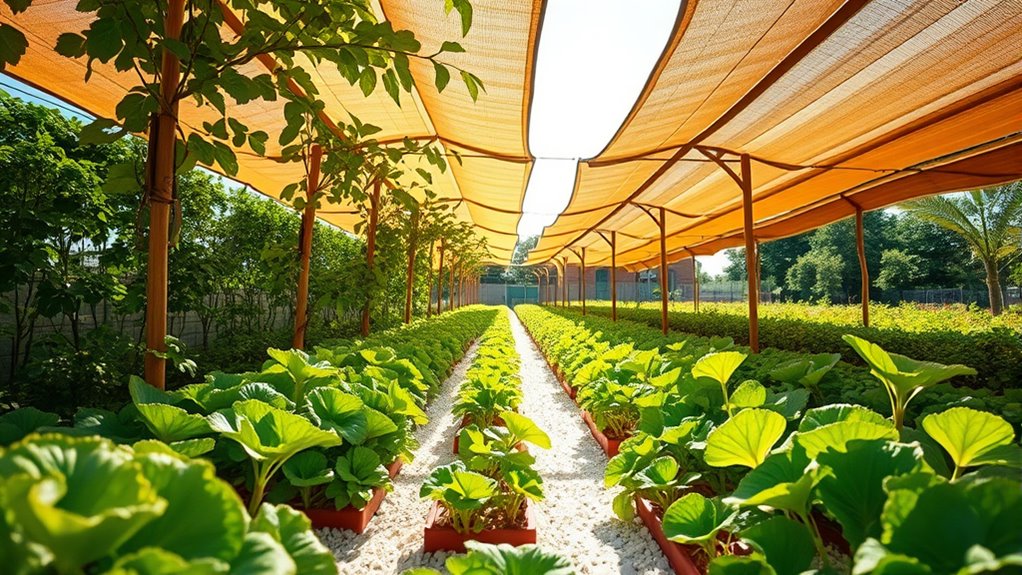
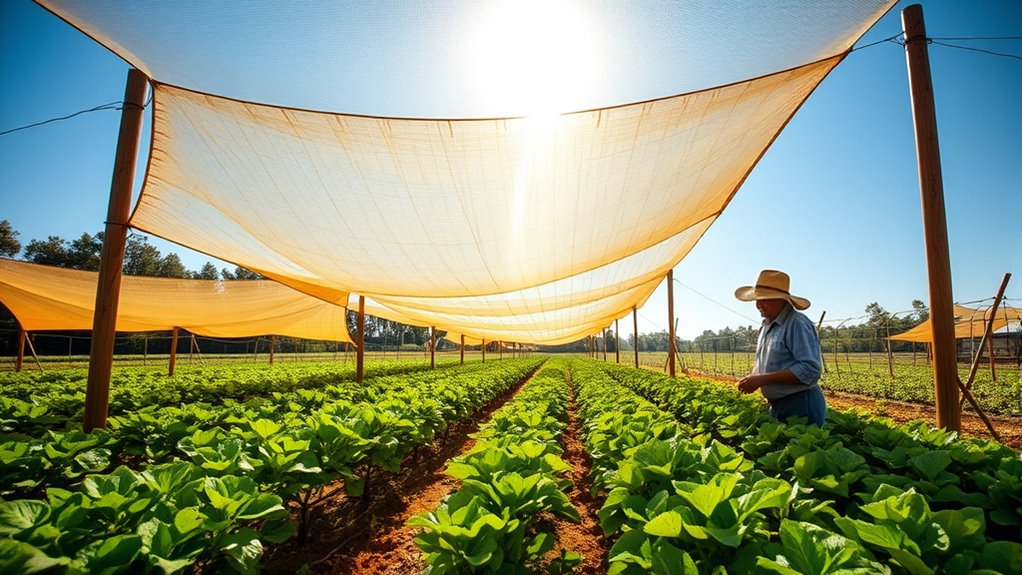
Start by evaluating your field’s specific needs. Understand which crops are most vulnerable to heat and drought conditions. Once identified, consider using shade structures like shade cloths, which can block up to 50-70% of sunlight, reducing the heat load on your plants. Installing shade cloths over rows or entire sections can greatly lower soil and canopy temperatures, providing immediate relief during peak heat hours. This simple crop cooling technique prevents heat stress from causing cellular damage or stunted growth.
Evaluate your field’s needs and use shade cloths to lower soil and canopy temperatures during peak heat.
In addition to physical shade, you can utilize strategic planting techniques. For example, intercropping with taller, drought-tolerant plants can provide natural shade for more sensitive crops. Mulching is another effective method; applying organic or plastic mulch helps retain soil moisture, reducing water loss through evaporation. This not only prevents drought stress but also stabilizes soil temperature, creating a cooler environment for roots. Maintaining consistent soil moisture levels is crucial; consider drip irrigation or soaker hoses that deliver water directly to the roots, minimizing waste and ensuring your crops stay hydrated during heatwaves.
Timing your watering schedules to align with cooler parts of the day, such as early mornings or late evenings, enhances drought stress prevention. This approach ensures your crops absorb more water and reduces heat-induced transpiration. Additionally, incorporating crop varieties bred for heat tolerance can further support your efforts. These varieties often have traits like deeper root systems or increased leaf reflectivity, which help manage heat buildup. Introducing heat-tolerant waxes or coatings can also help reflect sunlight and reduce heat absorption in sensitive plant tissues.
Combining these strategies creates a thorough system for managing heat stress. Proper shading, irrigation, mulching, and crop selection work together to improve your crops’ resilience against summer heat. Remember, proactive measures are key; the earlier you implement these crop cooling techniques, the better you’ll protect your plants from drought stress and heat damage. By doing so, you not only improve crop health but also boost your overall productivity during the hottest months. Staying vigilant and adaptable will ensure your heat-sensitive crops endure through summer’s toughest days, maintaining healthy growth and maximizing your harvest potential.
Frequently Asked Questions
How Do Shade Strategies Differ Between Crop Types?
You should tailor shade strategies based on crop types by considering their canopy management needs and sensitivity to heat. For leafy greens, use lighter shade fabrics that allow airflow, while fruiting crops might require denser shade fabrics for more protection. Different shade fabric types, like woven or mesh, offer varying light reduction levels. Adjusting these elements helps optimize growth and protect your crops during hot summer days effectively.
What Are Cost-Effective Shading Options for Small Farms?
Imagine you’re in a time machine, but instead of distant past, you find affordable options today. For small farms, cost-effective shading options include using shade fabric or shade netting, which are both affordable and easy to install. These materials help reduce heat stress on crops without breaking the bank. You can stretch shade netting over frames or drape shade fabric directly, giving your heat-sensitive crops a cooler, more comfortable environment.
How Does Shading Impact Crop Yield and Quality?
Shading improves crop yield and quality by enhancing photosynthesis, as it reduces stress from excessive heat and light. It also helps maintain more consistent moisture levels, leading to healthier plants. Additionally, shading can support pest management strategies by creating a less favorable environment for pests. This combined effect results in better crop development, higher yields, and improved quality, making shading a smart, cost-effective choice for heat-sensitive crops.
Are There Specific Shade Structures Suitable for Organic Farming?
You can use shade cloths and organic nets for organic farming, as they’re suitable options. Shade cloths offer customizable shading levels, protecting your crops from intense heat while maintaining organic integrity. Organic nets are made from natural or biodegradable materials, providing effective shade without synthetic chemicals. Both structures help reduce heat stress, improve crop quality, and support organic practices, making them excellent choices for heat-sensitive crops in your sustainable farming system.
How to Monitor Microclimates Under Shading Covers?
Like a vigilant captain steering through fog, you should monitor microclimates under shading covers with microclimate sensors placed at crop canopy level. Use shade cloths with breathable fabrics to maintain airflow. Regularly check sensor data to track temperature, humidity, and light levels, adjusting shading as needed. This proactive approach helps you guarantee ideal conditions for heat-sensitive crops, preventing stress and promoting healthy growth.
Conclusion
By implementing these summer shade strategies, you’re shielding your heat-sensitive crops like a gentle umbrella in a storm. Think of your plants as delicate dancers, gracefully gliding through the scorching sun with your protective efforts as their cool, calming breeze. With a little planning and care, you’ll keep your crops thriving, turning the blazing summer heat into just another passing cloud in their vibrant growth journey. Your garden’s success depends on your shade’s tender embrace—so nurture it wisely.