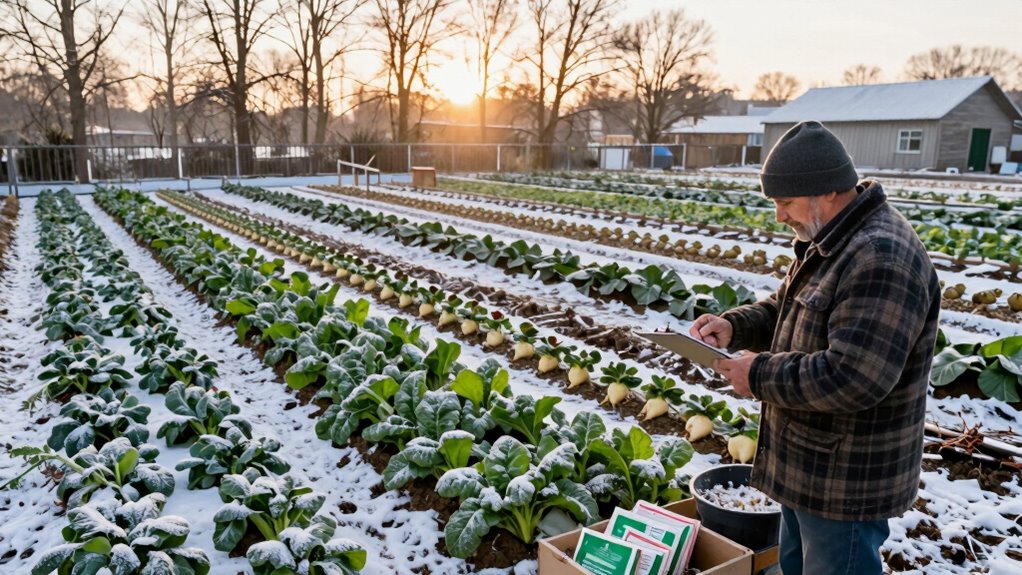
The winter crop planning habit that pays off every year involves using the season to test soil, incorporate organic matter, and develop a detailed crop calendar. By selecting pest-resistant varieties, rotating crops, and planning your planting schedule in advance, you set a foundation for healthier soil and better yields. Staying disciplined with this winter routine helps prevent pests, improve soil health, and optimize harvests. Keep going, and you’ll discover how consistent winter prep can transform your farm’s success.

Get garden gear delivered free with Prime
- Fast, free delivery on millions of items
- Prime Video, Amazon Music and more included
- Member-only deals all year
Key Takeaways
- Conduct thorough soil testing and amendments during winter to ensure nutrient-rich soil for the upcoming planting season.
- Develop a detailed crop rotation and planting schedule to prevent pest cycles and optimize yields.
- Research and select pest-resistant crop varieties tailored to local conditions to reduce pesticide reliance.
- Use winter months to plan long-term sustainability strategies focusing on soil health and ecosystem balance.
- Keep meticulous records of soil conditions, amendments, and pest management plans to inform future seasons.
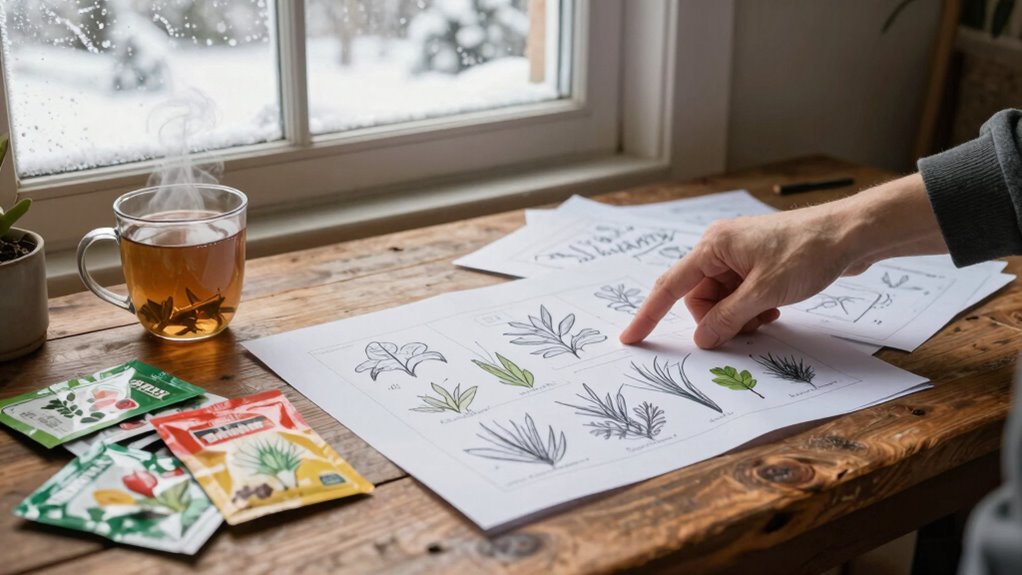
Winter is the perfect time to start planning your next crop season, guaranteeing you make the most of the colder months. During this downtime, you can focus on evaluating your soil health and developing strategies for pest management. Healthy soil is the foundation of a successful crop, so use this time to test your soil’s nutrient levels and make any necessary amendments. Incorporate organic matter or compost to improve soil structure and fertility, which will lead to better yields come spring. By taking these steps now, you’re setting your soil up for long-term productivity, reducing the need for chemical inputs and promoting sustainable farming practices. Additionally, researching biodiversity and crop diversity can help you select resilient plant varieties that support ecosystem health on your farm.
Use winter to assess soil health and add organic matter for better spring yields and sustainable farming.
As you plan, consider crop rotation to break pest and disease cycles. Rotating crops not only manages pests naturally but also helps maintain soil health by preventing nutrient depletion. Think about which crops you want to grow, and plan a rotation schedule that minimizes pest buildup. For example, planting legumes after heavy feeders like corn can replenish nitrogen in the soil, while avoiding planting the same family of crops consecutively can reduce pest pressure. This proactive approach makes pest management easier throughout the season, saving you time and resources later on. Incorporating soil testing can further refine your crop choices and rotations for optimal results.
Understanding soil health is essential to developing effective crop rotation and pest management strategies, ensuring your soil remains productive year after year.
Use winter to research resistant varieties and pest-resistant seeds. Selecting the right crops can considerably cut down on pesticide use and pest-related losses. Invest time in understanding local pest patterns and how different varieties respond to them. This knowledge allows you to choose crops that are naturally more resistant, simplifying pest management strategies and promoting healthier plants. Implementing these practices now ensures you’re not caught off guard when pests become active again in spring.
Planning your crop calendar during winter also helps you visualize planting windows, harvest times, and potential overlaps. By doing so, you can tailor your soil management practices to each crop’s specific needs, making sure your soil remains healthy and balanced throughout the season. Keep detailed records of your soil tests, amendments, and pest management strategies, so you can refine your approach each year. This habit of winter planning keeps you ahead of problems and allows you to allocate resources efficiently.
In essence, cultivating a winter crop planning habit isn’t just about scheduling; it’s about setting a solid foundation for a productive and sustainable crop season. By prioritizing soil health and pest management during the colder months, you’re investing in the long-term success of your farm. When spring arrives, you’ll be ready to plant with confidence, knowing you’ve prepared your soil and pest control measures effectively. This disciplined approach ensures that each year, your crops grow stronger, healthier, and more resilient, making your farming efforts more rewarding and profitable.
As an affiliate, we earn on qualifying purchases.
Frequently Asked Questions
How Early Should I Start Winter Crop Planning Each Year?
You should start winter crop planning at least 3 to 4 months before your last expected frost date. This allows you to take into account crop rotation and soil preparation, ensuring your soil stays healthy and productive. Use this time to select suitable winter crops, prepare your soil with compost or amendments, and plan your planting schedule. Early planning helps you maximize yields and maintain a resilient, sustainable garden year-round.
What Tools Are Best for Winter Crop Planning?
You should use tools like seed catalogs, garden planners, and digital apps for winter crop planning. Incorporate indoor germination techniques to start seedlings early, and plan soil preparation to make sure your soil is ready when planting begins. Using a calendar or spreadsheet helps track planting dates and crop rotation. Combining these tools enables you to organize your winter crop plan efficiently, maximizing your harvest and minimizing surprises during the growing season.
How Do I Choose the Right Winter Crops for My Region?
Choosing the right winter crops for your region isn’t rocket science, but it might feel like it! Start by researching local crop varieties that thrive in your climate. Then, focus on soil preparation—amending and testing your soil to guarantee it’s ready. Opt for hardy varieties suited to your season, and you’ll have a thriving winter garden instead of a frostbitten disaster. It’s simple, really—just good planning!
How Can I Extend the Growing Season Effectively?
To extend your growing season effectively, focus on season extension techniques like using row covers, cold frames, or hoop houses to protect crops from harsh weather. Plan for crop succession by planting quick-maturing varieties after early harvests, filling gaps in your garden. Stagger planting times and choose hardy crops to maximize productivity. These strategies help you make the most of your garden’s potential throughout the colder months.
What Are Common Mistakes to Avoid in Winter Crop Planning?
Like sailing into fog, winter crop planning can be tricky if you don’t avoid common mistakes. Don’t neglect crop rotation or skip soil testing, as these are essential for healthy soil and robust yields. Overlooking your crop diversity or planting too early can set you back. Be mindful of these pitfalls, and you’ll steer your winter garden toward success, reaping rewards year after year.
Conclusion
By embracing this winter crop planning habit, you’re creating a legacy as timeless as the seasons themselves. Like the steady hand of a master painter, your careful preparation guarantees a vibrant and bountiful harvest year after year. Remember, the secrets of the most successful gardeners aren’t just in their seeds but in their planning. Start now, and watch your efforts blossom into a tradition that pays off for generations to come.
Halloween Picks
halloween
As an affiliate, we earn on qualifying purchases.