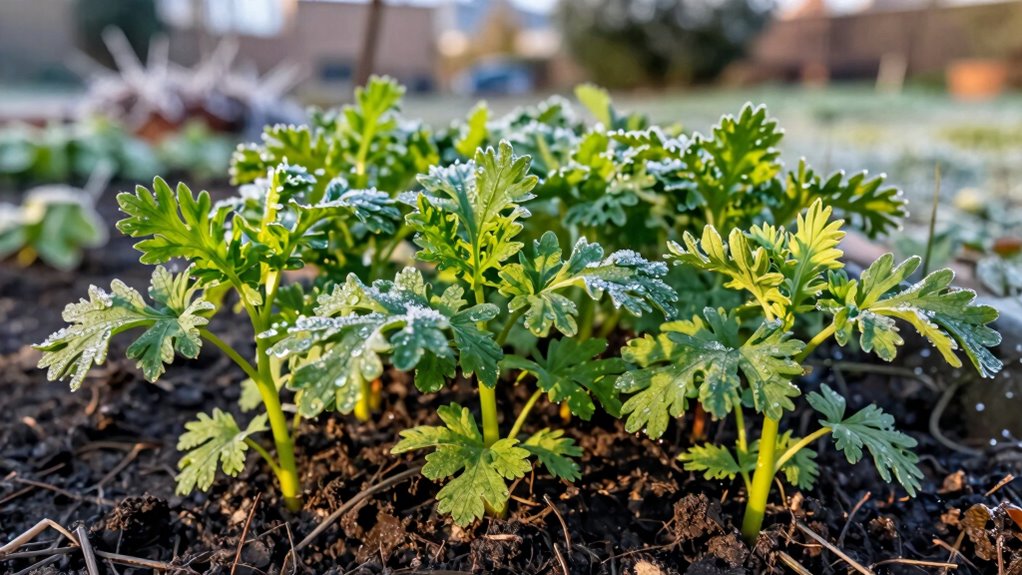

To stop weak, leggy seedlings this winter, guarantee you provide enough bright, full-spectrum light, close to 2-4 inches above your plants. Use grow lights with timers set for 16 hours a day, and adjust their position as seedlings grow to prevent stretching. Reflective surfaces like Mylar can boost light efficiency, while gradual outdoor exposure strengthens plants for acclimatization. For more tips on creating ideal light conditions and avoiding common mistakes, keep exploring this strategy.

Get garden gear delivered free with Prime
- Fast, free delivery on millions of items
- Prime Video, Amazon Music and more included
- Member-only deals all year
Key Takeaways
- Provide consistent, adequate light using properly positioned grow lights to prevent seedlings from stretching toward insufficient natural light.
- Use reflective surfaces like Mylar to maximize light distribution and reduce legginess.
- Maintain proper light distance (2-4 inches) and duration (16 hours daily) to promote compact, healthy growth.
- Ensure soil moisture is consistent and not waterlogged to prevent stress-induced elongation.
- Select full-spectrum or blue-enhanced LED grow lights to support sturdy, non-leggy seedlings during winter.
full spectrum LED grow lights for seedlings
As an affiliate, we earn on qualifying purchases.
As an affiliate, we earn on qualifying purchases.
Why Do Seedlings Become Leggy in Winter?
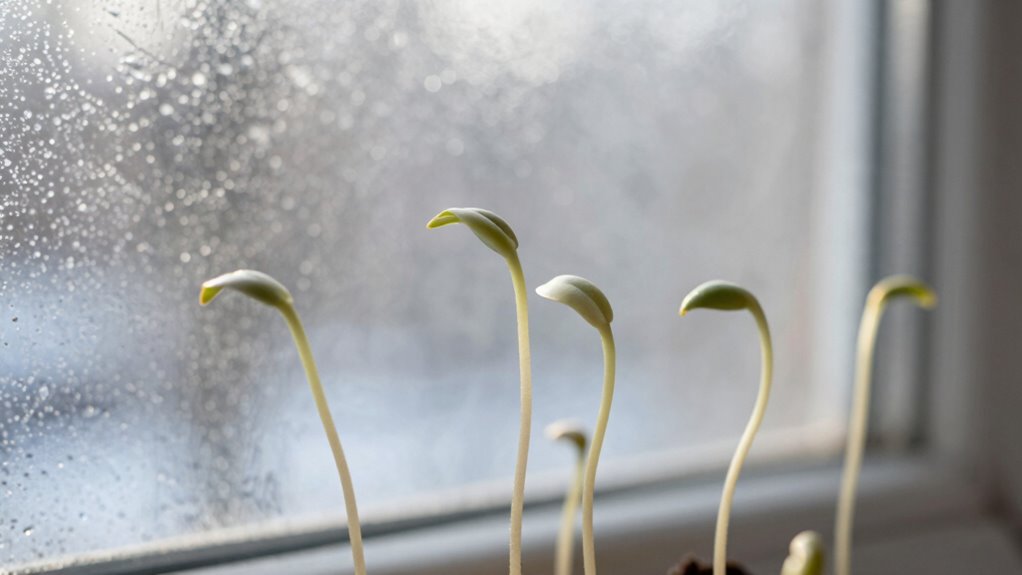
During winter, seedlings often become leggy because they stretch toward available light, trying to maximize their exposure. When light levels drop, your seedlings sense the need for more energy and grow taller and thinner. But this stretching can weaken their root health, making them more susceptible to damage. Soil moisture also plays a role; uneven or insufficient watering stresses seedlings, prompting them to grow elongated stems in search of better conditions. Healthy roots are essential for sturdy growth, yet winter’s lower temperatures and light can impair root development, compounding the leggy issue. To prevent this, guarantee your soil stays consistently moist but not waterlogged, and provide adequate light to promote strong, compact growth from the start. Additionally, understanding vital survival gear can help you be prepared for unexpected weather changes that might affect your gardening conditions. Proper light management is key to maintaining healthy seedlings during winter months, ensuring they develop into strong, resilient plants. Regularly monitoring soil conditions helps maintain optimal moisture levels and encourages balanced growth. Incorporating creative storytelling for branding principles can also help motivate you to develop effective strategies for winter gardening challenges. Being aware of plant stress responses can further guide you in providing the best care for your seedlings during colder months.
How to Recognize Weak or Leggy Seedlings
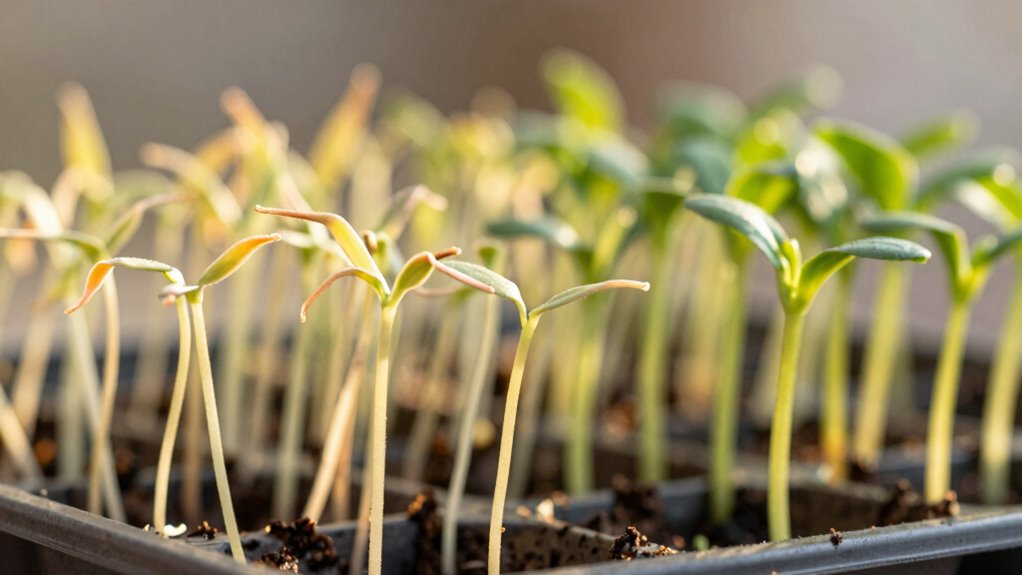
You can spot weak or leggy seedlings by their thin, spindly stems that stretch toward the light. Look for pale or yellow leaves, which indicate they’re not getting enough nutrients or proper light. Additionally, if your seedlings show stunted growth, it’s a clear sign they need better care. Ensuring your seedlings are in a well-organized space can help prevent these issues and promote healthy growth. Proper light management is essential for strong, sturdy seedlings and can make a significant difference in their development. Paying attention to current trends in plant care can also provide innovative techniques to support robust growth during the winter months. Incorporating natural light into your space can significantly enhance seedling development and overall vitality, especially when supplemented with outdoor transformation techniques to optimize light exposure.
Thin, Leggy Stems
Leggy seedlings often appear weak and spindly, with stems that seem stretched and thin compared to healthy, stocky plants. This condition usually results from insufficient seedling nutrition and poor soil moisture management. When seedlings don’t get enough nutrients, they struggle to develop strong stems, causing them to stretch toward the light, becoming leggy. Additionally, inconsistent soil moisture can stress young plants, making them weak and unable to support their own weight. To recognize thin, leggy stems, look for plants that are taller than necessary with elongated, fragile stems that wobble easily. Proper seedling nutrition, including balanced fertilization, and maintaining consistent soil moisture levels help promote sturdy, compact growth and prevent these weak, stretched stems from developing. Ensuring optimal conditions is similar to how air fryer accessories can enhance cooking results, providing the right environment for success.
Pale or Yellow Leaves
Pale or yellow leaves are common signs that seedlings are struggling and may be weak or leggy. This discoloration often indicates poor seedling nutrition, especially a lack of essential nutrients like nitrogen. When seedlings don’t get enough light, they stretch and become leggy, making them more vulnerable to pests and diseases. To improve their health, guarantee your seedlings receive adequate, balanced seedling nutrition through proper fertilization. Consistent pest prevention is also vital, as pests can further weaken weakened, pale leaves. Adjust your lighting to prevent stretching and provide the right spectrum of light. Keeping soil moist but not waterlogged supports healthy growth. Addressing these issues early helps strengthen your seedlings, reducing their susceptibility to pests and improving overall resilience. Additionally, understanding how to detect grease detection and other common stains can help maintain a clean growing environment, free from pests and contamination. Recognizing Indonesian decor masks as cultural artifacts can inspire diverse and authentic decor choices that support a harmonious environment. Proper lighting adjustments can significantly enhance seedling development and prevent leggy growth. Furthermore, being aware of halal cultural practices can help foster a respectful and inclusive approach to gardening and cultivation traditions. Regularly monitoring your seedlings’ health is essential for early intervention and sustained growth, especially when managing plant health signs.
Stunted Growth Signs
Weak or leggy seedlings often exhibit visible signs of stunted growth, indicating they aren’t developing as they should. You might notice their stems are thin, weak, or overly elongated, struggling to support themselves. These symptoms often result from poor seedling nutrition or inadequate soil drainage, which hampers healthy root development. Recognizing these signs early helps you adapt your care routine. Proper living space design can also create an environment that supports healthy seedling growth. Additionally, understanding plant care principles can guide you in providing the right conditions for robust development.
Choosing the Best Grow Lights for Winter Gardening
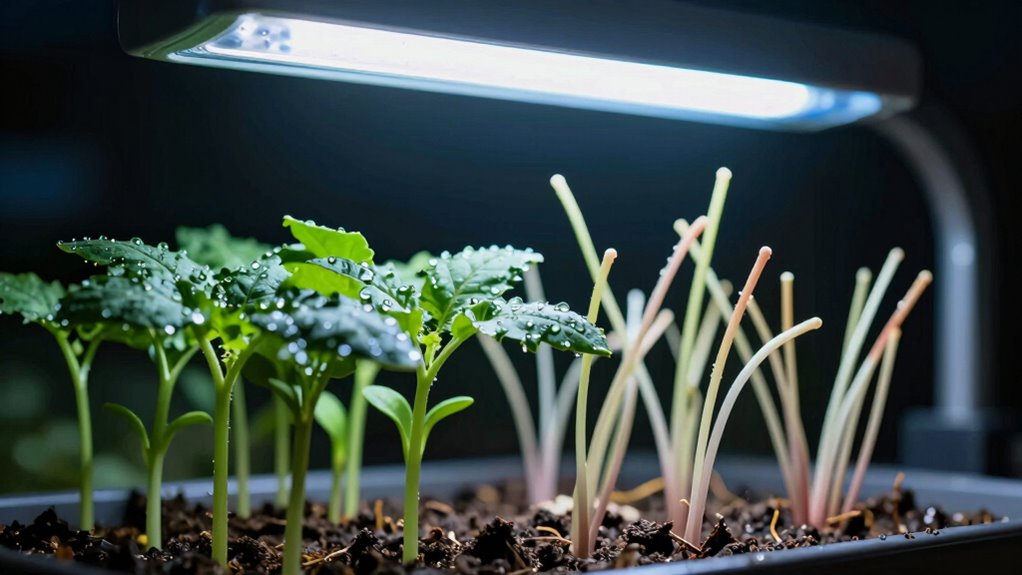
Choosing the right grow lights can make a big difference in your winter gardening success. Focus on lights that optimize the full light spectrum to support healthy seedling growth, especially when natural sunlight is limited. Additionally, energy-efficient options can save you money while providing the necessary light intensity to keep your plants thriving. Incorporating proper light distribution techniques can further enhance plant development and prevent weak, leggy seedlings. Ensuring your lighting setup minimizes light pollution can also improve overall plant health by directing light precisely where it’s needed. Selecting fixtures with adjustable light intensity can help tailor the environment to your seedlings’ specific needs during different growth stages. Understanding battery inverter generator capacity can also be beneficial for powering your grow lights efficiently, especially in areas with inconsistent power supply. Proper planning and understanding lighting requirements are essential to optimize plant growth during the winter months.
Light Spectrum Optimization
Have you ever wondered which light spectrum best supports your seedlings during the darker winter months? The right spectrum is essential for ideal seedling nutrition and healthy growth. Blue light is critical, as it promotes compactness and strong stems, reducing legginess. Red light encourages photosynthesis, boosting leaf development and overall vigor. Combining both blue and red spectrums creates a balanced environment that mimics natural sunlight, even indoors. Keep in mind, soil moisture plays a key role; well-hydrated soil helps seedlings absorb nutrients efficiently, complementing the benefits of proper lighting. Using full-spectrum grow lights ensures your seedlings receive the right wavelengths for healthy development, preventing weak, spindly growth. Additionally, understanding light spectrum can help you tailor your lighting setup for optimal plant health. Tailoring your light spectrum supports robust seedlings that are better prepared for transplanting and growth outside. Proper light spectrum selection also helps in minimizing energy waste and optimizing growth conditions.
Energy Efficiency Benefits
Ever wonder how to maximize your energy savings while keeping your seedlings healthy during winter? Choosing energy-efficient grow lights can make a big difference in your gardening routine. These lights reduce electricity costs and minimize heat output, helping you better manage soil nutrient levels and prevent heat stress on seedlings. To optimize benefits:
- Select LED grow lights—they consume less energy and last longer.
- Adjust light timing to match your seedlings’ needs, reducing unnecessary energy use.
- Use proper light intensity to support seedling transplantation without wasting power.
How to Properly Place and Time Your Grow Lights
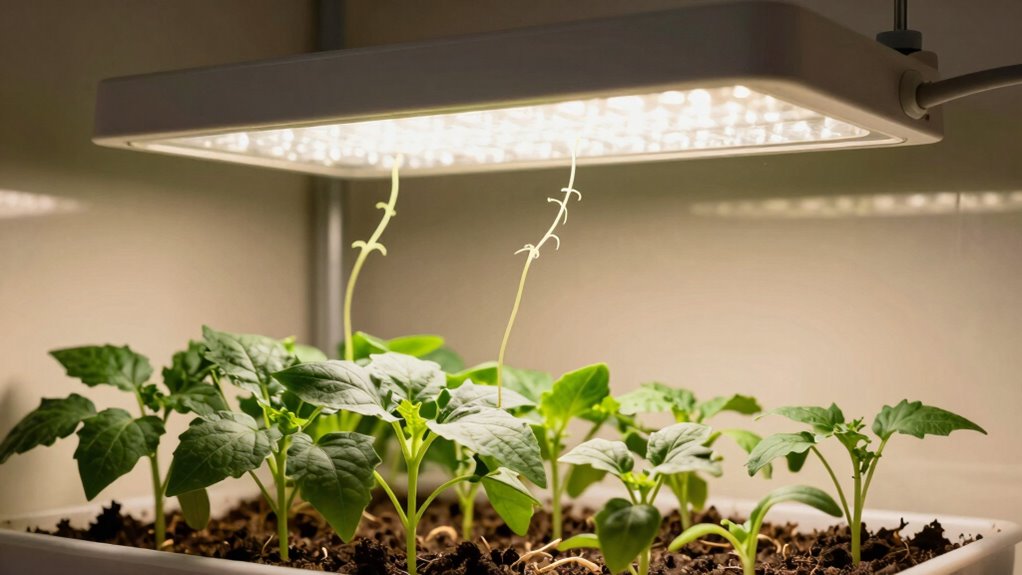
Proper placement and timing of your grow lights are essential for healthy seedling development. Keep lights close enough to prevent leggy growth, typically 2-4 inches above seedlings, adjusting as they grow. Use a timer to guarantee consistent light periods—about 16 hours of light and 8 hours of darkness—to mimic natural conditions. Proper light placement influences plant nutrient absorption and soil moisture retention. Visualize this setup:
| Light Distance | Effect |
|---|---|
| Too close | Leaf burn, dehydration |
| Ideal distance | Healthy growth, soil moisture balance |
| Too far | Weak, leggy seedlings |
| Time of day | Impact |
| Too long | Stress, nutrient imbalance |
| Proper duration | Strong, resilient seedlings |
| Too short | Insufficient growth |
Using Reflective Surfaces to Maximize Light Efficiency
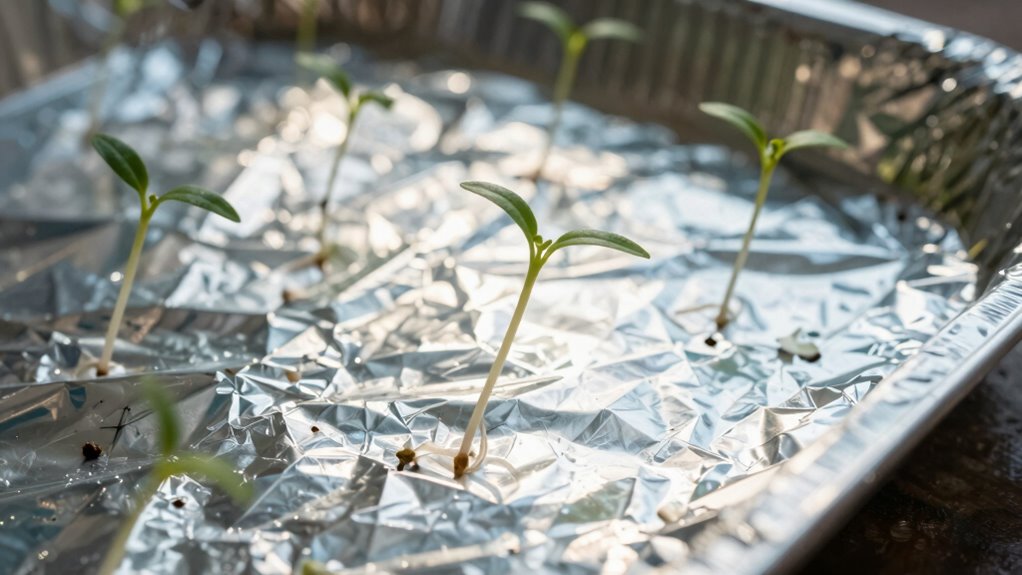
Using reflective surfaces around your seedlings can considerably boost light efficiency by redirecting and amplifying the light that reaches them. These surfaces help improve light diffusion, ensuring even coverage and reducing shadows. To maximize benefits, consider:
- Positioning reflective materials like Mylar or white paint close to the seedlings to bounce light from multiple angles.
- Ensuring surfaces are clean and smooth to prevent uneven light diffusion and maintain consistent reflection.
- Adjusting the height of reflectors as seedlings grow to keep light evenly distributed without causing heat buildup.
How to Adjust Light Intensity as Your Seedlings Grow
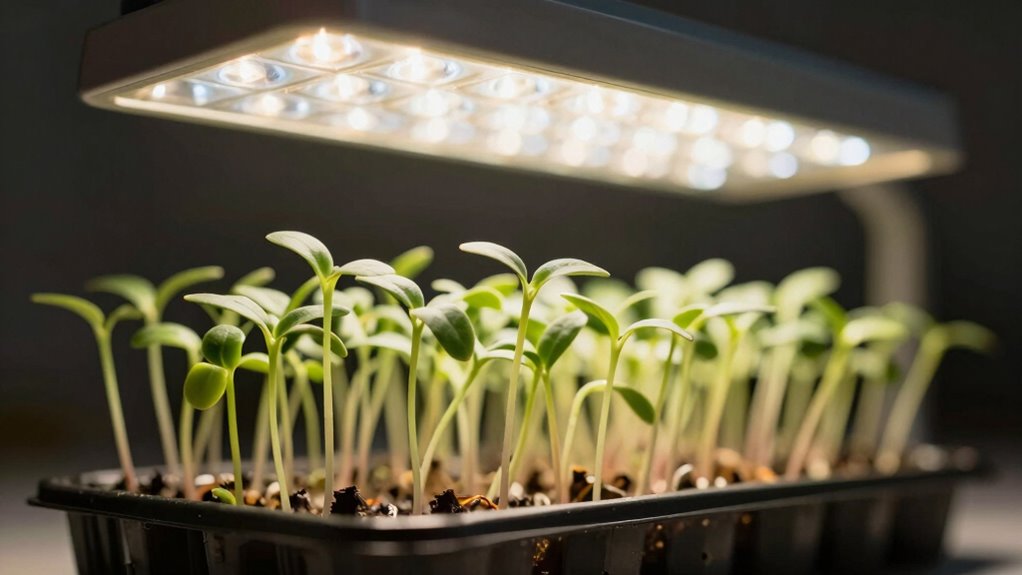
As your seedlings grow, keep an eye on their development to determine if they need more light. You should gradually move the light source closer or increase its intensity to match their increasing needs. Remember to make adjustments slowly to prevent stress or damage to your plants.
Monitor Seedling Growth Rate
Monitoring your seedlings’ growth rate is essential to guarantee they receive the right amount of light as they develop. When seedlings grow steadily, their seedling nutrition and root development improve, leading to healthier plants. Keep an eye on their height, leaf color, and overall vigor. If seedlings stretch or become leggy, they’re not getting enough light. Conversely, if they appear stunted or develop scorched edges, they may be receiving too much. To fine-tune your approach, consider these steps:
- Measure seedling height weekly to track growth trends.
- Observe leaf color for signs of stress or deficiency.
- Adjust light intensity accordingly to promote balanced growth and healthy root development.
Consistent monitoring helps prevent weak, leggy seedlings and guarantees ideal development.
Adjust Light Distance Accordingly
When your seedlings start to grow taller and their leaves expand, it’s crucial to adjust the distance between the light source and the plants. Proper soil preparation sets the foundation, guaranteeing seedlings receive nutrients to grow strong. As they develop, you may need to lower or raise the light to prevent stretching or leggy growth. Keep your watering schedule consistent to avoid stress and promote healthy growth, which influences how close your seedlings can safely get to the light. If seedlings begin to lean or stretch toward the light, move the lamp closer gradually. Conversely, if they seem to scorch or wilt, increase the distance. Regularly monitor their response and adjust accordingly to foster sturdy, compact growth.
Increase Light Intensity Gradually
Once your seedlings have established a healthy stem and leaf growth, gradually increasing the light intensity helps support their development without causing stress. This steady adjustment encourages strong seedling nutrition and reduces the risk of pests that thrive on weak plants. To do this effectively:
- Increase light gradually over a week, avoiding sudden spikes that can cause shock.
- Observe seedlings for signs of stress, such as leaf curling or yellowing.
- Adjust other factors like watering and airflow to complement the increased light, promoting healthy growth and pest prevention.
Supplemental Lighting Techniques and Tools for Stronger Seedlings
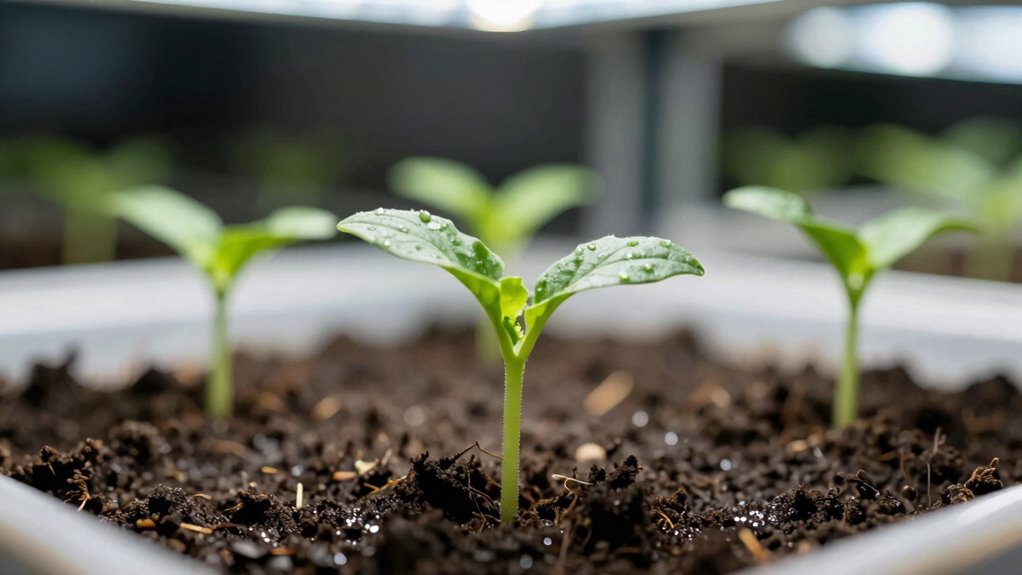
Supplemental lighting is essential for ensuring your seedlings grow strong, especially when natural sunlight falls short. Proper tools and techniques can boost seedling nutrition and prevent legginess. Use adjustable grow lights to control intensity and duration, mimicking natural sunlight. Position lights close enough to avoid stretching but not so close that they cause heat stress. Maintain consistent soil moisture to support healthy growth and optimize nutrient uptake. Here’s a quick comparison:
| Lighting Type | Best Use |
|---|---|
| Fluorescent Lights | Cost-effective, good for beginners |
| LED Grow Lights | Energy-efficient, customizable spectrum |
Choose the right tools based on your setup, and always monitor soil moisture to complement your lighting strategy.
Common Mistakes That Cause Legginess and How to Avoid Them
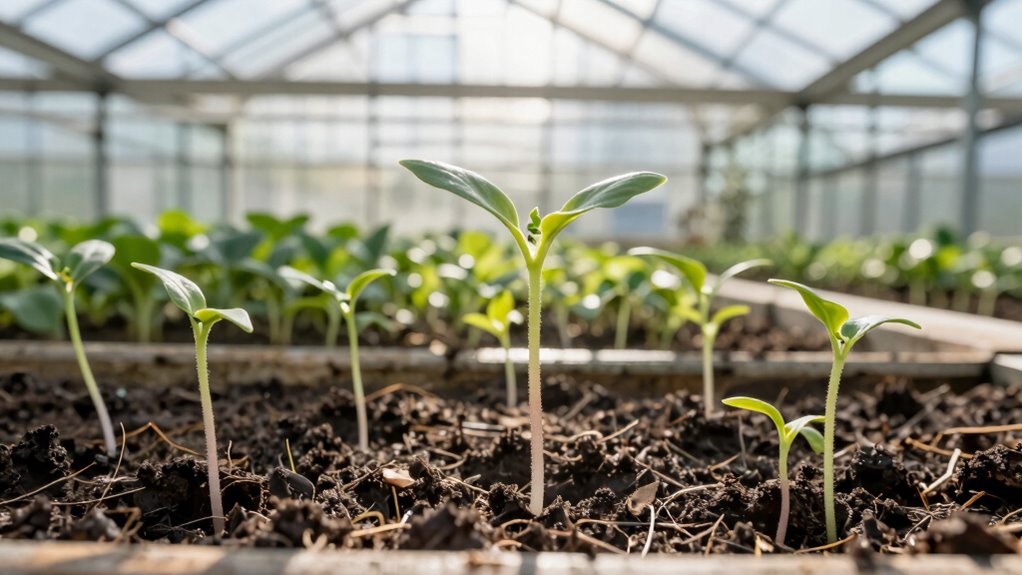
Legginess in seedlings often results from common mistakes that can be easily avoided with proper care. One key error is neglecting seedling nutrition, which stunts healthy growth and causes them to stretch toward light. Another mistake is inconsistent soil moisture—too dry, and seedlings become leggy as they search for water; too wet, and roots struggle to develop. Finally, placing seedlings in poor lighting conditions or far from a light source encourages them to elongate unnaturally. To prevent this, remember:
- Provide balanced seedling nutrition, including essential nutrients.
- Maintain consistent soil moisture to promote strong roots.
- Ensure proper lighting, keeping seedlings close enough to prevent stretch. Avoiding these mistakes helps produce sturdy, healthy seedlings ready for transplanting.
Troubleshooting Your Indoor Lighting Setup
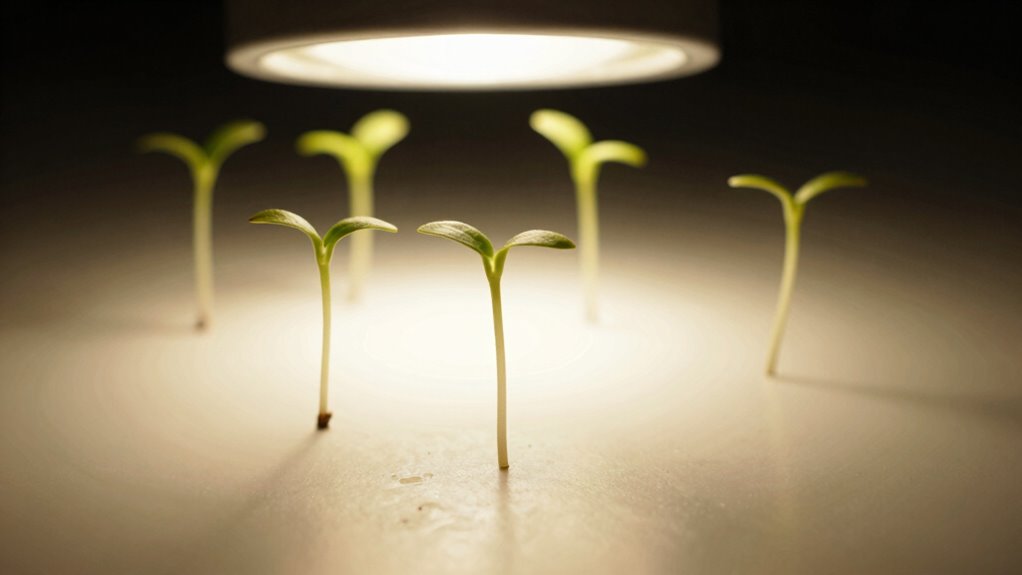
If your seedlings aren’t reaching their full potential, your indoor lighting setup might be the culprit. Insufficient or improperly positioned lights can hinder seedling nutrition and root development, leading to weak, leggy plants. Check that your grow lights are the right type—full-spectrum LEDs or fluorescents work best—and ensure they’re placed close enough without causing heat stress. Keep lights on for 14-16 hours daily to mimic natural sunlight. If seedlings are stretching, it’s a sign they need more light or stronger intensity. Also, avoid shadows and uneven lighting by adjusting the setup regularly. Proper lighting encourages healthy root development and robust seedling growth, so don’t overlook these adjustments in your troubleshooting process.
Transitioning Your Seedlings From Indoor Light to Outdoor Sunlight
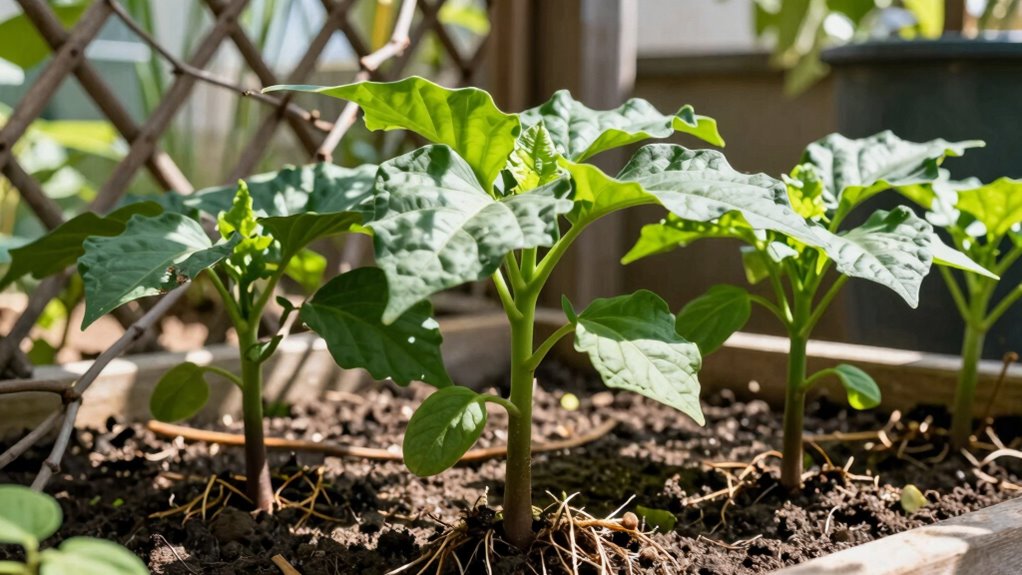
Once your seedlings have grown strong under indoor lights, gradually exposing them to outdoor sunlight helps them adapt safely to natural conditions. Start by placing them outside for a few hours daily, increasing exposure gradually over a week. During this transition, focus on three key points:
- Seedling nutrition: Ensure they’re well-fed with balanced nutrients to support resilience against outdoor stresses.
- Pest prevention: Regularly inspect for pests, as outdoor exposure can invite new threats.
- Sun acclimation: Gradually increasing sunlight prevents sunburn and encourages sturdy, leggy growth.
This step-by-step process helps your seedlings develop stronger stems, better resistance, and healthier growth, setting them up for success in their outdoor environment.
Frequently Asked Questions
What Are the Signs That Seedlings Are Too Weak to Survive?
If your seedlings look fragile and spindly, their seedling strength is weak, and they might not survive. Watch for poor growth indicators like pale, yellowish leaves, and stretched stems reaching for light, which signal they’re too weak. When growth slows considerably or seedlings topple easily, it’s a sign they lack resilience. Address these issues early by adjusting light, watering, and nutrients to boost their growth indicators and overall strength.
How Often Should I Replace or Upgrade My Grow Lights?
Think of your grow lights as your plants’ best friends—they need upgrades to stay vibrant. Replace or upgrade your grow light types every 12 to 18 months to maintain energy efficiency and ideal performance. As technology advances, newer models offer better light spectrum and efficiency, helping your seedlings grow strong. Regular updates ensure your plants get the right light, preventing legginess and encouraging healthy, robust growth.
Can Natural Sunlight Complement My Grow Light Setup?
Yes, natural sunlight can complement your grow light setup. You should align your sunlight scheduling with your grow lights and make seasonal adjustments as daylight hours change. During longer days, reduce your artificial light exposure to prevent overstimulation, and extend it during shorter days. By balancing natural sunlight with your grow lights, you support healthier seedlings and optimize growth, ensuring your plants thrive year-round.
What Are the Best Temperature and Humidity Conditions for Winter Seedlings?
You should keep winter seedlings in temperatures around 65-70°F for essential growth, ensuring they stay warm without overheating. Maintain humidity levels between 50-70% to prevent drying out, using humidity control tools if necessary. Proper seedling insulation helps retain warmth and stability, which is vital during colder months. By balancing temperature and humidity, you create an ideal environment that promotes strong, healthy seedlings and reduces leggy, weak growth.
How Do I Prevent Leggy Growth Without Overwatering?
Imagine this: you’re a digital pioneer, steering the challenges of seedling growth. To prevent leggy seedling height without overwatering, guarantee your light source is close enough—about 2-3 inches above the seedlings—and provide consistent, gentle watering. Keep the soil moist but not soaked. Adjust the light distance if you notice seedlings stretching, and avoid the temptation to overwater, which can weaken roots and cause leggy growth.
Conclusion
By mastering your winter light strategy, you become the gardener guiding delicate seeds through a dark, uncertain tunnel into the bright promise of growth. With attentive placement, reflective surfaces, and the right tools, you’ll turn weak, leggy seedlings into sturdy, vibrant plants ready to face the world. Think of your lighting setup as a lighthouse—shining steadily to steer your seedlings safely toward thriving, lush beauty that blooms despite the winter’s chill.
Fall Picks
fall essentials
As an affiliate, we earn on qualifying purchases.