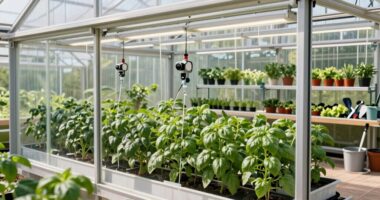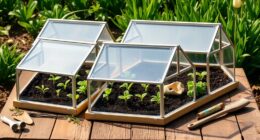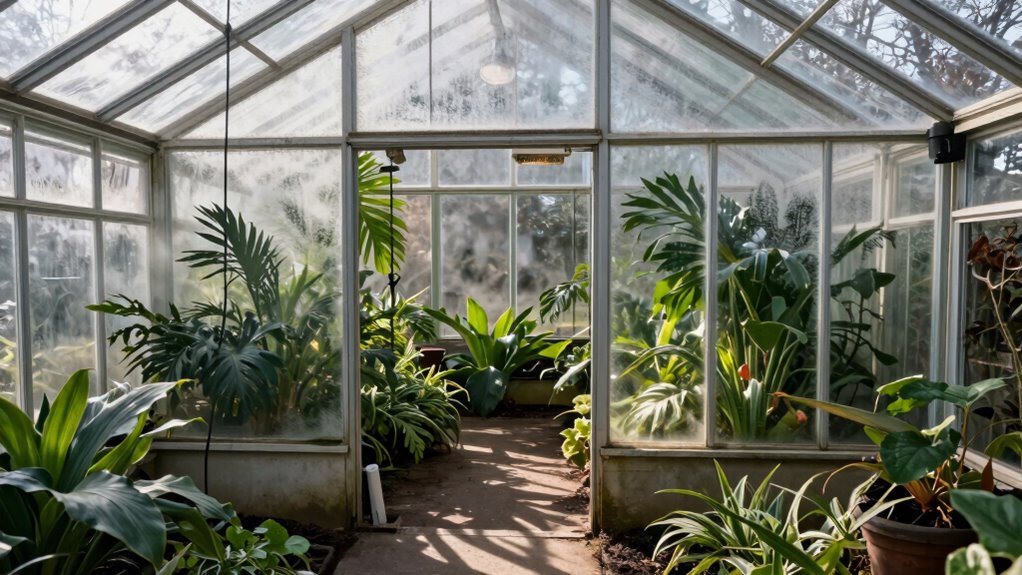

In winter, your greenhouse needs a different daily routine because colder temperatures and lower humidity levels make passive management ineffective. You must actively monitor and adjust heating, humidity, and soil temperature to keep plants healthy, since natural warmth and sunlight are limited. This proactive approach helps prevent stress, root damage, and disease. By staying attentive and making regular adjustments, you’ll guarantee your plants thrive despite the seasonal challenges—there’s more to uncover as you explore this further.
Play games included with Prime
Start a Prime free trial and play with Amazon Luna on your devices.
As an affiliate, we earn on qualifying purchases.
Key Takeaways
- Winter lacks natural warmth and sunlight, requiring active temperature and light management to sustain plant growth.
- Soil cools rapidly in winter, needing heating and insulation to prevent root stress.
- Lower outdoor humidity levels demand controlled humidification to prevent dehydration and disease.
- Shorter daylight hours and colder air necessitate manual adjustments of vents, heating, and lighting.
- Consistent environmental monitoring and proactive measures are essential to maintain optimal conditions during winter.
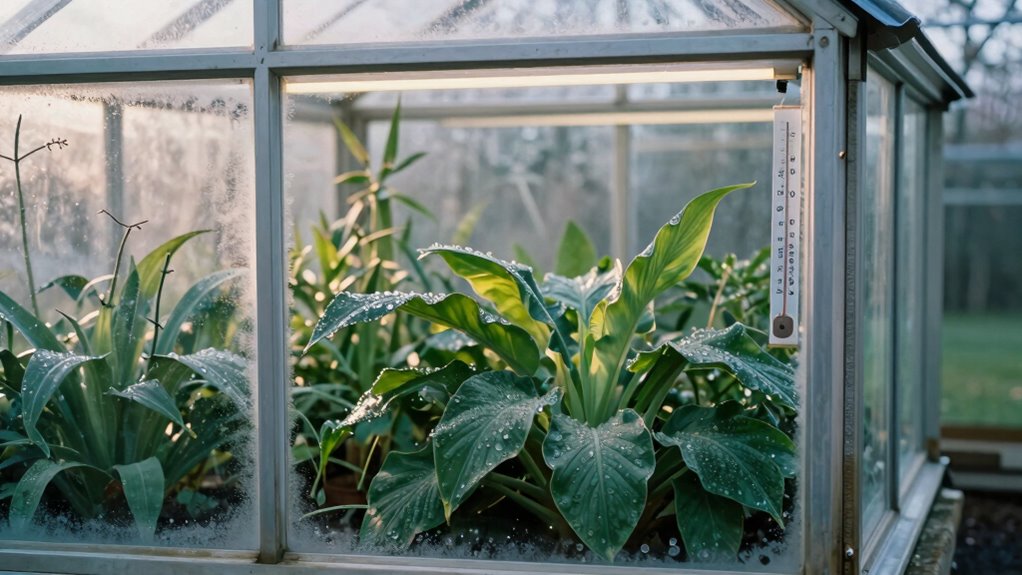
Winter greenhouses reveal a different rhythm of growth and activity, even as outdoor gardens slumber. During these colder months, your greenhouse doesn’t follow the same patterns as it does in summer. Instead, it requires careful adjustments to maintain ideal conditions for your plants. One key factor is soil temperature. Unlike summer, when warmth naturally sustains plant growth, winter soils tend to cool quickly, slowing down root activity and nutrient uptake. You need to actively manage soil temperature, using methods like heating cables or insulating layers, to keep the soil warm enough for healthy growth. This targeted management helps ensure your plants’ roots stay active and don’t suffer from cold stress, which can stunt growth or cause damage. Additionally, monitoring and controlling soil temperature becomes crucial to prevent setbacks in plant development during winter. Humidity control becomes equally essential during winter. In warmer seasons, higher humidity levels are often natural or easily maintained, but winter presents a different challenge. Cold air holds less moisture, so your greenhouse can become overly dry if you don’t intervene. To prevent stress from low humidity, you might need to introduce humidifiers or regularly mist plants. Maintaining the right humidity levels helps prevent issues like leaf scorch or dehydration, especially when heating systems dry out the air further. It’s a delicate balance—too much humidity can promote mold or fungal diseases, so you must monitor and adjust carefully. A comprehensive understanding of greenhouse climate control can help you fine-tune these environmental factors more effectively. Being aware of seasonal climate variations can guide you in making necessary adjustments to your greenhouse environment.
Managing soil temperature with heating cables and insulation keeps roots active during winter’s cold, supporting healthy plant growth.
Furthermore, understanding climate management techniques can provide you with additional strategies to optimize conditions during the winter months. Your daily routine in a winter greenhouse also shifts. Instead of relying on natural sunlight and ambient warmth, you’ll need to actively control temperature and humidity, often using automated systems or frequent manual checks. This means opening vents or adjusting heating sources at specific times to stabilize conditions. Unlike summer, when you can often let nature take its course, winter demands vigilance. You might also need to be more attentive to watering schedules, as cold soil can retain moisture longer, risking overwatering if you’re not careful.
In essence, your winter greenhouse operates on a different set of rhythms—one that revolves around maintaining soil temperature and humidity management. These elements are essential to mimicking natural conditions that support plant health despite the season. Your proactive approach keeps plants thriving through the cold months, ensuring they emerge in spring strong and ready to grow. The rhythm of winter greenhouses is less about passive observation and more about active management, requiring you to adapt your daily routines to meet the seasonal needs of your plants. This nuanced care makes a significant difference in your greenhouse’s success during the winter months.
winter greenhouse heating cables
As an affiliate, we earn on qualifying purchases.
As an affiliate, we earn on qualifying purchases.
Frequently Asked Questions
How Do Winter Greenhouse Temperatures Vary Daily Compared to Summer?
In winter, greenhouse temperatures fluctuate more daily compared to summer, often dropping lower at night and rising slowly during the day. You need to monitor seasonal plant behavior closely to maintain ideal conditions. This variation impacts winter crop scheduling, requiring you to adjust heating and lighting strategies. By understanding these temperature patterns, you can create a stable environment that promotes healthy growth despite the colder outside temperatures.
What Lighting Adjustments Are Necessary for Winter Greenhouses?
You need to give your winter greenhouse a leg up by adjusting your lighting. Use artificial lighting to supplement natural light, especially during shorter days. Focus on the light spectrum; full-spectrum LEDs mimic sunlight and promote healthy plant growth. Turn lights on early in the morning and extend them into evening to maintain a consistent photoperiod. This way, your plants get the light they need, no matter how short the days.
How Does Humidity Control Differ in Winter Versus Summer?
In winter, humidity regulation requires more attention to prevent mold and disease, so you need to increase ventilation during warmer parts of the day to prevent excess moisture. In contrast, summer ventilation strategies focus on reducing humidity by promoting airflow and using dehumidifiers. You should monitor humidity levels closely, adjusting ventilation and possibly adding heating or cooling to maintain ideal conditions for plant health year-round.
What Are Common Pests Specific to Winter Greenhouses?
In winter greenhouses, you often face pests like aphids, whiteflies, and spider mites, which thrive in the warmer, enclosed environment. You should monitor their pest lifecycle closely and implement pest prevention strategies early, such as introducing beneficial insects or using organic insecticides. These pests can quickly multiply in winter conditions, so consistent vigilance helps you manage infestations before they cause significant damage to your plants.
How Can Energy Efficiency Be Maximized During Winter Months?
Did you know that proper insulation can cut winter greenhouse energy costs by up to 50%? To maximize energy efficiency, focus on energy conservation by sealing leaks and enhancing insulation techniques like double-glazing or bubble wrap. Use thermal curtains at night and position heaters strategically to retain heat. These steps help maintain ideal temperatures while minimizing energy use, keeping your greenhouse warm and cost-effective throughout winter.
Conclusion
So, if you think summer greenhouse routines are enough, think again! Winter demands a whole new level of attention—your plants are basically training to survive an epic cold adventure. By adjusting your daily rhythms, you turn your greenhouse into a fortress of warmth and growth. Fail to do so, and your plants might just freeze in disbelief. Embrace the winter challenge, and you’ll be rewarded with thriving greenery that defies the coldest odds!
Fall Picks
fall essentials
As an affiliate, we earn on qualifying purchases.