
To safely dispose of old greenhouse materials, start by separating recyclable items like metal frames, plastic sheeting, and glass panes, then check with local recycling centers for acceptance. If recycling isn’t available, consider repurposing or composting untreated wood, and take metal parts to scrap facilities. Avoid landfilling hazardous or contaminated materials, as improper disposal can harm the environment. Following your local guidelines will guarantee responsible waste management—learn more about best practices to protect the environment.
Key Takeaways
- Identify recyclable materials like plastic sheeting, metal frames, and glass for proper recycling at designated centers.
- Consult local waste management guidelines to determine if materials require special handling or hazardous waste disposal.
- Reuse or repurpose untreated wooden supports and metal frames when possible to reduce waste.
- Avoid landfilling chemicals or contaminated materials to prevent long-term environmental pollution.
- Contact municipal authorities or recycling facilities for specific instructions tailored to your location and materials.
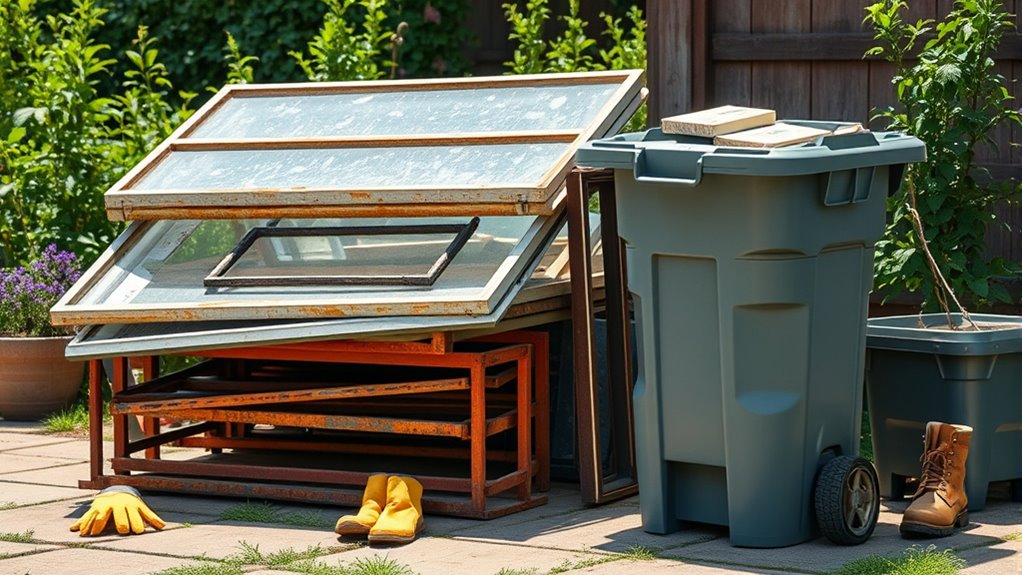
When it’s time to clear out old greenhouse materials, proper disposal is crucial to protect the environment and stay compliant with local regulations. Greenhouse materials, such as plastic sheeting, metal frames, wooden supports, and glass panes, can pose environmental risks if not handled correctly. To minimize your environmental impact, you should explore recycling options for these materials whenever possible. Recycling helps reduce landfill waste, conserves natural resources, and decreases the energy used in manufacturing new products. Before discarding any materials, check with local recycling centers or waste management facilities to see what types of greenhouse components they accept. Many centers now accept plastics like polyethylene film, which is common in greenhouse coverings, and some even recycle metals and certain types of glass. Proper recycling ensures that materials are processed responsibly and reduces the harm they could cause if left to degrade in landfills.
If recycling options are limited in your area, consider alternative disposal methods that still prioritize environmental safety. For example, wooden supports can often be repurposed or composted if untreated, reducing waste and giving the material a second life. Metal frames, especially those made of aluminum or steel, are highly recyclable and should be taken to scrap metal facilities. Glass panes, if intact and free of contaminants, can sometimes be recycled through specialized glass recycling services. However, broken or contaminated glass might need to be disposed of in accordance with local hazardous waste regulations to prevent environmental contamination.
It’s crucial to understand the environmental impact of improper disposal. Leaving old greenhouse materials in landfills can lead to long-term pollution, especially with plastics that take decades to decompose. Chemicals or residues from certain materials might leach into soil and groundwater, harming ecosystems and human health. By actively choosing recycling options and responsible disposal, you help reduce this risk and contribute to environmental conservation. Additionally, always follow local guidelines for waste disposal—regulations vary, and some areas may have specific procedures for hazardous or bulky waste. If you’re unsure, consult your municipal waste management office for guidance.
Frequently Asked Questions
Can Old Greenhouse Plastics Be Recycled Curbside?
You can’t typically recycle old greenhouse plastics through curbside recycling because they often fall outside standard recycling options. Instead, check local disposal guidelines, as some facilities accept plastics like polyethylene for recycling or proper disposal. It’s best to avoid throwing greenhouse plastics in regular trash, which can harm the environment. Look for specialized recycling programs or disposal options in your area to follow proper disposal guidelines and reduce waste.
Are There Hazardous Chemicals in Old Greenhouse Materials?
Old greenhouse materials can contain hazardous chemicals like pesticides, herbicides, or preservatives that pose risks during disposal. You should always check for these substances before handling or discarding old materials. To guarantee disposal safety, wear protective gear, avoid breaking or burning the materials, and follow local regulations. If you’re unsure about chemical presence, consult professionals or local waste management for proper disposal methods, protecting yourself and the environment.
How Do I Dispose of Broken Greenhouse Glass Safely?
First, handle broken greenhouse glass carefully using safety equipment like gloves and eye protection. Wrap sharp shards in thick newspaper or heavy-duty cardboard to prevent cuts. Use proper disposal techniques by sealing the wrapped glass in a sturdy, puncture-proof container or trash bag, then label it clearly. Always transport and dispose of the container following local regulations, prioritizing safety to prevent injuries or environmental harm.
What Local Regulations Govern Greenhouse Material Disposal?
You need to check your local regulations on greenhouse material disposal to guarantee regulatory compliance and minimize environmental impact. Many areas have specific rules for disposing of materials like glass, plastics, and treated wood, often requiring recycling or special waste handling. Contact your local waste management authority or environmental agency to understand the rules in your area. Following these guidelines helps protect the environment and keeps you within legal standards.
Can I Reuse or Repurpose Old Greenhouse Components?
Yes, you can definitely reuse or repurpose old greenhouse components. For example, you might repurpose greenhouse wiring for outdoor lighting projects or reuse old ventilation systems to improve airflow in other garden structures. Before doing so, verify the wiring is safe and in good condition, and inspect ventilation systems for any damage. Reusing materials reduces waste and saves money, making it a smart and eco-friendly choice.
Conclusion
Now that you know how to dispose of your old greenhouse materials safely, you’re practically a hero in the gardening world! Imagine saving the planet one piece of debris at a time—your efforts could prevent mountains of waste and keep ecosystems thriving. With these simple steps, you’re not just cleaning up; you’re creating a greener, healthier future for everyone. So go ahead, conquer that disposal task—your green thumb and the Earth will thank you endlessly!