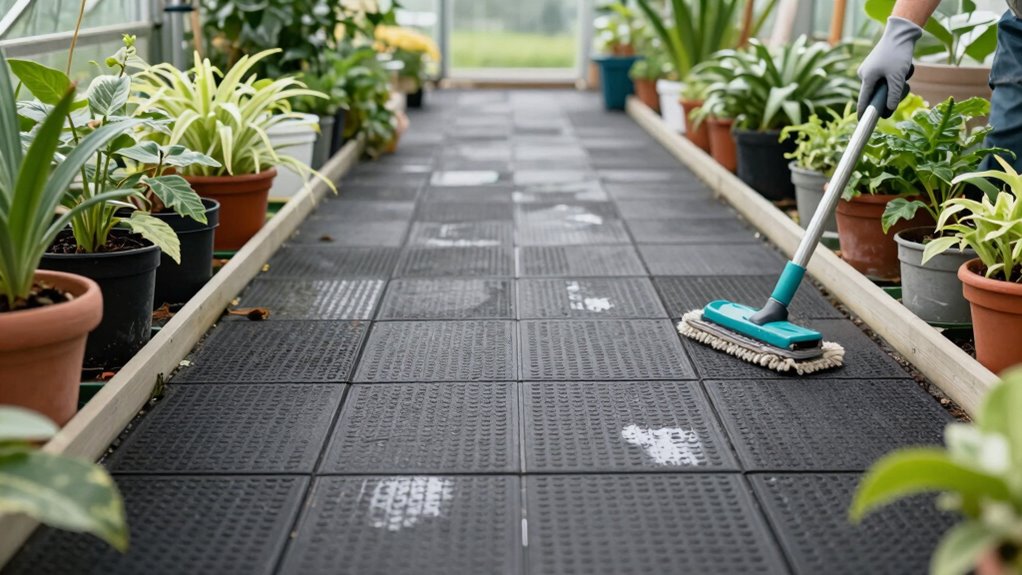

To keep your greenhouse floors safer and easier to maintain, install durable, non-slip surfaces like sealed concrete or rubber mats, and use gravel or crushed stone for better drainage. Regularly inspect and clean your floors to remove debris and prevent pests, while organizing tools and hoses to avoid tripping hazards. Maintain proper drainage systems and fix cracks promptly to prevent water accumulation and damage. Keep these steps in mind, and you’ll create a safer, more manageable greenhouse environment—more tips await if you continue exploring.

Get garden gear delivered free with Prime
- Fast, free delivery on millions of items
- Prime Video, Amazon Music and more included
- Member-only deals all year
Key Takeaways
- Install non-slip, textured flooring surfaces to improve traction and reduce slip hazards.
- Use durable, sealed materials like concrete or rubber mats for easy cleaning and pest prevention.
- Maintain level, debris-free floors through regular inspections and prompt repairs.
- Incorporate proper drainage systems to prevent water accumulation and mold growth.
- Keep pathways clear of tools and water to minimize tripping hazards and facilitate maintenance.
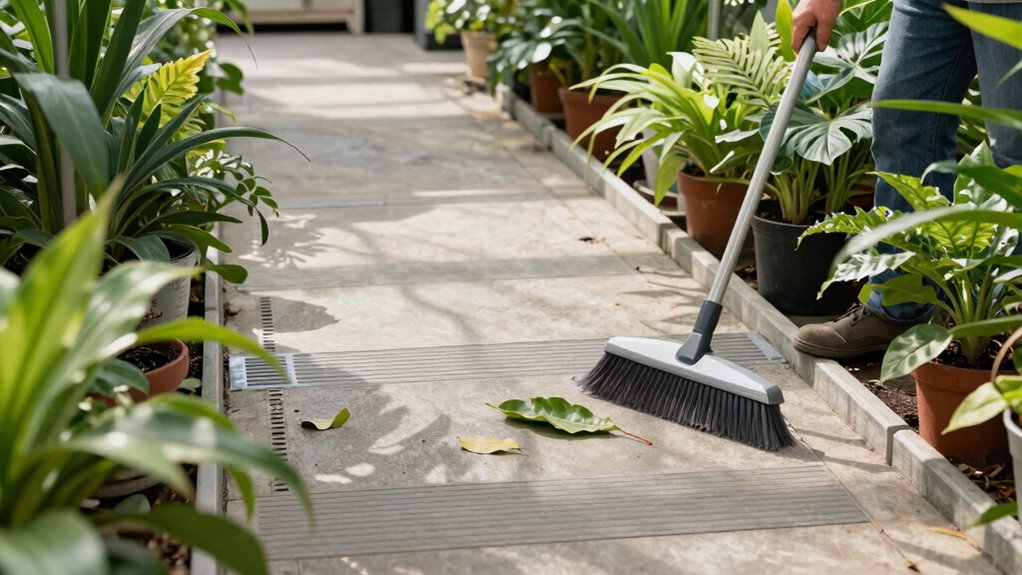
Maintaining a safe and manageable greenhouse floor is essential for both your plants and your safety. A well-designed floor helps prevent issues like soil erosion, which can undermine your plants’ roots and lead to uneven surfaces that are hazardous to walk on. To minimize soil erosion, you should consider installing a sturdy, non-slip surface that stays intact even when exposed to water and frequent foot traffic. Using gravel or crushed stone can help with drainage and stability, reducing the risk of loose soil washing away during watering or heavy rain. Additionally, incorporating edging materials like bricks or metal strips along the edges prevents soil from spilling over and keeps the floor level, making it safer to walk on and easier to maintain over time.
Your choice of flooring material also plays a significant role in pest control. Organic debris, soil buildup, or uneven surfaces provide hiding spots for pests like insects and rodents, which can damage your plants or spread disease. Regular cleaning and sweeping are vital to remove fallen leaves, plant debris, and any standing water that pests might breed in. Consider installing smooth, sealed surfaces like concrete or rubber mats in high-traffic areas to make cleaning easier and to eliminate hiding spots for pests. These surfaces also reduce the chances of pests burrowing into the ground, disrupting your pest control efforts. Furthermore, a durable floor makes it easier to apply pest control measures uniformly, ensuring better coverage and effectiveness. Proper flooring maintenance helps prevent pest infestations and keeps your greenhouse healthier overall. Incorporating effective drainage systems is crucial for preventing water accumulation and maintaining a safe walking surface, especially during heavy rains or frequent watering.
Maintaining a clean and level floor also contributes to your safety. Slippery or uneven surfaces increase the risk of falls and injuries. Regular inspections help you identify and repair cracks or loose tiles before they become bigger hazards. You can also use anti-slip coatings or textured surfaces to improve traction, especially in wet conditions. Additionally, keeping pathways clear of tools, hoses, and excess water prevents tripping hazards. When you organize your workspace efficiently, you reduce the chances of accidents, making the greenhouse safer for everyone who enters. Incorporating biodiversity-friendly practices in your maintenance routine can also help foster a healthier greenhouse environment overall. Furthermore, implementing proper drainage systems is crucial to prevent water accumulation and maintain a safe walking surface.
non-slip rubber mats for greenhouse floors
As an affiliate, we earn on qualifying purchases.
As an affiliate, we earn on qualifying purchases.
Frequently Asked Questions
What Are the Best Non-Slip Flooring Options for Greenhouses?
The best non-slip flooring options for greenhouses include applying non-slip coatings and using rubber mats. Non-slip coatings create a textured surface that prevents slips, especially in wet conditions. Rubber mats are another excellent choice—they provide traction, cushioning, and are easy to clean. Combining these options guarantees your greenhouse floor remains safe and low-maintenance, helping you avoid accidents and keep your workspace efficient and secure.
How Often Should Greenhouse Floors Be Cleaned?
You should clean your greenhouse floors at least once a week to prevent dirt accumulation and maintain safety. Regular cleaning helps prevent slips and falls, especially on non-slip flooring options. During busy planting or growth seasons, increase the floor cleaning frequency to twice a week if needed. Consistent cleaning not only keeps your workspace safer but also promotes healthier plant growth by reducing pests and disease risks associated with dirt buildup.
Can I Use Recycled Materials for Greenhouse Flooring?
Think of your greenhouse floor as a blank canvas—you can use recycled materials to make it eco-friendly and durable. Recycled rubber provides a cushioned, slip-resistant surface, while eco-friendly tiles add a touch of green innovation. Using these materials not only benefits the environment but also creates a safe, easy-to-maintain space. So, yes, you can definitely use recycled rubber and eco-friendly tiles for your greenhouse flooring.
How Do I Prevent Weed Growth on Greenhouse Floors?
To prevent weed growth on your greenhouse floors, start with effective weed control methods like manual removal or applying a weed barrier fabric. Then, seal the floor with a durable, waterproof coating to block weed seeds from germinating. Regularly inspect and maintain the floor, reapplying sealant as needed. This approach keeps weeds at bay, simplifies cleaning, and improves overall safety and durability in your greenhouse environment.
What Maintenance Tools Are Recommended for Underground Drainage Systems?
You should regularly inspect your underground drainage system to identify any blockages or damage. Use specialized tools like drain snakes or high-pressure water jetters for effective pipe cleaning techniques. These tools help clear debris, roots, or buildup that can cause drainage issues. Regular maintenance guarantees your drainage system functions smoothly, preventing water pooling and potential damage, making your greenhouse safer and easier to manage.
Conclusion
Keeping your greenhouse floors safe and easy to maintain is essential for a productive, secure environment. Regular cleaning, proper drainage, and non-slip surfaces can reduce accidents and make upkeep simpler. Did you know that slips and falls account for over 25% of workplace injuries in agriculture? By implementing these tips, you’ll not only protect yourself and your plants but also boost overall efficiency. Stay proactive, and your greenhouse will remain safe and easy to care for year-round.
Fall yard work Picks
leaf blowers
As an affiliate, we earn on qualifying purchases.