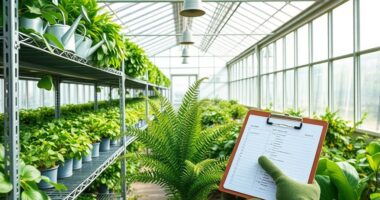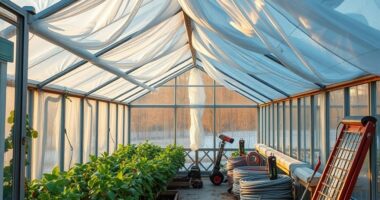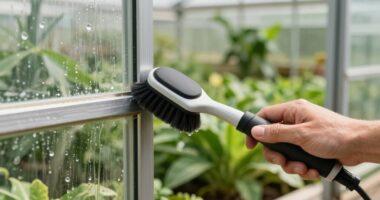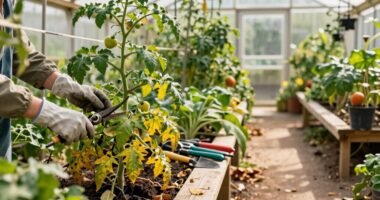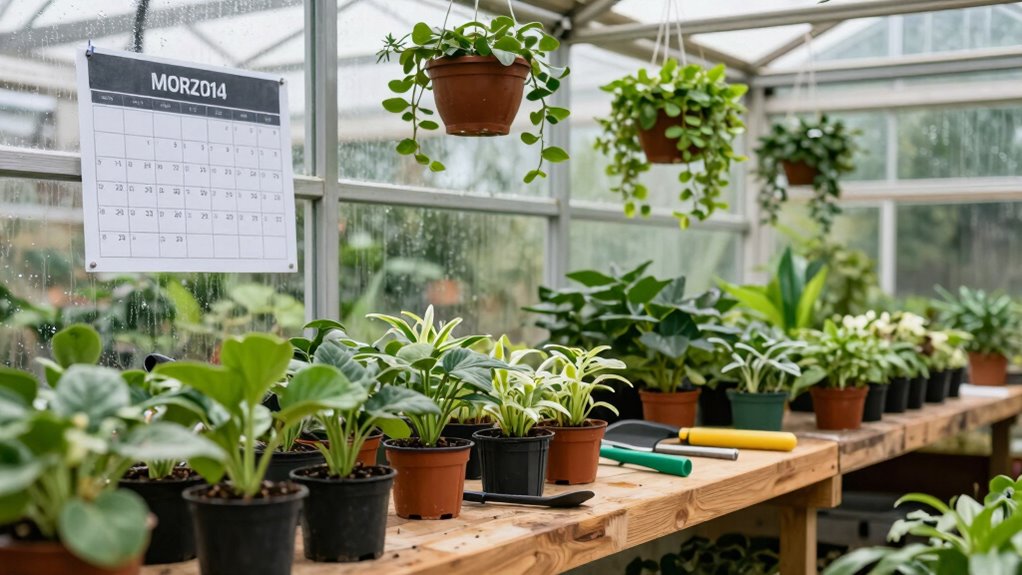
A well-organized greenhouse maintenance calendar helps you stay on top of cleaning, debris removal, and pest control year-round. Regularly eliminate fallen leaves and standing water to prevent pests and maintain a healthy environment. Monitor pest lifecycles and use equipment like airless sprayers for efficient treatment. Keep humidity and air quality in check with proper sanitation and ventilation. Stay consistent with these tasks, and you’ll create a thriving, pest-resistant greenhouse—stay tuned to discover detailed tips to keep your greenhouse flourishing.

Get garden gear delivered free with Prime
- Fast, free delivery on millions of items
- Prime Video, Amazon Music and more included
- Member-only deals all year
Key Takeaways
- Schedule regular cleaning and debris removal to prevent pest habitats and maintain a healthy environment.
- Monitor pest lifecycle stages to time control measures effectively and prevent infestations.
- Use equipment like airless sprayers for efficient, thorough application of organic pest control solutions.
- Conduct consistent sanitation and environmental monitoring to detect pests early and maintain optimal conditions.
- Manage humidity and airflow through proper ventilation to inhibit pest development and mold growth.
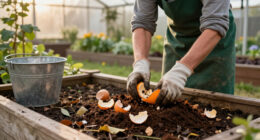
Maintaining cleanliness is essential; regularly clean up fallen leaves, plant debris, and any standing water that might attract pests. Keeping the environment tidy reduces hiding spots, making it less appealing for pests to settle in. Additionally, understanding the pest lifecycle can help you target control measures more effectively and prevent infestations from becoming severe. Regular sanitation and monitoring are key components of effective pest management. Using airless paint sprayers can also assist in applying organic pest control solutions evenly across large greenhouse areas. Incorporating kitchen air quality techniques can help reduce humidity levels that favor pest development and mold growth.
As an affiliate, we earn on qualifying purchases.
Frequently Asked Questions
How Often Should I Check for Pests in My Greenhouse?
You should check for pests at least once a week in your greenhouse. Regular pest identification helps you catch issues early before they spread. Look closely at leaves, stems, and soil. If you spot pests, consider biological control methods like introducing beneficial insects. Consistent monitoring and prompt action keep your plants healthy and free from infestations, ensuring your greenhouse thrives with minimal chemical use.
What’s the Best Way to Prevent Mold Growth Inside?
To prevent mold growth inside your greenhouse, focus on mold prevention by maintaining proper humidity control. Keep humidity levels below 60% using fans, dehumidifiers, or ventilation systems to reduce moisture. Regularly inspect plants for early signs of mold, and remove any infected material promptly. Make certain of good air circulation, avoid overwatering, and clean surfaces frequently. These steps will help you create an environment less conducive to mold, keeping your greenhouse healthy.
How Do I Adjust Temperature Settings Seasonally?
To adjust temperature settings seasonally, you need to focus on humidity control and ventilation enhancement. In colder months, lower your heater settings and increase ventilation to prevent overheating and excess humidity. During warmer seasons, raise the temperature gradually and enhance airflow to keep the environment balanced. Regularly monitor your greenhouse’s temperature and humidity levels, making small adjustments to maintain ideal conditions for your plants year-round.
When Should I Replace Greenhouse Heating Elements?
Think of your greenhouse heating elements as the heartbeats of your lush haven. You should replace them when they start to falter—typically every 3-5 years—or if you notice inconsistent warmth. This keeps your hydroponic systems thriving and lighting optimization on point. Don’t wait for a complete shutdown; timely replacements guarantee your plants bask in perfect warmth, fueling growth and energy without interruption.
What Tools Are Essential for Greenhouse Maintenance?
You need essential tools like a soil tester to monitor soil health and pH levels, ensuring ideal plant growth. A reliable thermometer helps manage temperature, while a fan or ventilation system controls air circulation. Don’t forget pruning shears for plant maintenance and a moisture meter to prevent overwatering. Regularly managing ventilation and testing soil keeps your greenhouse healthy and productive, making these tools indispensable for effective maintenance.
Conclusion
So, there you have it—your ultimate greenhouse maintenance calendar. Because, of course, what’s more thrilling than spending your weekends battling pests and pruning plants? Ironically, keeping up with these chores guarantees your greenhouse thrives, making all that effort worth it. Just remember, the more you care, the more your plants flourish—and the less you’ll be wishing you’d spent those hours doing literally anything else. Happy gardening!
Fall yard work Picks
leaf blowers
As an affiliate, we earn on qualifying purchases.