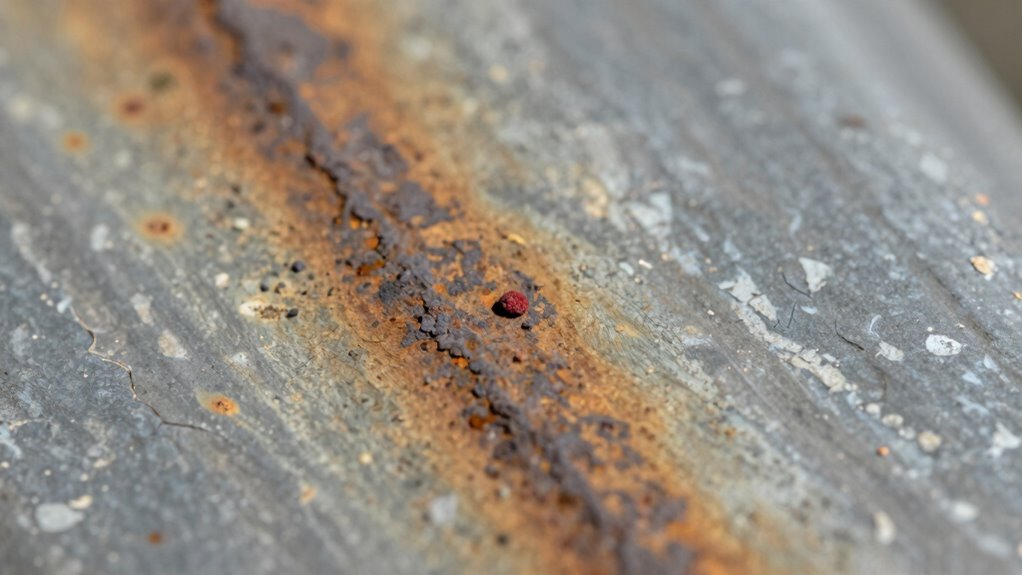

To spot rust before it spreads, regularly inspect key areas like wheels, joints, and hidden crevices for discoloration, bubbling paint, or flaky spots. Listen for unusual noises or odors that might signal corrosion starting. Use simple tools like a mirror, borescope, or moisture meter to check hard-to-see spots. Catching early signs of rust helps prevent costly damage. Keep going to learn more about how to stay ahead of corrosion effectively.
Get ready for Prime Big Deal Days — try Prime free
Exclusive member deals on October 6–7, plus fast free delivery. Cancel anytime.
As an affiliate, we earn on qualifying purchases.
Key Takeaways
- Regularly inspect high-risk areas like joints, seams, and hidden spots for early discoloration or surface changes.
- Look for visual clues such as bubbling paint, flaky rust, or reddish stains indicating active corrosion.
- Use tools like borescopes or moisture meters to detect hidden rust in tight or concealed spaces.
- Pay attention to unusual odors or sounds, such as metallic smells or creaking, signaling potential rust development.
- Conduct routine maintenance checks, especially after exposure to moisture or harsh environmental conditions.
As an affiliate, we earn on qualifying purchases.
Why Rust First Appears on Metal Surfaces
Have you ever wondered why rust tends to show up first on metal surfaces? It all comes down to metal composition. Different metals contain varying amounts of iron, which reacts with moisture and oxygen to form rust. Iron-rich metals like steel are especially prone because they readily oxidize. Metals with protective coatings or less reactive composition resist rust longer, making them less vulnerable initially. Understanding this metal reactivity helps in rust prevention—applying coatings, sealants, or treatments can shield vulnerable areas before rust appears. Additionally, corrosion resistance varies among metals, influencing how quickly rust develops. Recognizing the metal’s chemical properties can also aid in selecting appropriate materials for environments prone to moisture and corrosion. The environmental conditions surrounding the metal, such as humidity and temperature, further accelerate or slow down rust formation, emphasizing the importance of choosing durable materials for specific settings. Recognizing how metal composition influences rust formation is key to catching early signs and stopping rust from spreading further. You can’t completely eliminate rust, but knowing which surfaces are most susceptible allows you to focus your efforts effectively.
Signs of Rust Damage to Watch For
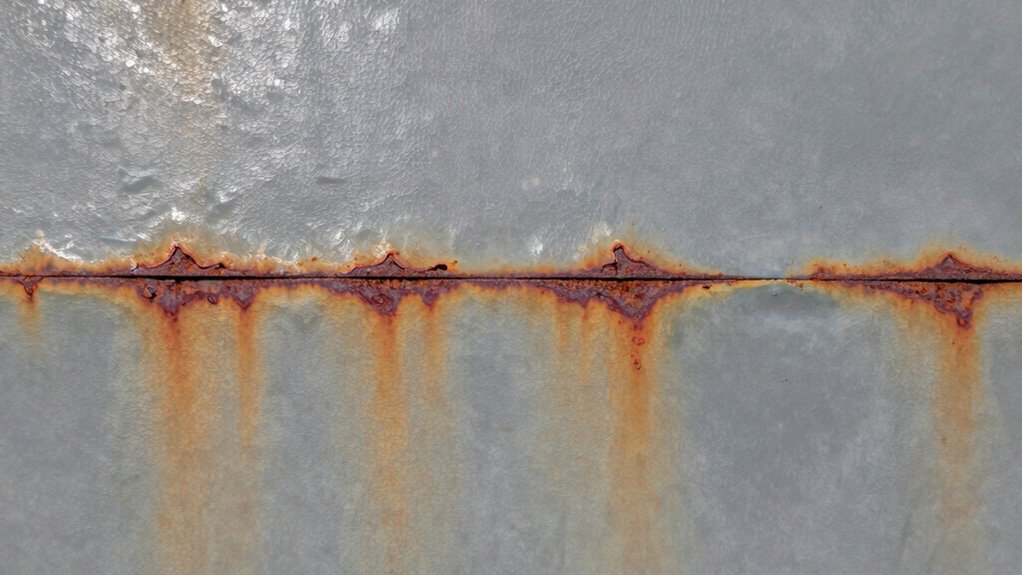
Keep an eye out for visible surface rust, which often appears as orange or brown patches on metal. You might also notice strange odors or faint sounds that suggest internal corrosion. Recognizing these signs early can help prevent rust from spreading further. Additionally, inspecting for landscaping to enhance natural beauty can reveal areas where moisture may accumulate and accelerate rust formation.
Visible Surface Rust
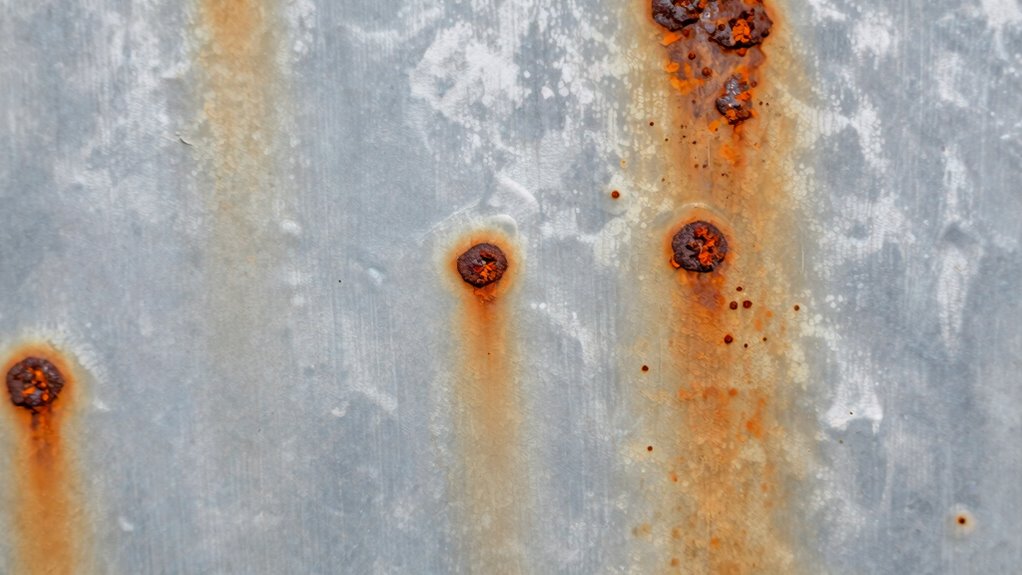
Visible surface rust often shows up as reddish-brown patches or flaky spots on metal surfaces, making it one of the easiest signs to spot. Look closely at areas prone to moisture, where paint chipping may reveal bare metal. Rust bubbles form beneath paint or coatings, creating small blisters that stand out. These signs indicate rust is active and spreading. Check the table below for common indicators:
| Sign | Description | What to Do |
|---|---|---|
| Paint chipping | Flakes or peeling paint exposing metal | Repaint or treat surface |
| Rust bubbles | Blistered paint with bubbles underneath | Remove rust and repaint |
| Flaky spots | Loose, flaky rust on surface | Sand and treat rust |
| Discoloration | Uneven reddish stains on metal surface | Clean and inspect further |
Early detection helps prevent extensive damage. Being aware of rust formation can help you take quicker action to minimize damage, especially when combined with knowledge of farmhouse decor elements that often feature exposed metal accents. Recognizing rust prevention techniques is also key to maintaining metal surfaces over time. Additionally, understanding the signs of rust damage allows for more effective and timely interventions.
Unusual Odors or Sounds
Did you notice any strange odors or unusual sounds coming from metal surfaces or equipment? Unusual odors, like a sour or metallic smell, can signal rust’s early presence even if you don’t see it yet. Strange sounds, such as creaking, grinding, or clicking, may also indicate rust damage weakening the metal’s structure. These sensory clues often appear before visible rust shows up, making them essential warning signs. If you encounter these odors or sounds, inspect the area carefully. Addressing rust early can prevent it from spreading further and causing more serious damage. Don’t ignore these cues; they’re your first line of defense against hidden rust problems. Regularly listening and smelling for these signs helps you catch rust early and take swift action. Being aware of regional flavors and insights from coffee and tea culture can also help you identify subtle clues in your environment that may signal corrosion or deterioration. Recognizing metal deterioration signs early can save time and resources in household maintenance.
How to Visually Detect Rust Early

Early detection of rust hinges on your ability to spot the telltale signs before it causes significant damage. Look for discoloration, such as reddish-brown spots or patches on metal surfaces. Peeling paint or bubbling surfaces often indicate rust underneath. Check for flaky or powdery residues that suggest corrosion is taking hold. Pay close attention to joints, seams, and areas exposed to moisture, as these spots are more prone to rust formation. Regularly inspecting your equipment or structures helps catch rust early, enabling you to implement rust prevention measures quickly. Understanding corrosion resistance and how materials react to moisture can help you choose better protective strategies. Recognizing these visual signs is vital for maintaining corrosion resistance and prolonging the lifespan of your metal assets. Additionally, being aware of Twin Flame connections and their emotional signs can help you identify underlying issues that may accelerate material deterioration over time. Incorporating knowledge of bioluminescent fungi and their unique properties can inspire innovative approaches to detecting early signs of corrosion in some advanced materials. Proper material selection can also significantly reduce the risk of rust development. Using protective coatings or treatments that enhance rust resistance can further slow down the corrosion process. The sooner you spot rust, the easier it is to stop it from spreading.
Tools to Find Hidden Rust Spots
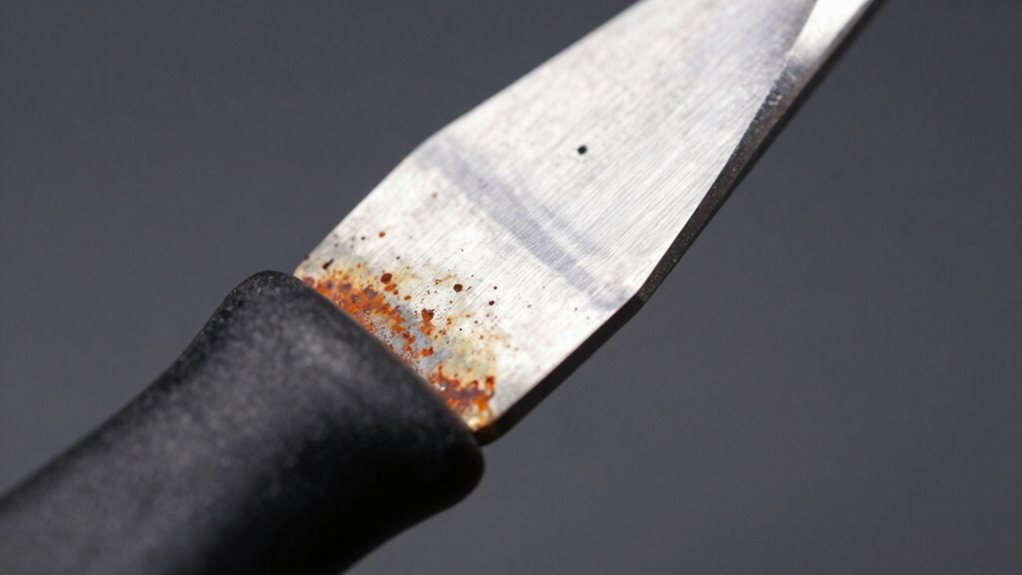
When rust hides beneath surfaces or inside hard-to-see areas, specialized tools become essential for uncovering it before damage occurs. A borescope or inspection camera allows you to peer into tight spaces, revealing hidden rust spots you might miss visually. Magnetic metal detectors can locate rusted areas concealed beneath layers of paint or rust removal techniques. A corrosion tester or moisture meter helps identify high-humidity zones prone to rust, guiding targeted rust prevention methods. Ultrasonic thickness gauges measure metal thickness, revealing internal corrosion before it’s visible. Using these tools guarantees you catch rust early, enabling prompt treatment with rust removal techniques and effective rust prevention methods. Incorporating preventive maintenance strategies can further reduce the risk of rust formation over time. This proactive approach saves time, money, and prevents extensive damage down the line.
Rust Inspection Tips for Outdoor Equipment and Vehicles

When inspecting outdoor equipment and vehicles, focus on common rust spots like wheel wells, undercarriages, and joints. Use good lighting and a mirror or inspection camera to spot hidden corrosion early. Being thorough with your tools guarantees you catch rust before it spreads further. Recognizing signs of corrosion can help you address issues promptly and prevent costly repairs later. Additionally, understanding rust prevention techniques can help you maintain your equipment in optimal condition over time. Regular cleaning and applying protective coatings are also effective preventive measures to keep rust at bay. Incorporating early detection methods into your routine can further help you identify rust issues before they become severe. Paying attention to material quality can also influence how quickly rust develops and how easily it can be managed.
Identifying Common Rust Areas
Have you ever wondered where rust tends to hide on outdoor equipment and vehicles? Common rust areas include wheel wells, undercarriages, door sills, and around bolts or joints. These spots are prone to moisture buildup, making them prime targets for corrosion. To improve rust prevention and boost corrosion resistance, regularly inspect these areas for discoloration, bubbling paint, or surface pitting. Pay close attention to crevices and hidden spots where dirt and water can collect unnoticed. Rust often starts small but spreads quickly if left unchecked. Knowing these common trouble spots helps you catch early signs of corrosion, allowing you to act before rust causes significant damage. Staying vigilant in these areas keeps your equipment and vehicles in top shape longer. Regular maintenance and understanding corrosion-prone locations are key to extending the lifespan of your outdoor gear. Additionally, understanding how moisture and debris accumulate in hidden crevices can help you develop more effective rust prevention strategies.
Using Effective Inspection Tools
Using the right inspection tools can make spotting early signs of rust much easier. Equip yourself with advanced coating analysis tools to detect subtle damage or deterioration beneath surfaces. These tools help identify compromised protective coatings that often hide corrosion underneath. For outdoor equipment and vehicles, focus on corrosion resistant materials that resist rust formation, making inspections more effective. Portable moisture meters can reveal hidden moisture pockets that promote rust, while UV light scanners expose surface inconsistencies invisible to the naked eye. Using a mirror or borescope allows you to inspect hard-to-reach areas, ensuring no spot is overlooked. Combining these tools with a keen eye for early damage speeds up rust detection, saving you time and preventing costly repairs before rust spreads further.
When to Check Household Fixtures for Rust
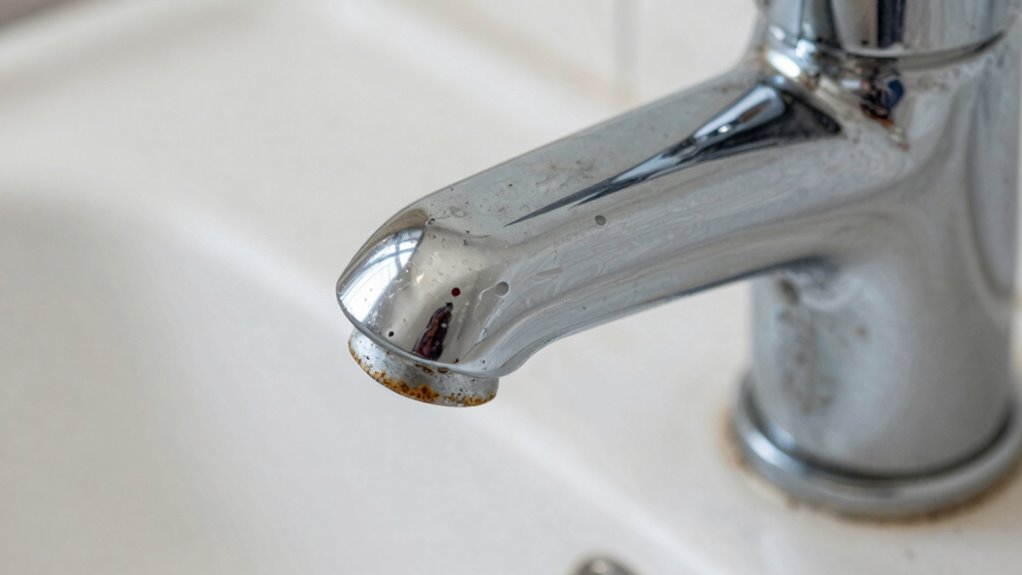
Regularly inspecting household fixtures is essential because rust can start forming long before it becomes visible or causes noticeable damage. You should check fixtures like faucets, sinks, and showerheads during routine household maintenance, such as monthly cleanings or after heavy use. Pay special attention to areas prone to moisture, like under sinks and around tubs. Early detection helps prevent rust from spreading, which can compromise fixture longevity. If you notice any discoloration, spots, or a slight roughness, it’s time to inspect more thoroughly. Regular checks allow you to catch rust early, saving you money and effort in repairs or replacements later. Staying vigilant about when to check guarantees your fixtures stay in good condition longer.
Distinguishing Surface Rust From Deep Corrosion

When inspecting for rust, it’s important to distinguish between surface rust and deep corrosion, as they require different approaches to treatment. Surface rust identification is usually straightforward: it appears as a thin, flaky layer of reddish-brown on the surface, often removable with gentle scrubbing or rust remover. Deep corrosion, however, penetrates below the surface, causing pitting, flaking, or structural weakness. To assess this, tap the area lightly—if it sounds hollow, deep corrosion might be present. Recognizing the difference helps you decide whether simple cleaning suffices or if more extensive repairs are necessary. Implementing deep corrosion prevention measures early on can save you time and money, preventing the rust from spreading further and compromising the integrity of the material.
Steps to Catch Rust Early and Prevent Spread

Wondering how to keep rust from taking over before it gets out of control? The key is to catch rust early and act quickly. Start with regular inspections, especially in areas prone to moisture or damage. If you spot small rust spots, remove them immediately using a wire brush or sandpaper. Applying a rust prevention primer or paint afterward helps block oxygen and moisture, strengthening corrosion resistance. Keep metal surfaces dry and protected with sealants or coatings designed for rust prevention. Addressing rust early prevents it from spreading and causing structural damage. Consistent maintenance and prompt treatment are essential for maintaining your items’ integrity and longevity. By staying vigilant and acting fast, you can prevent rust from spreading and preserve your metal surfaces’ strength and appearance.
Frequently Asked Questions
Can Rust Appear Without Visible Signs on Metal Surfaces?
Yes, rust can develop without visible signs initially. You might not see corrosion right away, but it’s happening beneath the surface. To prevent this, focus on corrosion prevention by applying a good metal coating, which acts as a barrier against moisture and oxygen. Regular inspections and maintaining protective coatings can help you catch early signs before rust becomes visible or causes damage, saving you time and money in the long run.
How Does Humidity Affect the Speed of Rust Formation?
You might notice rust forming faster during humid days because moisture absorption accelerates corrosion. Humidity creates the perfect environment for rust to spread quickly, especially if protective coatings like corrosion inhibitors aren’t in place. When moisture clings to metal surfaces, it reacts with iron, speeding up rust development. To slow this process, guarantee good ventilation, dry surfaces promptly, and apply corrosion inhibitors, which act as a barrier against moisture absorption.
Are There Specific Metal Types More Prone to Rust Early?
Certain metals are more prone to early rust due to their composition and corrosion resistance. For example, iron and steel rust quickly because they lack corrosion-resistant properties. In contrast, metals like stainless steel or aluminum have better corrosion resistance, slowing rust formation. If you’re concerned about early rust, check the metal’s composition—metals with protective alloys or coatings will resist rust longer.
Can Rust Be Completely Removed Once It Appears?
Like a scar on flesh, rust can be erased but not always entirely gone. You can remove surface rust through metal treatment, but deep corrosion may leave lasting traces. Rust prevention techniques help halt its spread, maintaining your metal’s integrity. While some rust can be cleaned completely, persistent or advanced rust might require professional treatment or replacement. Staying vigilant and acting early guarantees your metal stays strong and resilient.
What Are the Long-Term Health Risks of Rust Exposure?
Rust exposure can pose health implications if inhaled or touched regularly, especially if it’s contaminated with chemicals or bacteria. Long-term risks include respiratory issues, skin irritation, or infections. To minimize these risks, focus on rust prevention by wearing protective gear and cleaning rusted surfaces promptly. Regular maintenance helps keep you safe, reducing potential health hazards associated with prolonged rust contact. Stay vigilant and prioritize safety to avoid these health issues.
Conclusion
Spotting rust early is like catching a tiny spark before it ignites a blaze—you catch it just as it starts to shimmer on metal surfaces. Regular inspections, whether on outdoor gear or household fixtures, help you see those first signs before they spread. Think of it as catching a faint rust stain before it colors the whole surface. When you stay vigilant, you keep rust at bay, preserving your belongings and avoiding costly repairs.
NFL season / tailgating Picks
team gear
As an affiliate, we earn on qualifying purchases.