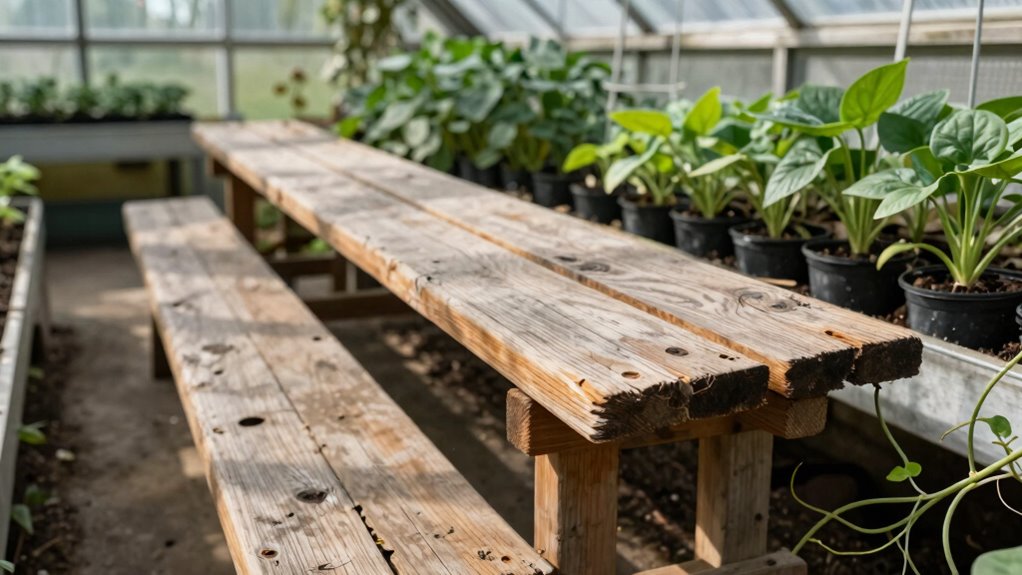

The biggest mistake that makes greenhouses harder to use is placing benches on poorly-drained or uneven surfaces. This setup causes water pooling, which leads to root rot, disease, and difficult maintenance. It also hampers airflow and causes uneven watering, stressing your plants. To avoid these issues, position benches on well-drained and level surfaces, using proper materials and elevation. Keep going to discover how proper bench placement can simplify your greenhouse management and improve your plants’ health.

Get garden gear delivered free — and shop member deals
- Fast, free delivery on millions of items
- Access to Prime Big Deal Days deals on October 6–7
- Prime Video, Amazon Music and more included
Key Takeaways
- Placing benches on uneven or poorly-drained surfaces causes water pooling and root issues.
- Using unstable or inappropriate materials reduces drainage and complicates maintenance.
- Positioning benches too close or in obstructive locations hinders airflow and access.
- Ignoring proper elevation leads to waterlogging and drainage problems.
- Improper bench layout creates difficult-to-maintain areas, increasing the risk of plant health issues.
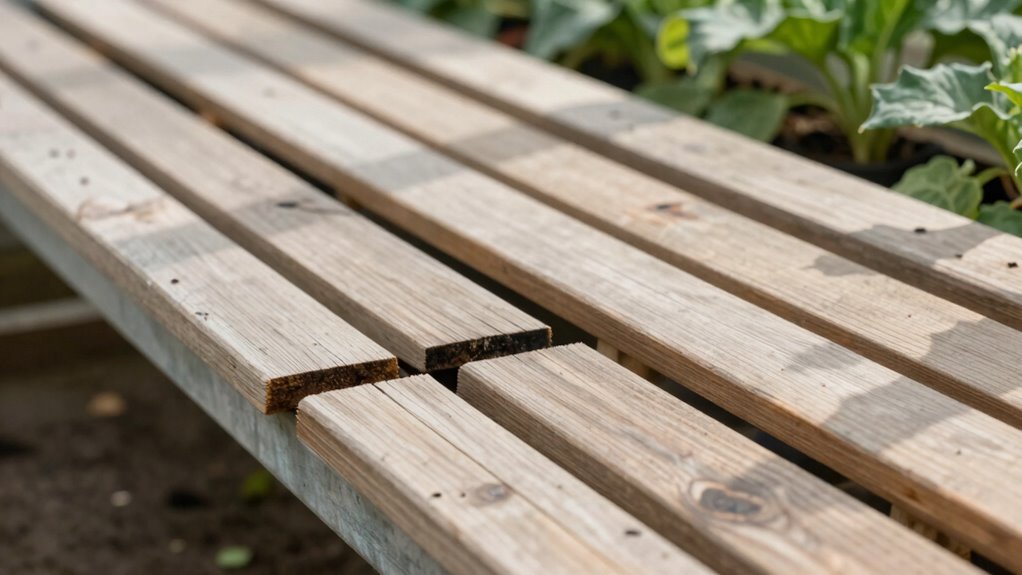
Many beginners overlook the importance of proper bench placement, which can lead to setbacks and injuries. When you set up your greenhouse benches without carefully considering their location, you risk creating a space that’s difficult to manage and prone to problems. One of the biggest issues is soil drainage. If your benches are placed on uneven ground or in poorly-drained areas, excess water can accumulate around the plants’ roots, leading to root rot and stunted growth. This not only hampers your plants’ health but also makes maintenance more challenging, as you’ll constantly be dealing with soggy soil and water pooling. To avoid this, you need to assure your benches are positioned on a well-drained surface, ideally with some elevation or a sturdy base that promotes proper runoff and prevents waterlogging. soil drainage is a crucial factor that directly impacts plant health and greenhouse efficiency. Ensuring proper bench placement can also prevent unnecessary wear and tear on your tools and materials, saving you time and resources in the long run. Additionally, selecting the right materials for your benches can enhance drainage and durability, further supporting your greenhouse’s overall health. Proper bench setup also helps in maintaining consistent watering routines and prevents uneven soil conditions that can stress your plants. Proper arrangement of benches can also improve overall airflow, reducing the likelihood of fungal diseases and pest infestations.
As an affiliate, we earn on qualifying purchases.
Frequently Asked Questions
How Does Bench Height Affect Greenhouse Airflow?
Bench height directly impacts airflow in your greenhouse, influencing air circulation and temperature regulation. Higher benches allow better air movement underneath and around plants, preventing stagnant air and reducing disease risk. Conversely, low benches can restrict airflow, trapping heat and humidity. By adjusting bench height thoughtfully, you promote even temperature control and healthier plant growth, making your greenhouse easier to manage and more efficient.
What Materials Are Best for Bench Surfaces?
You should choose materials like treated wood, concrete, or high-quality plastic for your bench surfaces, as they excel in bench durability and resist moisture. An interesting statistic shows that 75% of greenhouse workers prefer surfaces with textured finishes to prevent slipping. Opt for textured surfaces that provide traction and are easy to clean, ensuring safety and longevity. These materials help your benches withstand daily use and maintain a safe environment.
Can Bench Placement Influence Pest Control?
Yes, bench placement can influence pest control by affecting pest hiding spots and sanitation challenges. If benches are placed too close or in poorly ventilated areas, pests can hide easily and thrive. Proper spacing improves airflow, making it harder for pests to find hiding spots and easier to clean, reducing sanitation challenges. Thoughtful bench placement helps you maintain a healthier greenhouse environment and minimizes pest-related issues effectively.
How to Optimize Space With Bench Positioning?
To optimize space with bench positioning, focus on smart bench design and efficient space allocation. Arrange benches to maximize airflow and accessibility, ensuring you leave enough room for movement and maintenance. Use narrow or tiered benches to increase plant capacity without overcrowding. Position benches along walls or in rows with clear pathways, balancing plant density and ease of access. This approach enhances productivity while maintaining a well-organized, functional greenhouse layout.
What Are Common Mistakes in Irrigation Setup?
Imagine your irrigation system as a delicate dance; if you don’t coordinate your watering schedules and maintain the system, the rhythm falters. Common mistakes include uneven water distribution, neglecting regular system maintenance, and inconsistent watering schedules. These errors lead to over- or under-watering, stressing plants. To keep the dance smooth, regularly check your irrigation system, adjust watering schedules as needed, and perform routine maintenance to guarantee everything flows seamlessly.
Conclusion
If you position your benches too close or uneven, your greenhouse becomes cramped and hard to navigate. Imagine trying to tend your plants, but your tools keep banging into the benches, or you struggle to reach the back row. Proper placement creates clear pathways and efficient use of space, making your gardening easier and more enjoyable. Don’t let a simple mistake hinder your success—plan your bench layout carefully, and watch your greenhouse thrive.
Fall Picks
fall essentials
As an affiliate, we earn on qualifying purchases.