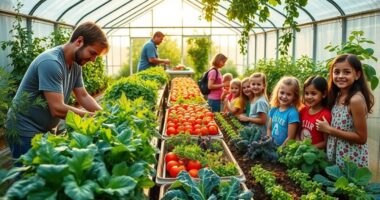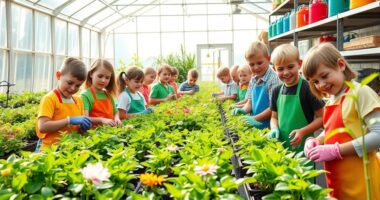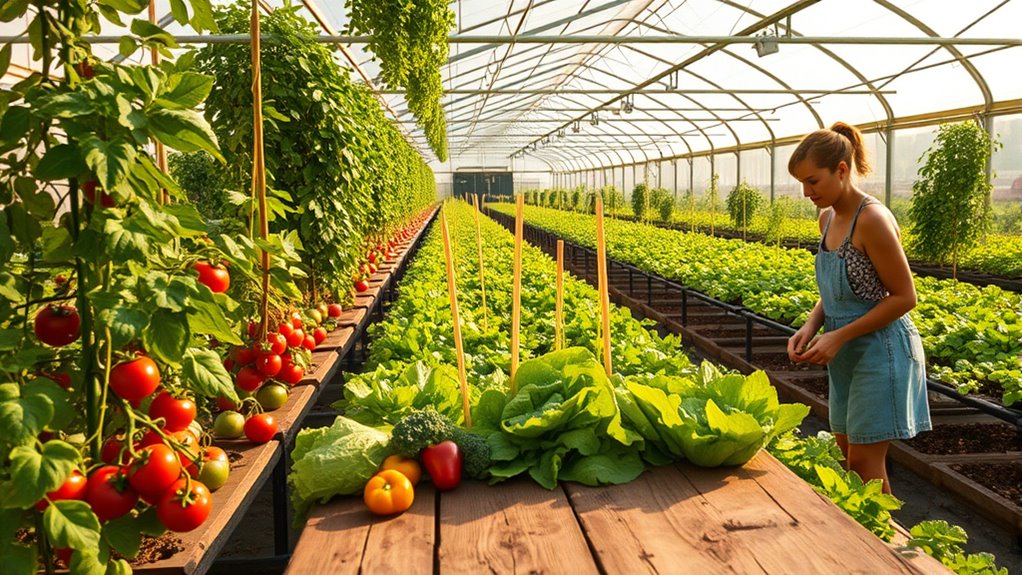

Community Supported Agriculture (CSA) and greenhouses work together to connect you directly with local farmers, supporting sustainable practices and a stronger connection to your food. Greenhouses extend the growing season, allowing fresh produce to thrive year-round and diversify crops. This combination reduces environmental impact, cuts transportation emissions, and promotes transparency in farming. If you’re curious how these methods foster community resilience and environmental health, there’s much more to discover beyond this overview.
Key Takeaways
- CSA fosters direct relationships between consumers and farmers, promoting transparency and local community support.
- Greenhouses extend growing seasons, allowing diverse, nutrient-rich crops beyond outdoor limitations.
- Both practices reduce environmental impact through decreased transportation emissions and sustainable farming techniques.
- Crop diversity in CSA and greenhouse farming improves soil health, resilience, and nutritional value of produce.
- Supporting local farms through CSA and greenhouses boosts local economies and encourages sustainable, eco-friendly practices.
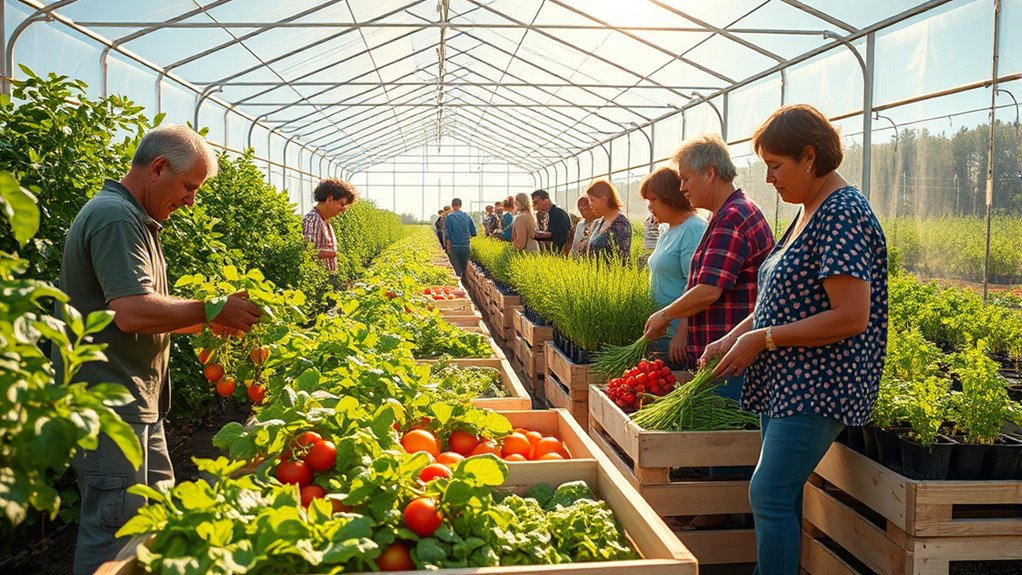
Community Supported Agriculture (CSA) and greenhouses are transforming how people access fresh, local produce. These approaches connect consumers directly with farmers, fostering a stronger relationship between food production and consumption. When you participate in a CSA, you’re not just buying vegetables; you’re supporting sustainable farming practices that prioritize the health of the land and the community. These farms often emphasize crop diversity, planting a wide variety of fruits and vegetables rather than relying on a few staple crops. This diversity ensures better soil health, reduces the risk of pests and diseases, and creates a more resilient food system. As a result, you gain access to a broader range of nutrient-dense produce, often harvested at peak ripeness, which means better flavor and nutritional value for your family.
Greenhouses complement this model by extending growing seasons and protecting crops from adverse weather conditions. They enable farmers to cultivate a wider variety of plants, including those that might not thrive in the local climate otherwise. By growing crops in controlled environments, farmers can experiment with sustainable farming techniques that reduce the need for chemical inputs and minimize environmental impact. This method also promotes crop diversity because it allows for the cultivation of heat-loving or delicate plants that would otherwise be impossible to grow locally. When you buy produce from greenhouses integrated into CSA programs, you’re often getting fresher, more sustainable options, with fewer transportation emissions involved. Additionally, greenhouse technologies often incorporate energy-efficient systems, further reducing their environmental footprint.
Both CSA and greenhouse farming emphasize the importance of local sourcing, which reduces the carbon footprint associated with long-distance food transportation. This sustainable approach helps protect the environment while also supporting local economies. As a consumer, you’re encouraged to know exactly where your food comes from and how it was grown, fostering transparency and trust. This direct connection motivates farmers to adopt environmentally friendly practices, such as crop rotation, composting, and integrated pest management, which further enhance sustainability.
Frequently Asked Questions
How Do CSA Memberships Affect Local Farmers’ Income Stability?
CSA memberships boost your local farmers’ income by providing upfront payments, which help stabilize their financial situation. This steady cash flow allows farmers to plan ahead, invest in better equipment, and cover expenses during lean periods. As a result, market stability improves because farmers aren’t as dependent on unpredictable seasonal sales. Your support through memberships creates a reliable income stream, ensuring farmers can sustain their operations and produce quality food for your community.
What Are the Environmental Impacts of Greenhouse Farming Compared to Traditional Farming?
Greenhouse farming uses about 90% less pesticide than traditional farming, which benefits soil health and reduces pollution. However, it consumes markedly more energy, mainly from fossil fuels, impacting the environment. The controlled environment minimizes soil erosion, but the high energy use can contribute to greenhouse gas emissions. You can help reduce environmental impacts by supporting farms that prioritize sustainable practices and renewable energy use.
How Do Greenhouses Extend the Growing Season in CSA Programs?
Greenhouses extend the growing season by creating a controlled environment, allowing you to grow crops beyond their typical outdoor limits. This season extension means you can offer fresh produce for more months, increasing crop diversity in your CSA program. You can start planting earlier in spring and harvest later in fall, which benefits both your community and your business. Greenhouses make it easier to maintain consistent yields year-round.
Can Community-Supported Agriculture Reduce Food Transportation Emissions?
Yes, community-supported agriculture can reduce food transportation emissions by promoting local urban farming, which minimizes the need for long-distance transportation. When you support local CSA programs, you help decrease food waste by consuming fresh, seasonal produce. This approach not only lowers carbon emissions but also strengthens community ties and encourages sustainable practices, making your food choices more environmentally friendly and reducing overall transportation-related pollution.
What Are the Challenges of Integrating Greenhouses Into CSA Models?
Integrating greenhouses into CSA models presents challenges like managing costs and pest control. You’ll need to carefully control expenses for equipment, heating, and maintenance to keep prices affordable for members. Pest control becomes more complex inside greenhouses, requiring effective strategies without harming crops or members’ health. Balancing these factors is essential, so you can offer fresh produce year-round while maintaining sustainability and keeping members engaged and satisfied.
Conclusion
By choosing community-supported agriculture and greenhouses, you get fresh, local produce while supporting your community. Some might worry about higher costs or limited variety, but the benefits—better taste, fewer chemicals, and stronger local connections—far outweigh these concerns. Plus, supporting local farms helps boost the economy and promotes sustainable practices. So, next time you shop, consider these options—you’ll enjoy healthier food and contribute to a greener, more resilient community.