
TL;DR
An Amateur Gardening report presents nine plants associated with Chinese garden symbolism, drawing on the Yangzhou Scholars’ Garden at RHS Bridgewater. Curator Tracy Snell explains their meanings, while RHS Chief Horticulturist Guy Barter offers practical growing advice; the symbolism is cultural, not a guarantee of luck, love or longevity.
Amateur Gardening has profiled nine plants associated with Chinese garden symbolism, pairing their traditional meanings with cultivation advice from RHS Bridgewater curator Tracy Snell and RHS Chief Horticulturist Guy Barter. The report draws on the Yangzhou Scholars’ Garden at RHS Bridgewater in Salford, describing plants linked with qualities including purity, resilience, love and longevity.

Get garden gear delivered free with Prime
- Fast, free delivery on millions of items
- Prime Video, Amazon Music and more included
- Member-only deals all year
Snell describes a Chinese scholars’ garden as a designed expression of personality and artistic skill, in which plants sit alongside rocks, buildings and water. The selection also reflects the changing seasons. The Yangzhou Scholars’ Garden, which the report says took eight years to create, opened at RHS Bridgewater in September 2026.
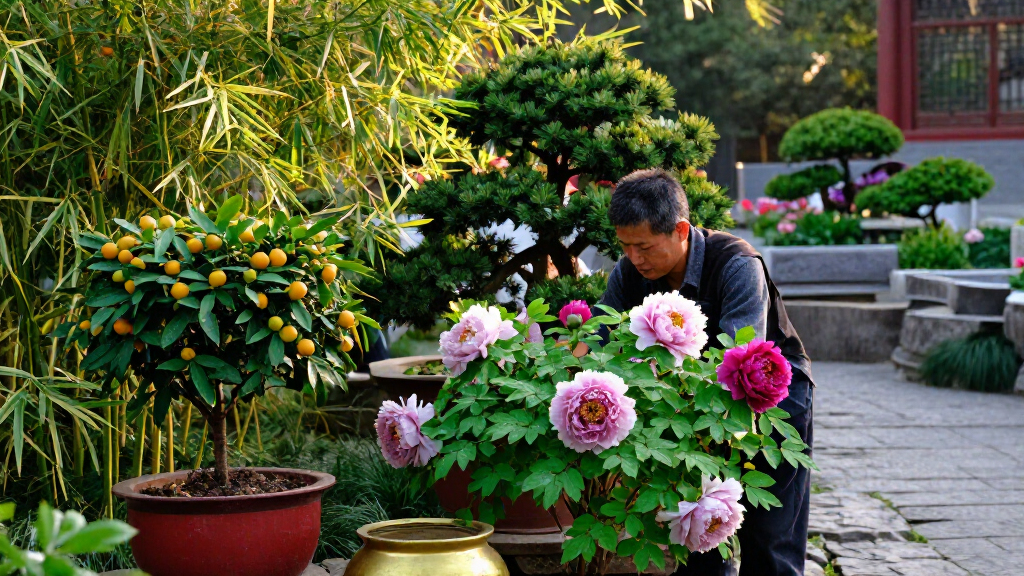
The nine favourites named in the report are magnolia, ginkgo, Japanese maple (Acer palmatum), clumping bamboo (Fargesia nitida), Chinese wintersweet, bigleaf hydrangea, pine, plum and peony. Their meanings include magnolia for purity and noble character, ginkgo for tenacity and longevity, and hydrangea for love and beauty. Snell says bamboo’s hollow stems represent modesty, while its flexibility and evergreen leaves suggest endurance.
Barter’s advice is practical rather than symbolic. He recommends matching plants to their conditions: magnolias need full sun and well-drained soil, while Japanese maples do best in partial shade and soil that does not dry out readily. Newly planted trees need watering in dry spells for their first two years. The report also warns that bamboo should be checked for spreading, even though Fargesia nitida generally forms clumps.
Symbolism Meets Garden Practice
The guide offers readers a way to connect familiar garden plants with the meanings they carry in the tradition described by Snell. It also links those ideas to choices gardeners can make: a plant’s size, seasonal interest and growing needs can shape where it belongs and how a garden feels.
For UK gardeners, the report’s practical value is its emphasis on conditions, not symbolism alone. A ginkgo can grow large and needs room, while dwarf forms such as ‘Troll’ may suit smaller spaces or containers. Advice to avoid waterlogged soil, provide shelter where needed and monitor bamboo can help prevent common planting problems. The cultural meanings are presented as symbolism, not as a promise that a plant will bring luck, love or a longer life.
Products Worth Considering

Orbit B-hyve XD 4-Port Smart Hose Watering Timer with Wi-Fi Hub

EGO POWER+ LM2114 21-Inch Cordless Electric Lawn Mower with Battery and Charger

Orbit B-hyve 12-Zone Indoor/Outdoor Wi-Fi Sprinkler Controller
As an affiliate, we earn on qualifying purchases.
Inside the Yangzhou Scholars’ Garden
The article’s focus is the Yangzhou Scholars’ Garden at RHS Bridgewater, a garden in Salford designed around Chinese scholars’ garden principles. According to Snell, its plantings are part of a larger composition that includes landscape and built features, and that celebrates seasonal change. The source says the garden opened in September 2026 after eight years of work.
The report pairs Snell’s account of plant meanings with Barter’s horticultural guidance. It names nine favourites, but the supplied source material gives detailed growing notes only for magnolia, ginkgo, Japanese maple, bamboo, Chinese wintersweet and hydrangea. Pine, plum and peony appear in the selection and in Snell’s planting suggestions, but the provided extract does not set out their full care requirements.
“Plants in a Chinese scholars’ garden are chosen as an expression of the person’s personality, as well as creating a stylised version of nature and showcasing artistic talent in the placement of the plants.”
— Tracy Snell, curator at RHS Bridgewater
Limits of the Planting Guide
The source material does not provide a publication date, and it does not independently verify the traditional meanings it describes; these are presented through Snell’s account of the garden. The report also does not explain whether meanings vary by region, period or other cultural traditions.
The supplied text ends partway through the hydrangea advice and does not include full care notes for pine, plum or peony. Readers should not infer detailed growing instructions for those plants from the symbolism alone. Conditions also vary between gardens, so the article’s general guidance may not address every soil, climate or cultivar.
Check Conditions Before Planting
The source gives no further announcement or scheduled development. Gardeners considering these plants can use the report as an introduction, then check advice for the exact species or cultivar and local conditions before planting. Barter’s guidance calls for watering new trees during dry spells for their first two years, maintaining space around them and monitoring clumping bamboo for any spreading.
For the garden itself, the report identifies the Yangzhou Scholars’ Garden at RHS Bridgewater as the setting behind Snell’s choices. It does not say whether RHS Bridgewater plans additional events or publications about the garden.
Key Questions
Which plants are included in the report?
The nine named favourites are magnolia, ginkgo, Japanese maple, clumping bamboo, Chinese wintersweet, bigleaf hydrangea, pine, plum and peony.
Which plant is associated with longevity?
The report links ginkgo with longevity and tenacity. It also associates Japanese maple with auspiciousness, happiness and longevity.
Can these plants grow in a small garden?
Some can, but size and form matter. The report says ginkgo generally grows large, while the dwarf variety ‘Troll’ may suit small spaces or containers. It describes magnolias as reaching about 8–12 metres at maturity.
What does the report say about planting bamboo?
Fargesia nitida generally forms clumps rather than spreading runners, but Barter advises checking it each year for invasive growth and using a root-control barrier if needed.
Do the plants guarantee luck, love or long life?
No. Those words describe symbolic meanings attributed to the plants in the report; they are not claims of a guaranteed effect.
Source: amateurgardening.com