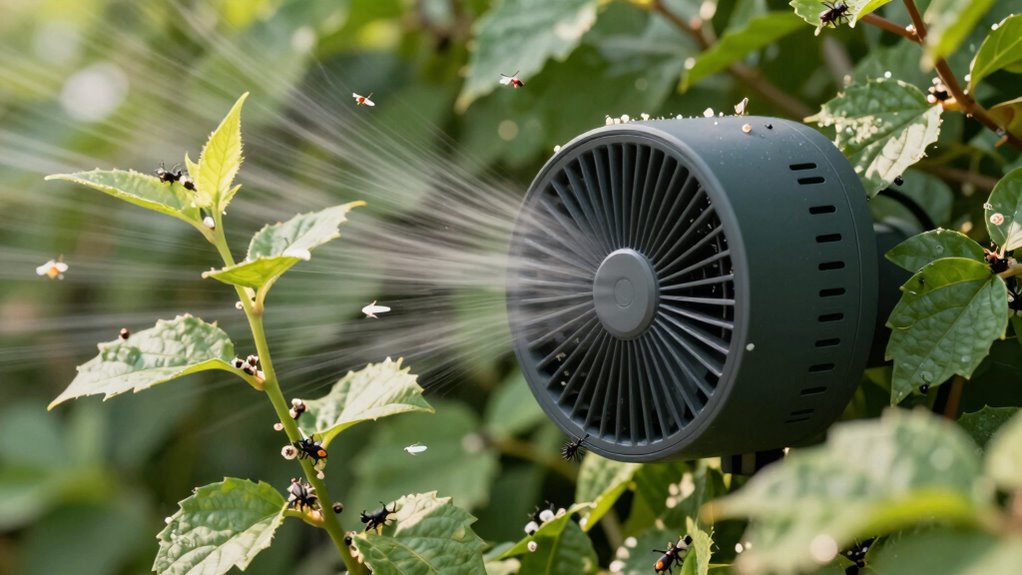

Improving airflow in your garden helps control aphids, whiteflies, and mites by reducing stagnant air and excess humidity that these pests thrive on. Good ventilation keeps leaves dry and creates an environment less hospitable to pests and diseases, making it harder for infestations to take hold. Proper fan placement and regular airflow maintenance are key. If you want to discover simple strategies to boost your airflow and protect your plants naturally, keep exploring this topic.

Get garden gear delivered free with Prime
- Fast, free delivery on millions of items
- Prime Video, Amazon Music and more included
- Member-only deals all year
Key Takeaways
- Installing strategically placed fans improves air circulation, disrupting pest movement and reducing their settlement sites.
- Proper garden ventilation lowers humidity, making conditions less favorable for pests like aphids, whiteflies, and mites.
- Regular pruning and plant spacing enhance airflow, preventing stagnant spots where pests thrive.
- Maintaining consistent airflow helps dry excess moisture, reducing mold and pest attraction.
- Monitoring and adjusting fan placement ensures even airflow, minimizing pest habitats and promoting healthy plant growth.
As an affiliate, we earn on qualifying purchases.
Why Poor Air Circulation Leads to Pest Problems in Gardens
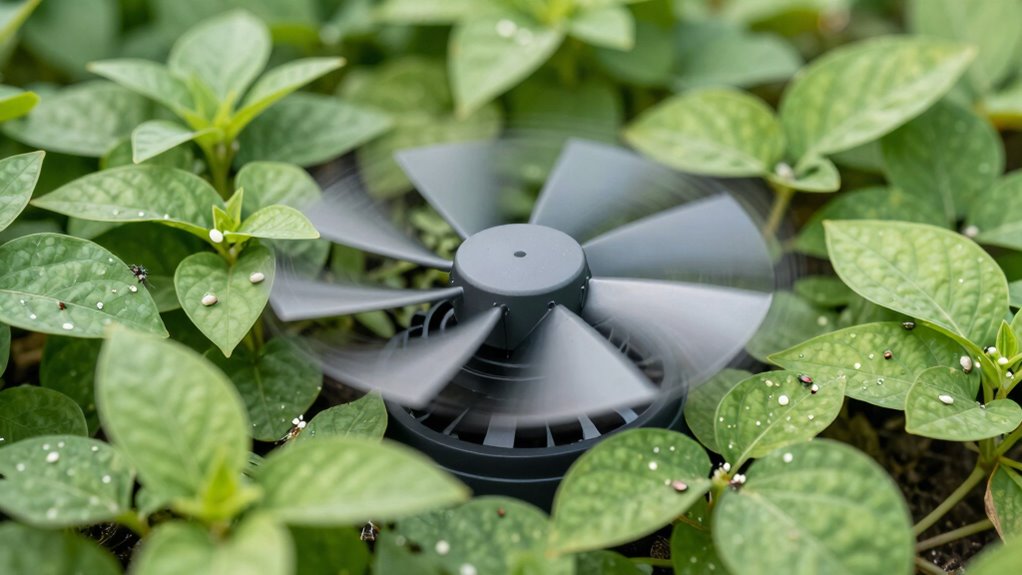
When air circulation is poor in your garden, pests find it easier to thrive and spread. Stagnant air creates a sheltered environment where pests like aphids, whiteflies, and mites can multiply rapidly. Without good airflow, plants become more susceptible to diseases, making disease prevention harder. Dense, poorly ventilated areas also enhance pest resistance, as pests and pathogens avoid areas with better airflow. This lack of movement allows pests to establish large populations and makes it tougher to manage infestations. Improving airflow disrupts pest colonies and reduces humidity, which can weaken pests’ ability to survive and resist control measures. By enhancing ventilation, you promote healthier plants and create an environment less inviting for pests and disease, supporting overall garden health.
How Airflow and Humidity Affect Pest Growth
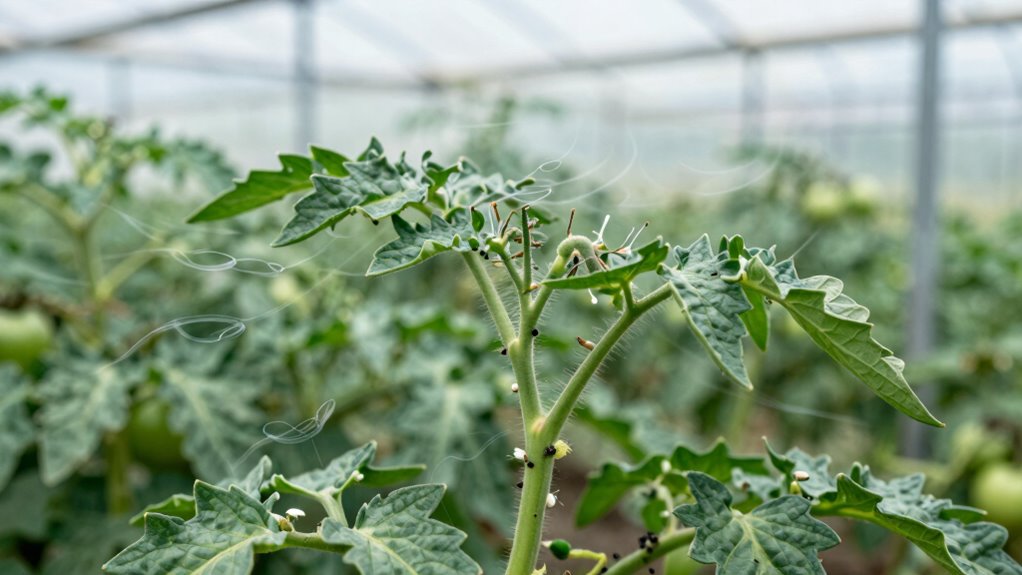
Proper airflow helps keep humidity levels in check, making your space less inviting for pests. When moisture builds up, pests thrive and multiply more easily. By ensuring good ventilation, you limit their growth and protect your garden effectively. Additionally, maintaining optimal air circulation can prevent the development of conditions that pests favor. Understanding how traditional farming practices influence pest management can also enhance your overall approach. Good pest control methods that incorporate airflow management are essential for sustainable gardening. Proper airflow also reduces the likelihood of humidity buildup, which can create ideal conditions for pests to thrive. Incorporating auditory processing techniques from speech therapy can even aid in creating a more comfortable environment by reducing noise-related stressors that might affect plant health indirectly.
Airflow Reduces Humidity Levels
Good airflow plays an essential role in lowering humidity levels, which in turn helps prevent pest infestations. Proper air circulation promotes humidity control, making the environment less attractive to pests like aphids, whiteflies, and mites. When humidity drops, pests struggle to thrive and reproduce. To maximize airflow benefits, consider:
- Using fans or vents to increase air movement
- Ensuring proper spacing between plants for better circulation
- Maintaining consistent airflow throughout the growing area
- Implementing AI-powered monitoring systems can help optimize airflow and humidity levels for pest prevention. Additionally, understanding the color accuracy of your environment can assist in adopting innovative methods for pest control. Proper airflow not only aids in pest management but can also be integrated with eco-friendly craft ideas to create sustainable gardening solutions. Improving your airflow techniques can further enhance pest control strategies and promote healthier plant growth.
Excess Moisture Encourages Pests
Excess moisture creates an inviting environment for pests to thrive and multiply, especially in indoor gardening setups. When humidity levels stay high, pests like aphids, whiteflies, and mites find it easier to survive and reproduce, weakening your pest resistance efforts. Too much moisture nurtures mold and fungi, which attract additional pests and can cause plant health issues. Proper airflow helps dry out excess moisture, reducing pest-friendly conditions. Without adequate ventilation, pests can quickly establish themselves and spread, making pest control more difficult. Maintaining balanced humidity and airflow is key to keeping pests at bay. Additionally, air circulation techniques can significantly enhance moisture control and pest prevention efforts, just as understanding natural filtration systems emphasizes the importance of sustainable practices for a healthier environment. Adequate ventilation also helps prevent the buildup of indoor pollutants that can weaken plant defenses and promote pest infestations. Proper airflow management is essential for creating a less hospitable environment for pests and ensuring healthier plant growth.
Proper Ventilation Limits Growth
When airflow is restricted, humidity levels tend to rise, creating an ideal environment for pests to thrive. Proper ventilation helps keep humidity in check and prevents pest populations from exploding. To effectively limit pest growth, focus on these key actions:
- Enhance soil aeration by avoiding compacted soil, which reduces pest hiding spots and improves plant health. Additionally, promoting healthy soil structure can support soil aeration and overall plant resilience.
- Maintain consistent pest monitoring to catch infestations early before they spread.
- Ensure proper airflow in growing areas, reducing stagnant air pockets where pests like whiteflies and mites can settle and reproduce. Proper airflow also helps regulate humidity levels, making conditions less favorable for pests. Improving air circulation can significantly diminish pest habitats and reproduction rates.
- Incorporate sound healing techniques—such as gentle vibrations from tuning forks or singing bowls—to promote cellular health and potentially support plant resilience against pests. Sound vibrations are believed to influence cellular regeneration and overall plant health, and recent studies suggest that airflow management plays a crucial role in pest prevention.
What Makes an Effective Garden Airflow System?
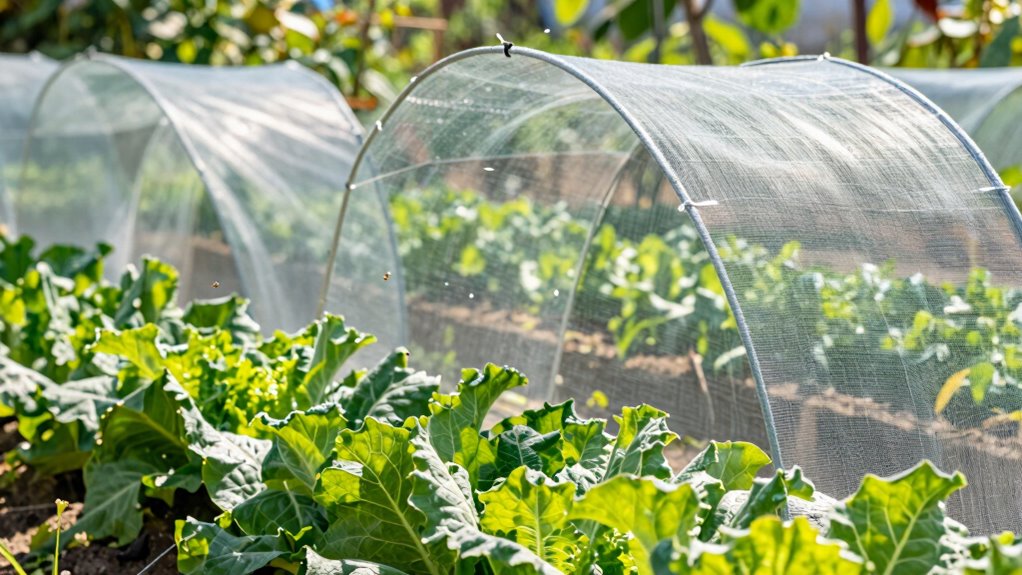
An effective garden airflow system relies on proper ventilation techniques that guarantee consistent air circulation. You should strategically place fans to maximize coverage and prevent stagnant spots. When done right, these steps help keep pests at bay and promote healthier plant growth. Incorporating ventilation techniques similar to those used in vehicle protection can further enhance airflow efficiency. Additionally, understanding local wildlife can help you identify potential threats and natural resources that support your pest control efforts. Recognizing natural pest predators can also provide valuable insights into maintaining a balanced and healthy garden ecosystem. Proper placement of fans can also minimize damage to delicate plants, ensuring your garden remains vibrant and pest-free. Employing airflow optimization strategies can significantly improve the overall health of your garden environment.
Proper Ventilation Techniques
Effective garden airflow relies on proper ventilation techniques that promote steady, directional air movement without creating turbulence or dead zones. To achieve this, focus on these strategies:
- Plant pruning to open up airflow pathways, reducing humidity and limiting pest habitats.
- Soil aeration improves root health and encourages stronger plant growth, which in turn enhances airflow around plants.
- Maintain consistent airflow across the entire garden, avoiding stagnant spots where pests like aphids, whiteflies, and mites thrive.
Strategic Fan Placement
Strategic placement of fans plays a pivotal role in creating a consistent and healthy airflow pattern throughout your garden. Proper positioning helps prevent plant disease by reducing humidity and moisture buildup, which can foster fungal growth. It also enhances pest prevention by disrupting the flying patterns of aphids, whiteflies, and mites, making it harder for them to settle on your plants. You should place fans to guarantee even airflow across all plant surfaces, avoiding stagnant pockets of air that can harbor pests or disease. Adjustable fans are ideal, allowing you to target specific areas or adjust as plants grow. This careful placement creates a breeze that strengthens plant resilience, promotes healthy growth, and keeps pests and diseases at bay.
How to Install an Airflow System in Your Garden

Installing an airflow system in your garden begins with careful planning. First, decide where to place fans and vents to maximize airflow, especially around vertical gardening setups. Second, choose the right equipment that promotes organic aeration without disrupting your plants’ growth. Third, consider how the system will integrate with your existing garden design to guarantee even air distribution. Focus on creating natural airflow patterns that encourage healthy plant growth and pest control. Using vertical gardening techniques can enhance airflow and make installation easier. Make certain the system supports organic aeration, which improves soil health and plant vitality. Proper planning now ensures your garden benefits from effective airflow, reducing pest issues and fostering a thriving, healthy environment.
Best Practices for Maintaining Garden Air Circulation
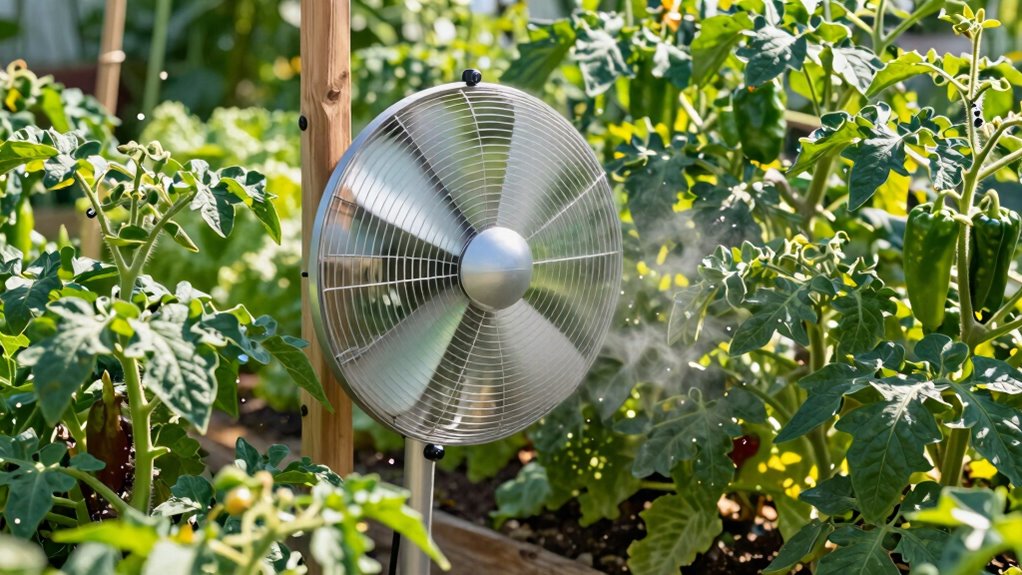
Maintaining consistent garden air circulation requires regular attention and proactive adjustments. Good airflow helps reduce plant disease by preventing excess humidity that fosters mold and rot. It also strengthens pest resistance, making plants less attractive and harder for pests like aphids, whiteflies, and mites to settle. To achieve this, prune crowded foliage to improve air movement and space plants appropriately. Use stakes or trellises to keep plants upright, promoting better ventilation. Avoid overwatering, which increases humidity and hampers airflow. Regularly monitor airflow patterns, especially after weather changes or planting new crops. Proper circulation minimizes stagnant air pockets, discouraging pests and disease development, and supports healthier, more resilient plants. Consistent maintenance ensures your garden remains a hostile environment for pests while promoting plant vigor.
How to Monitor and Adjust Your Garden’s Airflow
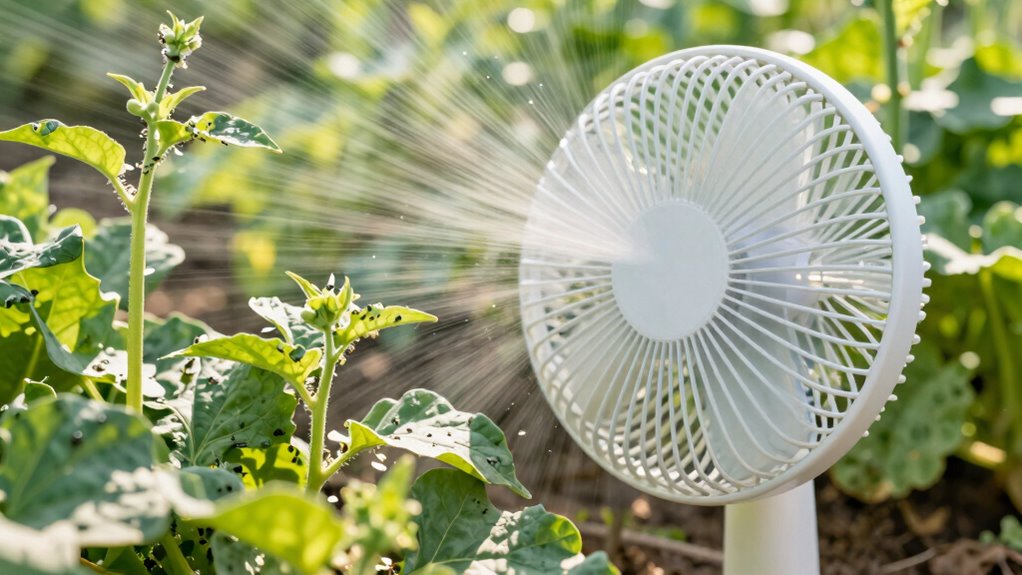
Monitoring your garden’s airflow begins with paying close attention to how air moves around your plants. Observe the airflow patterns to identify areas with stagnant air or excessive drafts. To improve ventilation efficiency, consider these steps:
- Check for dead zones where air isn’t circulating well.
- Adjust fans or vents to promote even airflow across all plants.
- Use lightweight fabric or screens to guide airflow without creating turbulence.
Common Mistakes to Avoid When Upgrading Garden Airflow
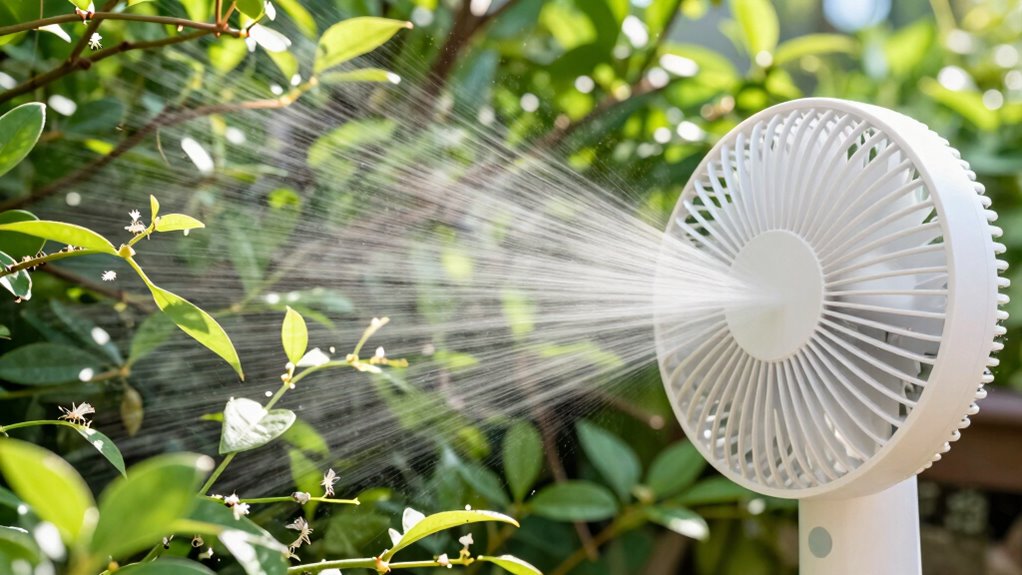
Even with the best intentions, it’s easy to make common mistakes when upgrading your garden’s airflow that can undermine your efforts. One mistake is neglecting crop rotation, which helps prevent pest buildup and maintains soil health. Poor soil aeration can also lead to compacted soil, limiting airflow and root growth. Avoid installing overly powerful fans that create excessive wind, which can dry out plants and disturb beneficial insects. Additionally, overlooking proper shading can cause uneven airflow and heat stress. Here’s a quick guide:
| Mistake | Effect | Solution |
|---|---|---|
| Ignoring crop rotation | Pest and disease buildup | Practice crop rotation regularly |
| Poor soil aeration | Compacted soil, poor roots | Use aeration tools and practices |
| Excessive airflow or shading | Plant stress, uneven growth | Adjust fan power and shading |
Stay deliberate, avoid these pitfalls, and your airflow upgrade will boost pest control effectively.
How to Know If Your Airflow System Is Working
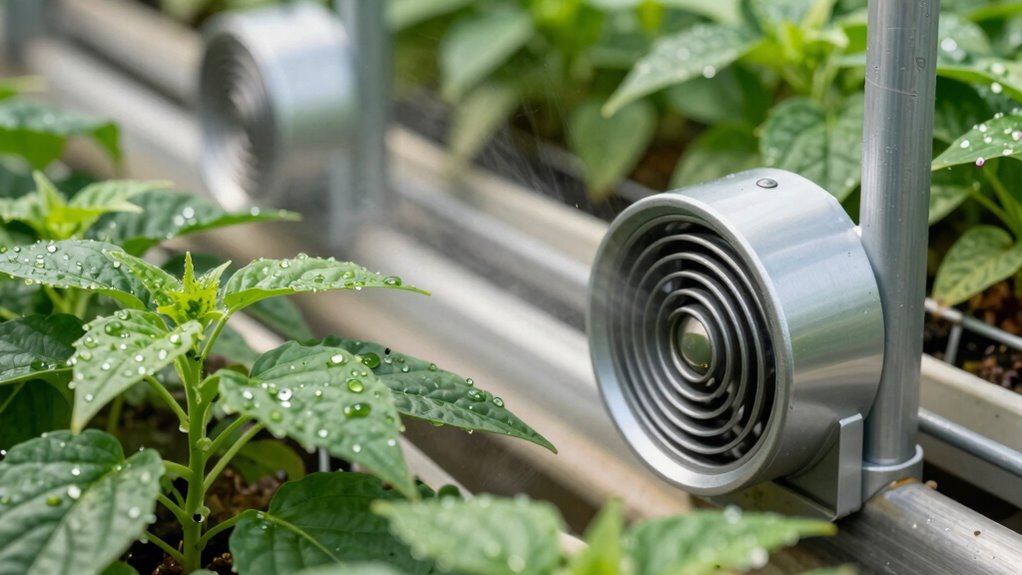
To determine if your airflow system is working effectively, pay close attention to how your plants respond and the overall environment in your garden. Proper airflow patterns and ventilation systems should create a balanced, breezy atmosphere without strong gusts. Check for these signs:
- Leaves move gently, indicating consistent airflow without damage.
- No excessive humidity or stagnant spots, reducing mold and pests.
- Cooler, evenly distributed temperatures across your plants.
If you notice still air pockets, uneven temperatures, or plants look stressed, your ventilation system might need adjustments. An effective airflow system promotes healthy plant growth and pest control by maintaining steady, gentle air movement. Regularly observe your garden’s environment to ensure your airflow patterns remain ideal.
Benefits of Good Air Circulation for Plant and Environment Health
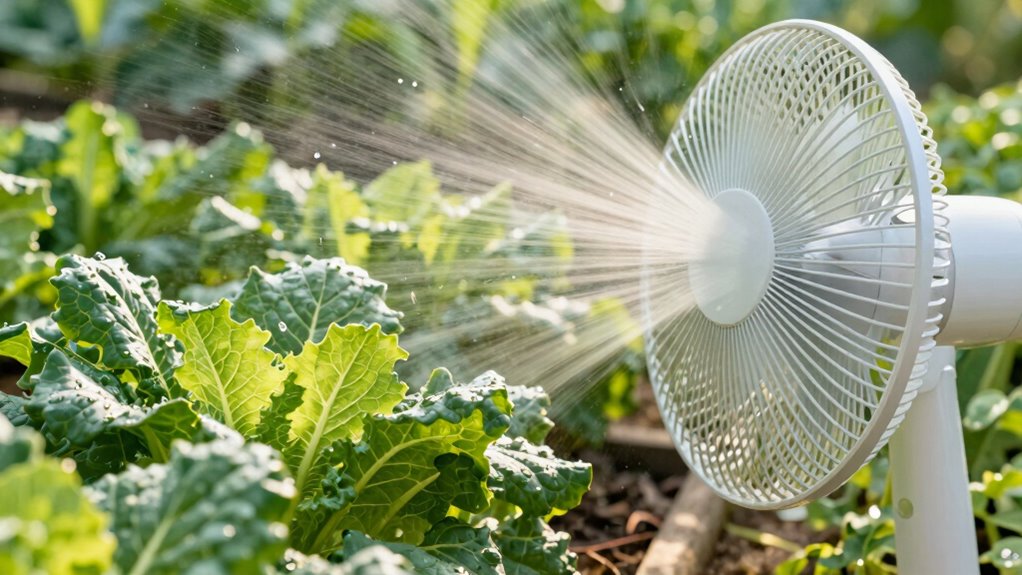
Good air circulation is essential for maintaining healthy plants and a balanced environment in your garden. It helps prevent plant disease by reducing moisture buildup on leaves, which often fosters fungi and bacteria. Proper airflow also plays a key role in pest prevention, making it harder for pests like aphids, whiteflies, and mites to establish colonies. When air moves freely around your plants, it discourages stagnant conditions that pests thrive in. Additionally, good circulation strengthens plant health, enabling them to resist diseases and recover faster from stress. By ensuring consistent airflow, you create an environment that’s less inviting to pests and less prone to disease outbreaks. Overall, good air circulation promotes a healthier, more resilient garden ecosystem.
Frequently Asked Questions
Can Airflow Systems Reduce All Types of Garden Pests?
Airflow systems can help reduce many garden pests by disrupting pest migration and making your plants less appealing. Through airflow optimization, you create a less hospitable environment for pests like aphids, whiteflies, and mites, which rely on still air to settle and spread. However, airflow alone might not eliminate all pest types, especially those hidden or resistant, so combine it with other integrated pest management strategies for best results.
How Often Should I Inspect My Airflow System’s Performance?
You should inspect your airflow system’s performance at least once a month to guarantee ideal airflow and pest control. Regular airflow maintenance helps identify any blockages or inefficiencies early, allowing for timely system enhancement. Keep an eye on airflow rates, filters, and vents, and clean or adjust parts as needed. Consistent inspections help maintain effective pest control, improve plant health, and prolong your system’s lifespan.
Are There Specific Plants That Benefit More From Upgraded Airflow?
Certain plants, like leafy greens, herbs, and tropical varieties, benefit more from upgraded airflow. Improved air circulation benefits plant humidity levels, preventing excess moisture that attracts pests like aphids, whiteflies, and mites. You’ll notice healthier growth, fewer disease issues, and stronger resilience. Upgrading airflow helps maintain ideal conditions, especially for humidity-sensitive plants, ensuring they thrive and stay pest-free by reducing stagnant air and promoting consistent airflow around your plants.
What Signs Indicate Poor Airflow in My Garden?
Poor airflow in your garden shows as stagnant air, damp soil, and suffocated plants, like a trapped fish out of water. Signs include yellowing leaves, mold growth, and an increase in pest habitat like aphids or whiteflies. You’ll notice soil aeration issues, with compacted soil preventing roots from breathing. Enhancing airflow helps prevent these problems, encouraging healthy growth and reducing pest problems by breaking up pest habitat and improving soil conditions.
Can Airflow Systems Help Prevent Fungal Diseases?
Yes, airflow systems can help prevent fungal diseases by improving humidity control and enhancing air circulation in your garden. When you guarantee good airflow, moisture doesn’t linger on plant surfaces, reducing the risk of fungi like powdery mildew and botrytis. Proper air circulation keeps the environment drier and more hostile to fungal growth, protecting your plants and promoting healthier development. Regularly using airflow systems is a smart preventative measure.
Conclusion
By giving your garden the fresh inhalation it needs, you’re turning it into a fortress against pests. Good airflow acts like an invisible shield, sweeping away troublemakers and nurturing healthy growth. When you fine-tune your system, you’ll notice your plants thriving, pests retreating, and your garden transforming into a vibrant oasis. Think of it as giving your green friends a gentle wind beneath their wings, ensuring they flourish in harmony.
Halloween Picks
halloween
As an affiliate, we earn on qualifying purchases.