
You can prevent disease outbreaks by embracing cultural practices that promote hygiene, like regular handwashing with soap and proper sanitation, which community leaders often reinforce. Respecting local customs helps you communicate health messages effectively and build trust. Incorporating traditional remedies and rituals alongside modern health strategies can boost community participation. When you understand and support these practices, you create stronger, healthier communities. Keep exploring to discover how blending tradition and science can enhance disease prevention strategies.
Key Takeaways
- Incorporate traditional cleansing rituals and hygiene practices to promote community-wide disease prevention.
- Engage local leaders and healers to disseminate health messages aligned with cultural beliefs.
- Use culturally familiar remedies and organic foods to boost immunity and support overall health.
- Respect and integrate customary practices with modern hygiene education to enhance acceptance and compliance.
- Leverage cultural events and community gatherings to reinforce healthy behaviors and dispel misconceptions.
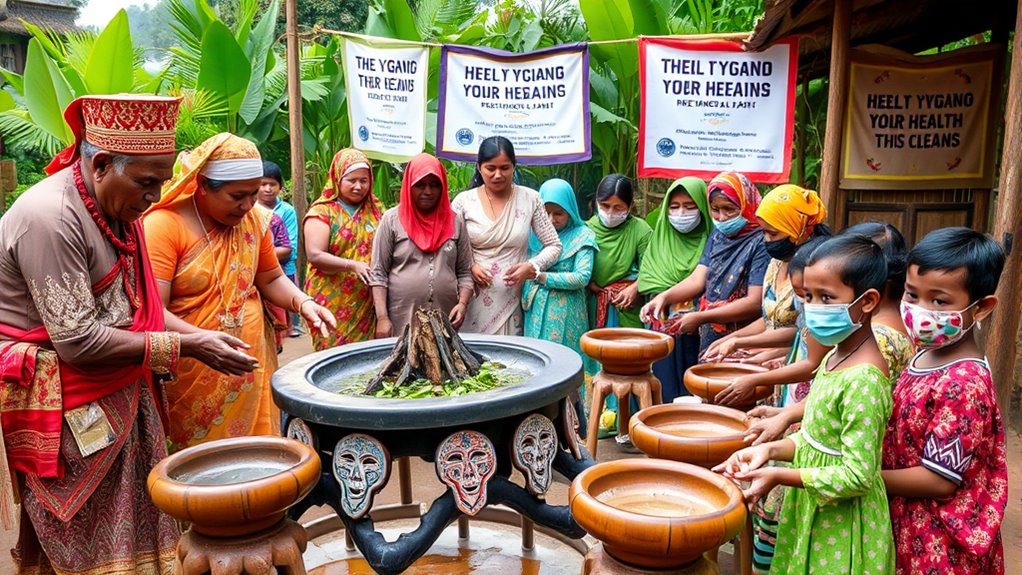
Cultural practices play a critical role in preventing disease outbreaks by promoting healthy behaviors and community awareness. When you understand and respect local customs, you can effectively encourage practices that reduce the spread of illness. One key aspect of this is hygiene education, which involves teaching community members about proper handwashing, sanitation, and personal cleanliness. By integrating hygiene education into daily routines, you help create habits that minimize the transmission of pathogens. For example, emphasizing the importance of washing hands with soap after using the restroom or before preparing food can markedly lower infection rates. These simple yet powerful actions become ingrained when supported by community leaders and local traditions, making the message more impactful and sustainable. Promoting the use of natural and organic juices, such as amla juice, can also boost immunity and overall health in communities, further supporting disease prevention efforts.
Traditional healing also plays a pivotal role in cultural practices that prevent disease. In many communities, traditional healers are trusted figures who understand local beliefs and medicinal plants. Collaborating with them can bridge the gap between modern medicine and traditional approaches, ensuring health messages resonate more deeply. You can work with traditional healers to promote hygienic practices alongside their healing methods, creating a unified front against disease. For instance, integrating traditional cleansing rituals with hygiene education can reinforce the importance of cleanliness in a culturally acceptable way. This approach respects local beliefs while enhancing public health efforts, making it easier for communities to adopt new behaviors without feeling their cultural identity is being compromised.
Partnering with traditional healers enhances health messages and promotes culturally acceptable hygiene practices.
By combining hygiene education with the respect for traditional healing practices, you foster an environment where healthy behaviors are embraced rather than resisted. When community members see that their customs are valued and incorporated into health initiatives, they’re more likely to participate actively. This synergy helps dispel misconceptions about modern medicine, encouraging people to seek proper treatment and adopt preventive measures. Additionally, leveraging traditional beliefs can help disseminate health messages more effectively, especially in remote or underserved areas where formal healthcare access might be limited.
Ultimately, understanding and respecting cultural practices is essential in designing effective disease prevention strategies. You become a facilitator, promoting healthy behaviors through culturally sensitive approaches that resonate deeply with the community. By emphasizing hygiene education and collaborating with traditional healers, you help build trust and foster sustainable health improvements. These practices not only prevent outbreaks but also strengthen community resilience, ensuring they are better prepared to handle future health challenges while honoring their cultural identity. Incorporating organic and natural juices as part of nutritional education can further support community health initiatives by encouraging wholesome dietary choices.
Frequently Asked Questions
How Do Cultural Practices Influence Modern Disease Prevention Strategies?
You see, cultural practices like folk remedies and social rituals shape modern disease prevention strategies by influencing how communities respond to health threats. Folk remedies may complement vaccinations or treatments, while social rituals can promote hygiene or social distancing. By understanding and respecting these practices, health officials can design more effective, culturally sensitive interventions that encourage community participation and trust, ultimately strengthening disease prevention efforts.
Are Traditional Practices Always Effective Against New or Emerging Diseases?
Traditional remedies and ritual purification can sometimes help in disease prevention, but they’re not always effective against new or emerging diseases. You should rely on modern science and public health measures, such as vaccines and sanitation, for effective control. While traditional practices might complement these strategies, they shouldn’t replace proven methods. Always stay informed about the latest health guidelines, and consult health professionals for accurate prevention and treatment.
How Can Cultural Sensitivity Be Maintained While Promoting Health Interventions?
You can uphold cultural sensitivity by engaging in respectful dialogue with community members, listening to their beliefs and concerns. Focus on cultural adaptation, tailoring health interventions to fit local customs and values. By involving community leaders and respecting traditions, you build trust and encourage acceptance of health measures. This collaborative approach ensures that interventions are both effective and culturally appropriate, fostering cooperation and better health outcomes.
What Role Do Community Leaders Play in Enforcing Health-Related Cultural Practices?
Imagine a bridge connecting health and tradition—that’s community leaders’ role. Their leadership influence shapes community engagement, making health practices more accepted. You see, they enforce health-related cultural practices by setting examples and advocating for change. With their authority and trust, they motivate others to follow guidelines, ensuring disease prevention efforts resonate culturally. Their active involvement turns health initiatives into shared community values, fostering collective responsibility and safeguarding public health.
Can Cultural Practices Adapt Quickly to Changing Disease Threats?
Yes, cultural practices can adapt quickly to changing disease threats by leveraging cultural resilience and adaptive traditions. You might see communities modifying rituals or health behaviors swiftly when new risks emerge, often driven by awareness campaigns and leadership. These adaptations help maintain cultural identity while addressing health concerns effectively. Your community’s ability to innovate within its traditions plays a crucial role in responding to evolving disease threats.
Conclusion
By embracing these cultural practices, you play a crucial role in preventing disease outbreaks. Just like ancient healers used wisdom passed down through generations, your actions—like proper sanitation and respectful health habits—can stop illnesses before they spread. Remember, in today’s fast-paced world, it’s your responsibility to stay vigilant and proactive. Don’t be a slacker—think of yourself as the modern-day Florence Nightingale, making a difference one step at a time.