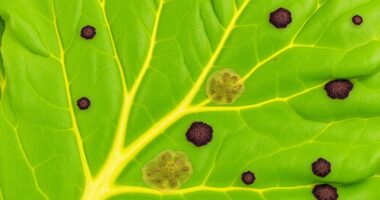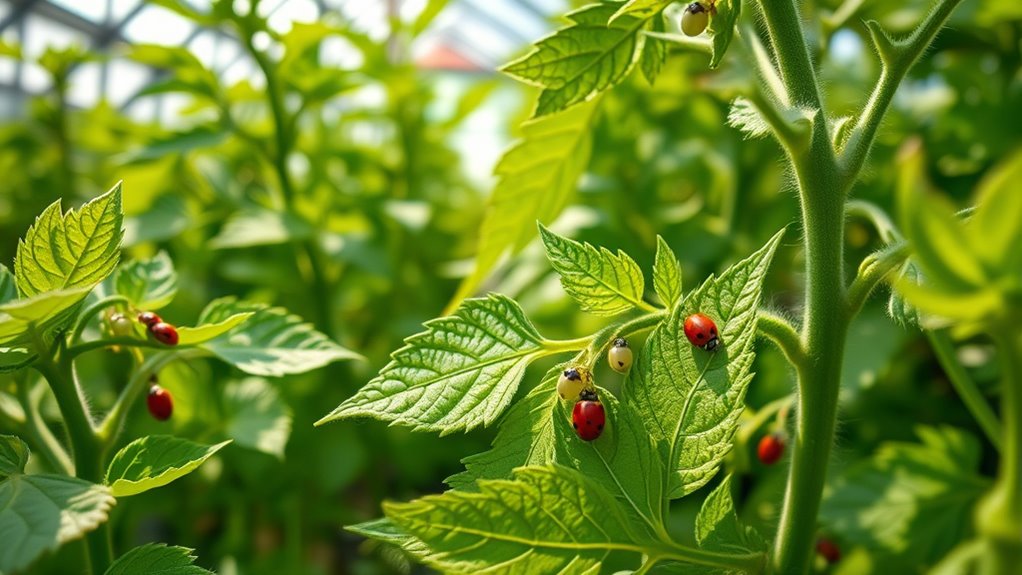

To control aphids naturally in your greenhouse, encourage beneficial insects like ladybugs and lacewings by planting flowering companion plants and providing insect hotels. Regularly inspect your plants for early signs of infestation and use homemade solutions such as soap sprays infused with garlic or neem oil to quickly tackle outbreaks. Keep plants healthy through proper watering and fertilizing, which boosts their resistance. For more effective, chemical-free pest control tips, continue exploring natural methods for a thriving greenhouse.
Key Takeaways
- Introduce beneficial insects like ladybugs and lacewings to naturally prey on aphids.
- Use homemade sprays with water, dish soap, neem oil, or garlic extract for quick aphid control.
- Regularly inspect plants and intervene early with natural remedies or predators to prevent outbreaks.
- Create habitat features such as insect hotels to attract and sustain beneficial insect populations.
- Maintain optimal plant health through proper watering, fertilizing, and pruning to boost resistance against aphids.
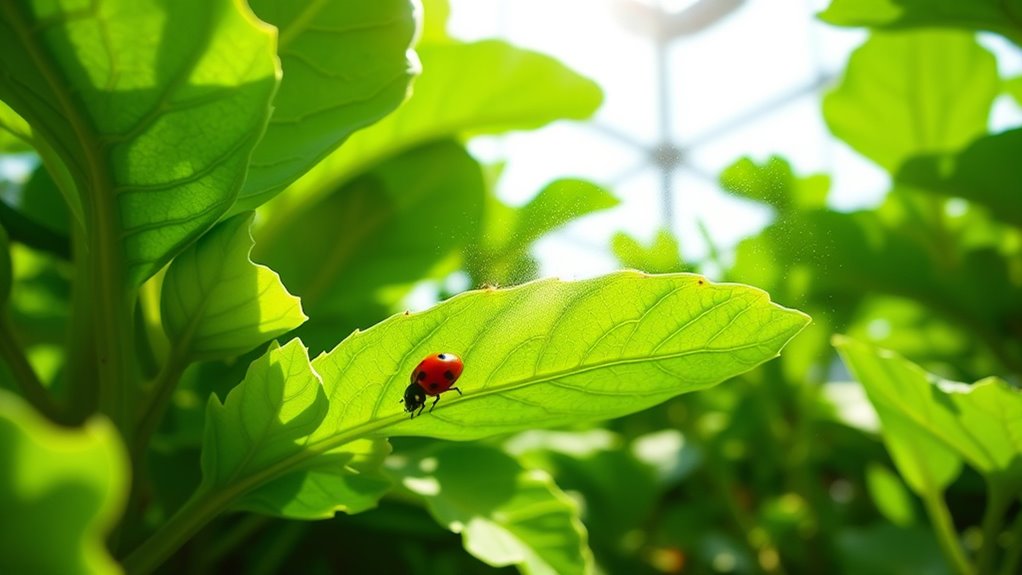
Aphids are one of the most common pests that can quickly damage your plants, but you don’t have to rely on chemical pesticides to keep them in check. Instead, you can leverage the power of beneficial insects and homemade remedies to manage these tiny invaders naturally. Beneficial insects, such as ladybugs, lacewings, and hoverflies, are excellent allies in your greenhouse. They feed on aphids and can markedly reduce their numbers without harming your plants or the environment. Introducing or encouraging these predators creates a balanced ecosystem where pests are kept in check naturally. You can attract beneficial insects by planting flowering companion plants or providing habitats like insect hotels, which serve as safe havens for these helpful creatures. This approach fosters a sustainable, chemical-free method of pest control that benefits your entire greenhouse.
Homemade remedies are another effective strategy that requires minimal effort and ingredients you probably already have. One popular method involves spraying a mixture of water, a few drops of dish soap, and a splash of neem oil or garlic extract onto affected plants. The soap acts as a surfactant, breaking down the aphids’ protective waxy coating, causing them to dehydrate and die. Neem oil contains compounds that disrupt aphid feeding and reproduction, making it a potent natural pesticide. Garlic, when blended into a strong infusion, deters aphids due to its strong odor and natural insecticidal properties. These homemade solutions are safe for your plants, your family, and the environment, making them ideal for regular use in a greenhouse setting. Regular monitoring and integrated pest management techniques can further enhance your control efforts and prevent outbreaks.
To maximize your efforts, inspect your plants regularly for signs of aphid infestation. Early intervention prevents populations from exploding and causing serious damage. When you spot aphids, promptly apply your homemade remedy or introduce beneficial insects to target the pests directly. Combining these methods creates a synergistic effect — beneficial insects keep aphids in check, while homemade remedies serve as a quick, effective measure to knock down outbreaks before they spread. Remember, maintaining plant health through proper watering, fertilizing, and pruning also helps your plants resist pests better. By integrating these natural methods, you create a resilient greenhouse environment, reducing dependence on chemical pesticides and promoting healthier, more productive plants.
Frequently Asked Questions
Are There Any Environmentally Friendly Chemical Options for Aphid Control?
Yes, there are environmentally friendly chemical options for aphid control. You can use biological pesticides like insecticidal soaps or neem oil, which are organic insecticides that target aphids without harming beneficial insects. These options are safe for your greenhouse environment and help keep your plants healthy. Always follow the application instructions to guarantee effective control while minimizing any negative impact on your ecosystem.
How Can I Prevent Aphid Infestation in the First Place?
An ounce of prevention is worth a pound of cure, so start by practicing crop rotation and companion planting. Rotate your plants each season to disrupt aphid life cycles and plant pest-repelling companions like marigolds or basil near vulnerable crops. Keep your greenhouse clean, inspect plants regularly, and encourage natural predators like ladybugs. These proactive steps create a less inviting environment for aphids from the start.
What Are the Signs of Aphid Infestation on Different Plants?
You’ll notice aphid damage symptoms like distorted, yellowing, or curling leaves, along with sticky honeydew on plant surfaces. Plant distress signals include stunted growth and wilting, which indicate a serious infestation. Look closely at new shoots and undersides of leaves for small, soft-bodied insects. Catching these signs early helps you take action before the aphids spread further and cause more damage to your plants.
Do Natural Predators Like Ladybugs Need Special Care?
Beneficial insects like ladybugs do need some special care to thrive. You should focus on beneficial insect care by providing a suitable predator habitat management, such as planting flowering plants or providing shelter areas to encourage ladybugs to stay and reproduce. Avoid using broad-spectrum insecticides that could harm them. Regularly monitor their population, and make certain they have access to food sources, so they can effectively control aphids naturally.
How Often Should I Apply Natural Remedies for Effective Control?
You should apply natural remedies for aphid control every 5 to 7 days, depending on infestation severity. Maintaining a consistent natural remedy schedule guarantees ongoing protection and prevents aphids from multiplying. Keep an eye on your plants, and if you notice persistent or new aphid activity, adjust the application frequency accordingly. Regular treatments help sustain a healthy balance and keep your greenhouse pest-free naturally.
Conclusion
Think of your greenhouse as a peaceful forest, where every creature plays its part. By embracing natural controls, you’re like a wise forest guardian, guiding beneficial insects and homemade remedies to keep pesky aphids at bay. With patience and care, you’ll restore harmony, allowing your plants to thrive like a thriving woodland. Remember, your garden’s balance depends on your gentle stewardship—nature’s own symphony, where every note matters.