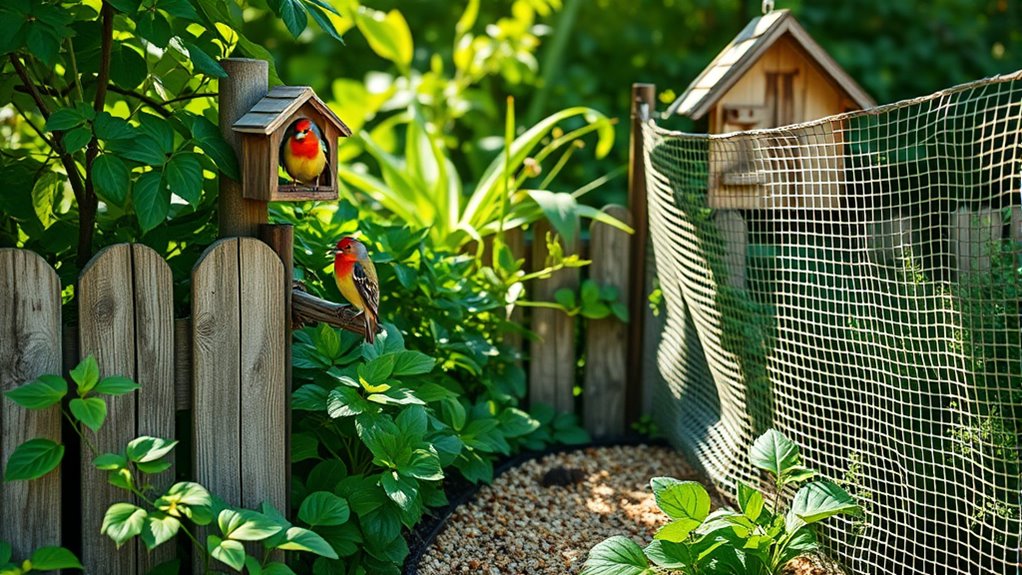

To prevent critter damage from birds and rodents, you need to identify their nesting habits and secure vulnerable areas around your property. Seal entry points with durable materials, remove nests early, and keep debris away that could serve as nesting sites. Trim branches and clear clutter to make your home less inviting. Staying proactive with habitat modification and exclusion strategies helps keep pests at bay. For more tips on effective prevention, keep exploring these solutions.
Key Takeaways
- Install barriers like screens on vents, chimneys, and eaves to prevent bird and rodent entry.
- Seal all potential entry points with durable materials such as steel wool or metal flashing.
- Regularly remove nests, debris, and clutter around your property to deter nesting and hiding spots.
- Trim trees and bushes near your home to reduce easy access for birds and rodents.
- Maintain cleanliness and habitat modification to eliminate food sources and shelter for critters.
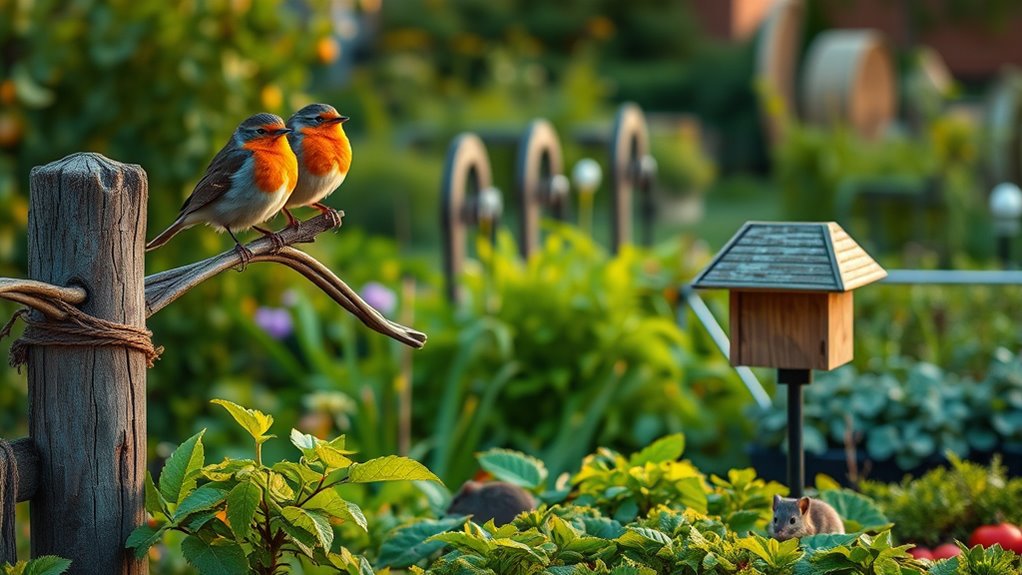
Have you ever wondered how birds and rodents interact within their shared environments? These creatures often coexist in close proximity, which can lead to conflicts and damage if you’re not careful. Understanding their nesting habits is key to preventing problems and developing effective pest control strategies. Birds typically build nests in trees, shrubs, or eaves of buildings, seeking safe spots away from predators. Rodents, on the other hand, prefer to nest inside walls, attics, or underground burrows, often taking advantage of hidden, sheltered spaces. When these nesting habits overlap with areas frequented by humans, issues arise, such as property damage, contamination, or health risks.
Birds nest in trees and eaves; rodents prefer inside walls and underground burrows.
To keep both birds and rodents in check, you need a strategic approach that targets their nesting behaviors. For birds, installing nest barriers or screens on vents, chimneys, and eaves can prevent them from settling in unwanted spots. Regularly inspecting these areas and removing any existing nests before they become established can save you a lot of trouble later. For rodents, sealing entry points—holes, cracks, or gaps in walls and foundations—is essential. Since rodents are adept at squeezing through tiny openings, use durable materials like steel wool or metal flashing to block these access points. Removing clutter and debris around your property also discourages nesting, as it provides fewer hiding spots and nesting sites for both birds and rodents.
Pest control strategies should also include habitat modification. Trim tree branches that hang close to your house, especially near rooflines and vents, to deter birds from nesting too close. Keep your yard tidy by removing fallen leaves, branches, and other debris that might attract rodents or serve as nesting material. Installing bird feeders and water sources away from your home can help redirect birds, reducing their tendency to settle near your dwelling. For rodents, placing traps in known pathways and using bait stations can help control their populations effectively. Remember, however, that humane methods and prevention are often more sustainable than relying solely on poisons or traps. Additionally, choosing appropriate materials for sealing entry points enhances the effectiveness of your efforts.
Consistently applying these pest control strategies based on an understanding of their nesting habits will make a significant difference. Keep an eye on vulnerable areas and act proactively to prevent critters from establishing nests. By doing so, you not only protect your property from damage but also contribute to a healthier, more balanced environment where birds and rodents coexist without causing trouble. Prevention is always better than dealing with the consequences afterward, and knowing their nesting preferences helps you stay one step ahead of these common pests.
Frequently Asked Questions
How Can I Identify Signs of Critter Damage Early?
You can spot critter damage early by observing nesting habits and droppings patterns around your property. Look for small holes, chewed wires, or gnawed wood, which indicate rodent activity. Frequent droppings in hidden areas or near food sources also signal critters are present. Regularly inspect these signs, especially in less visible spots, to catch problems early and prevent extensive damage.
Are There Eco-Friendly Methods to Deter Birds and Rodents?
Imagine a garden where gentle breezes carry the scent of natural repellents like garlic or peppermint, deterring pesky critters without harm. You can use habitat modification—removing debris and trimming plants—to make your space less inviting. These eco-friendly methods create an environment that’s less appealing to birds and rodents, helping you protect your property naturally. Embrace these gentle, sustainable strategies to keep critters at bay while caring for the environment.
What Are the Most Common Health Risks From Critters?
You should be aware that critters pose health risks like disease transmission and allergen exposure. Birds and rodents can carry harmful pathogens, potentially spreading illnesses through droppings or bites. Their nesting materials and shed fur can trigger allergies or asthma attacks. To stay safe, avoid contact with these animals, clean up droppings promptly, and maintain a tidy environment to minimize their presence and reduce health hazards.
How Do I Choose the Right Prevention Tools?
They say, “A stitch in time saves nine,” so choosing the right prevention tools is key. To do this, carefully assess the critters you’re dealing with. When choosing traps, pick ones suited for the specific pest, like snap traps for rodents. For deterrents, select humane options like motion-activated lights or ultrasonic devices. Consider your space, safety, and effectiveness to guarantee you pick the best tools for the job.
Can Critters Cause Structural Damage to My Home?
Yes, critters can cause structural damage to your home. They often build nests in critter habitats like attics or wall cavities and can chew through wiring, insulation, or wood. Wildlife entry points, such as gaps around vents or damaged siding, allow them access. Regular inspections and sealing these entry points help prevent critters from damaging your home’s structure. Stay vigilant and address issues promptly to avoid costly repairs.
Conclusion
To keep your property safe, stay vigilant and act quickly—an ounce of prevention is worth a pound of cure. Regularly check for gaps, remove food sources, and set humane traps when needed. By staying proactive, you’ll keep birds and rodents at bay, preserving your space and peace of mind. Remember, a stitch in time saves nine, so don’t wait until critters become a bigger problem. Stay alert and protect your home today.