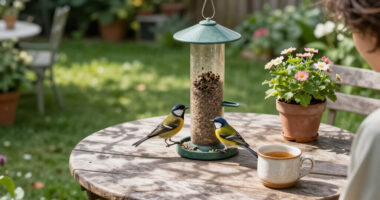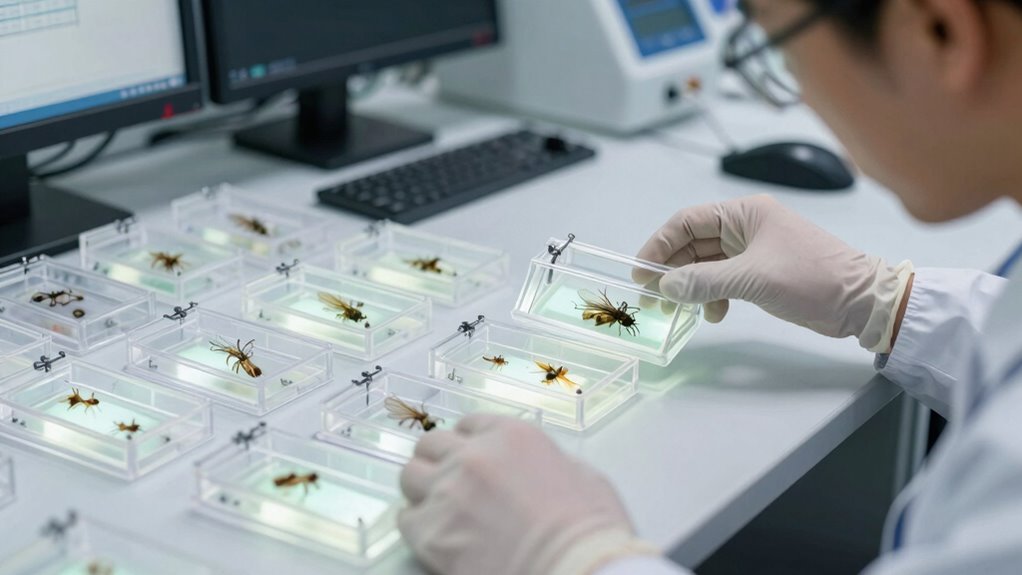

Establish a consistent weekly routine to inspect your crops for early pest signs. Use tools like a magnifying glass, sticky traps, and a notebook to monitor pests, damage, and movement patterns. Focus on areas like undersides of leaves and stems, and look for chewed leaves, holes, and residue. Regular checks help you catch issues early before they explode. Keep practicing and adjusting your routine, and you’ll improve your pest management skills over time.

Get garden gear delivered free with Prime
- Fast, free delivery on millions of items
- Prime Video, Amazon Music and more included
- Member-only deals all year
Key Takeaways
- Schedule a consistent weekly inspection time to ensure routine pest monitoring.
- Use proper tools like magnifiers, sticky traps, and flashlights for thorough checks.
- Focus on both visible pests and subtle damage signs, inspecting underside of leaves and stems.
- Keep detailed records of pest presence, damage patterns, and environmental conditions.
- Adjust and refine your routine based on findings to improve early detection and pest control effectiveness.
magnifying glass for pest inspection
As an affiliate, we earn on qualifying purchases.
As an affiliate, we earn on qualifying purchases.
Why Weekly Pest Scouting Is Key to Healthy Crops
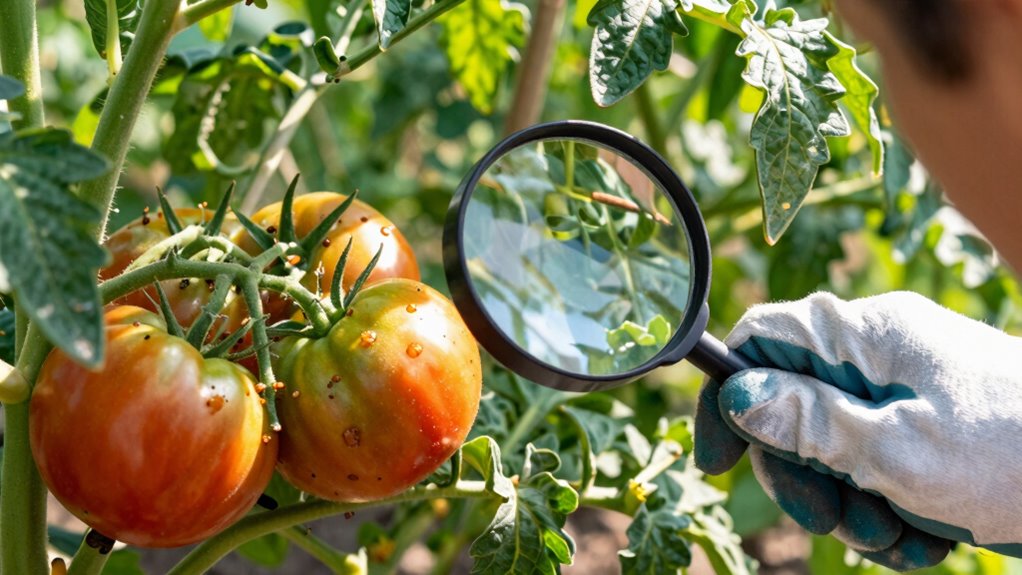
Regular weekly pest scouting is essential because pests can quickly establish themselves and cause significant damage if left unnoticed. By implementing integrated strategies, you create a thorough defense that combines monitoring, cultural practices, and targeted controls. This proactive approach enhances crop resilience, making plants better able to withstand pest pressures. Early detection through regular scouting allows you to identify pest presence before populations explode, reducing the need for extensive chemical treatments. Consistent monitoring also helps you understand pest movement patterns and vulnerability points, enabling more precise interventions. Over time, this routine strengthens your overall pest management system, ensuring healthier crops, higher yields, and fewer crop losses. Staying vigilant weekly keeps pests in check and supports sustainable farming practices.
What Pests and Damage Signs Should You Look For?
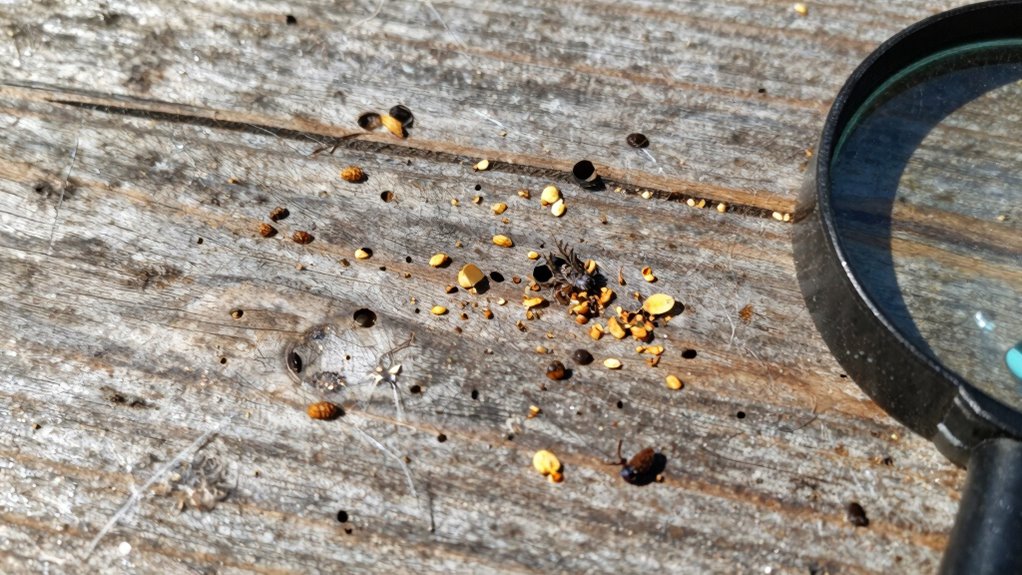
To effectively identify pests and damage signs, you need to know what to look for during your weekly scouting. Pest identification involves recognizing common pests such as aphids, beetles, or caterpillars, along with their specific behaviors and signs. Damage indicators include chewed leaves, holes, discoloration, wilting, or sticky residue like honeydew. Keep an eye out for eggs, larvae, or shed skins, which signal active infestation. Look closely at the underside of leaves and stems, as many pests hide there. Recognizing early warning signs can help you catch issues before they escalate, ensuring healthier crops and reducing the need for aggressive controls. Noticing these signs early helps prevent population explosions. By understanding pest identification and damage indicators, you can catch issues before they escalate, ensuring healthier crops and reducing the need for aggressive controls.
Tools You Need to Scout Effectively
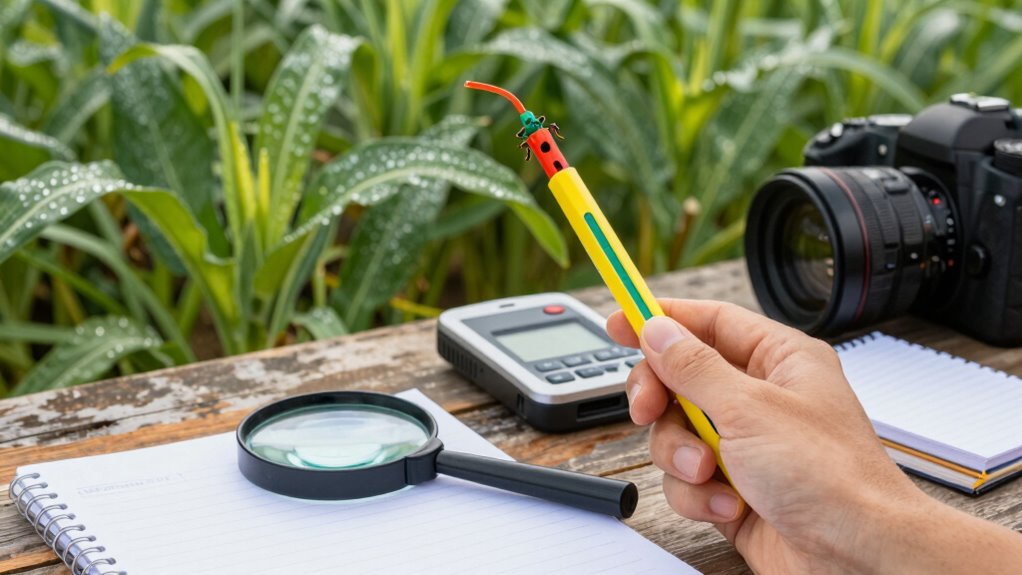
Having the right tools on hand makes your weekly scouting more efficient and accurate. With proper tools, you can quickly identify pests and assess damage signs, preventing infestations before they escalate. Essential tools include a magnifying glass for pest identification, a notebook or digital device for recording findings, and a flashlight for inspecting dark or hidden spots. Regular tool maintenance guarantees accuracy—clean your magnifying glass for clear vision, keep your flashlight charged, and calibrate any measuring devices. Using quality tools and maintaining them prevents misidentification and saves time during inspections. Staying prepared with these tools allows you to catch issues early, making your pest management routine more effective and less stressful.
How to Set Up and Maintain Your Weekly Monitoring Routine

Establishing a consistent weekly monitoring routine is essential for catching pest problems early. To set it up, choose a specific day and time each week to inspect your crops thoroughly. Use tools like magnifying glasses and sticky traps to identify pests quickly. Incorporate crop rotation and pest-resistant varieties into your planting schedule to reduce pest attraction and buildup over time. Keep detailed records of what pests you find and where, so you can spot patterns and adjust your strategies accordingly. Regularly review your routine to guarantee it stays effective, and don’t skip inspections even when pests aren’t immediately visible. This consistent effort helps you catch issues early, making pest management more manageable and preventing infestations from exploding. Additionally, understanding how pests develop and spread can help you tailor your monitoring to target the most vulnerable stages of their lifecycle, especially when considering natural predators and their role in maintaining a balanced ecosystem.
Common Problems During Pest Checks and How to Fix Them
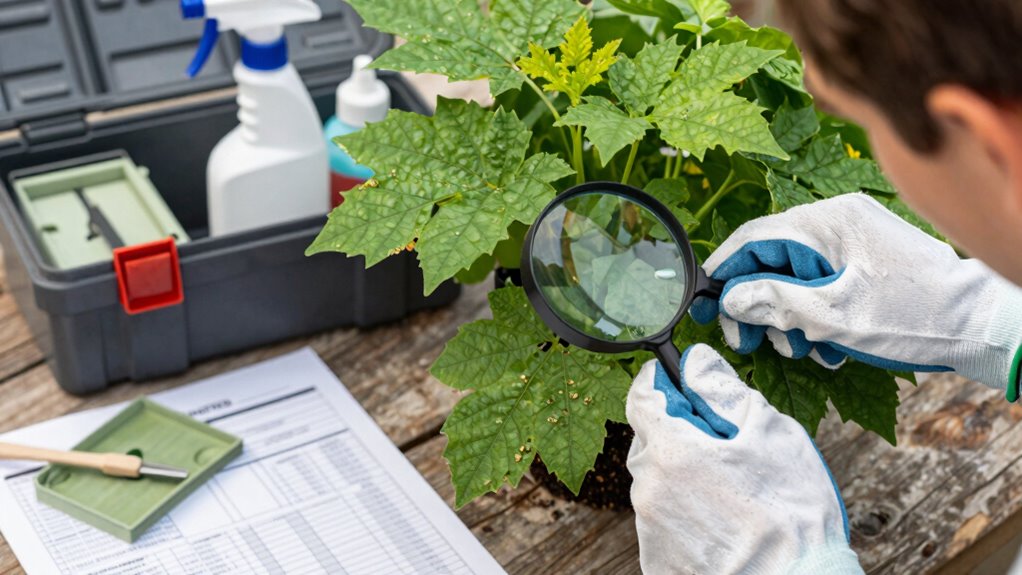
During pest checks, one common problem you might encounter is misidentifying pests or overlooking them altogether. Poor pest identification can lead to missed early signs, allowing infestations to escalate. To improve, focus on specific pest signs, like damage patterns or droppings, rather than just visible pests. Additionally, inconsistent inspections may cause you to miss emerging issues. Incorporating detection methods such as monitoring for specific damage types or pest activity signs can greatly enhance your accuracy. Keep detailed records of pest activity to identify patterns early and consider using home surveillance technology to aid in early detection. Regularly updating your knowledge about pest behaviors, such as understanding alarm clocks and their functions, can also improve your ability to recognize unusual activity early on.
Frequently Asked Questions
What Are the Most Common Pests in My Specific Crop?
You’ll often encounter pests like aphids, caterpillars, and beetles in your crop, depending on the variety. To manage them effectively, practice crop rotation to break pest life cycles and plant pest-resistant varieties that reduce infestations. Regular scouting helps you identify early signs, so you can act quickly. Combining these strategies keeps pest populations in check, protecting your crop and ensuring healthy, productive yields.
How Do Weather Conditions Affect Pest Activity?
Weather conditions considerably influence pest activity through climate patterns and temperature fluctuations. Warmer temperatures often boost pest reproduction and activity, making pests more aggressive and harder to control. Conversely, cooler weather can slow their development. Sudden temperature fluctuations might trigger pest migrations or outbreaks. Stay vigilant by monitoring weather forecasts; understanding these conditions helps you anticipate pest peaks and plan your scouting routine more effectively, catching issues early before they escalate.
When Is the Best Time of Day to Scout Pests?
Think of pest activity as a secret dance, with the best time of day being your front-row seat. Early morning and late evening are when pests are most active, like dancers warming up or winding down. During these times, you can spot them more easily and catch problems early. So, plan your scouting around these periods to stay one step ahead and keep your crops healthy.
Can I Use Natural Predators During Weekly Scouting?
Yes, you can use natural predators during weekly scouting as part of biological control. Predator introduction helps manage pest populations naturally, reducing the need for chemicals. During your weekly scouting, identify pest hotspots and introduce beneficial predators like ladybugs or parasitic wasps where infestations are detected. This proactive approach keeps pest numbers in check, supporting a healthy, balanced ecosystem and preventing pest explosions before they happen.
How Do I Record and Track Pest Population Data Effectively?
You should record pest population data using simple data recording techniques like tally sheets or digital apps, which help you identify pest trends over time. Did you know that early pest identification can reduce crop damage by 30%? To stay effective, note pest types, locations, and severity, updating your records weekly. This approach enables you to make informed decisions and catch pest outbreaks before they escalate.
Conclusion
By sticking to your weekly scouting routine, you’ll stay one step ahead of pests, catching trouble before it blooms into a full-blown infestation. Think of it as tending a delicate garden—regular attention keeps things healthy and thriving. With sharp eyes and the right tools, you’re the vigilant guardian guarding your crops’ future. Keep this routine steady, and you’ll turn pest problems into distant memories, allowing your garden to flourish like a well-tuned symphony.
Halloween Picks
halloween
As an affiliate, we earn on qualifying purchases.