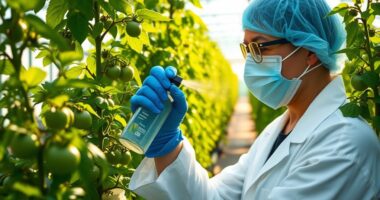

The quarantine step that saves your entire greenhouse setup is carefully isolating new or suspicious plants before they enter your main space. By setting up a dedicated quarantine area and following strict protocols, you catch pests and diseases early, preventing them from spreading. Consistent monitoring, proper sanitation, and prompt removal of issues are essential. Keep this approach in mind to protect your investment, and you’ll discover more tips for long-term success.

Get garden gear delivered free — and shop member deals
- Fast, free delivery on millions of items
- Access to Prime Big Deal Days deals on October 6–7
- Prime Video, Amazon Music and more included
Key Takeaways
- Isolating new plants immediately prevents pests and diseases from spreading to existing greenhouse crops.
- Conducting thorough inspections during quarantine allows early detection and removal of potential threats.
- Maintaining strict hygiene and disinfection routines minimizes contamination risks within the quarantine area.
- Using sterilized soil, tools, and containers reduces pathogen buildup and cross-contamination.
- Consistently monitoring and properly timing quarantine duration ensures plants are pest- and disease-free before integration.
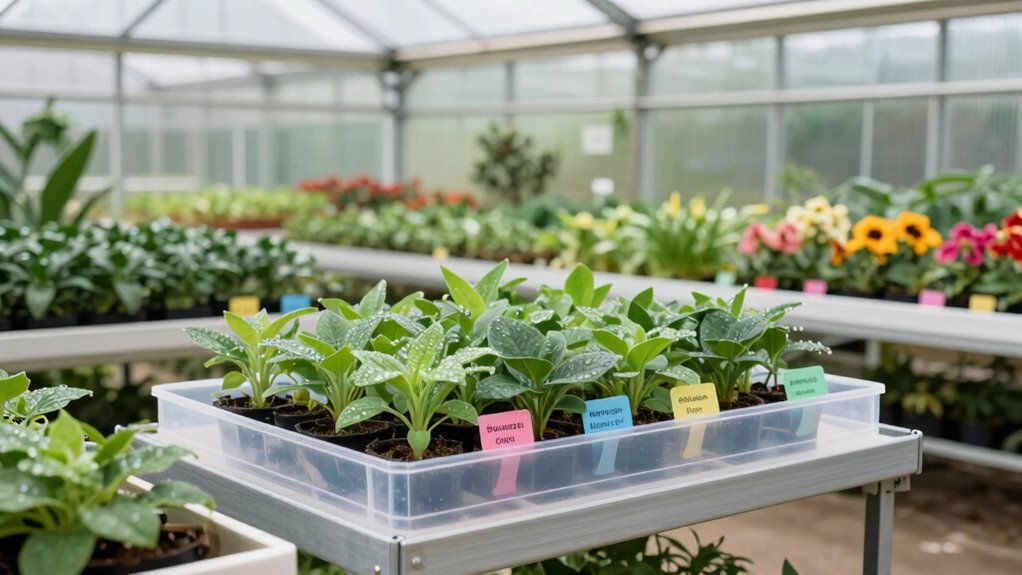
greenhouse plant quarantine station
As an affiliate, we earn on qualifying purchases.
As an affiliate, we earn on qualifying purchases.
Why Quarantining Your Greenhouse Plants Protects Your Investment

Quarantining your greenhouse plants is an essential step in safeguarding your investment. It helps maintain plant health by catching issues early before they spread. When you isolate new plants, you prevent pests and diseases from entering your established setup. This proactive approach reduces the risk of infestations that can damage or kill your plants, saving you time and money in the long run. Quarantine allows you to observe plants closely, identify any signs of pests or illnesses, and treat problems promptly. By preventing pests from establishing a foothold, you protect your entire greenhouse ecosystem. Additionally, monitoring during quarantine can help you identify common plant pests and prevent outbreaks. Incorporating proper pest management techniques during quarantine can further enhance your efforts. Understanding how to optimize your greenhouse setup can also improve overall plant health and reduce stress on your plants. Implementing effective quarantine protocols can be a vital part of your overall greenhouse management strategy. Regularly inspecting quarantined plants for early signs of disease is crucial to prevent larger issues from developing. It’s an essential practice for any serious gardener aiming to preserve their investment.
How to Choose Healthy Plants for Your Greenhouse
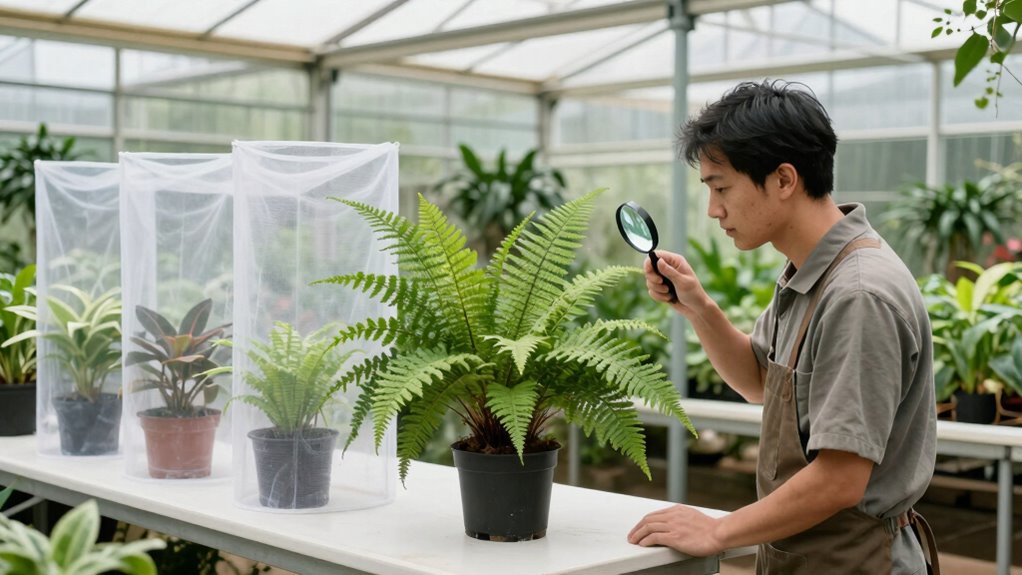
Choosing healthy plants is the next critical step after establishing your quarantine process. Start by inspecting plant labeling carefully; accurate labels help you identify species and health status. Look for signs of disease, such as spots, discoloration, or wilting. When selecting plants, make sure they come from reputable sources that practice soil sterilization, reducing the risk of pests and pathogens. Avoid plants with damaged roots or abnormal growth. Handle each plant gently to prevent injury. Confirm that the soil is free of mold or pests. Remember, healthy plants are less likely to introduce problems into your greenhouse. By paying close attention to labeling and guaranteeing soil sterilization, you set a strong foundation for a thriving, pest-free greenhouse environment. Incorporating natural filtration systems can also help maintain a healthy environment for your plants. Ensuring your plants are free from pests and diseases at the outset is essential for long-term success. Additionally, understanding the horsepower of electric dirt bikes can inspire innovative ways to power greenhouse equipment sustainably. Properly monitoring environmental factors like humidity levels can further support plant health and prevent disease development. Regular environmental monitoring and understanding plant temperature requirements can significantly improve your greenhouse’s overall health and productivity.
Setting Up a Quarantine Area That Works
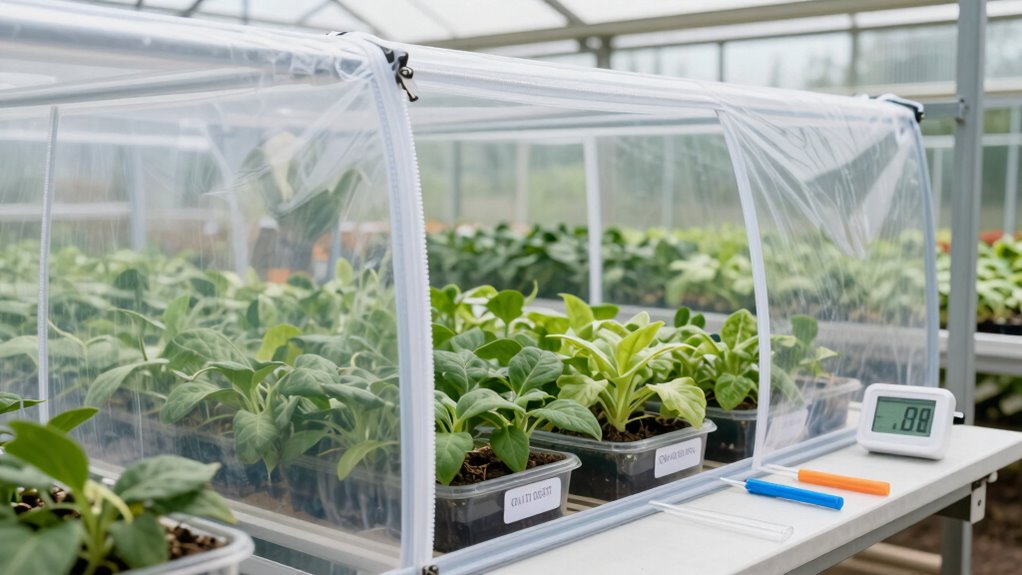
You need to designate a separate space for quarantine to prevent cross-contamination. Implement strict protocols for handling new plants and equipment to keep pests and diseases out. A well-organized quarantine area is essential for protecting your entire greenhouse setup. Effective quarantine procedures help ensure that any potential issues are caught early before they can spread throughout your setup. Regular monitoring and feedback during quarantine can further enhance early detection and response. Incorporating latest trends in plant health management, such as digital monitoring tools, can improve your quarantine effectiveness. For example, hydrotherapy techniques used in water-based health treatments can be adapted to monitor plant health and stress levels remotely, providing another layer of protection. Emphasizing creative storytelling for branding can also promote awareness of your commitment to plant health and biosecurity.
Designate Separate Space
Setting up a dedicated quarantine space is essential for preventing the spread of pests or diseases within your greenhouse. You should create compartmentalized zones that clearly separate quarantined plants from healthy ones. This minimizes contact and reduces the risk of contamination. Make sure the space is easily accessible and clearly marked to avoid accidental entry. Implement strict isolation protocols, such as using separate tools and wearing dedicated clothing when handling quarantined plants. Keep the area well-ventilated and away from main growing zones. Regularly monitor the quarantine space for signs of pests or disease. Using essential oils with antimicrobial and healing properties can be a natural way to support plant health and prevent infections. Proper quarantine protocols are vital to maintaining a healthy greenhouse environment. Establishing a dedicated quarantine area also helps in applying targeted treatments without affecting the rest of your setup. Incorporating preventative measures can further enhance the effectiveness of your quarantine efforts. By clearly designating a separate area, you create a controlled environment that’s easier to manage and helps prevent issues from spreading throughout your entire setup.
Implement Strict Protocols
To guarantee your quarantine area functions effectively, implementing strict protocols is essential. You need clear procedures to prevent plant disease and pest introduction. First, establish a disinfectant routine for tools, containers, and footwear. Second, restrict access to only essential personnel, ensuring they follow hygiene practices. Third, monitor quarantined plants daily for signs of pests or disease, removing any suspect plants immediately. These steps help contain potential threats before they spread to your main greenhouse. Enforce strict hygiene standards, and document all activities for accountability. By maintaining discipline and consistency, you minimize risks associated with plant disease and pest prevention, safeguarding your entire setup. Additionally, understanding the importance of biosecurity measures helps reinforce your quarantine protocols. Implementing these measures is crucial for preventing pathogens from entering and spreading within your greenhouse. Recognizing the role of preventive practices can significantly reduce the likelihood of outbreaks, providing an extra layer of protection. These protocols are your best defense against outbreaks, keeping your greenhouse healthy and productive.
How to Quarantine New and Existing Plants Step by Step
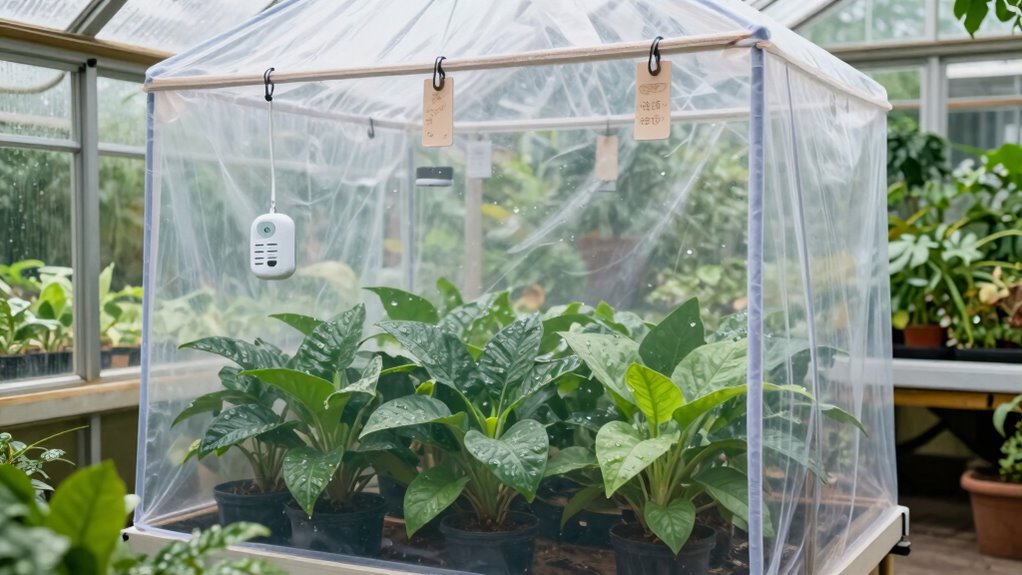
When bringing new or existing plants into your greenhouse, implementing a quarantine process is vital to prevent the spread of pests and diseases. Start by isolating plants in a separate area, away from your main setup. During quarantine, focus on plant propagation practices that minimize contamination, such as using sterilized tools and containers. Soil sterilization is essential; remove old soil and replace it with fresh, sterilized medium to eliminate hidden pests or pathogens. Keep the quarantined plants separate and monitor them closely for signs of trouble. Guarantee proper airflow and avoid sharing tools between quarantined and main plants. This step helps you catch issues early and prevents problems from spreading, protecting your entire greenhouse ecosystem. Incorporating proper airflow management can further reduce disease risk and promote healthier plant growth during quarantine. Additionally, using vetted living solutions such as eco-friendly sterilization products can enhance your quarantine effectiveness. To ensure comprehensive protection, understanding the importance of watt-hours and capacity in your equipment can help you optimize environmental controls and monitoring during quarantine periods.
How to Detect Pests and Diseases During Quarantine
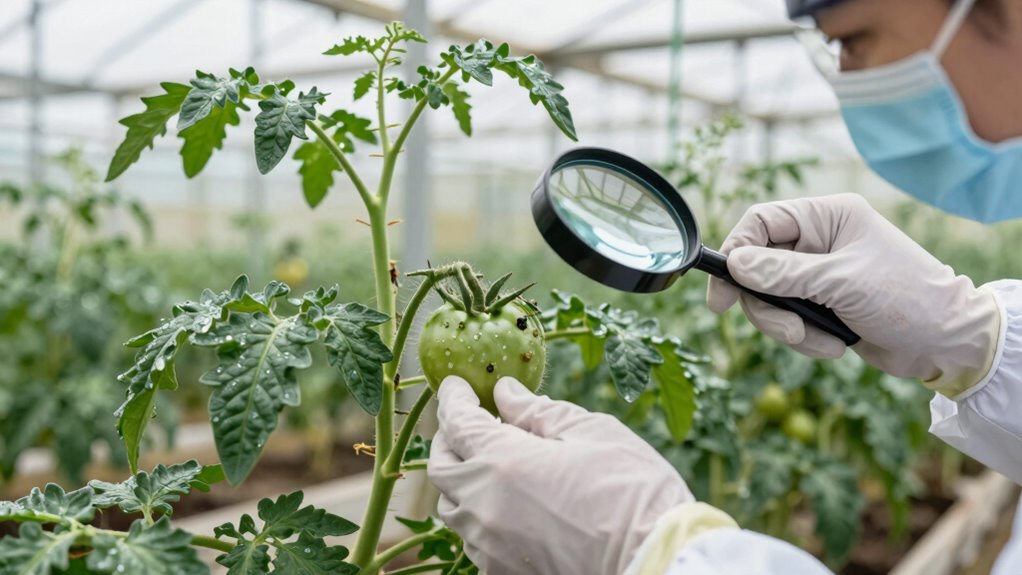
To catch pests and diseases early during quarantine, you need to be vigilant with regular visual inspections. Look closely for unusual spots, holes, or webbing on leaves and stems. Recognizing these signs quickly helps prevent the spread to your entire greenhouse.
Visual Inspection Techniques
Conducting a thorough visual inspection is essential for detecting pests and diseases during quarantine. You’ll want to carefully examine plants for visual cues such as spots, discoloration, or wilting. Using proper inspection tools like magnifying glasses, flashlights, or hand lenses can help identify subtle signs that might otherwise go unnoticed. Focus on key areas like leaf undersides, stems, and nodes, where pests often hide. Regularly rotate plants to observe all sides and guarantee no detail is missed. Look for:
- Unusual spots, lesions, or discoloration
- Tiny insects or eggs on plant surfaces
- Webbing or sticky residue indicating pest activity
With sharp eyes and the right tools, you’ll catch problems early, preventing their spread within your greenhouse.
Signs of Infestation
Detecting pests and diseases early is crucial for preventing their spread throughout your greenhouse. Pay close attention to pest identification by looking for tiny insects, webbing, or eggs on leaves and stems. Disease symptoms often appear as spots, discoloration, or mold on plant tissues. Check for wilting, stunted growth, or unusual leaf curling, which can signal deeper issues. Regular inspections help you catch problems before they escalate. Be alert to any sticky residues or fine webbing, which could indicate pest activity. Keep an eye out for irregular leaf patterns or spots that don’t match natural growth. Recognizing these signs early allows for swift action, reducing the risk of infestations spreading to healthy plants and ensuring your greenhouse remains healthy.
Common Quarantine Mistakes to Avoid
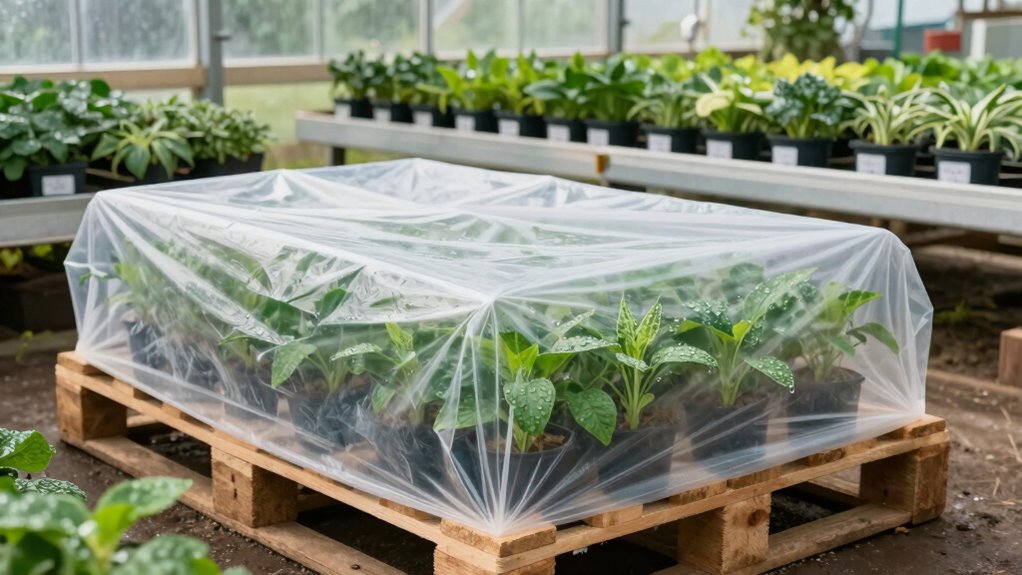
Even experienced gardeners can make mistakes during quarantine that compromise their entire greenhouse setup. One common error is neglecting proper labeling, which can lead to mixing healthy plants with infected ones. Another mistake is overwatering issues; too much water can promote fungal growth and stress plants, making them more vulnerable. Additionally, rushing the process or not monitoring plants closely can cause you to miss early signs of pests or disease. Failing to keep quarantine areas separate or neglecting sanitation can also spread issues to your main greenhouse. To avoid these pitfalls, stay organized with clear labels, control watering carefully, and maintain consistent observation. These small steps guarantee quarantine remains effective and protects your entire setup.
How Long Should Plants Stay in Quarantine?
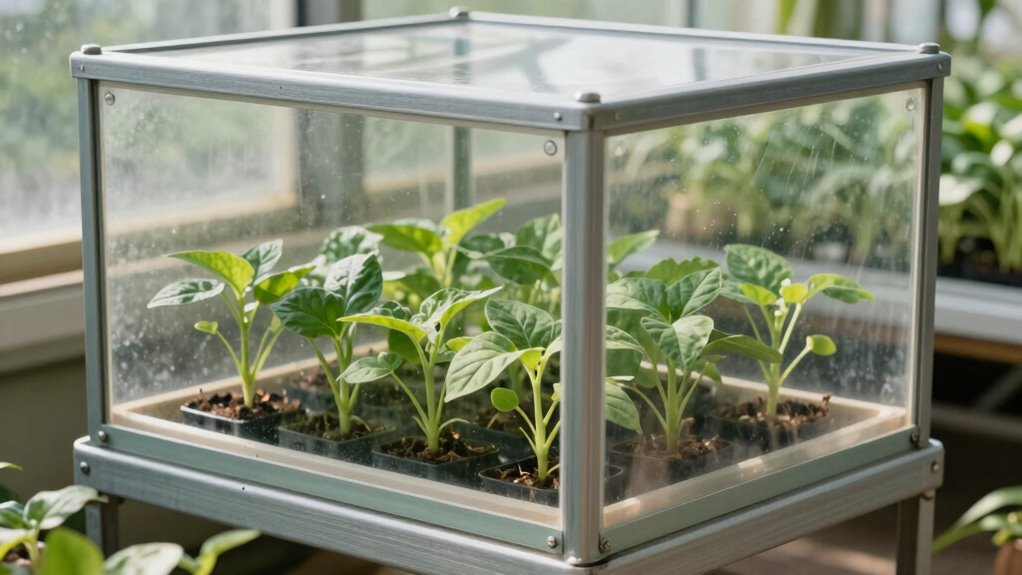
How long should plants stay in quarantine? Typically, you should keep them isolated for at least 2 to 4 weeks. During this time, monitor for pests, diseases, and signs of poor soil drainage. Proper plant nutrient management is essential—if plants show symptoms, adjust feeding to support recovery. Good soil drainage reduces the risk of root rot and fungal issues, which can appear suddenly. Use this table to gauge your quarantine progress:
| Time in Quarantine | Key Focus |
|---|---|
| 1 Week | Observe for initial pests or disease symptoms |
| 2-3 Weeks | Check soil drainage and plant nutrient responses |
| 4 Weeks | Confirm no new issues; ready to integrate into greenhouse |
| Ongoing | Maintain vigilance for emerging problems |
Stay attentive, and your quarantine will safeguard your entire setup.
Integrate Quarantine Practices for Long-Term Greenhouse Success
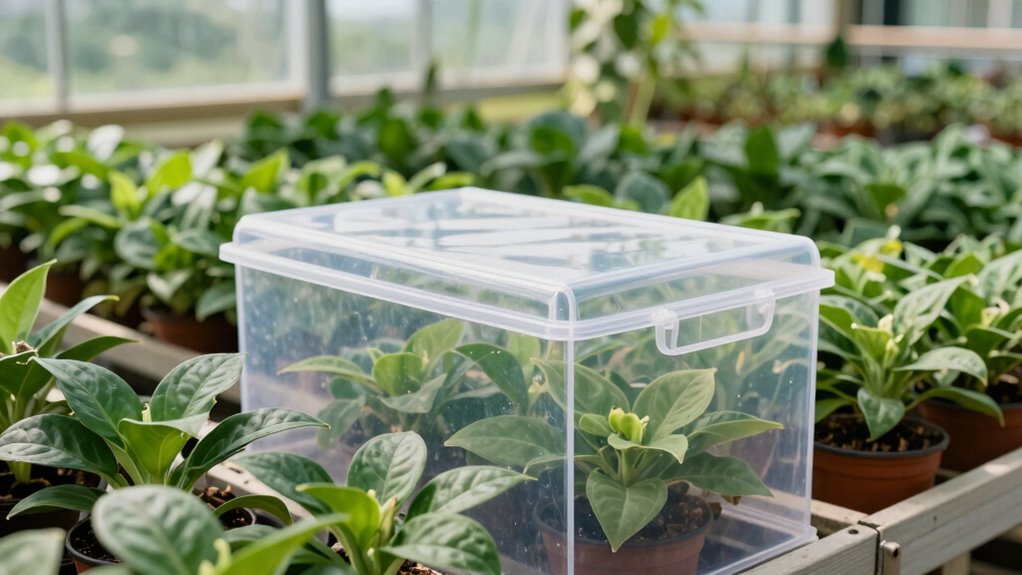
To guarantee your greenhouse remains healthy over the long term, integrating quarantine practices into your regular management routine is essential. This means establishing protocols for plant propagation and soil sterilization to prevent disease spread. When introducing new plants, always quarantine them first to monitor for pests or illnesses. Regularly sterilize soil containers and tools to eliminate pathogens that could compromise your entire setup. Consider implementing a schedule for soil sterilization, whether through heat treatment or chemical methods, to keep the growing environment sterile. Additionally, develop a routine for inspecting new plants during quarantine, ensuring any signs of trouble are caught early. By making quarantine an ongoing practice, you safeguard your greenhouse against outbreaks, ensuring a healthier, more productive growing environment for the long term.
Frequently Asked Questions
Can Quarantine Prevent All Plant Diseases?
Quarantine can’t prevent all plant diseases, but it markedly reduces pathogen transmission. By isolating new plants for the recommended quarantine duration, you give yourself time to spot symptoms and prevent spread. While some hidden infections might slip through, consistent quarantine practices greatly lower your risk. Remember, thorough observation during quarantine is key to catching issues early and protecting your entire greenhouse setup from devastating diseases.
What Tools Are Essential for Effective Quarantine?
You need essential tools like disinfectant sprays, hand sanitizers, and sterilized pruning shears for effective quarantine. Regular tool maintenance guarantees they stay clean and prevent disease spread. Keep quarantine duration strict—typically 2-4 weeks—so you catch any symptoms early. Use gloves and disinfect tools between plants. Properly maintained tools and a solid quarantine duration are key to stopping diseases from spreading throughout your greenhouse setup.
How Does Quarantine Impact Plant Growth?
Quarantine improves plant growth by ensuring plant health and preventing disease spread. When you isolate new plants, you spot issues early, giving you a chance to treat problems before they affect your entire greenhouse. This focus on disease prevention promotes healthier, more vigorous plants. It also reduces stress on existing plants, leading to better growth. Overall, quarantine creates a safer environment, resulting in stronger, disease-free plants that thrive over time.
Are Certain Plant Species More Vulnerable During Quarantine?
Certain plant species are more vulnerable during quarantine, much like a fragile glass ornament. Your focus on plant susceptibility reveals that species vulnerability varies; delicate tropical plants and those with known pest issues need extra care. You must monitor these vulnerable species closely, ensuring quarantine protects them from disease and pests. Recognizing which plants are more susceptible helps safeguard your entire greenhouse, preventing widespread issues and maintaining a healthy, thriving environment.
How Often Should Quarantine Protocols Be Reviewed?
You should review your quarantine protocols regularly, ideally every six months or after any significant changes in plant sources or regulations. Pay close attention to quarantine timing and protocol updates to guarantee you’re catching new pests or diseases early. Staying proactive helps you adapt to emerging threats and keeps your greenhouse safe. Regular reviews also ensure your procedures remain effective, preventing outbreaks that could threaten your entire setup.
Conclusion
So, you’ve now mastered the art of quarantine—your secret weapon against green nightmare invasions. Remember, a little quarantine can save your entire greenhouse from chaos, disaster, and that one plant that’s secretly plotting to take over. Ignore this step, and you might as well invite pests to a house party. Play it smart, stay vigilant, and enjoy your thriving, pest-free paradise. After all, who knew that isolation could be the true hero of gardening?
Fall Picks
fall essentials
As an affiliate, we earn on qualifying purchases.