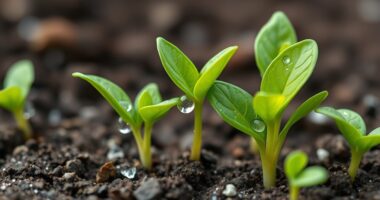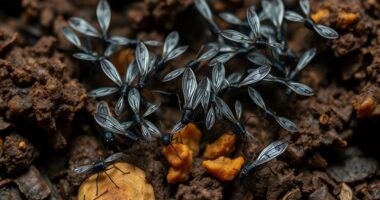

To detect root rot diseases, regularly check your plants for signs like wilting, yellowing, or stunted growth, and examine the roots for brown or black, soft, foul-smelling areas. Maintain proper soil moisture—neither too wet nor too dry—to prevent fungal growth. If you notice symptoms, remove infected plants with sterile tools and treat with appropriate fungicides based on identification. Proper watering and garden practices make a big difference, so keep exploring for more effective strategies.
Key Takeaways
- Regularly inspect roots for discoloration, softness, and foul smell to detect early signs of root rot.
- Monitor soil moisture levels consistently to prevent overwatering or drought stress that can promote fungal growth.
- Identify specific fungi causing root rot, such as Phytophthora or Fusarium, through lab testing or microscopic examination.
- Remove infected plants promptly, sterilize tools, and apply targeted fungicides to control and eliminate the disease.
- Practice cultural methods like planting native species, ensuring proper drainage, and maintaining garden biodiversity for disease prevention.
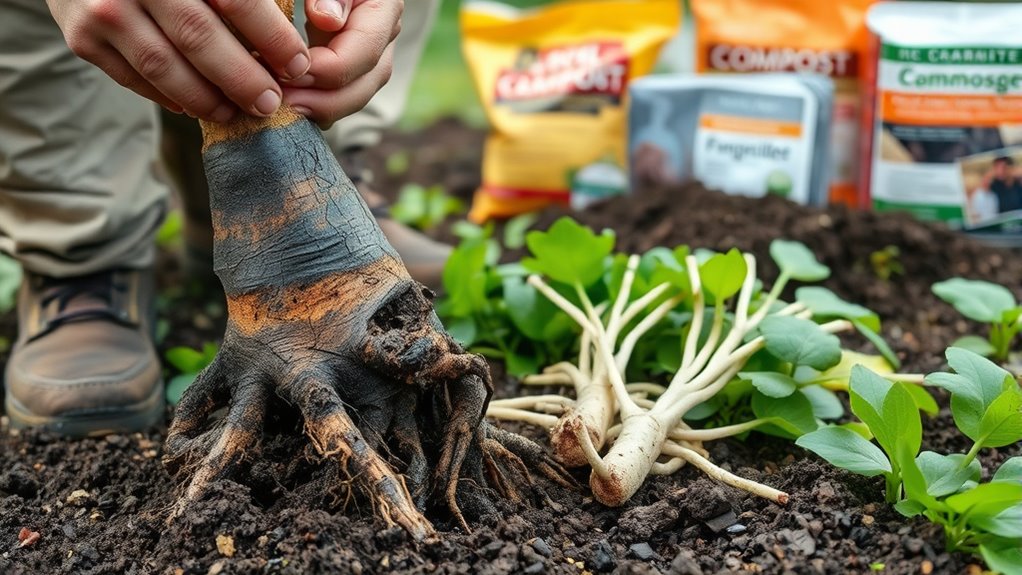
Root rot diseases can quickly devastate your plants if left unchecked, so early detection is essential. The first sign you should look for is changes in soil moisture. Overly wet soil creates the perfect environment for fungi to thrive, which is often the root cause of these diseases. If the soil remains damp for extended periods, it increases the risk of fungal growth attacking the roots. Conversely, soil that’s too dry can also stress plants and make them more vulnerable. Maintaining proper soil moisture levels is fundamental—not too wet, not too dry. Regularly check the soil’s moisture content by feeling it with your fingers or using a moisture meter. Consistent moisture management helps prevent the conditions that favor fungal development, reducing the likelihood of root rot. Incorporating native plant species into your garden can also enhance overall biodiversity and make your garden more resilient to pests and diseases.
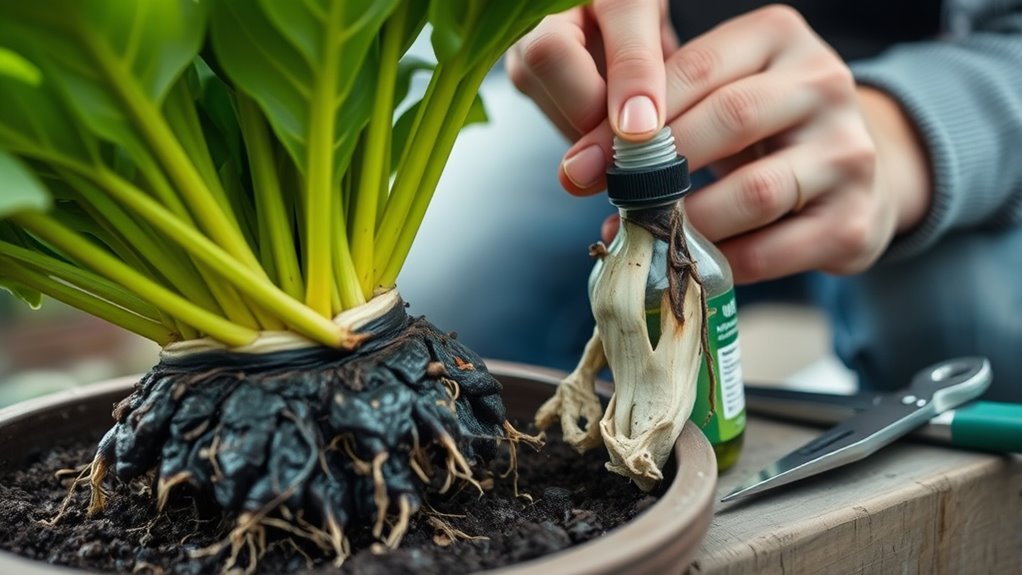
Fungal identification is the next essential step in managing root rot. When you suspect a problem, carefully examine the roots for signs of fungal infection. Healthy roots are firm, white, and smell fresh, but infected roots often turn brown or black, become soft, and may emit a foul odor. To identify specific fungi causing the disease, you might need to take a sample of the affected roots and look for characteristic features under a microscope or send it to a lab for testing. Recognizing the type of fungus involved helps determine the most effective treatment. Common root rot fungi include Phytophthora, Pythium, and Fusarium, each with slightly different behaviors and treatment responses. Early fungal identification enables you to act swiftly, whether through targeted fungicide application or cultural practices to minimize fungal spread. Regularly engaging in backyard biodiversity practices, such as planting native species and creating habitats, can also help bolster your garden’s health and resistance to diseases.
Monitoring your plants regularly is key to catching issues early. Look for subtle signs like wilting, yellowing leaves, or stunted growth, all of which can be symptoms of root rot. When you notice these symptoms, gently remove the plant from the soil to inspect the roots directly. The sooner you confirm fungal presence, the better your chances of saving your plant. Use sterile tools to prevent contamination and avoid spreading the fungi to other plants. Proper diagnosis allows you to implement specific treatments, such as applying appropriate fungicides or adjusting watering practices to reduce soil moisture and inhibit fungal growth.
Frequently Asked Questions
Can Root Rot Spread Between Different Plant Species?
Yes, root rot can spread between different plant species through cross species transmission. If one plant is infected, its pathogens can sometimes infect nearby susceptible plants, especially if they share soil or water sources. Plant susceptibility varies; some species are more resistant, while others are highly vulnerable. To prevent spreading, you should remove infected plants promptly and avoid sharing tools or soil between different species.
Are There Natural Remedies to Prevent Root Rot?
You can use natural remedies like compost teas and neem oil to prevent root rot. Compost teas boost your plant’s immune system by introducing beneficial microbes that fight off harmful fungi. Neem oil acts as a natural fungicide, protecting roots from infection. Regularly applying these treatments creates a healthier environment, reducing the chances of root rot developing. Incorporate them into your plant care routine for effective, eco-friendly prevention.
How Long Does It Take to Recover From Root Rot?
Recovery from root rot varies based on the rehabilitation timeline and recovery factors like the extent of infection and treatment effectiveness. Typically, it takes several weeks to months for your plant to recover once you’ve addressed the issue. You’ll see new growth as the roots heal and healthy roots develop. Consistent care, proper watering, and good soil conditions speed up recovery, but patience is key for your plant’s full rehabilitation.
What Are the Economic Impacts of Root Rot on Agriculture?
Have you ever considered how root rot impacts your farm’s bottom line? The economic loss from reduced crop yield can be substantial, affecting your profits and sustainability. Root rot diseases lead to lower productivity, increased treatment costs, and market setbacks. Without proper management, these economic impacts can ripple through your entire operation, emphasizing the importance of early detection and effective treatment to safeguard your crops and income.
Is It Safe to Use Chemical Fungicides Around Edible Plants?
You can use chemical fungicides around edible plants if you follow chemical safety guidelines carefully. It is crucial to read label instructions and apply fungicide properly during recommended times to minimize residue. Always wear protective gear and wash your hands afterward. Proper fungicide application reduces risks to your health and the environment, ensuring your plants stay healthy without compromising safety. Staying informed about safe practices helps you manage root rot effectively while protecting your edible crops.
Conclusion
By paying close attention to signs like wilting, discolored roots, or a foul smell, you can catch root rot early and save your plants. For example, imagine noticing your potted plant’s leaves drooping despite proper watering—checking the roots reveals dark, mushy tissue. Acting quickly with proper drainage, removing affected roots, and applying fungicides can make all the difference. Stay vigilant, act promptly, and your plants will thank you for it.