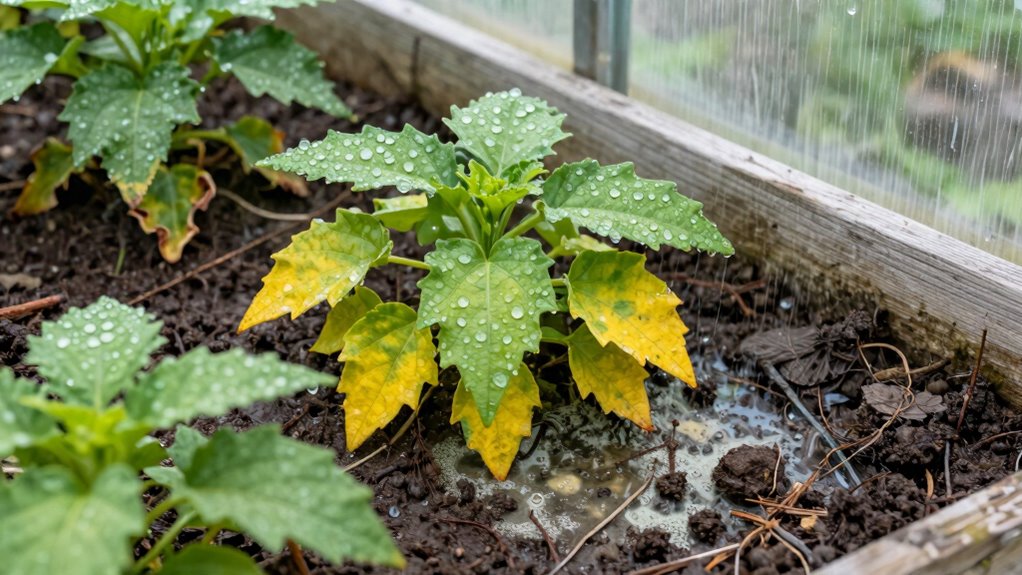
The watering mistake that causes more greenhouse problems than pests is overwatering. When you water too much, you drown the roots, cut off oxygen, and create a perfect environment for root rot and fungal diseases. It washes away crucial nutrients and weakens the plants, making them more vulnerable. If you keep overwatering, these issues will persist. Want to understand how to prevent this and keep your plants healthy? Keep going for essential tips and solutions.

Get garden gear delivered free with Prime
- Fast, free delivery on millions of items
- Prime Video, Amazon Music and more included
- Member-only deals all year
Key Takeaways
- Inconsistent watering creates fluctuating soil moisture, promoting root rot, fungal diseases, and overall plant stress.
- Overwatering drowns roots, reducing oxygen and increasing vulnerability to root rot and fungal pathogens.
- Underwatering causes dry, brittle leaves, weakening plants and making them susceptible to diseases.
- Not monitoring soil moisture leads to waterlogged or drought-stressed plants, heightening disease risks.
- Irregular watering schedules prevent soil from drying out properly, fostering disease development and plant health decline.
soil moisture meter for greenhouse plants
As an affiliate, we earn on qualifying purchases.
As an affiliate, we earn on qualifying purchases.
Understanding How Overwatering Damages Greenhouse Plants
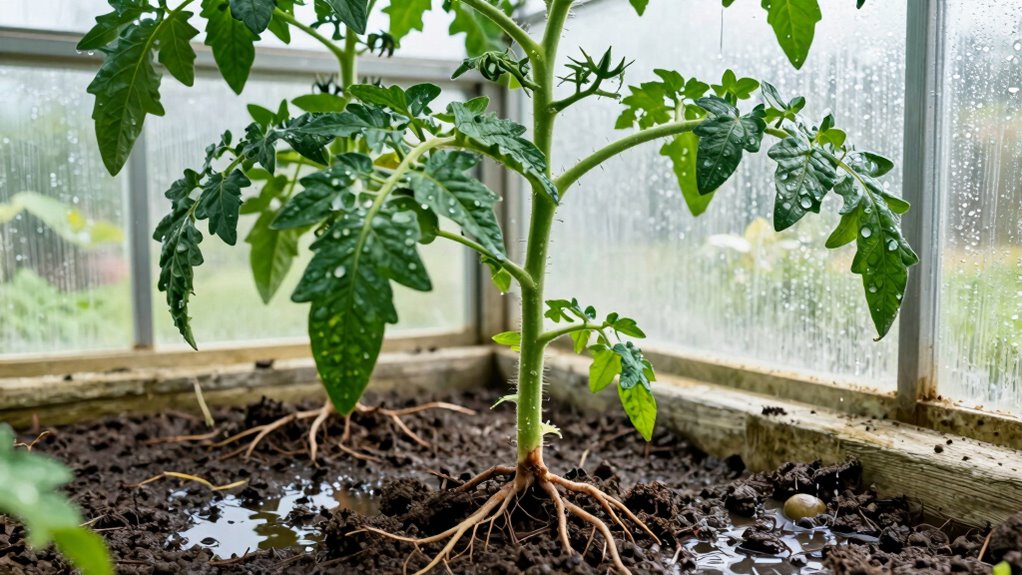
Overwatering is a common mistake that can severely harm your greenhouse plants. When you give too much water, the excess floods the soil, reducing oxygen availability to the roots. This hampers root health, making plants more vulnerable to diseases like root rot. Overwatering also washes away essential plant nutrients, depriving your plants of crucial elements they need to grow strong. As roots struggle to access oxygen and nutrients, their ability to support healthy growth diminishes. You might notice wilting or yellowing leaves, but these symptoms often stem from root issues caused by excess water. Proper watering ensures your plants maintain healthy roots, which are key to absorbing nutrients effectively. Keeping soil moisture balanced helps your greenhouse plants thrive and stay resilient, especially when considering Piercing Care and Hygiene and other safe use guidelines to prevent problems. Additionally, understanding soil drainage can help you avoid water accumulation that leads to overwatering issues, and maintaining proper watering techniques is essential for healthy plant development.
Recognizing Signs of Overwatering and Underwatering
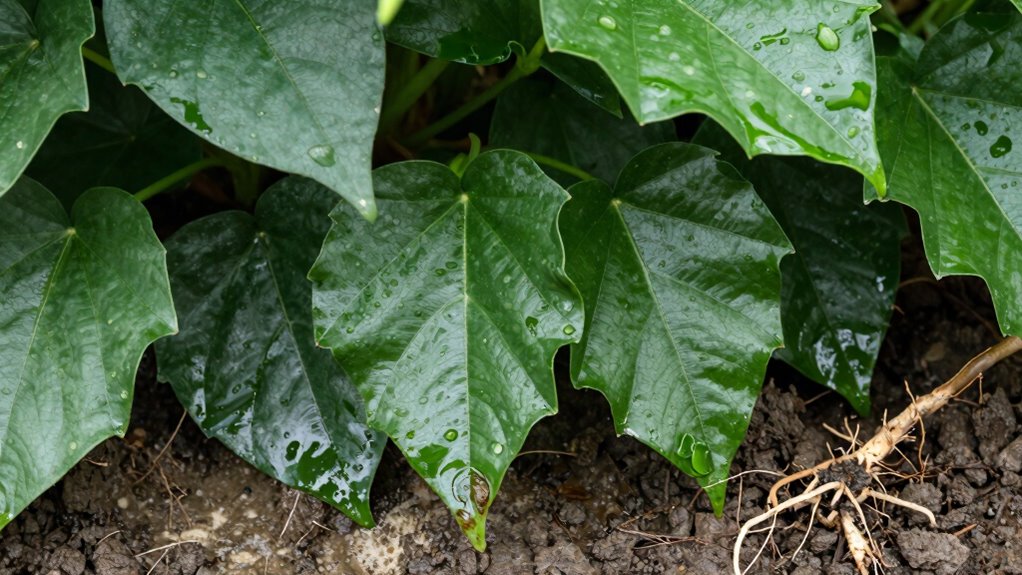
Recognizing whether your plants are overwatered or underwatered is essential for maintaining healthy greenhouse conditions. Overwatering often leads to waterlogged soil, causing roots to suffocate and leading to plant dehydration despite excess water. Signs include yellowing leaves, wilting, and a soggy feel to the soil. Underwatering, on the other hand, results in dry, brittle leaves, wilting, and poor growth, as the plant struggles to access enough moisture. To conserve water and prevent plant dehydration, monitor soil moisture regularly and adjust your watering schedule accordingly. Proper water management ensures plants stay healthy, prevents root rot, and promotes efficient water use in your greenhouse. Recognizing these signs early helps you avoid the pitfalls of both over- and underwatering. Additionally, understanding the importance of precise watering routines in water management can significantly improve plant health and greenhouse efficiency. Being aware of plant stress signals, such as leaf discoloration or wilting, can help you catch issues before they become severe. Regularly checking soil moisture levels with a reliable meter can help you develop a more accurate watering schedule, reducing guesswork and improving plant resilience.
How Irregular Watering Can Encourage Plant Diseases
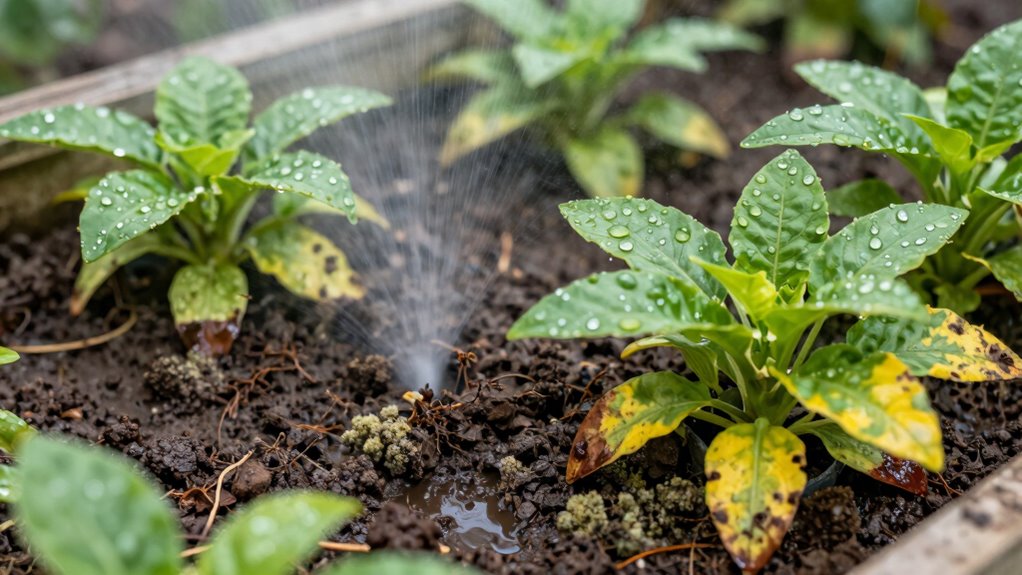
Inconsistent watering schedules can create the perfect environment for plant diseases to develop. When you water irregularly, you cause fluctuations in soil moisture that promote issues like root rot and fungal spores growth. These conditions weaken your plants and make them more vulnerable. Proper watering techniques can help maintain healthy soil moisture levels and prevent disease development. To prevent this: 1. Avoid overwatering, which encourages root rot by drowning roots in excess water. 2. Never let soil dry out completely, as dry spells can stress plants and foster fungal spores. 3. Maintain a consistent watering routine to keep moisture levels stable, reducing the risk of disease. Consistent watering also supports soil health, which is essential for preventing pathogen buildup that can lead to infections. Well-maintained soil with balanced moisture levels is a key component of plant health, promoting stronger growth and resilience. Additionally, understanding the watering needs specific to your plant variety can further optimize plant health and resilience. Being aware of soil moisture levels can help you adjust your watering schedule more effectively and prevent unintentional stress on your plants.
Best Practices for Watering Greenhouse Plants
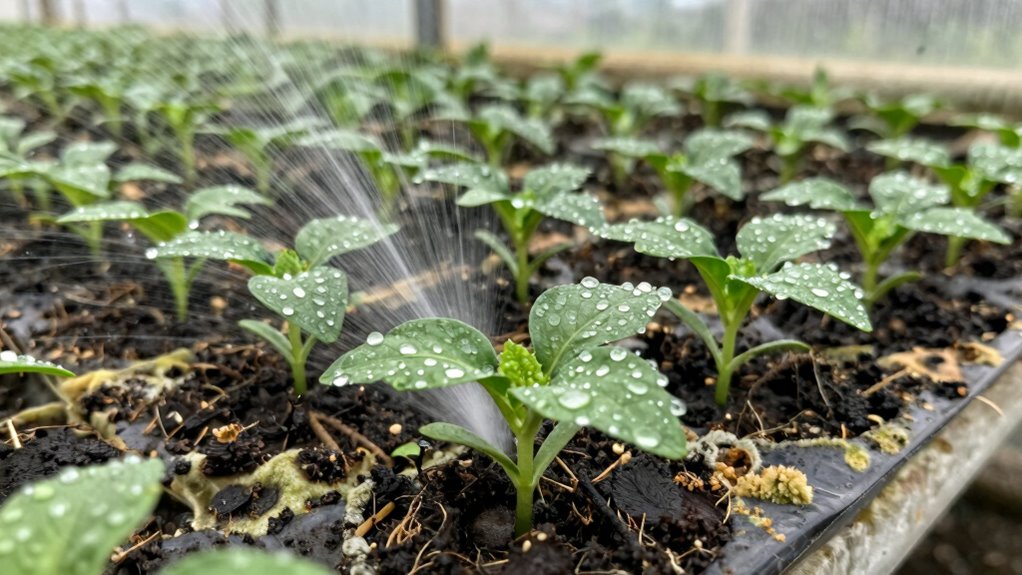
To guarantee healthy greenhouse plants, you should develop a consistent watering routine that meets their specific needs. Proper watering promotes strong root health, which is essential for stable growth and resilience. Avoid overwatering, as it can lead to root rot and hinder nutrient absorption, weakening your plants. Water early in the day to allow excess moisture to evaporate and prevent disease. Use well-draining soil or media to make certain excess water doesn’t accumulate around roots. Monitoring soil moisture levels regularly, sticking your finger or using a moisture meter, to determine when plants need water, is crucial. Consistent watering helps plants absorb nutrients efficiently, supporting healthy development and preventing problems caused by water stress or drought. Understanding watering best practices is also crucial for maintaining an optimal environment in your greenhouse. Additionally, paying attention to the specific water requirements of different plant breeds can significantly enhance their health and growth. Regularly adjusting your watering schedule based on seasonal changes can also prevent common issues associated with improper watering. Incorporating tools like moisture meters ensures precise soil moisture measurement, which is vital for optimal watering.
Adjusting Watering for Different Plant Types and Growth Stages
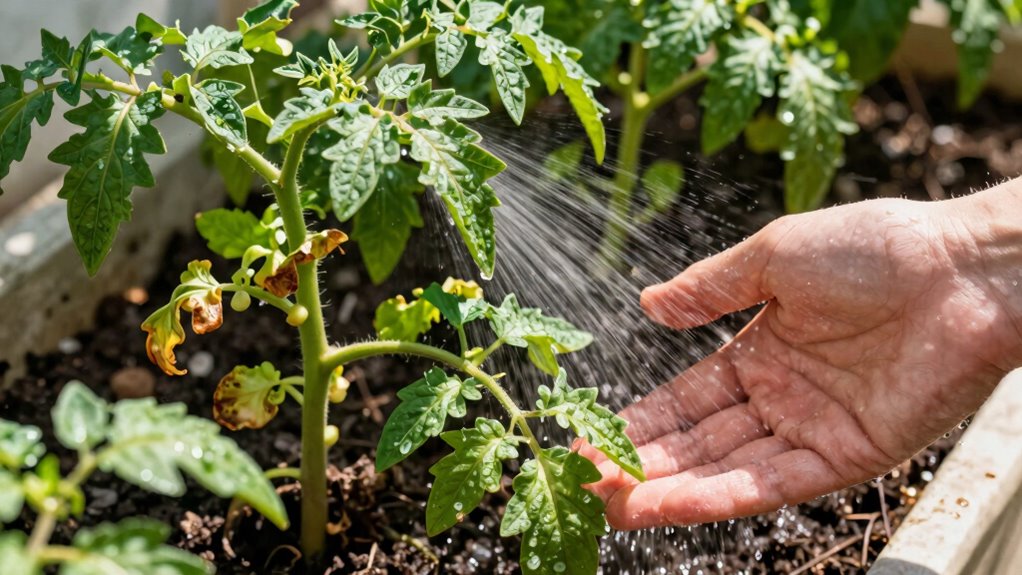
You need to tailor your watering schedules based on the specific plants and their growth stages. As plants mature, their water needs change, so adjusting your approach guarantees healthy development. By fine-tuning your watering for each phase, you prevent issues like overwatering or drought stress. Incorporating practical tools that help monitor soil moisture can further support proper watering habits.
Tailoring Watering Schedules
Different plant types and growth stages demand tailored watering schedules to guarantee healthy development. Recognizing each plant’s drought tolerance helps you adjust watering frequency, preventing over- or under-watering. To conserve water and promote ideal growth, consider these strategies:
- Observe soil moisture levels regularly to avoid unnecessary watering.
- Adjust watering based on plant needs—more frequent for young or drought-sensitive plants, less for mature or drought-tolerant ones.
- Use efficient watering methods, like drip systems, to minimize water waste and ensure consistent moisture.
- Understanding the light and humidity requirements of your indoor plants can further refine your watering schedule for optimal health. Additionally, being aware of your watering techniques can significantly impact water efficiency and plant vitality. Incorporating watering schedules that match your plants’ specific needs can lead to healthier growth and more sustainable practices. Being mindful of soil moisture levels can help prevent common mistakes, such as overwatering, which can cause root rot and other greenhouse problems.
Adjusting For Growth Phases
Adjusting watering routines as plants progress through various growth stages is essential for their health and productivity. During early growth, plants need more frequent watering to support root development, but as they mature, watering frequency should decrease to prevent overwatering. For seedlings and young plants, keep the soil consistently moist but not soggy. As they evolve into vegetative or flowering stages, modify watering based on their specific needs, which may include less frequent but deeper watering to encourage strong roots. Monitoring the plant’s appearance and soil moisture helps you fine-tune this process. Recognizing each growth stage ensures you provide just the right amount of water, avoiding stress or disease caused by improper watering frequency. Proper adjustment maximizes growth and minimizes problems.
Tools and Techniques for Soil Moisture Monitoring
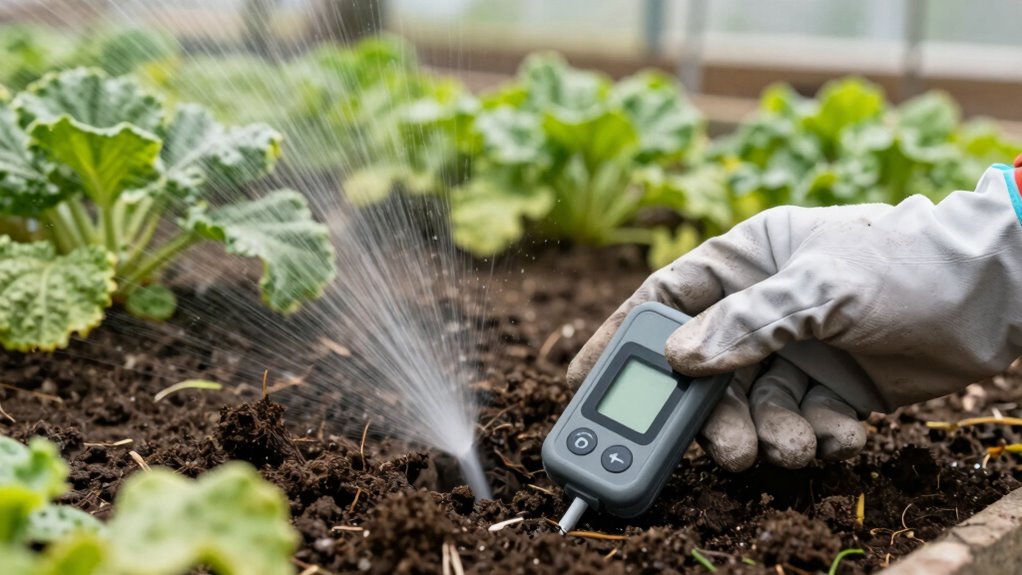
Accurately monitoring soil moisture is essential for maintaining healthy greenhouse conditions, and there are several tools and techniques available to help you do so effectively. Water sensors are among the most reliable methods for tracking soil moisture levels in real time. These sensors can be placed at different depths to give you an accurate picture of soil conditions and prevent over- or under-watering. Understanding the why behind soil moisture levels is crucial for effective watering practices. Here are some tools and techniques to consider:
- Digital Water Sensors: These provide instant readings and can connect to apps for easy monitoring.
- Moisture Meters: Handheld devices that give quick, spot-check measurements.
- Tensiometers: Instruments that measure soil tension, indicating moisture availability.
Using these tools guarantees you maintain ideal soil moisture, reducing greenhouse issues caused by improper watering.
Common Watering Mistakes to Avoid in Greenhouse Gardening
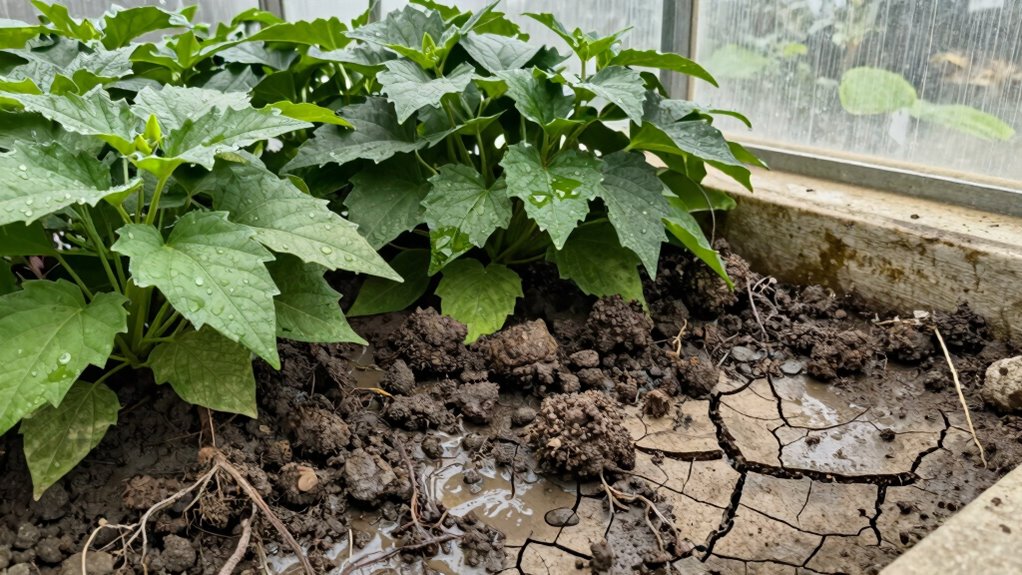
Avoid overwatering, as it can lead to root rot and other health issues for your plants. Stick to a consistent watering schedule to prevent stress and uneven growth. Make sure your drainage solutions are effective to prevent water from pooling and damaging your greenhouse environment.
Overwatering Risks
Have you ever overwatered your greenhouse plants and wondered what went wrong? Overwatering can harm root health and disrupt water distribution, leading to poor plant growth. Excess water fills air pockets in the soil, suffocating roots and promoting rot. To avoid this, keep these tips in mind:
- Maintain proper drainage to prevent water from pooling.
- Check soil moisture before watering—only water when the top inch feels dry.
- Use watering techniques that promote even water distribution, like drip systems or watering cans with a fine nozzle.
Inconsistent Watering Schedule
Inconsistent watering schedules can disrupt your greenhouse plants’ growth and health, often leading to stress and poor development. When watering isn’t regular, plants struggle to establish strong roots and maintain ideal water uptake. This inconsistency hampers water conservation efforts because you may overwater during some sessions and underwater in others, wasting resources. Uneven moisture levels also weaken root health, making plants more vulnerable to pests and diseases. To avoid this mistake, establish a consistent watering routine tailored to your plants’ needs and environmental conditions. Regular watering helps maintain stable soil moisture, supporting healthy root growth and efficient water use. By sticking to a predictable schedule, you ensure your greenhouse plants thrive and reduce the risk of stress-related problems.
Poor Drainage Solutions
When watering schedules are uneven or too frequent, poor drainage often follows as a result. This can lead to waterlogged roots, negatively impacting root health and nutrient absorption. To avoid drainage issues, consider these solutions:
- Use well-draining soil mixes that prevent water buildup.
- Incorporate drainage layers, like gravel or coarse sand, at the bottom of containers.
- Elevate pots on stands or feet to promote airflow and excess water runoff.
Proper drainage ensures roots stay healthy and oxygenated, supporting better nutrient uptake. Without it, roots become vulnerable to rot and disease, reducing plant vigor. Keep an eye on your watering habits and container choices to prevent these common drainage pitfalls. Addressing drainage proactively helps maintain strong root systems and vibrant greenhouse plants.
Improving Drainage and Soil Quality for Better Water Management

Improving drainage and soil quality is essential for effective water management in your greenhouse. Good soil aeration prevents waterlogging and promotes healthy root growth. Incorporate organic amendments like compost or aged manure to boost soil structure and fertility. These additions improve water retention without causing oversaturation and help break up compacted soil. To optimize drainage, consider mixing coarse materials such as sand or perlite into your soil. Regularly test your soil’s drainage capacity and adjust accordingly. Here’s a quick guide:
| Ingredient/Method | Purpose | Effect |
|---|---|---|
| Organic amendments | Improve fertility and structure | Better water retention and aeration |
| Soil aeration tools | Enhance root oxygen flow | Prevents waterlogging |
| Coarse materials | Enhance drainage | Prevents oversaturation |
Implement these strategies for healthier greenhouse soil.
Troubleshooting Watering Problems and Enhancing Your Routine
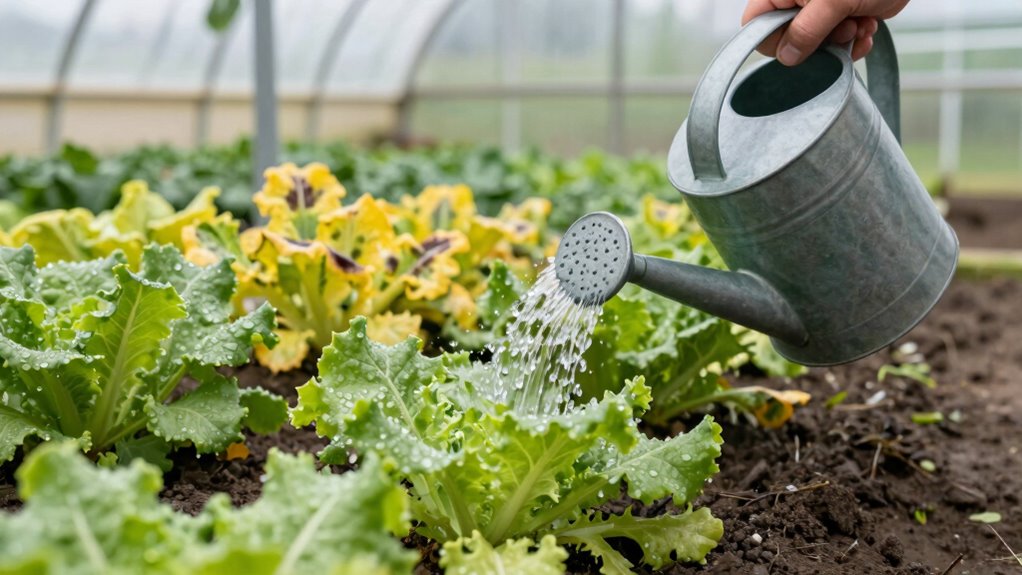
Even a small mistake in your watering routine can lead to significant greenhouse problems, such as root rot or uneven plant growth. To troubleshoot effectively and improve your routine, focus on these key areas:
- Check your watering schedule regularly to avoid over- or under-watering, especially in hydroponic systems where precise control matters.
- Monitor soil moisture levels with a moisture meter to promote water conservation and prevent saturation.
- Adjust watering techniques to ensure even distribution, reducing waste and encouraging healthy root development.
Frequently Asked Questions
How Does Watering Frequency Affect Greenhouse Humidity Levels?
Your watering schedule directly impacts humidity control in the greenhouse. Water too often, and humidity levels rise, creating a damp environment that fosters mold and pests. Water too infrequently, and plants can suffer, reducing transpiration and humidity. Finding the right balance guarantees ideal humidity levels. Adjust your watering frequency based on plant needs and environmental conditions to maintain stable humidity, preventing problems caused by overly moist or dry air.
Can Watering Mistakes Impact Plant Nutrient Absorption?
Poor watering practices can profoundly impact plant nutrient absorption, causing nutrient leaching and root suffocation. When you overwater, nutrients wash away, leaving plants starved and stunted. Conversely, underwatering can suffocate roots, preventing them from absorbing essential nutrients. You need to balance watering to maintain moisture without drowning roots. Proper watering guarantees nutrients stay in the soil, roots breathe freely, and your plants thrive with ideal nourishment.
What Are the Long-Term Effects of Overwatering on Soil Health?
Overwatering leads to long-term soil health issues like soil compaction and microbial imbalance. When you water too much, soil becomes dense, restricting root growth and reducing oxygen availability. This creates an environment where beneficial microbes struggle to survive, disrupting nutrient cycling. Over time, these problems weaken plant health, decrease yields, and make your greenhouse more prone to pests and diseases. You need to find a balance to maintain healthy, resilient soil.
How Do Watering Errors Influence Greenhouse Pest Populations?
Watering errors can considerably influence pest populations in your greenhouse. When you overwater, soil becomes compacted, reducing aeration and creating a damp environment that pests like fungus gnats and mold thrive in. This attracts more pests, worsening infestations. Conversely, uneven watering leads to dry spots, stressing plants and weakening their defenses. Proper, consistent watering helps maintain soil health, reducing pest attraction and keeping your greenhouse healthier overall.
Are There Specific Signs of Watering Issues in Root Development?
You’ll notice watering issues through poor root development, such as stunted or discolored roots indicating root rot. Water stress can cause roots to become brittle or overly dry, weakening the plant’s ability to absorb nutrients. If roots appear mushy, blackened, or shriveled, you’re likely overwatering or underwatering. Regularly check soil moisture and root health to prevent these signs, ensuring proper watering practices and avoiding damage caused by incorrect watering.
Conclusion
By mastering proper watering techniques, you can prevent more problems than pests ever could cause. It’s funny how a simple mistake like overwatering can lead to root rot or disease, which often go unnoticed until it’s too late. When you pay close attention to soil moisture and adjust your routine accordingly, you’ll find your greenhouse thriving. Sometimes, the smallest change in your watering habits makes all the difference—almost as if the plants are telling you what they need without saying a word.
Fall yard work Picks
leaf blowers
As an affiliate, we earn on qualifying purchases.