
To tell heat stress from disease symptoms, observe where and how the damage appears. Heat stress often shows as wilting, leaf browning, and dry patches mainly on sun-exposed areas during hot days, and symptoms lessen overnight. Disease signs include spots, mold, or oozing that spread unevenly and may have fuzzy edges or foul odors. Noticing these differences helps you respond properly. Keep going to uncover more tips for accurate diagnosis and proper plant care.
Key Takeaways
- Heat stress causes uniform, localized leaf wilting and scorching in sun-exposed areas, often improving overnight.
- Disease symptoms include irregular spots, lesions, mold, or oozing, often appearing unevenly and spreading over time.
- Heat damage generally affects large, symmetrical areas during hot days, while disease symptoms may start as isolated spots.
- Healthy plants recover quickly from heat stress with shade and watering; weakened plants show more severe, persistent symptoms.
- Presence of mold, foul smell, or uneven spreading indicates infection, whereas heat stress effects diminish with temperature drop.
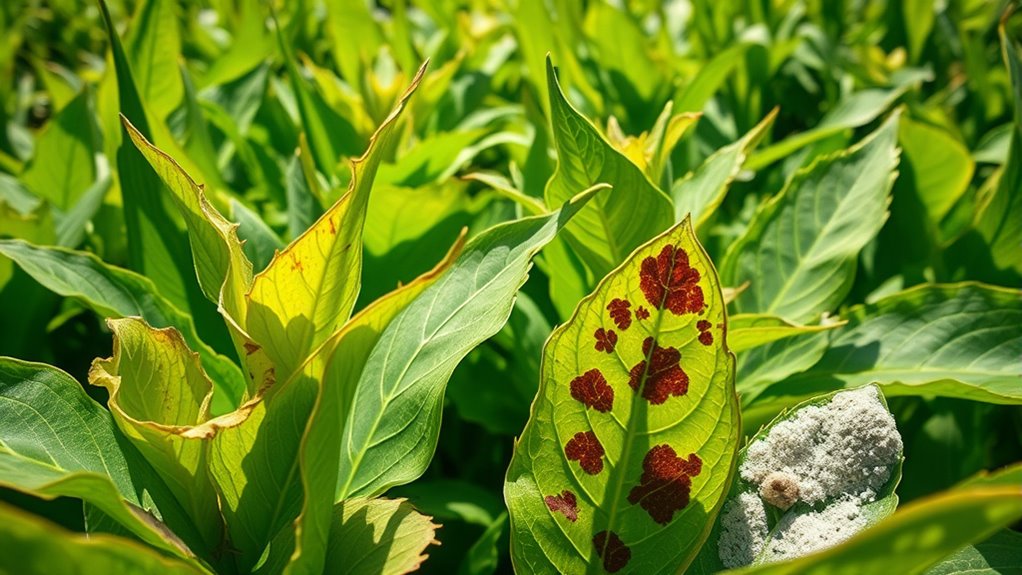
Heat stress and disease symptoms can often look similar, making it essential to recognize the differences early. When your plants show signs of distress, it’s natural to worry about whether they’re battling high temperatures or an illness. However, understanding the key differences helps you respond effectively, supporting your plant’s resilience and preventing further damage. The first step is focusing on symptom differentiation. By paying close attention to the patterns and progression of symptoms, you can determine whether heat stress or disease is the culprit.
Heat stress typically causes symptoms like leaf wilting, scorching, or browning, especially along the edges. These signs often appear during the hottest parts of the day and become less pronounced overnight as temperatures drop. The damage tends to be localized, affecting areas exposed to direct sunlight. You might notice that the affected leaves are dry, crisp, or curled, but the overall plant remains structurally intact. In contrast, disease symptoms often start as small spots, lesions, or mold, which gradually spread or deepen over time. Fungal or bacterial infections may cause leaf spots with defined borders, ooze, or a fuzzy appearance, indicating ongoing pathogen activity.
Heat stress causes localized leaf scorch and wilting, mainly during hot days; disease often presents as spreading spots or mold.
Plant resilience plays a pivotal role in how your plants handle stress. Healthy, well-maintained plants are better equipped to withstand adverse conditions. If your plants are resilient, they might recover quickly once the environmental stress subsides. Conversely, weakened plants may show more severe symptoms or succumb more rapidly to disease. Recognizing these differences allows you to tailor your response—whether that means providing shade and extra watering during heat waves or applying appropriate fungicides or cultural practices to manage disease.
Another key aspect of symptom differentiation is observing the timing and location of symptoms. Heat stress often affects large portions of the plant uniformly, especially in exposed areas. Damage tends to be symmetrical and predictable, aligning with sun exposure. Disease symptoms, however, might appear irregularly, starting in isolated spots and spreading unevenly. You may also notice a foul smell or visible mold, which are clear indicators of infection rather than heat damage.
Frequently Asked Questions
Can Heat Stress Symptoms Appear Suddenly or Develop Gradually?
Heat stress symptoms can appear suddenly or develop gradually, depending on how long you’re exposed to heat and your body’s response. You might notice symptoms like heavy sweating and weakness suddenly, or they could build up over time, causing fatigue or dizziness. It’s important to pay attention to symptom onset, as early detection allows you to cool down and prevent more serious heat-related illnesses. Stay alert and act quickly to stay safe.
Are There Specific Signs That Differentiate Heat Stress From Dehydration?
Sure, dehydration usually whispers “I’m thirsty,” but heat stress shouts with skin redness and electrolyte imbalance. If your skin turns red and you notice muscle cramps or dizziness, you’re likely dealing with heat stress, not just dehydration. Dehydration might make you feel dry and parched, yet heat stress impacts your entire body with symptoms like sweating, fatigue, and skin redness. Spot these signs early to prevent a heat-related meltdown.
How Long Does It Typically Take for Heat Exhaustion to Develop?
Heat exhaustion typically develops within 1 to 4 hours of intense heat exposure or physical activity. You might notice symptoms like heavy sweating, weakness, dizziness, and nausea quickly after starting to work in hot conditions. The timing can vary depending on your hydration levels, clothing, and activity intensity. If you experience these signs early, it’s vital to cool down and hydrate promptly to prevent progression to heat stroke.
Can Certain Diseases Mimic Heat Stress Symptoms?
You might wonder if diseases can mimic heat stress symptoms, and the answer is yes. Disease mimicry occurs when conditions like Lyme disease or meningitis cause symptom overlap with heat stress, such as dizziness, headache, or nausea. This makes diagnosis tricky, so it’s essential to take into account other signs and seek medical advice. Recognizing disease mimicry helps prevent misdiagnosis and guarantees you get the right treatment promptly.
Are Children and Elderly More Prone to Heat Stress Than Others?
Yes, children and the elderly are more vulnerable to heat stress because of their higher risk factors. Their bodies may struggle to regulate temperature effectively, making them more susceptible to heat-related illnesses. As someone caring for them, you should monitor vulnerable populations closely during hot weather, guarantee they stay hydrated, and keep them in cool environments to reduce the risk of heat stress.
Conclusion
Now that you know the signs, stay sharp and stay safe. Spotting the subtle shifts between heat stress and disease symptoms can save lives and prevent suffering. Be vigilant, be vigilant, be vigilant—your vigilance verifies vitality. With keen eyes and quick action, you can combat confusion and conquer crises. Keep cool, stay cautious, and carry confidence, because clear comprehension creates a safer, stronger stance against heat and health hazards alike.