

To prevent nutrient disorders, you should regularly monitor your pH and EC levels. Keeping your pH between 5.5 and 6.5 helps nutrients stay soluble and accessible, while adjusting EC guarantees your plants get the right amount of nutrients without overloading them. Consistent checks let you catch imbalances early and make quick corrections, promoting healthy growth. If you want to understand how to fine-tune these levels effectively, continue exploring how regular adjustments support plant health.

Get garden gear delivered free with Prime
- Fast, free delivery on millions of items
- Prime Video, Amazon Music and more included
- Member-only deals all year
Key Takeaways
- Regular testing of pH and EC ensures early detection of imbalances that can cause nutrient deficiencies or toxicities.
- Adjusting pH with pH up or down solutions maintains optimal nutrient solubility and availability.
- Monitoring EC helps prevent over- or under-fertilization, reducing risks of nutrient lockout or deficiencies.
- Consistent pH and EC management creates stable conditions for healthy plant growth.
- Prompt adjustments based on monitoring data help avoid nutrient disorders and improve crop yields.
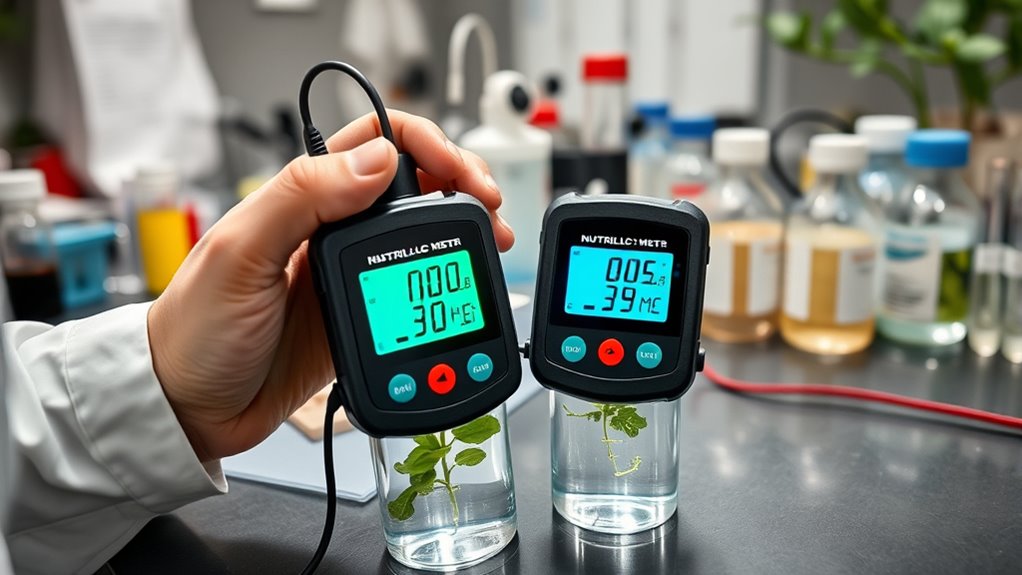
Have you ever wondered why maintaining proper pH and electrical conductivity (EC) levels is essential for healthy plant growth? The answer lies in how plants absorb nutrients from their environment. When the pH of your growing medium is off, it can hinder the availability of vital nutrients, making it difficult for plants to thrive. Similarly, if the EC levels are too low or too high, your plants might not get the right amount of nutrients they need, leading to deficiencies or toxicities. Monitoring these two parameters ensures your plants have the ideal conditions to grow strong and healthy.
Proper pH and EC levels are vital for optimal nutrient absorption and healthy plant growth.
pH adjustment is a critical step in maintaining optimal nutrient uptake. Different nutrients are available to plants at specific pH ranges, typically between 5.5 and 6.5 for most crops. If the pH drifts outside this window, certain nutrients become insoluble and inaccessible to roots. For example, at high pH levels, micronutrients like iron and manganese become less available, causing deficiencies. Conversely, low pH can lead to toxic accumulations of elements like aluminum. To prevent these issues, you need to regularly test and adjust your pH. This can be done using pH up or pH down solutions, which help bring the medium back into the ideal range. Consistent pH adjustment ensures your plants can absorb nutrients efficiently, avoiding common deficiencies or toxicities.
Electrical conductivity (EC) measures the concentration of dissolved salts or nutrients in your solution. If EC is too low, your plants may not be receiving enough nutrients, resulting in poor growth and potential deficiencies. On the other hand, excessively high EC indicates an overabundance of salts, which can lead to nutrient lockout or root damage. Proper monitoring allows you to fine-tune your feeding schedule, adding nutrients methodically to maintain a balanced EC level. This balance is crucial because it ensures your plants are neither starved nor overwhelmed with nutrients, both of which can cause nutrient disorders.
Regular testing of pH and EC provides you with real-time insights into your growing environment. Using reliable meters, you can detect fluctuations early and make timely adjustments. This proactive approach helps prevent nutrient lockout and deficiencies, ultimately supporting healthier, more productive plants. Remember, maintaining the right pH and EC isn’t a one-time task but an ongoing process. By staying vigilant and making necessary pH adjustments and EC corrections, you create optimal conditions for nutrient uptake, which is fundamental for robust plant development. In the end, consistent monitoring and adjustments safeguard your plants from nutrient disorders, leading to healthier growth and better yields.
As an affiliate, we earn on qualifying purchases.
Frequently Asked Questions
How Often Should Ph and EC Be Tested for Optimal Plant Health?
You should test pH and EC at least once a week, especially if you’re following a watering schedule to keep your plants healthy. Regular soil testing helps you catch nutrient imbalances early. If conditions change or you notice issues, test more frequently. Consistent monitoring ensures your plants get the right nutrients, prevents disorders, and promotes ideal growth, making it easier to adjust your watering and fertilizing routines effectively.
Can Fluctuating Ph Levels Cause Specific Nutrient Deficiencies?
Fluctuating pH levels are like a gatekeeper that can cause nutrient lockout, blocking essential nutrients from your plants. When pH drifts out of ideal range, it creates a pH imbalance, leading to specific nutrient deficiencies. You might notice yellowing leaves or stunted growth. Keeping pH steady helps prevent these issues, ensuring your plants absorb nutrients properly and stay healthy, thriving without the risk of nutrient lockout.
What Are the Best Tools for Accurate Ph and EC Measurement?
You should use portable meters with high-quality electrodes for accurate pH and EC measurement. Regular electrode calibration is essential to guarantee precision; calibrate your electrodes with standard solutions before each use. Portable meters are convenient for on-site testing, providing quick results. Look for models with automatic temperature compensation and easy calibration features, which help maintain accuracy and prevent nutrient disorders caused by incorrect pH or EC readings.
How Do Ph and EC Levels Vary Among Different Plant Species?
Imagine growing tomatoes and basil side by side; you’ll notice their pH and EC needs differ. Species-specific variation affects nutrient uptake, causing each plant to thrive under different conditions. For example, tomatoes prefer slightly acidic soil with moderate EC, while basil tolerates a broader pH range. Understanding these differences helps you tailor your monitoring, ensuring ideal nutrient absorption and healthy growth across diverse plant species.
Are There Natural Remedies to Stabilize Ph and EC in Nutrient Solutions?
You can naturally stabilize pH and EC in nutrient solutions by using organic amendments like compost or peat moss, which act as natural buffers. Incorporate natural buffers such as dolomite lime or wood ash to gently raise pH levels. These remedies help maintain ideal conditions, reduce the need for chemical adjustments, and promote healthier plant growth by balancing nutrient availability naturally.
Conclusion
By keeping a close eye on pH and EC levels, you’re like a skilled captain steering nutrient waters, avoiding hidden storms and reefs. When you tune into these vital signs, you steer your plants toward lush, thriving growth, ensuring they don’t fall prey to nutrient disorders. Remember, monitoring pH and EC isn’t just a task—it’s your lighthouse guiding healthy crops through the fog of imbalance, shining bright with every accurate reading.
Fall Picks
fall essentials
As an affiliate, we earn on qualifying purchases.