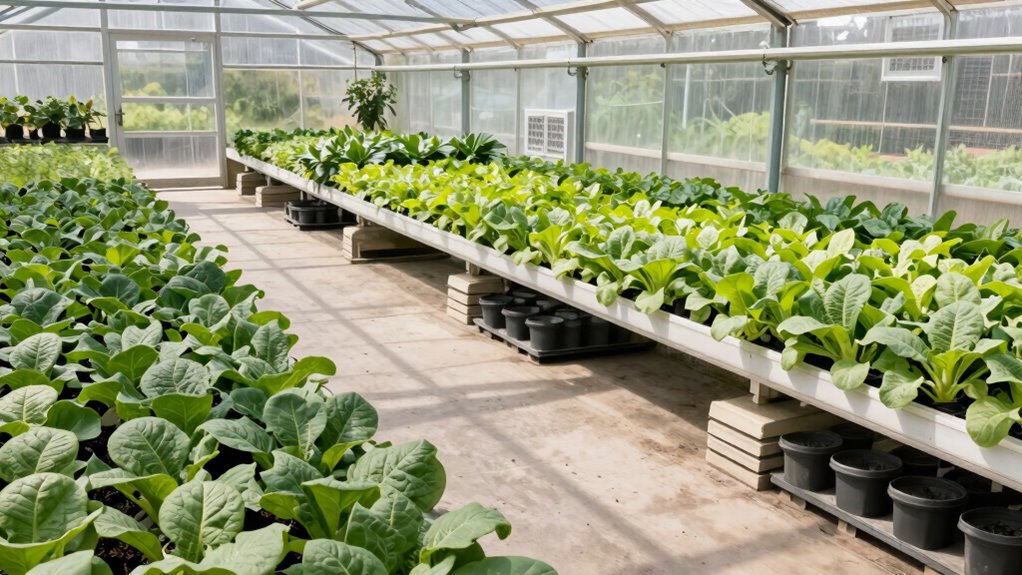

To reduce pest hiding places in your busy greenhouse, regularly clean and disinfect benches, tools, and floors to remove debris and organic matter. Seal cracks and gaps around vents and doors to block entry points. Keep air circulating and humidity levels controlled to make the environment less inviting. Remove dead plant material promptly and implement crop rotation to disrupt pest life cycles. Focused sanitation and environmental management are key, and you’ll discover even more effective strategies as you go along.

Get garden gear delivered free with Prime
- Fast, free delivery on millions of items
- Prime Video, Amazon Music and more included
- Member-only deals all year
Key Takeaways
- Regularly clean and disinfect all surfaces, tools, and shelves to eliminate debris and potential pest hiding spots.
- Seal cracks, gaps, and vents to prevent pests from entering and hiding within structural vulnerabilities.
- Remove plant debris, dead leaves, and infected material promptly to reduce breeding habitats.
- Enhance air circulation and manage humidity to create less favorable conditions for pest concealment.
- Implement routine inspections and monitoring traps to identify and address pest presence early.
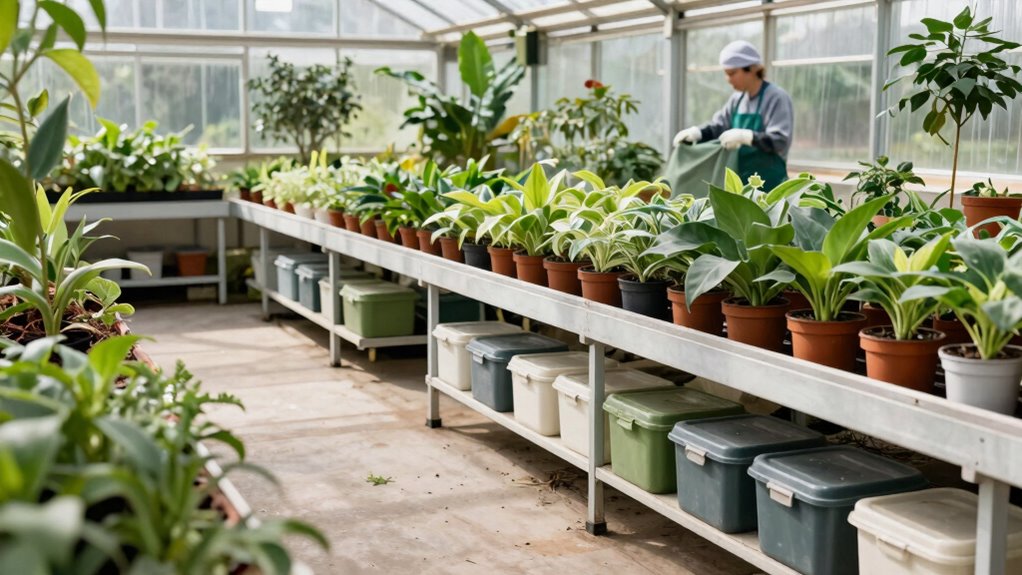
Greenhouses provide a controlled environment that promotes plant growth, but they also offer numerous hiding spots for pests. If you want to keep pests at bay, you need to focus on reducing these hiding places through effective greenhouse sanitation. Regularly cleaning benches, tools, and shelves removes debris, dead leaves, and plant residues that pests often hide in. Avoid letting organic matter accumulate, as it creates an inviting habitat for insects and mites. Sweep and disinfect floors frequently to eliminate potential hiding spots and prevent pest buildup. Ventilation is also essential; guarantee good air circulation to reduce humidity and deter pests that thrive in damp conditions. Properly sealing cracks and gaps around vents, doors, and windows prevents pests from sneaking in and establishing a foothold. Maintaining proper greenhouse hygiene is crucial, as it significantly impacts pest management success. Implementing pest-resistant crops can notably decrease the likelihood of pest infestations. These crops are genetically or naturally resistant to common pests, making them less attractive and less prone to infestation. Growing pest-resistant varieties reduces the need for chemical interventions, supporting a cleaner and safer greenhouse environment. When selecting plants, consider those with built-in pest resistance traits suitable for your climate and crop rotation plans. This approach minimizes the places pests can hide within your crop lineup and reduces the overall pest pressure within your greenhouse. Additionally, regular sanitation disrupts pest life cycles, making it harder for them to establish colonies. Incorporating proper sanitation practices further enhances your pest control efforts by removing potential breeding grounds. Maintaining a tidy environment extends beyond just cleaning. Properly disposing of plant debris and pruning affected plants prevents pests from finding shelter and breeding grounds. Remove dead or infected plant material promptly, and don’t leave it lying around in the greenhouse. Regularly inspect plants for early signs of pests, catching problems before they spread and create more hiding spots. Using sticky traps can also help monitor pest activity and catch insects before they establish colonies. To further enhance pest prevention, consider implementing integrated pest management strategies that combine cultural, biological, and mechanical controls for comprehensive protection. Additionally, rotating crops and introducing beneficial insects can help diversify pest control methods and reduce the chances of pests developing resistance. Regularly assessing the pest population levels allows you to adapt your strategies promptly and maintain a pest-free environment.
greenhouse pest control sticky traps
As an affiliate, we earn on qualifying purchases.
As an affiliate, we earn on qualifying purchases.
Frequently Asked Questions
How Often Should I Inspect My Greenhouse for Pests?
You should inspect your greenhouse for pests at least once a week to maintain a strong Pest inspection schedule. Regular monitoring frequency helps catch infestations early before they spread. During each inspection, look closely at plants, soil, and hidden areas. Consistent greenhouse monitoring frequency guarantees you stay ahead of pests, reducing the risk of serious damage. Adjust your inspection routine based on pest pressure and seasonal changes for ideal pest management.
What Natural Predators Can Help Control Pests?
You can use beneficial insects like ladybugs, lacewings, and predatory mites to naturally control pests through biological control. These beneficial insects target common greenhouse pests such as aphids, whiteflies, and spider mites, reducing your reliance on chemical pesticides. By releasing these predators regularly and maintaining a healthy environment, you enhance pest management. This natural approach keeps your plants healthy and minimizes pest hiding places, creating a balanced, pest-resistant greenhouse.
Are Certain Plants More Prone to Pest Hiding?
Certain plants are more prone to pest hiding because of their structure and susceptibility. Dense, leafy plants or those with textured surfaces provide excellent pest sheltering, making it harder for you to control infestations. You should monitor these plants closely, prune or thin them when possible, and maintain good hygiene. Understanding plant susceptibility helps you target pest sheltering areas, reducing hiding spots and improving your overall pest management efforts.
How Does Humidity Affect Pest Hiding Spots?
Higher humidity levels create ideal pest habitats by encouraging mold, mildew, and moisture-loving pests to thrive. By practicing humidity management, you can reduce these hiding spots, making it harder for pests to find shelter. Proper ventilation, dehumidifiers, and controlling watering routines help lower excess moisture. This minimizes pest hiding places, supporting healthier plants and easier pest control, ultimately making your greenhouse less inviting for pests and more resilient overall.
Can Pest-Proofing Methods Harm My Plants?
Pest-proofing methods can pose chemical risks, but if you choose plant-safe options, they won’t harm your plants. Always read labels carefully and opt for organic or non-toxic treatments when possible. Proper application minimizes risks, ensuring your plants remain healthy and safe. Remember, the goal is to reduce pests without compromising plant safety, so balancing effective pest control with gentle, plant-friendly solutions is key.
Conclusion
By regularly inspecting and cleaning your greenhouse, you’ll naturally uncover hidden pest hiding spots. Sometimes, a simple sweep or prune reveals more than you expected—like finding a forgotten corner teeming with pests. Keep up these habits, and you’ll not only reduce pest hideouts but also catch issues early before they spread. After all, the smallest effort can make a big difference—sometimes, the pests hide just where you least expect.
Evergreen bestsellers Picks
bestsellers
As an affiliate, we earn on qualifying purchases.