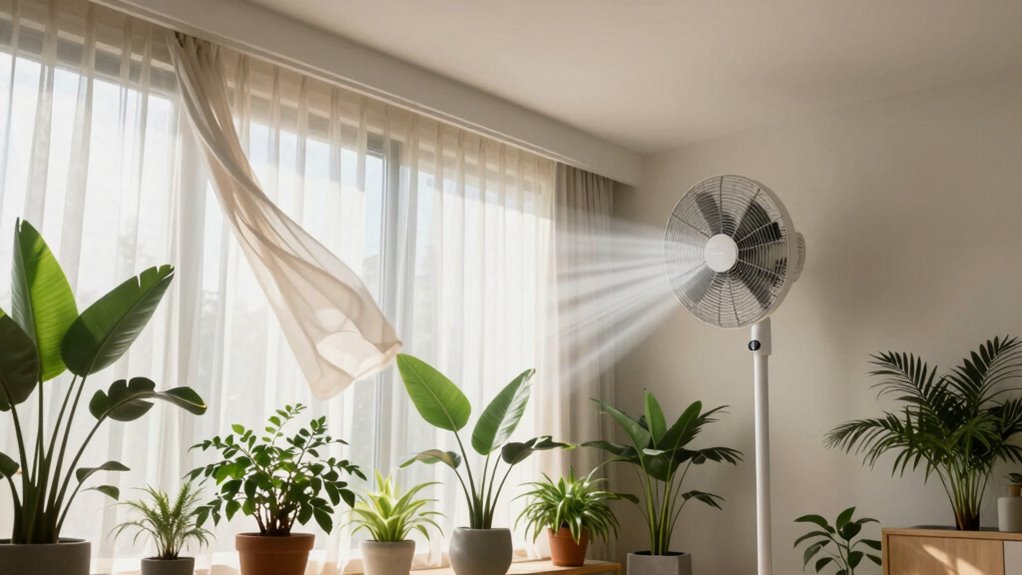

Proper airflow does more than just adjust temperature; it improves indoor humidity, reduces pollutants, and keeps air fresh. This helps prevent mold, odors, and respiratory issues, creating a healthier environment for you. Good airflow also makes your HVAC systems more efficient, saving energy and lasting longer. If you want to understand how these benefits work together to boost comfort and health, there’s more to explore below.

Get garden gear delivered free with Prime
- Fast, free delivery on millions of items
- Prime Video, Amazon Music and more included
- Member-only deals all year
Key Takeaways
- Proper airflow regulates indoor humidity, preventing mold growth and respiratory issues beyond temperature control.
- It improves air quality by removing pollutants, allergens, and odors, promoting healthier indoor environments.
- Enhanced airflow ensures consistent fresh air circulation, increasing comfort and reducing stuffiness or stale air.
- Efficient airflow reduces strain on HVAC systems, saving energy and prolonging equipment lifespan.
- Maintaining balanced airflow supports overall health and sustainability by creating safer, cleaner indoor spaces.

Have you ever wondered why proper airflow is more than just about keeping things cool? It’s because airflow plays a critical role in maintaining a healthy environment beyond temperature control. When you think about airflow, you might picture a breeze cooling you down on a hot day, but its benefits go much deeper. Good airflow helps regulate humidity, which is essential for comfort and health. Too much moisture can lead to mold growth, musty odors, and even respiratory issues, while too little can cause dryness and irritation. Proper ventilation ensures that excess humidity is expelled, keeping the air balanced and preventing these problems. It also helps in maintaining ideal air quality. When fresh air circulates effectively, it replaces stale, contaminated air, reducing the buildup of indoor pollutants, allergens, and airborne pathogens. This ongoing exchange of air means you breathe cleaner, healthier air every day, which can boost your overall well-being.
Additionally, airflow influences how well your indoor spaces ventilate, directly impacting your comfort. If air isn’t circulating properly, you might notice stuffiness and a lingering smell, making your environment less inviting. Proper airflow ensures a consistent flow of fresh air, which helps dissipate indoor odors and pollutants quickly. This is especially important if you spend a lot of time indoors or have pets, smokers, or sources of dust and volatile organic compounds. Better airflow also supports your respiratory health by reducing the concentration of airborne irritants. When the air is refreshed regularly, your lungs don’t have to work as hard to filter out contaminants, and you’re less likely to experience allergy flare-ups or asthma symptoms. Moreover, airflow quality directly impacts the efficiency and durability of your heating, cooling, and ventilation systems. When air moves efficiently through your space, these systems don’t have to work as hard, which can save energy and reduce wear and tear. Good airflow can also help prevent air stagnation, which can lead to the growth of mold and bacteria in poorly ventilated areas. Maintaining proper airflow can also improve indoor humidity levels, which is crucial for a comfortable and healthy living environment. Regularly maintaining and optimizing airflow can improve indoor air quality and contribute to a healthier living environment. In turn, this creates a more sustainable environment and lowers your utility bills. It also means fewer breakdowns and repairs, keeping your home or office running smoothly. Ultimately, airflow isn’t just about temperature—it’s about creating a balanced, healthy environment for you and everyone around you. By prioritizing proper ventilation and circulation, you’re not only enhancing comfort but also supporting better air quality and humidity regulation. It’s a simple, effective way to improve your indoor environment, making it safer, healthier, and more comfortable to live and work in every day.
air purifier with humidity control
As an affiliate, we earn on qualifying purchases.
As an affiliate, we earn on qualifying purchases.
Frequently Asked Questions
How Does Airflow Impact Humidity Levels in a Space?
Airflow directly impacts humidity levels in your space by promoting effective air circulation, which helps distribute moisture evenly. When airflow increases, it encourages humidity regulation, preventing damp spots or overly dry areas. Proper air circulation also helps remove excess moisture or dry air, maintaining a balanced environment. By controlling airflow, you can better manage humidity levels, making your space more comfortable and reducing issues like mold or dryness.
Can Airflow Influence Air Quality and Contaminant Removal?
Absolutely, airflow actively influences air quality and contaminant removal by promoting proper air circulation. When you improve circulation, contaminants disperse quickly, preventing buildup that could harm health. Efficient airflow clears the air of airborne pollutants, pathogens, and odors, ensuring a fresher, healthier environment. By controlling circulation, you enhance overall air quality, making spaces safer and more breathable, and reducing the risk of airborne illnesses or irritants lingering around.
What Role Does Airflow Play in Energy Efficiency?
Airflow plays a vital role in energy efficiency by enhancing air circulation and ventilation efficiency. When you optimize airflow, it helps distribute conditioned air evenly throughout your space, reducing the workload on heating and cooling systems. This means your HVAC units don’t have to work as hard, saving energy and lowering utility bills. Proper airflow guarantees that your environment stays comfortable while using less energy, making your system more efficient overall.
How Does Airflow Affect the Longevity of HVAC Systems?
Airflow substantially impacts the longevity of your HVAC system by maintaining ideal airflow patterns, which reduces strain on components. Proper airflow prevents overheating and uneven wear, helping your system run efficiently for longer. Additionally, good airflow minimizes system noise, indicating smoother operation and less mechanical stress. When airflow is balanced and unobstructed, your HVAC system experiences less fatigue, ultimately extending its lifespan and reducing costly repairs.
Can Airflow Prevent Mold Growth in Enclosed Environments?
Ever wondered if airflow can prevent mold growth? Proper air circulation and effective ventilation strategies are essential. They help reduce humidity and remove excess moisture, creating an environment less inviting for mold. By maintaining consistent airflow, you limit stagnant spots where mold spores thrive. So, yes—good airflow isn’t just about temperature; it’s a vital factor in preventing mold in enclosed spaces, keeping your environment healthier and safer.
Conclusion
So, next time you’re thinking about airflow, remember it’s not just about cooling things down. Proper airflow can improve air quality, prevent mold, and even boost productivity by reducing stuffiness. Some experts believe good airflow might also help in controlling airborne illnesses. While the science continues to evolve, it’s clear that airflow’s benefits extend far beyond temperature. Embrace it fully — your space, health, and comfort could all benefit in unexpected ways.
Fall yard work Picks
leaf blowers
As an affiliate, we earn on qualifying purchases.