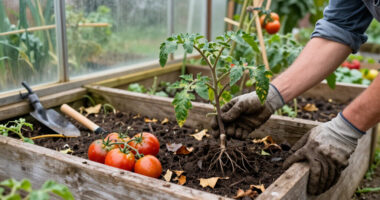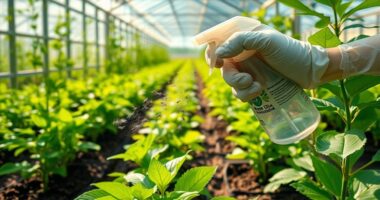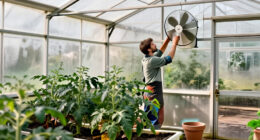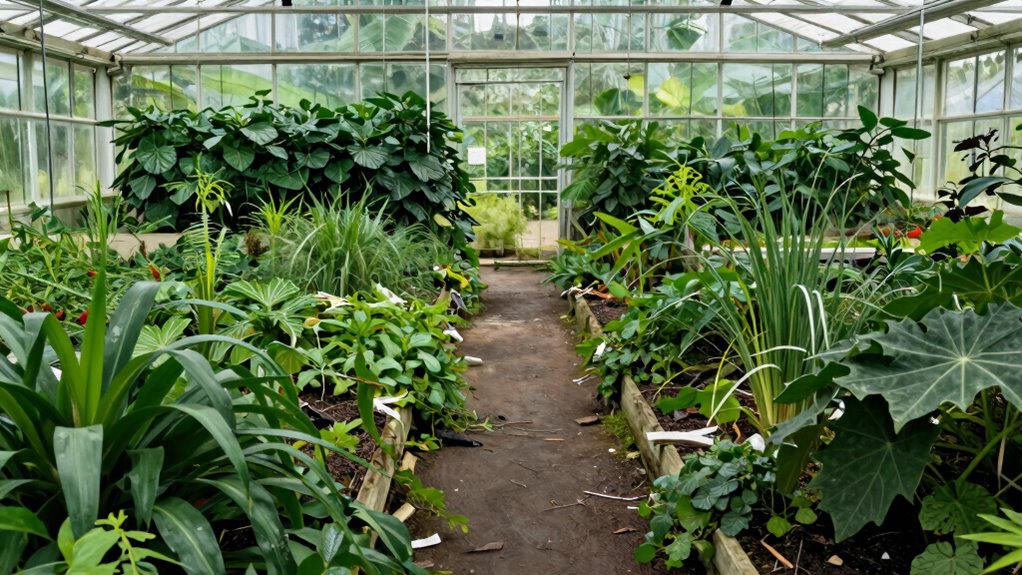

Skipping proper sanitation might seem like a quick fix, but it risks major trouble in your greenhouse. Dirty tools, surfaces, and trays become breeding grounds for pests and diseases, making control harder and increasing chemical use. This cycle wastes water, harms plants, and damages the environment. Neglecting sanitation also leads to costly outbreaks and more intensive pest management. To avoid these issues and maintain a healthy, sustainable operation, understanding the full impact is essential for your success.

Get garden gear delivered free with Prime
- Fast, free delivery on millions of items
- Prime Video, Amazon Music and more included
- Member-only deals all year
Key Takeaways
- Skipping thorough cleaning can allow pests and diseases to thrive, leading to larger outbreaks later.
- Using shortcuts in sanitation increases chemical and water usage, harming the environment and raising costs.
- Poor sanitation creates breeding grounds for pests, making pest control more difficult and less effective.
- Neglecting proper cleaning routines can compromise plant health and reduce overall greenhouse productivity.
- Inadequate sanitation practices undermine sustainable efforts, leading to long-term environmental and operational issues.
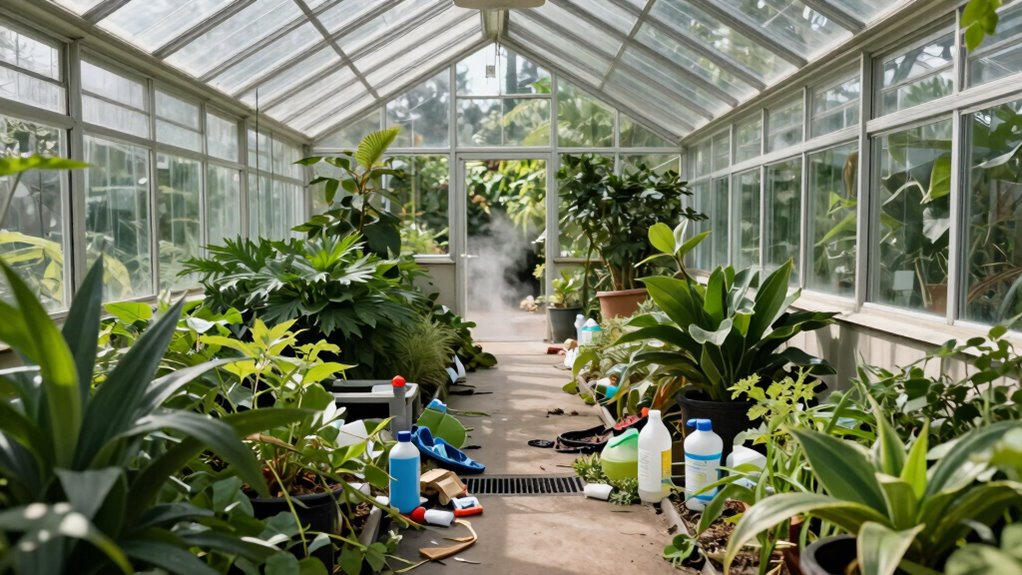
When greenhouse operators take shortcuts with sanitation, they risk more than just dirty equipment—they can trigger serious environmental problems. One common shortcut involves neglecting proper cleaning routines, which might seem like a quick fix to save time or costs. However, this oversight can lead to a cascade of issues that affect everything from water conservation to pest management. Dirty tools, trays, and surfaces become breeding grounds for pests and diseases, making it harder to control infestations and maintain healthy plants. This can also lead to increased chemical usage, further harming the environment and plant health. Proper sanitation practices are essential for preventing pest outbreaks and maintaining a balanced ecosystem within the greenhouse. This sets off a cycle where you end up using more chemicals or water to combat problems that could have been prevented with proper sanitation. Implementing sustainable practices in sanitation not only reduces environmental impact but also enhances overall plant health. Maintaining proper cleaning routines helps prevent these issues and supports healthier greenhouse ecosystems, ultimately promoting environmental responsibility in greenhouse management.
As an affiliate, we earn on qualifying purchases.
Frequently Asked Questions
How Long Does the Greenhouse Trouble Typically Take to Develop?
Greenhouse trouble from poor sanitation can develop in as little as a few weeks. If you skip proper cleaning, soil contamination and pathogen buildup happen quickly, creating a breeding ground for pests and diseases. Regularly inspecting and sanitizing your greenhouse helps prevent these issues from escalating. The longer you neglect sanitation, the more severe the problems become, so staying proactive is key to maintaining a healthy, productive environment.
Are There Any Long-Term Effects on Plant Health?
A stitch in time saves nine, so ignoring sanitation can cause lasting plant issues. Long-term effects on plant health include soil contamination and pathogen buildup, which weaken plants over time. These problems can lead to stunted growth, reduced yields, and increased vulnerability to pests and diseases. Regular sanitation breaks this cycle, preventing these long-term effects and ensuring your greenhouse remains healthy and productive.
Can This Shortcut Be Reversed or Fixed Easily?
Yes, you can reverse or fix this shortcut, but it requires effort. First, thoroughly clean all equipment to remove chemical residues that might harm plants. You might also need to inspect for equipment damage caused by improper sanitation. Regularly deep cleaning and using gentle, eco-friendly cleaning agents can prevent future issues. Addressing chemical residues promptly and maintaining your equipment helps restore plant health and avoids long-term damage.
What Alternative Sanitation Methods Are Safer?
You should opt for safer sanitation methods like steam cleaning or using natural disinfectants such as vinegar or hydrogen peroxide. These alternatives reduce chemical residue and lower the risk of pathogens developing resistance. Avoid shortcuts that rely on harsh chemicals, as they can leave residues and contribute to pathogen resistance over time. Regular cleaning with proven, eco-friendly solutions keeps your environment safe without the drawbacks of chemical overuse.
Does This Issue Affect Only Certain Types of Greenhouses?
Like a modern-day Marie Antoinette, you might think some greenhouse types are immune, but sanitation methods impact all. Regardless of whether you run a traditional, hydroponic, or high-tech greenhouse, the issue of improper sanitation can cause trouble. It’s a universal concern. You should always adapt your sanitation methods to suit your specific greenhouse type to prevent disease spread, ensuring a healthy environment for your plants and avoiding costly setbacks.
Conclusion
So, next time you cut corners on sanitation, picture your greenhouse as a petri dish of disaster, brewing chaos in a tiny, unkempt lab. Sure, it’s just a shortcut today, but tomorrow, you might be harvesting a crop of trouble—diseases sprouting like weeds, pests partying like it’s a never-ending festival. Remember, a spotless greenhouse isn’t just hygienic; it’s the secret to a thriving, worry-free harvest. Cleanliness isn’t just next to godliness—it’s next to success.
Halloween Picks
halloween
As an affiliate, we earn on qualifying purchases.