

To keep your greenhouse virus-free, focus on early detection by inspecting plants regularly for symptoms like mottled leaves or stunted growth. disinfect tools and surfaces often, using appropriate solutions, and practice strict hygiene with gloves and hands. Maintain a clean environment by reducing humidity, quarantining new plants, and preventing external virus entry. Acting swiftly at the first sign of infection helps protect your plants and keep outbreaks at bay. Continue for more tips on safeguarding your greenhouse.
Key Takeaways
- Conduct regular, thorough inspections to detect early symptoms of viral infections in your plants.
- Disinfect tools, equipment, and surfaces routinely using appropriate sanitizers to prevent virus spread.
- Maintain a clean, well-ventilated environment, controlling humidity and implementing biosecurity measures at entry points.
- Quarantine new plants and monitor them until confirmed virus-free before integrating into the greenhouse.
- Act promptly upon detecting signs of infection to isolate affected plants and prevent widespread contamination.
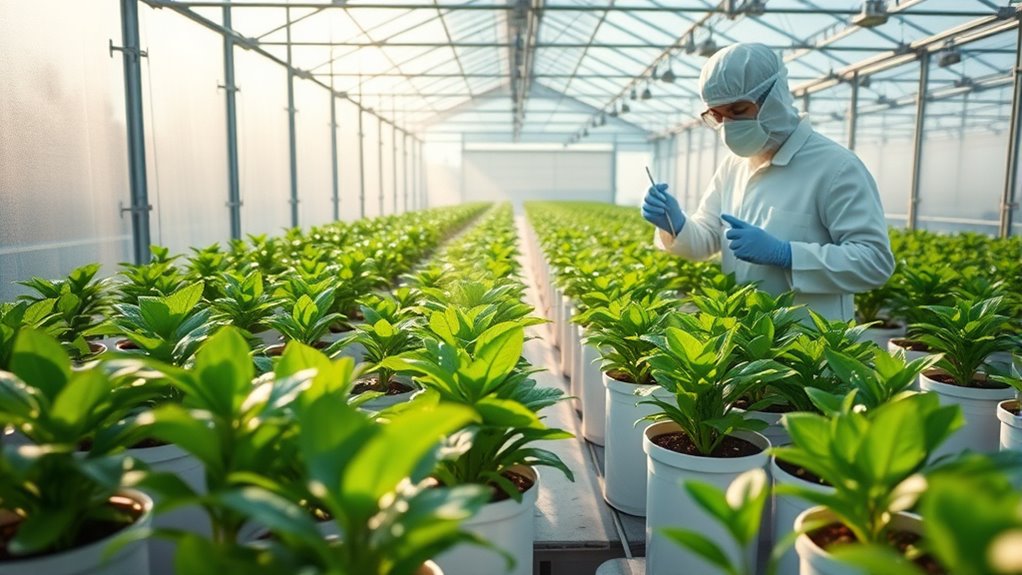
Viruses can spread quickly and easily, but you can substantially reduce your risk of infection by practicing simple prevention measures. In a greenhouse setting, where plants are often densely packed and conditions are humid, viruses can spread rapidly if not carefully managed. One of the most effective strategies you can employ is prioritizing early detection. The benefits of early detection are vital because catching a viral infection in its initial stages allows you to isolate affected plants promptly, preventing the virus from spreading to healthy specimens. Regular monitoring of your plants for unusual symptoms—such as mottled leaves, stunted growth, or discoloration—can help you identify issues before they become widespread. Using tools like magnifying glasses and keeping detailed records of plant health can make early detection more manageable and accurate. Additionally, understanding industry trends and staying informed through resources like industry updates can help you anticipate and prevent potential outbreaks.
Early detection through regular monitoring helps prevent virus spread and keeps your greenhouse healthy.
Alongside vigilant observation, implementing effective disinfection techniques is essential. You should clean and disinfect your tools, work surfaces, and equipment routinely to eliminate any viral particles that might be lurking. A combination of disinfectants, like solutions containing bleach or commercial sanitizers, can effectively neutralize viruses on contact. Be sure to follow the manufacturer’s instructions for dilution and contact time to maximize their efficacy. Additionally, disinfecting your hands and gloves before moving between different plant batches prevents cross-contamination. Proper disposal of infected plant material is equally important; never compost or leave infected debris in the greenhouse, as this can serve as a virus reservoir.
Maintaining good sanitation practices extends beyond just tools and plant material. You should also keep the greenhouse environment clean and well-ventilated, reducing humidity levels that can foster viral survival. Using footbaths or disinfectant mats at entry points can prevent the introduction of viruses from outside sources. When new plants arrive, quarantine them separately until you confirm they’re virus-free, further minimizing the risk of bringing infections into your healthy stock.
Ultimately, combining early detection with effective disinfection techniques creates a resilient defense against viruses. Regularly inspecting plants, maintaining strict sanitation protocols, and acting swiftly at the first signs of trouble can save you time, effort, and money. Staying proactive and vigilant not only protects your current plants but also preserves the overall health and productivity of your greenhouse. By integrating these practices into your routine, you greatly enhance your capacity to keep your greenhouse virus-free, ensuring a thriving and healthy growing environment.
Frequently Asked Questions
How Often Should I Disinfect Greenhouse Tools?
You should disinfect your greenhouse tools after each use to prevent virus spread. Regular tool sterilization is essential, especially when moving between different plants or sections. The disinfection frequency depends on how often you work and the types of plants you handle, but daily disinfection or after every session is a good rule. Always use effective disinfectants, and guarantee tools are completely dry before storing to maintain a virus-free environment.
What Are the Signs of a Greenhouse Virus Outbreak?
Detecting a virus outbreak is like catching a whisper before it becomes a storm. You’ll notice symptoms like leaf mottling, stunted growth, or unusual discoloration—signs of possible infection. Symptoms identification is key. Virus transmission methods often include contaminated tools, insects, or infected plant material. Stay vigilant; if you see these signs, isolate affected plants immediately and review your sanitation practices to prevent further spread.
Can Natural Predators Help Prevent Viruses?
Natural predators can help with virus control in your greenhouse by reducing pest populations that spread viruses. By encouraging beneficial insects like ladybugs or predatory mites, you create a natural defense system that limits pests, decreasing the chances of virus transmission. This eco-friendly approach supports a healthier environment while naturally managing pests and viruses. Incorporate natural predators into your pest management plan to enhance virus prevention and keep your greenhouse thriving.
Are There Specific Plants More Susceptible to Greenhouse Viruses?
Certain plants are more susceptible to greenhouse viruses because their plant immune responses are weaker or less effective. You should watch for plants with compromised health or those that are stressed, as they’re more vulnerable to virus transmission pathways. By selecting resistant varieties and maintaining ideal growing conditions, you reduce susceptibility and interrupt virus transmission pathways, helping keep your greenhouse healthy and virus-free.
How Does Humidity Influence Virus Spread in Greenhouses?
Humidity control plays a vital role in virus transmission within your greenhouse. High humidity levels create ideal conditions for viruses to spread quickly, as moisture helps viruses survive on plant surfaces and in the air. By maintaining ideal humidity levels through proper ventilation and dehumidification, you can reduce the risk of virus transmission, keeping your plants healthier and minimizing the chances of outbreaks.
Conclusion
Think of your greenhouse as a fortress, where each precaution is a sturdy wall protecting your valuable crops. By staying vigilant and practicing good hygiene, you become the vigilant guardian guarding a treasure chest from unseen invaders. Just as a castle’s defenses keep invaders at bay, your efforts create an unbreachable barrier against viruses. Keep this allegory in mind, and you’ll guarantee your greenhouse remains a thriving, virus-free sanctuary for your plants to flourish.