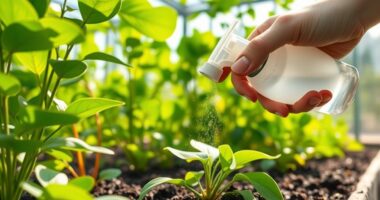
To acclimate your seedlings before outdoor transplanting, gradually introduce them to outdoor conditions by slowly increasing their time outside over a week or two. Start by placing them in a shady spot, then gradually expose them to more sunlight and airflow each day. Water them well and monitor their response to the outdoor environment. Proper acclimation helps prevent transplant shock and promotes healthy growth. Keep going to discover more tips for successful seedling transplantation.
Key Takeaways
- Gradually expose seedlings to outdoor conditions by increasing sunlight and outdoor time over a week.
- Harden off seedlings by placing them in a sheltered, shaded area before full outdoor exposure.
- Ensure seedlings are well-watered but not overly saturated to reduce transplant shock.
- Transplant during mild weather, avoiding extreme heat, cold, or strong winds.
- Prepare the outdoor site by loosening soil and ensuring proper drainage for healthy root establishment.
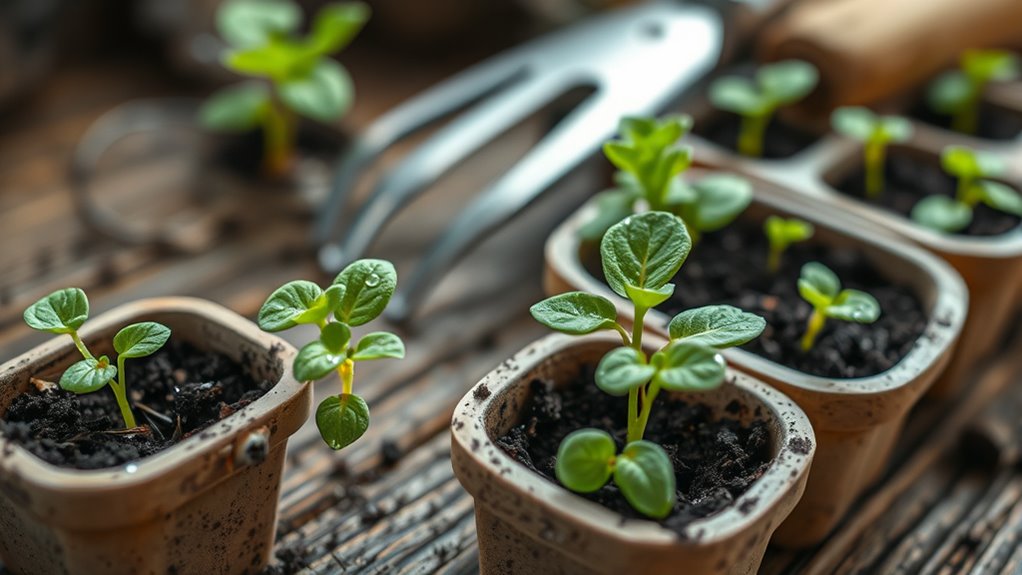
Transplanting seedlings is a crucial step in ensuring healthy plant growth, and proper preparation can make all the difference. One key aspect to focus on is preventing soil hardening around the roots, which can impede water and nutrient uptake once the seedlings are in their outdoor environment. Before transplanting, you should gently loosen the soil around the roots during the root pruning process. This helps avoid root circling or tangling, encouraging the roots to grow outward and establish a stronger anchorage in the new soil. When you prune roots, do so carefully, trimming only the damaged or excessively long roots, which stimulates healthy root growth and reduces transplant shock.
Proper root pruning prevents circling roots and promotes healthy growth during transplanting.
Soil hardening is a common issue in many garden beds, especially if the soil has been compacted over time. To prepare your seedlings for outdoor conditions, loosen the soil at the transplant site beforehand. Use a garden fork or a tiller to aerate the soil, breaking up any compacted layers. This creates a loose, well-draining environment that allows roots to expand easily, reducing the risk of water pooling around the roots and causing rot. Incorporate organic matter or compost into the soil to improve its structure and fertility, which will give your seedlings a nurturing environment right from the start.
When you’re ready to transplant, handle the seedlings gently. Carefully remove them from their containers or seed trays, taking care not to damage the delicate root systems. Immediately inspect the roots and prune any that are circling or damaged. Root pruning should be done with clean, sharp tools to ensure a clean cut, which encourages new root growth. It’s best to prune just enough to promote healthy, outward growth, avoiding excessive trimming that could weaken the plant.
Before transferring the seedlings into the prepared outdoor soil, water them thoroughly. This helps reduce transplant shock by ensuring the roots are hydrated and less likely to dry out during the transition. After planting, press the soil gently around the roots to eliminate air pockets, and water again to settle the soil around the roots. Keep the seedlings shaded and protected from harsh sunlight for a few days post-transplant, allowing them to recover and establish themselves fully.
Frequently Asked Questions
How Long Should I Acclimate Seedlings Outdoors?
You should acclimate seedlings outdoors for about 7 to 10 days, gradually extending their hardening period. During this time, focus on temperature adjustment by bringing them outside for a few hours daily, then increasing exposure each day. This process helps seedlings adapt to outdoor conditions, reducing transplant shock. Keep an eye on weather forecasts and avoid harsh conditions, ensuring a smooth shift for healthy growth.
What Are Signs of Stress in Seedlings During Acclimation?
Watch for warning signs like wilting leaves and color fading, which indicate seedlings are stressed. If they seem sluggish, their leaves curl or droop, and their vibrant hues fade to dull shades, it’s a clear sign they’re struggling. These symptoms suggest they’re overwhelmed by the outdoor environment. You should slow down the progression, providing extra shade and water, so seedlings can stabilize and safely settle into their new surroundings.
Can Seedlings Be Acclimated Indoors Before Outdoor Planting?
Yes, you can acclimate seedlings indoors before outdoor planting. To do this effectively, gradually reduce indoor humidity levels and increase exposure to sunlight by moving your seedlings to brighter spots daily. Start with partial sunlight and slowly extend their outdoor exposure, protecting them from harsh conditions. This process helps your seedlings adjust, making transplantation smoother and reducing transplant shock when they go outside.
How Do Weather Conditions Affect the Acclimation Process?
Did you know that sudden temperature fluctuations can stress seedlings and slow their adaptation? Weather conditions like temperature swings and wind exposure directly impact the acclimation process. You should gradually introduce your seedlings to outdoor conditions, monitoring temperature changes closely. Protect them from harsh wind, which can dry out plants and cause shock. Adjust your approach based on weather forecasts to guarantee a smooth shift and healthy growth outdoors.
Is There a Specific Time of Day Best for Outdoor Exposure?
You should expose your seedlings outdoors during the early morning or late afternoon when sunlight duration is mild and wind exposure is lower. This gentle progression helps prevent stress from harsh midday sun and strong gusts. Avoid the hottest part of the day to minimize shock. Gradually increase outdoor time over several days, ensuring your seedlings adapt comfortably to their new environment with balanced sunlight and minimal wind stress.
Conclusion
Now that you’ve acclimated your seedlings, you’re ready for outdoor transplanting. Remember, this process is like training a puppy—patience and gentle care pay off. Gradually exposing them to the outside world helps them toughen up, ensuring a successful move. Don’t rush it; even in the age of smartphones, good gardening still requires time and attention. Soon, you’ll be enjoying a lush, thriving garden—far better than any time-traveling adventure!