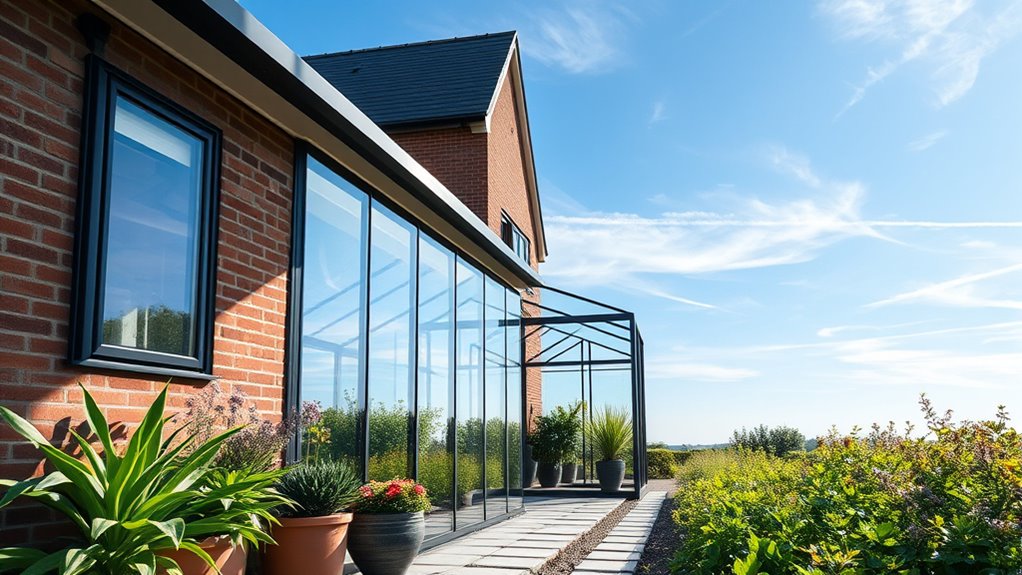

When designing a greenhouse attached to your home, focus on maximizing natural airflow with strategically placed windows and vents. Choose durable, insulated materials that support light transmission and energy efficiency. Incorporate cross-ventilation and exhaust fans to control temperature and humidity, helping to prevent mold and overheating. Make sure your system is adaptable for seasonal changes and easy to maintain. Continuing will reveal more tips to create a sustainable, efficient greenhouse tailored to your needs.

Get garden gear delivered free with Prime
- Fast, free delivery on millions of items
- Prime Video, Amazon Music and more included
- Member-only deals all year
Key Takeaways
- Incorporate natural ventilation with strategically placed windows and vents to maintain optimal airflow and temperature control.
- Select durable, insulating materials that support light transmission and energy efficiency for long-term greenhouse performance.
- Design flexible ventilation systems that can adapt seasonally, including exhaust fans and cross-ventilation pathways.
- Ensure easy access to ventilation components for maintenance and adjustability according to plant needs.
- Integrate the greenhouse seamlessly with your home’s structure, prioritizing durability and climate control for year-round use.
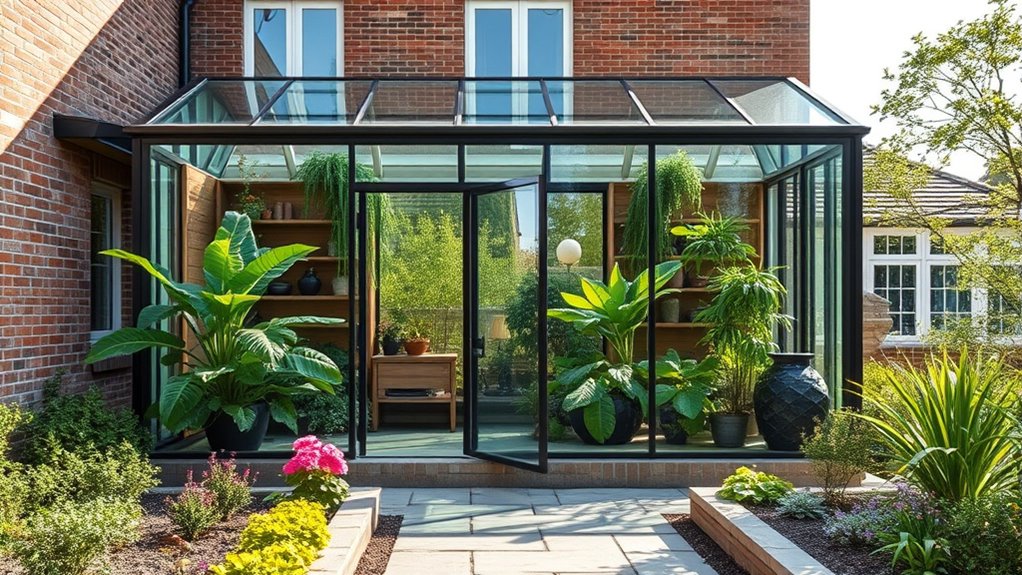
Have you ever wondered how to create a greenhouse that maximizes sunlight and supports healthy plant growth? One of the most crucial aspects to consider is your ventilation strategies and material selection. Proper ventilation ensures your plants thrive by maintaining optimal temperature, humidity, and air circulation. When designing your attached greenhouse, think about how you’ll incorporate natural airflow. Sliding or awning windows at different heights allow for cross-ventilation, helping hot air escape and fresh air enter. Installing exhaust fans or vents can also aid in controlling temperature and humidity, especially during hotter months. Effective ventilation prevents issues like mold, mildew, and overheating, which can harm your plants and reduce growth rates. So, plan your ventilation system carefully, ensuring it’s adaptable to seasonal changes and your specific plant needs. Additionally, choosing appropriate materials that support insulation and durability can significantly impact your greenhouse’s efficiency and plant health.
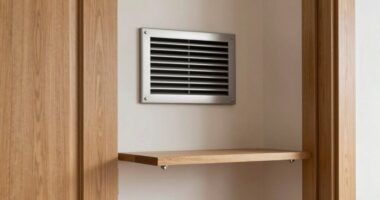
attached greenhouse ventilation system
As an affiliate, we earn on qualifying purchases.
As an affiliate, we earn on qualifying purchases.
Frequently Asked Questions
How Much Does a Home-Attached Greenhouse Typically Cost?
A home-attached greenhouse typically costs between $5,000 and $20,000, depending on size and materials. When planning your budget, consider cost considerations like foundation, framing, glazing, and ventilation systems. You should also factor in installation and future maintenance costs. Planning your budget carefully helps you balance quality and affordability, ensuring your greenhouse meets your needs without overspending. Always get quotes from contractors to refine your budget plan.
What Are the Best Materials for Greenhouse Glazing?
You should choose materials like polycarbonate or tempered glass for greenhouse glazing because they offer excellent durability and insulation properties. Polycarbonate is lightweight, impact-resistant, and provides good insulation, making it ideal for long-term use. Tempered glass, on the other hand, is highly durable and transmits maximum light, but it’s heavier and less insulating. Both options protect your plants while maintaining energy efficiency in your attached greenhouse.
How Do I Ensure Proper Ventilation in My Greenhouse?
Vivid ventilation crucializes your vibrant greenhouse. You’ll want to implement smart strategies like installing exhaust fans, vents, and open windows to promote proper air circulation. Consider positioning vents at different heights to facilitate natural airflow, and use oscillating fans for consistent circulation. By combining passive and active ventilation strategies, you guarantee fresh, healthy air flows freely, preventing humidity buildup and creating an essential environment for your plants to flourish.
What Permits or Regulations Are Needed for Building a Greenhouse?
You’ll need to check local zoning restrictions and building codes before building your greenhouse. Contact your city or county planning office to find out if permits are required, especially if the structure is large or attached to your home. Some areas may have height limits or setback rules. Making sure you comply with these regulations helps prevent fines and ensures your greenhouse is safe and legal.
How Can I Maximize Natural Light in a Small Attached Greenhouse?
Maximize your small greenhouse’s sunlight by strategically positioning it for ideal solar orientation, ensuring it faces south for maximum exposure. Use reflective surfaces like white walls or mirrors to bounce light deeper inside. Keep windows clean and unobstructed, and consider installing adjustable shades to control heat and glare. These tactics will amplify natural light, creating a cozy, cultivated haven that’s bright and beautiful all day long.
Conclusion
So, after all that planning and effort, you’ve built your dream greenhouse right at home. It’s funny how something so lush and thriving can start from a simple idea—yet here you are, probably battling the same pesky pests or weather quirks as any seasoned gardener. But hey, isn’t that what makes it all worthwhile? You’ve created your own little paradise, proof that even in the face of irony, passion and perseverance really do grow on you.
Halloween Picks
halloween
As an affiliate, we earn on qualifying purchases.