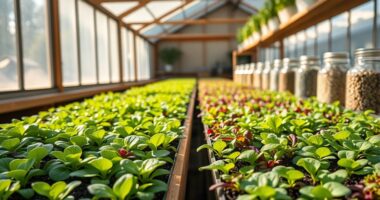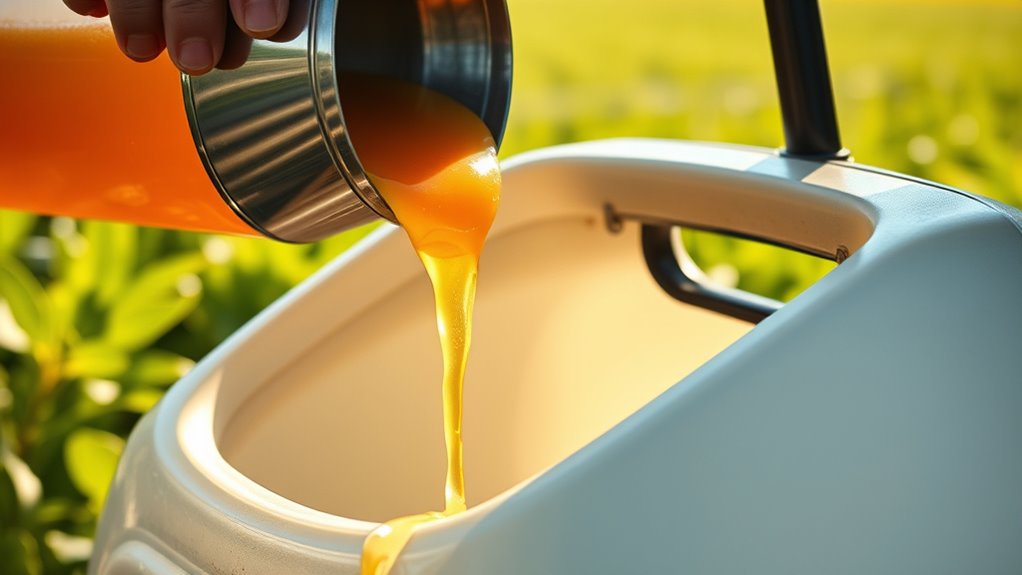

To mix and apply organic liquid fertilizers, follow the instructions on the label for proper dilution, using clean water and accurate measurements, then mix in a bucket for even distribution. Apply during early morning or late afternoon with a watering can or sprayer, avoiding heavy rain or extreme heat. Consistent, careful application helps maintain soil health and promotes vibrant plant growth. Keep exploring for more tips on optimizing your organic fertilizing techniques.
Key Takeaways
- Follow the fertilizer label instructions for proper dilution with clean water before mixing.
- Mix thoroughly in a bucket or watering can for even distribution.
- Apply during early morning or late afternoon to minimize evaporation and maximize absorption.
- Use a watering can or sprayer to evenly distribute around the root zone or directly onto leaves.
- Schedule regular applications, avoiding excessive amounts, to maintain soil health and prevent nutrient buildup.
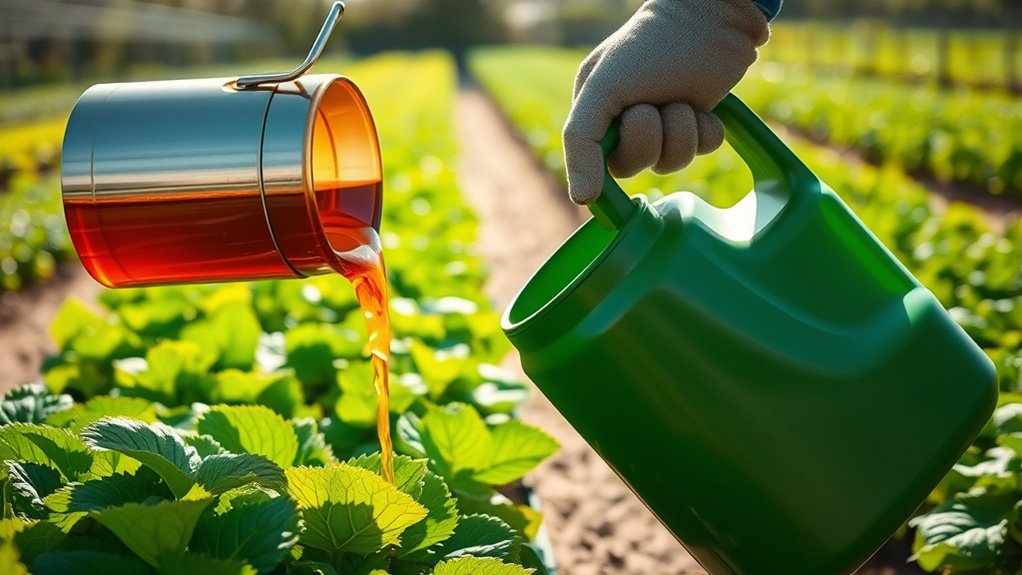
Organic liquid fertilizers are a popular choice for gardeners and farmers seeking a natural way to nourish their plants. When you mix and apply these fertilizers correctly, you support healthy soil and maximize nutrient absorption, leading to stronger, more productive plants. The key is understanding how to prepare the solution properly and apply it at the right times for ideal results.
First, pay attention to the instructions on your fertilizer’s label. Organic liquid fertilizers often come in concentrated forms, so diluting them accurately ensures your plants get the right amount of nutrients without risking damage. Use clean water and measure carefully, mixing the fertilizer in a bucket or watering can. Proper dilution helps maintain soil health, preventing over-concentration that could harm beneficial microbes or lead to nutrient imbalances. When you apply the fertilizer, you’re not just feeding your plants; you’re also supporting the soil’s ecosystem, which plays a vital role in nutrient cycling and overall plant health.
Applying the fertilizer at the right time is equally important. Early morning or late afternoon applications reduce evaporation and guarantee the nutrients stay in the soil longer, giving your plants ample opportunity to absorb them. Use a watering can or sprayer to evenly distribute the solution over the root zone, avoiding excessive runoff. For leafy plants or those with dense foliage, foliar feeding can be effective—just spray the diluted fertilizer directly onto the leaves, which can help quickly boost nutrient uptake, especially during periods of rapid growth or stress.
Consistency also matters. Regular, scheduled applications promote a steady supply of nutrients, which supports soil health over time. Avoid over-application, as this can lead to nutrient buildup and disrupt the soil’s natural balance. Remember, organic fertilizers work synergistically with soil microbes, so minimizing chemical interference and maintaining appropriate application intervals encourages a vibrant, resilient soil ecosystem that enhances nutrient absorption.
Additionally, incorporating knowledge about contrast ratio can help you understand how visual quality impacts your plants’ appearance and overall health, as higher contrast ratios in lighting can make the colors of your plants more vibrant and easier to assess for deficiencies. Finally, consider the weather conditions before applying. Avoid applying fertilizers before heavy rain, which can wash nutrients away, or during extreme heat, which can cause rapid evaporation. By timing your applications thoughtfully, you help guarantee that nutrients stay in the soil long enough for roots to absorb them effectively, fostering healthy plant growth and a thriving soil environment. With proper mixing and timely application, organic liquid fertilizers become a powerful tool to nourish your garden or farm naturally, promoting soil health and robust nutrient absorption every step of the way.
Frequently Asked Questions
How Often Should I Apply Organic Liquid Fertilizer?
You should apply organic liquid fertilizer every one to two weeks, depending on your plants’ needs and growth stage. The application frequency guarantees your plants get consistent nutrients without overfeeding. Pay attention to the ideal timing, such as early morning or late afternoon, to maximize absorption and reduce evaporation. Adjust the schedule if you notice signs of over-fertilization or nutrient deficiencies, keeping your plants healthy and thriving.
Can Organic Liquid Fertilizers Be Used on All Plant Types?
Yes, you can use organic liquid fertilizers on most plant types, but plant compatibility varies. Some plants may need specific nutrients, so consider soil adjustments to optimize growth. Always check the fertilizer label for suitability, and test on a small area first. By understanding your plants’ needs and adjusting your soil accordingly, you guarantee healthy growth and avoid potential nutrient imbalances.
What Safety Precautions Are Necessary When Mixing Fertilizers?
Did you know that improper handling can cause skin irritation or respiratory issues? When mixing fertilizers, always wear protective gear like gloves and goggles, and make certain proper ventilation to avoid inhaling fumes. Keep fertilizers away from children and pets, and follow manufacturer instructions carefully. By taking these safety precautions, you prevent accidents and protect your health while maintaining a healthy garden.
How Do I Store Leftover Organic Liquid Fertilizer?
You should store leftover organic liquid fertilizer in a sealed, opaque container to prevent contamination and degradation. Follow proper storage methods by keeping it in a cool, dry place away from direct sunlight and children. Use containers made of food-grade or non-reactive materials to avoid chemical reactions. Label the container clearly, and avoid leaving it open to prevent spills or evaporation. Proper storage extends shelf life and maintains fertilizer effectiveness.
Are Organic Liquid Fertilizers Suitable for Hydroponic Systems?
Sure, organic liquid fertilizers are hydroponic compatible, but don’t expect your plants to throw a party. They can enhance nutrient absorption, giving your roots a buffet of organic goodness. Just remember, not all organic fertilizers dissolve equally, so check for compatibility and proper dilution. Think of it as giving your hydroponic system a gourmet upgrade—just don’t forget to monitor pH levels or your plants might start a rebellion.
Conclusion
Now that you know how to mix and apply organic liquid fertilizers, your garden will bloom like a vibrant masterpiece. Think of each drop as a boost of life, turning dull soil into a lush, green paradise. With a little care and attention, your plants will thrive, reaching for the sun with renewed vigor. Keep nurturing your garden’s heartbeat, and watch it flourish like a well-tuned symphony, bursting with color and vitality.