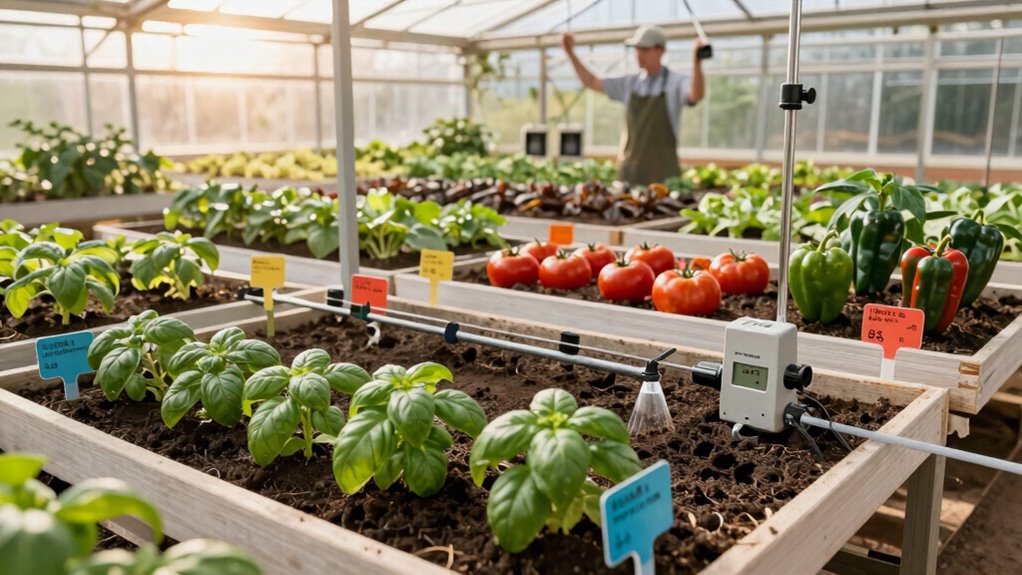
In greenhouses, crop-specific care matters more because you can precisely control environmental factors, nutrients, and pests tailored to each plant’s needs. Unlike gardens, where conditions are broader, greenhouses require you to optimize conditions for maximum growth and yield. Ignoring these differences can lead to poor health, lower production, or pests spreading quickly. If you keep exploring, you’ll discover how fine-tuning these details makes all the difference in successful greenhouse cultivation.

Get garden gear delivered free with Prime
- Fast, free delivery on millions of items
- Prime Video, Amazon Music and more included
- Member-only deals all year
Key Takeaways
- Greenhouses require tailored environmental controls to meet each crop’s specific temperature, humidity, and light needs for optimal growth.
- Precise nutrient delivery in hydroponics depends on crop-specific requirements, which are easier to manage in controlled greenhouse settings.
- Pest management strategies must be customized to target pests unique to each crop, making targeted control more effective in greenhouses.
- Crop-specific knowledge allows for optimized layout and care, reducing disease risk and improving overall yield quality.
- Uniform strategies are ineffective; tailored care in greenhouses maximizes resource efficiency and ensures consistent high-quality harvests.

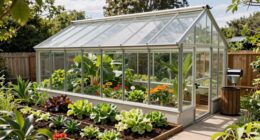
Greenhouses offer a controlled environment that can be optimized for different crops, but success depends on understanding each plant’s unique needs. Unlike outdoor gardens, where natural conditions influence growth, greenhouses give you the ability to fine-tune everything from temperature to humidity. This control allows for year-round cultivation and higher yields, but it also demands crop-specific care. You can’t simply apply the same strategy across all plants; instead, you need tailored approaches that consider each crop’s particular requirements, especially when it comes to hydroponic systems and pest management.
Greenhouse success relies on tailored care for each crop, from environment control to pest and hydroponic management.
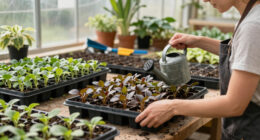
Hydroponic systems are increasingly popular in greenhouses because they enable precise control over nutrient delivery and water usage. Different crops thrive under specific nutrient mixes and root conditions, so you must adjust your hydroponic setup accordingly. For example, leafy greens like lettuce need a different nutrient balance than fruiting plants such as tomatoes. When you set up hydroponic systems, it’s essential to understand these distinctions to maximize growth and prevent deficiencies or toxicities. This crop-specific approach ensures healthier plants and more efficient resource use, ultimately boosting your productivity. Additionally, understanding crop-specific nutrient requirements helps prevent common issues like nutrient lockout or deficiencies. Recognizing plant-specific growth habits can also help optimize your greenhouse layout and management practices, making your cultivation more efficient. Moreover, adopting integrated pest management strategies tailored to each crop can significantly reduce pesticide use and improve overall plant health.
Pest management is another critical aspect that underscores why crop-specific care matters more in greenhouses than in traditional gardens. In a controlled environment, pests can spread rapidly if not managed properly. Each crop attracts different pests, and their vulnerabilities vary. For instance, aphids might be a problem for leafy greens, while whiteflies target tomatoes. You need to tailor your pest control strategies to each crop, employing targeted biological controls, integrated pest management (IPM), or carefully selected pesticides that won’t harm your plants or beneficial insects. A generic pest control approach can be ineffective or even counterproductive, leading to infestations that threaten your entire crop. Recognizing crop-specific pest management is vital for maintaining a healthy greenhouse environment.
Ultimately, the key to success in greenhouse cultivation is understanding that each crop has its own set of needs—whether it’s the right hydroponic setup or pest management plan. Ignoring these distinctions can result in poor yields, disease outbreaks, or resource wastage. By paying close attention to crop-specific requirements, you’re better equipped to optimize growth conditions, reduce problems, and achieve consistent, high-quality harvests. Greenhouse gardening demands this level of precision, making crop-specific care not just beneficial but essential for thriving in a controlled environment.
greenhouse crop-specific environmental control systems
As an affiliate, we earn on qualifying purchases.
As an affiliate, we earn on qualifying purchases.
Frequently Asked Questions
How Does Crop-Specific Care Affect Greenhouse Energy Consumption?
Crop-specific care directly impacts your greenhouse’s energy consumption by enabling better energy efficiency and climate control. When you tailor conditions to each crop’s needs, you reduce excess heating or cooling, saving energy and lowering costs. This targeted approach prevents unnecessary resource use, guarantees ideal growth, and maintains stable temperatures. By focusing on crop-specific requirements, you make your greenhouse more efficient, environmentally friendly, and cost-effective.
Are There Crops That Require Less Specialized Care in Greenhouses?
Some crops require less specialized care in greenhouses, making them more adaptable for beginners. For example, leafy greens like lettuce and herbs thrive with minimal fuss, thanks to their high plant adaptation. While crop diversity can be impressive, these hardy plants are easier to grow, needing less intervention. You’ll find they’re resilient and forgiving, turning your greenhouse into a success story without the need for intense, crop-specific care.
How Can I Identify the Specific Needs of Each Crop?
You can identify each crop’s specific needs by researching its plant nutritional requirements and observing its growth stages closely. Monitor how the plant responds to different nutrients, adjusting fertilization as needed. Keep an eye on growth stage indicators like leaf color, size, and overall vigor. This proactive approach guarantees you meet each crop’s unique needs, promoting healthy development and maximizing yields in your greenhouse.
What Are the Risks of Neglecting Crop-Specific Care?
Neglecting crop-specific care is like giving all plants the same medicine—some will thrive, others suffer. Without tailored attention, your crops risk poor general health, increased susceptibility to pests, and lower crop yield. Data shows that specialized care can boost yields by up to 30%. Ignoring their unique needs can lead to stunted growth, disease spread, and ultimately, a failed harvest, costing you time, effort, and profits.
Does Crop-Specific Care Influence Greenhouse Pest Management Strategies?
Yes, crop-specific care greatly influences your greenhouse pest management strategies. You can implement integrated pest management by tailoring treatments to each crop’s vulnerabilities, reducing chemical use and boosting effectiveness. Crop rotation becomes easier and more effective when you understand each plant’s needs, disrupting pest life cycles. This targeted approach helps you maintain healthy crops, minimize pest outbreaks, and create a more sustainable, efficient greenhouse environment.
Conclusion
In the greenhouse symphony, every crop is a unique instrument, demanding its own tune to flourish. When you give each plant the tailored care it craves, you’re conducting a masterpiece of growth and health. Like a gardener tending to delicate blooms and hardy succulents alike, your attention transforms the greenhouse into a vibrant oasis. Remember, tending with precision turns your greenhouse into a lush, thriving sanctuary where every crop sings its own victorious song.
Halloween Picks
halloween
As an affiliate, we earn on qualifying purchases.