
To select the right potting mix or growing media, consider your plant’s specific needs. Look for a balance between good drainage and nutrient retention, using coarse components like perlite or pumice to improve aeration. Organic matter such as compost or coconut coir boosts water retention and nutrients. Choose mixes formulated for your plant type—succulents need fast-draining mixes, while ferns prefer moisture-retentive media. Knowing how to tailor your mix helps your plants thrive; more tips follow.
Key Takeaways
- Choose mixes formulated for specific plant types, like succulents or ferns, to meet their water and aeration needs.
- Incorporate coarse components such as perlite, pumice, or coarse sand to improve soil aeration and drainage.
- Balance organic matter like compost or coconut coir to enhance nutrient retention and water-holding capacity.
- Ensure the media provides proper drainage to prevent root rot and excess moisture issues.
- Read labels and select potting mixes designed for container gardening to optimize plant health and growth.

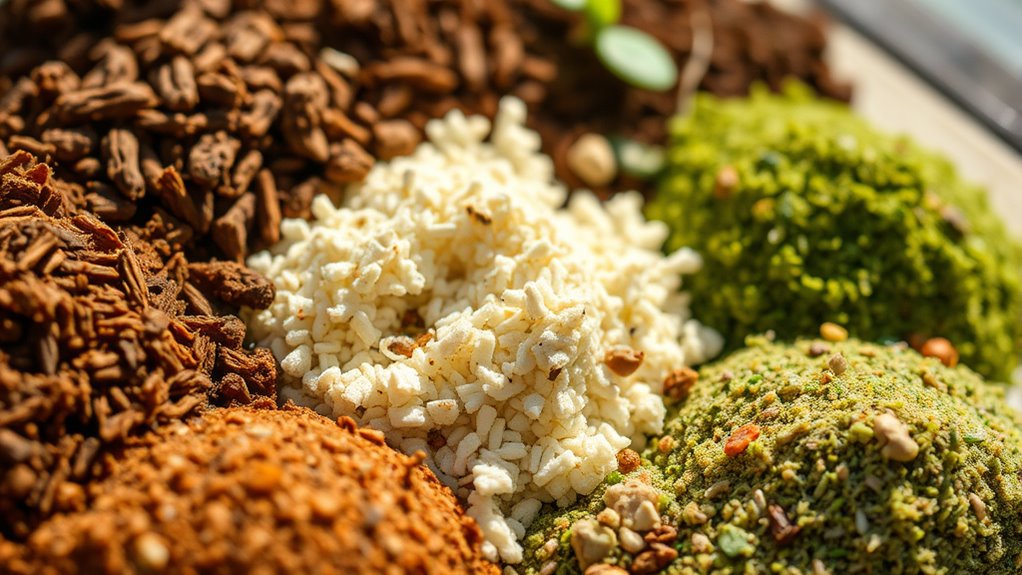
Choosing the right potting mix or growing media is essential for healthy plant growth. When you select the proper medium, you provide your plants with an environment that encourages strong roots, vibrant foliage, and steady development. One of the key factors to consider is how well the media promotes soil aeration. Good soil aeration ensures that oxygen reaches the roots, preventing issues like root rot and promoting overall plant vitality. When your growing media is too dense or compacted, air can’t circulate properly, which hampers root function. Look for mixes that contain coarse components like perlite, pumice, or coarse sand, as these help loosen the soil structure and create pockets of air within the medium. This improved soil aeration not only supports healthy root systems but also helps prevent diseases caused by excess moisture or poor drainage.
Another critical aspect is nutrient retention. Your chosen potting mix should be capable of holding onto essential nutrients while allowing excess salts and water to drain away. If the media retains nutrients too tightly, roots may struggle to access what they need, leading to nutrient deficiencies. Conversely, if it drains too quickly, plants might suffer from nutrient leaching, requiring frequent fertilization. Ideally, a well-balanced growing media strikes a harmony between retaining nutrients and providing proper drainage. Organic matter such as compost, peat moss, or coconut coir enhances nutrient retention by holding onto vital minerals and nutrients, making them available to your plants over time. These components also improve water-holding capacity, ensuring your plants don’t dry out quickly between watering sessions.
Additionally, understanding the difference between potting mixes and growing media can help you better tailor your selections for specific plant needs. When choosing your potting mix, consider your specific plant’s needs. For example, succulents prefer a fast-draining mix with excellent soil aeration, while ferns thrive in a medium that retains moisture and nutrients well. It’s also wise to read labels and opt for mixes formulated for container gardening, as these are often designed to optimize both soil aeration and nutrient retention. Remember, a balanced growing medium reduces the risk of pests and disease, supports healthy root development, and ultimately leads to lush, thriving plants. By paying attention to these factors—soil aeration and nutrient retention—you set a solid foundation for your plants’ success. Selecting the right potting mix isn’t just about convenience; it’s about creating an environment where your plants can truly thrive and reach their full potential.
Frequently Asked Questions
How Often Should I Replace My Potting Mix?
You should replace your potting mix every 1 to 2 years. Over time, soil sterilization decreases, and nutrients get depleted, which can harm your plants. Regularly refresh the mix by adding compost or fertilizer to replenish nutrients. If you notice poor growth or disease, it’s a sign to substitute the soil sooner. This ensures your plants stay healthy and have the best environment for growth.
Can I Reuse Old Potting Soil Safely?
You can reuse old potting soil safely if you sterilize it first, like in a case where a gardener heated soil in the oven to kill pathogens. Soil sterilization prevents disease buildup, making reuse viable. Alternatively, composting techniques can refresh your soil by enriching it with nutrients. Just guarantee you remove roots and debris, and sterilize or compost thoroughly to avoid pests and diseases, giving your plants a healthy start.
What Are the Signs of Poor Drainage in Growing Media?
You’ll notice poor drainage if water pools on the surface or around the roots after watering. Wilting leaves that don’t recover quickly are also a sign, indicating roots aren’t getting enough oxygen. Additionally, soggy soil that stays wet for days and a foul odor can point to drainage issues. Address these signs promptly by improving aeration or amending your growing media to guarantee healthy plant growth.
Are There Eco-Friendly or Organic Potting Mixes Available?
Yes, you can find eco-friendly or organic potting mixes. Look for options with organic certifications, ensuring they meet strict standards. These mixes often contain eco-friendly ingredients like compost, coconut coir, or peat alternatives, reducing environmental impact. When choosing, check labels for organic certification and eco-friendly ingredients to support sustainable gardening practices. This way, you nurture your plants while caring for the environment.
How Does Ph Level Affect Plant Growth in Media?
You should pay attention to pH levels because they directly affect plant growth by influencing nutrient availability. If the media’s pH is too high or low, you can perform pH adjustment to optimize conditions. Soil buffering helps uphold stable pH levels, preventing sudden changes that could stress your plants. Regular testing ensures your media stays within the ideal pH range, promoting healthy root development and vigorous growth.
Conclusion
Choosing the right potting mix or growing media can make all the difference in your plants’ health and growth. By understanding your plants’ needs and selecting suitable materials, you set yourself up for success. Remember, isn’t it worth investing a little effort now to enjoy thriving, beautiful plants? With the right mix in hand, you’ll be amazed at how easily your garden or indoor space blooms. Happy planting!