
To maintain healthy soil under cover, you should rotate crops thoughtfully and incorporate diverse cover crops to support microbial life, including mycorrhizal fungi. Avoid monocultures and chemical inputs that harm beneficial microbes. Adding legumes, grasses, and brassicas builds soil structure, enriches nutrients, and fosters fungal networks essential for resilience. These practices help sustain long-term soil robustness and productivity. Keep exploring how these methods can improve your soil’s health and foster a thriving ecosystem.
Key Takeaways
- Implement diverse crop rotations to prevent soil depletion and disrupt pest and disease cycles.
- Use cover crop mixes to enhance microbial diversity and organic matter in soil.
- Incorporate mycorrhizal-friendly plants like legumes and grasses to promote beneficial fungi networks.
- Minimize chemical inputs to preserve microbial life and support soil microbial activity.
- Regularly care for beds by maintaining organic matter, avoiding compaction, and practicing proper crop succession.
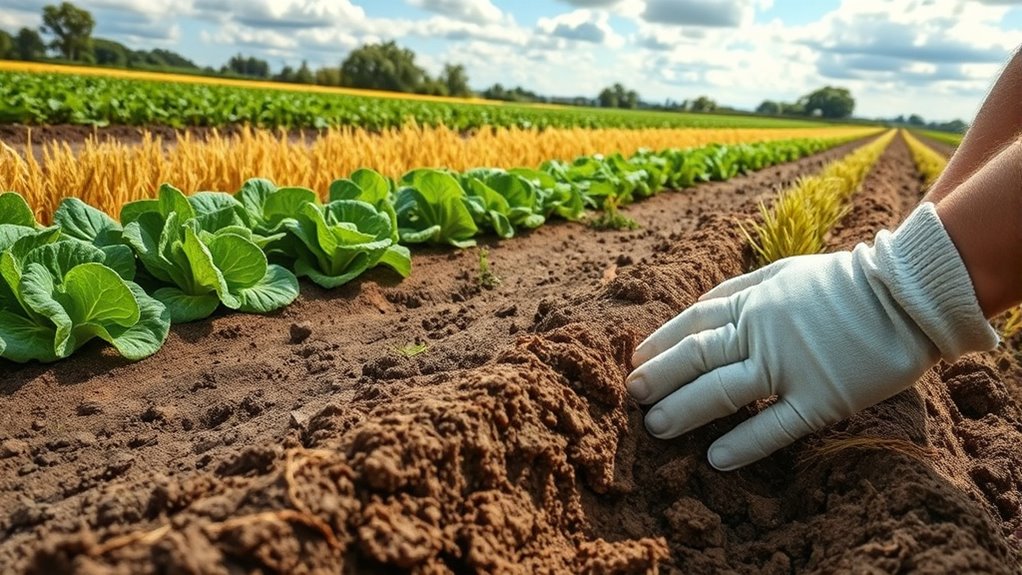
Maintaining healthy soil is essential for successful farming, and one of the most effective ways to do this is through crop rotation. When you rotate your crops thoughtfully, you prevent soil depletion, reduce pest and disease buildup, and promote overall soil vitality. A key component of this process involves encouraging beneficial soil organisms like mycorrhizal fungi, which form symbiotic relationships with plant roots. These fungi extend your plants’ access to nutrients, improve water uptake, and enhance soil structure. By diversifying your cover crops, you create an environment rich in mycorrhizal fungi and other beneficial microbes, which leads to healthier, more resilient soil.
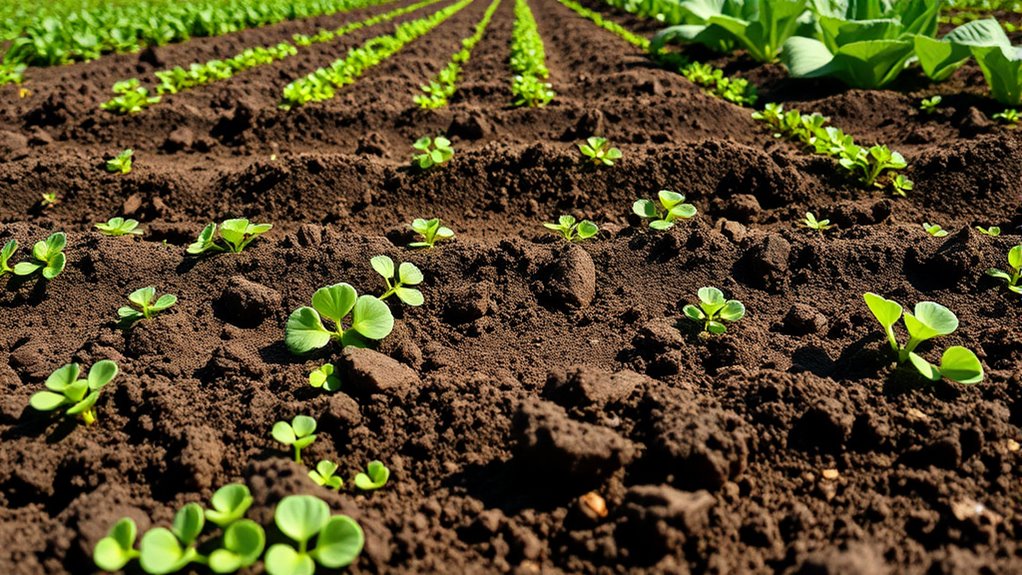
Cover crop diversity plays a vital role in supporting soil health. Instead of planting the same crop repeatedly, varying your cover crops introduces a broad spectrum of root structures, nutrient requirements, and organic matter contributions. This diversity nurtures a rich microbial community, including mycorrhizal fungi, which thrive on specific plant hosts. Different cover crops—like legumes, grasses, and brassicas—offer unique benefits: legumes fix nitrogen, grasses add biomass and organic matter, and brassicas help break pest cycles. When you mix these, you foster a robust ecosystem that supports a wide array of soil microbes. This diversity helps improve soil structure, enhances nutrient cycling, and increases organic matter content, making your soil more resilient against erosion and compaction.
Encouraging mycorrhizal fungi through crop rotation and cover crop diversity isn’t just about planting different species; it’s about creating an environment where these fungi can flourish. Avoid monocultures and overly chemical-dependent practices that can harm microbial life. Instead, incorporate cover crops that are known to support mycorrhizal networks, such as clovers and grasses. These fungi form hyphal connections between plants, facilitating nutrient exchange and communication within the soil ecosystem. As you incorporate a variety of cover crops, you provide continuous food sources and habitat for these fungi, strengthening their presence and activity. This symbiosis boosts plant health and reduces the need for synthetic fertilizers.

TnT Seed Company Peas, Oats, Vetch Garden Cover Crop Mix Seeds for Planting – 5 lb Jug – Improves Soil Health, Weed Suppression, Nitrogen Fixation, Increases Biomass
- Package Size: 5 lb jug covers 3,000–3,750 sq ft
- Soil Health Improvement: Fixes nitrogen and enhances soil fertility
- Fast-Growing Cover Crop: Establishes quickly for spring and fall
As an affiliate, we earn on qualifying purchases.
As an affiliate, we earn on qualifying purchases.
Frequently Asked Questions
How Does Cover Cropping Impact Soil Biodiversity Long-Term?
Cover cropping benefits your soil by boosting soil microbial diversity long-term. As you plant cover crops, you create habitats and organic matter that support a wide range of beneficial microbes. This increased diversity helps suppress pests naturally and improves nutrient cycling. Over time, your soil becomes healthier, more resilient, and better equipped to sustain productive crops, reducing the need for chemical interventions and enhancing overall soil robustness.
What Are the Best Cover Crop Options for Different Soil Types?
When selecting cover crops for different soil types, you should consider cover crop selection and companion planting to optimize benefits. For sandy soils, choose deep-rooted options like radishes or winter rye to improve structure. Loamy soils benefit from legumes like clover for nitrogen fixation. Clay soils respond well to cover crops that break up compaction, such as buckwheat. Tailoring your cover crop choices based on soil type enhances soil health and supports sustainable farming.
How Often Should Crop Rotation Cycles Be Changed for Optimal Soil Health?
Imagine your soil as a busy theater cast, each crop taking center stage. To keep the performance fresh and healthy, you should change the crop rotation frequency every season or two, ensuring soil health cycles stay lively. This rotation prevents pests and maintains fertility. By adjusting the schedule, you support ongoing soil vigor, helping your land produce strong, healthy crops year after year.
Can Cover Crops Help Remediate Soil Contamination?
Cover crops can definitely help with soil remediation by reducing contaminants and improving soil health. Their deep roots can extract pollutants, while organic matter from cover crop benefits enhances microbial activity that breaks down toxins. You should choose specific cover crops suited for remediation, like mustards or legumes, and plant them strategically. Using cover crops regularly supports long-term soil health and helps restore contaminated soils effectively.
What Tools or Equipment Are Recommended for Bed Care Maintenance?
For bed care maintenance, you need essential tools like a soil tester and aeration equipment. Soil testing helps you monitor nutrient levels and pH, guiding your care routine. Bed aeration loosens compacted soil, promotes root growth, and improves drainage. Use a hand aerator or garden fork regularly to keep the soil healthy. Combining these tools guarantees your beds stay productive, healthy, and ready for planting season.
Conclusion
By implementing diverse crop rotations and proper bed care, you can boost your soil’s health and productivity. Did you know that rotating crops can reduce soil erosion by up to 50%? This simple practice not only improves nutrient cycling but also helps fight pests and diseases. So, take control of your soil’s future today—your crops, and the environment, will thank you for it. Healthy soil leads to bountiful harvests and a more sustainable farm.