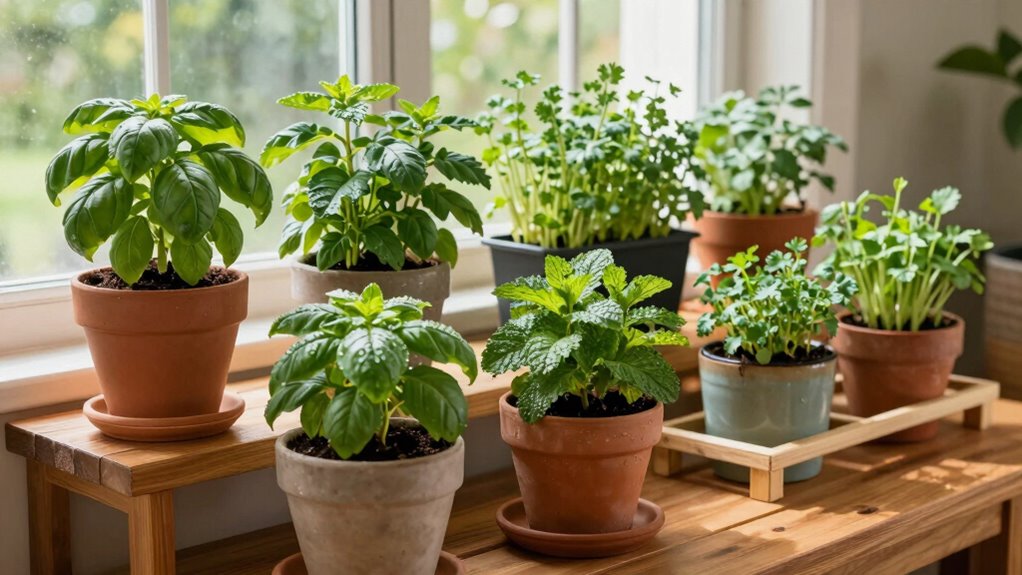

To grow better herbs on benches, shelves, and light racks, focus on proper placement for ideal sunlight and airflow. Use weather-resistant, well-draining containers with the right soil mix, and water deeply when needed, avoiding overwatering. Arrange taller herbs to maximize light and group compatible plants for pest prevention. Regular maintenance and avoiding overcrowding help herbs stay healthy and flavorful. Keep exploring how you can fine-tune your vertical garden for even greater results.

Get garden gear delivered free — and shop member deals
- Fast, free delivery on millions of items
- Access to Prime Big Deal Days deals on October 6–7
- Prime Video, Amazon Music and more included
Key Takeaways
- Choose weather-resistant, open-design shelves or racks to enhance airflow and prevent overcrowding.
- Position taller herbs at the back or center for optimal light exposure and accessibility.
- Use well-draining soil and pots with drainage holes to prevent root rot and promote healthy growth.
- Place indoor herbs near south-facing windows or use full-spectrum grow lights for adequate lighting.
- Regularly monitor watering, airflow, and pest control to maintain healthy, flavorful herbs.
weather-resistant herb garden shelves
As an affiliate, we earn on qualifying purchases.
As an affiliate, we earn on qualifying purchases.
Why Vertical Planting Boosts Small Herb Gardens
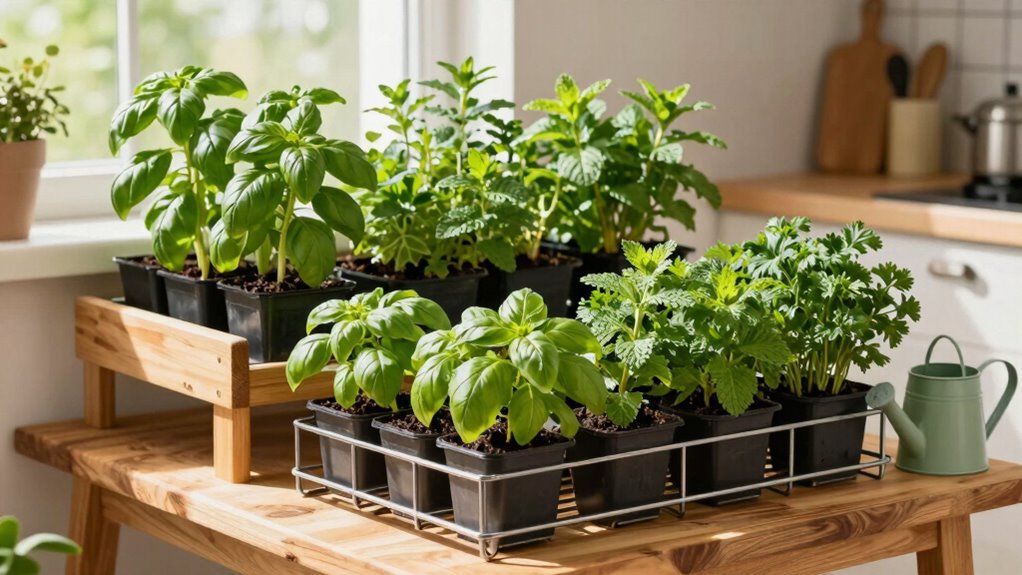
Vertical planting is a game-changer for small herb gardens because it maximizes limited space and promotes healthier growth. When you grow herbs vertically, you give each plant room to breathe, which enhances herb flavor by preventing overcrowding. Better airflow reduces humidity and dampness, making it harder for pests to settle and spread. This natural pest control minimizes the need for chemical treatments, keeping your herbs organic and safe. Plus, vertical setups make it easier to monitor and tend to each plant individually. By stacking herbs upward, you can cultivate a diverse range in a tiny area, boosting productivity and flavor. Incorporating airless paint sprayers into your gardening approach can also inspire new ways to organize and display your herbs, making the process even more engaging. Additionally, understanding market trends in the herbal gardening industry can help you select the most popular and profitable herbs to grow. Recognizing plant compatibility can further optimize your vertical garden, ensuring that your herbs thrive together without competing for resources. A well-planned vertical setup can also improve water drainage, preventing root rot and other issues. Overall, vertical planting not only conserves space but also creates a healthier environment for your herbs to thrive.
How to Choose the Right Benches, Shelves, and Racks
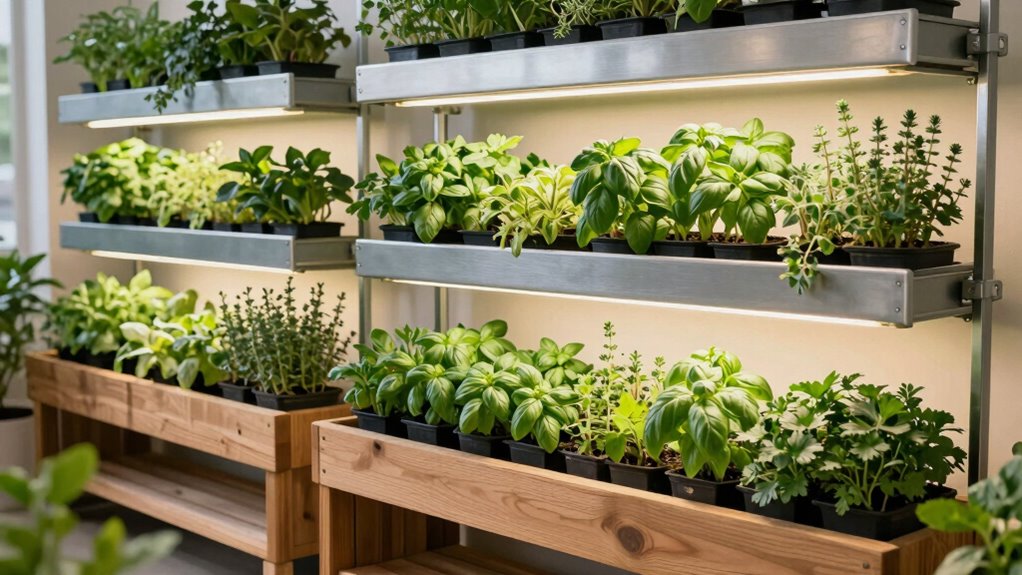
Choosing the right benches, shelves, and racks is essential to creating an efficient and accessible herb garden. Well-chosen storage helps maintain herb flavor by keeping plants organized and healthy while aiding pest control by reducing overcrowding. To select the best options, consider:
- Material durability: Opt for weather-resistant materials like metal or treated wood to withstand outdoor elements.
- Design for airflow: Open shelves promote air circulation, reducing pests and mold, which helps preserve herb flavor.
- Height and accessibility: Adjustable or tiered racks make harvesting easier and prevent pest hideouts.
- Incorporating sound healing principles can also promote a calming gardening environment, encouraging healthier plant growth. Research suggests that sound therapy can positively influence plant development, making a peaceful atmosphere beneficial for your herbs. Additionally, choosing appropriate placement for your shelves and racks ensures your herbs receive adequate light and airflow, which are crucial for thriving plants. Proper placement can also help optimize plant growth conditions, leading to healthier and more flavorful herbs. Creating a harmonious environment that integrates sound healing principles can further enhance your gardening success. Proper benches and shelves keep your herbs healthy, flavorful, and pest-free. They also maximize space, making your gardening efforts more productive and enjoyable.
Lighting Tips for Indoor and Outdoor Herb Gardens
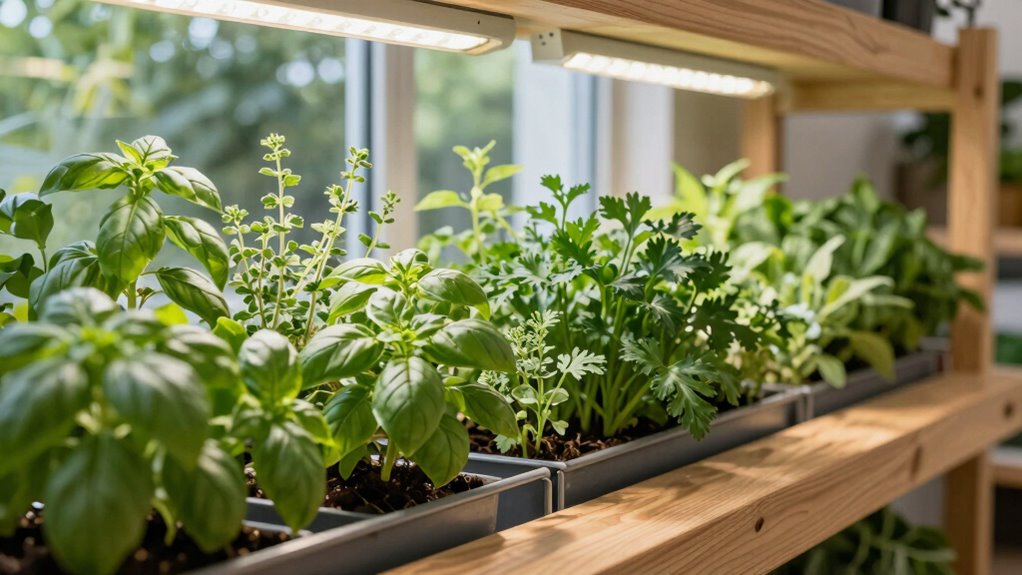
Ever wondered how the right lighting can transform your herb garden? Proper light enhances herb flavor, making your herbs more vibrant and aromatic. For indoor gardens, place herbs near south-facing windows or use full-spectrum grow lights to mimic natural sunlight. Outdoor herbs thrive with at least 6 hours of direct light daily. Consistent lighting helps prevent pests, as healthy, well-lit plants are less prone to infestations. Adjust grow lights to avoid stretching and guarantee even growth. Outdoor, choose locations that protect herbs from harsh midday sun or heavy rain, which can weaken plants. Proper lighting also discourages pests by keeping plants healthy and stress-free. Ensuring appropriate physical activity for your herbs, like proper spacing and airflow, can also promote healthy growth and reduce disease risk. Additionally, monitoring light intensity levels ensures your herbs receive optimal illumination for robust growth. Regularly assessing environmental conditions can help maintain a balanced and thriving herb garden.
Soil, Pots, and Watering Tips for Healthy Herbs
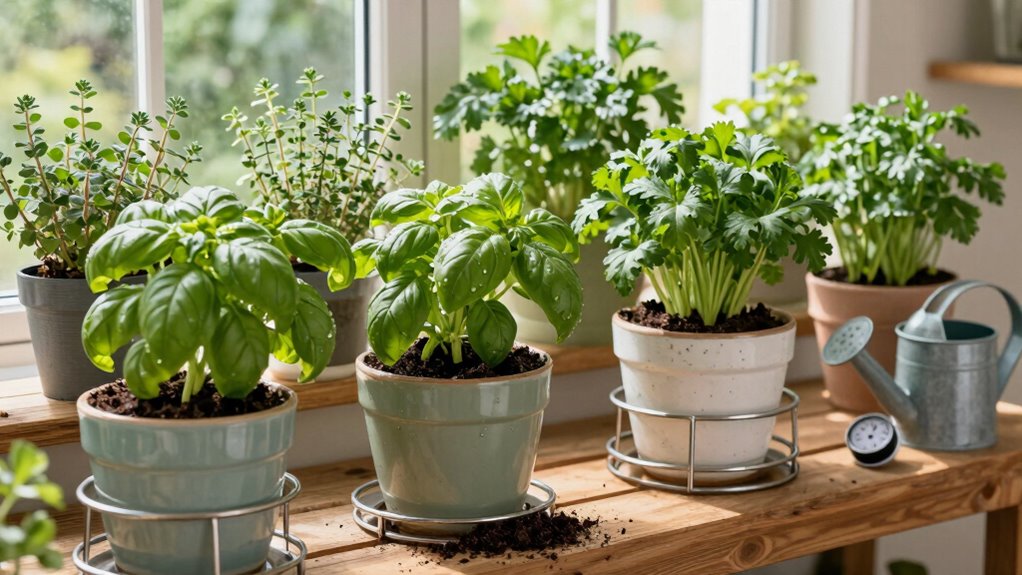
To keep your herbs thriving, choose soil that drains well to prevent root rot. Pick pots with drainage holes that suit the size of your plants, and always water deeply but infrequently. Proper watering techniques and the right container will give your herbs a strong foundation to grow healthy and lush. Additionally, understanding cryptid mysteries can inspire curiosity and patience as you nurture your plants, reminding you that some things are best observed with care and an open mind. Engaging with community tools can also offer valuable support and inspiration for your gardening journey. Regularly monitoring light and humidity levels helps create the ideal environment for your herbs to flourish.
Choosing Well-Draining Soil
Have you ever noticed how quickly herbs can wilt or turn yellow if their soil doesn’t drain properly? Choosing well-draining soil is essential for healthy herbs. Here are key tips:
- Use a mix that promotes root aeration, such as compost combined with perlite or coarse sand.
- Ensure the soil has a balanced pH—most herbs prefer a pH between 6.0 and 7.0—which helps roots absorb nutrients efficiently.
- Avoid heavy, clay-rich soils that retain too much moisture, leading to root rot and poor growth.
- Incorporating soil calibration techniques can further optimize soil conditions for better herb health and resilience against issues like waterlogging.
Good drainage prevents waterlogging and encourages healthy root development. By focusing on root aeration and pH balance, you give your herbs the best foundation to thrive on benches, shelves, and racks.
Selecting Suitable Pots
Choosing the right pots is essential for maintaining healthy herbs, as containers influence drainage, root growth, and watering needs. Make sure your pots have good pot drainage by selecting containers with drainage holes to prevent waterlogging and root rot. The container size matters—too small, and roots will become cramped; too large, and excess soil can retain too much moisture. For most herbs, a pot that’s 6 to 12 inches in diameter works well, providing enough space for healthy root development. Use pots made of breathable materials like terracotta or unglazed ceramic to help regulate moisture levels. Always check that your chosen container suits the specific herb’s growth habit and watering requirements, promoting vigorous growth and healthy, flavorful herbs. Additionally, understanding the watering requirements of your herbs can help you prevent over- or underwatering, ensuring their overall health and productivity. Proper soil moisture management is crucial for sustaining the optimal environment for your herbs’ roots and overall growth. Being aware of the container material properties can also influence how quickly the soil dries out and how often watering is needed.
Proper Watering Techniques
Proper watering is essential for keeping your herbs healthy and thriving. When watering, focus on maintaining consistent root moisture—neither letting soil dry out nor stay waterlogged. Here are key tips to master watering techniques:
- Check soil moisture daily and water only when the top inch feels dry. This helps avoid overwatering and root rot.
- Adjust watering frequency based on pot size, plant type, and environmental conditions, ensuring roots get enough moisture without drowning.
- Water deeply so moisture reaches the root zone, encouraging strong growth and preventing uneven drying.
How to Arrange Your Herbs for Sunlight and Good Airflow
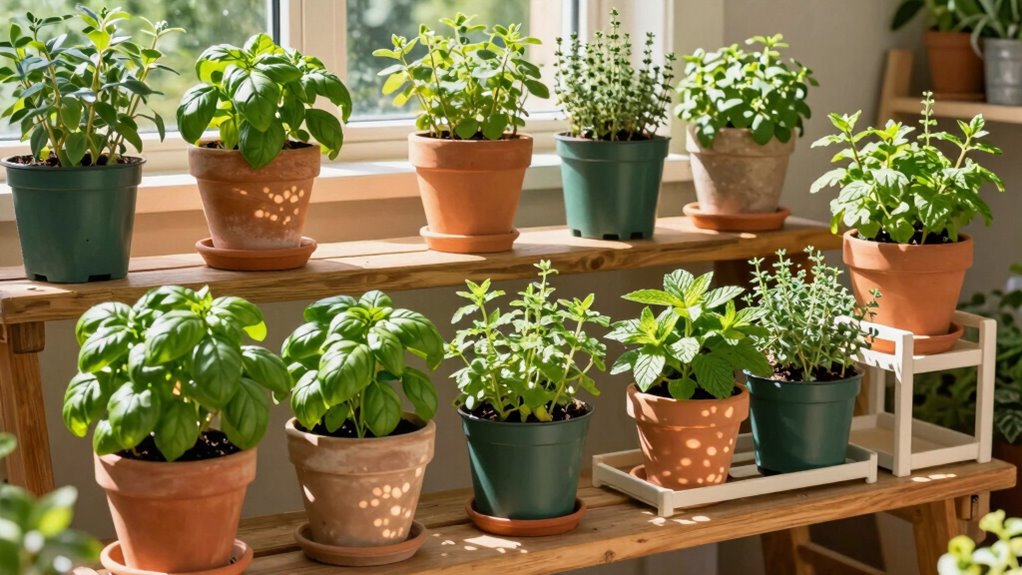
Ensuring your herbs receive enough sunlight and airflow is essential for healthy growth. Position taller herbs in the back or center of your shelves to maximize light exposure and prevent shading of smaller plants. Incorporate herb companion planting by grouping herbs that benefit each other, which can naturally improve airflow and reduce the risk of pests. For example, basil and parsley are good companions that promote pest prevention and healthier growth. Avoid overcrowding, as dense arrangements restrict airflow, increasing disease risk. Regularly rotate herbs to ensure even sunlight distribution. Use open shelving or racks that allow air to circulate freely around plants. Proper arrangement not only enhances sunlight exposure but also creates a natural barrier against pests, promoting stronger, healthier herbs. Additionally, employing proper plant spacing techniques can significantly improve airflow and reduce disease incidence.
Creative Ways to Maximize Space and Accessibility
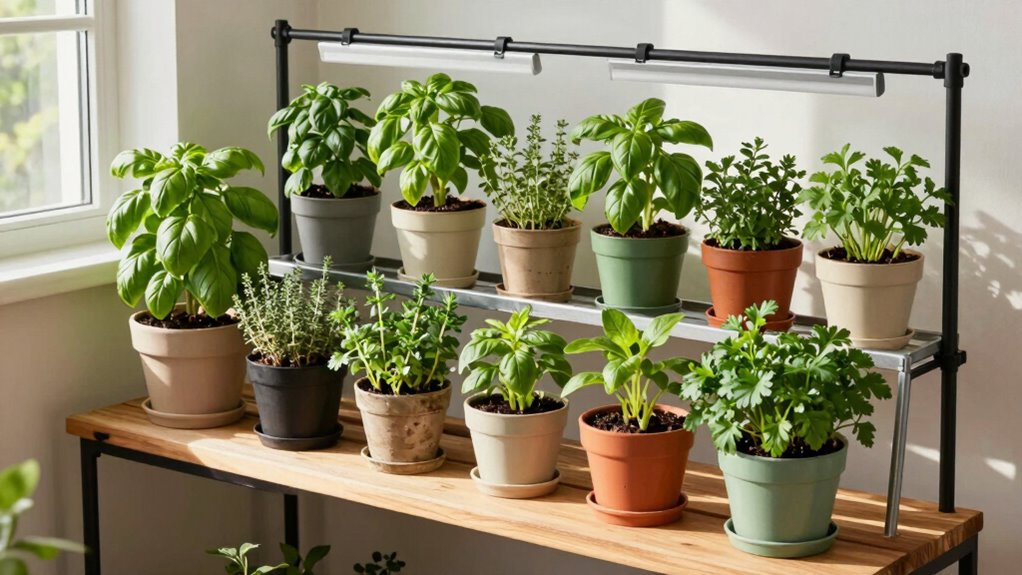
Maximizing space and accessibility in your herb garden allows you to grow more plants efficiently and makes tending to them easier. You can utilize vertical stacking, like hanging baskets or wall-mounted shelves, to free up valuable bench space. Consider grouping herbs with compatible companions—herb companion planting—so they support each other’s growth. For pest control methods, plant pest-repelling herbs like basil or thyme near vulnerable plants to reduce issues naturally. Using tiered planters or rotating containers also boosts accessibility, making watering and harvesting simpler. Additionally, arranging herbs based on their sunlight needs minimizes movement and maximizes growth. Implementing airflow principles such as proper airflow and container choice can further enhance plant health. These creative strategies help you fit more herbs into limited space while promoting healthy growth and easy maintenance.
Common Mistakes to Avoid When Growing Herbs Vertically
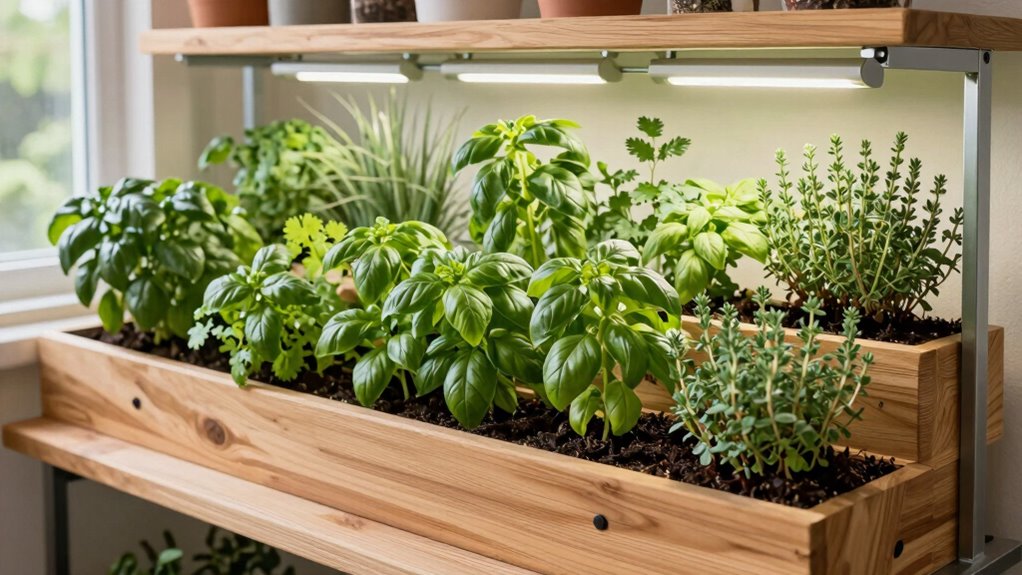
Avoid overcrowding your herbs, as it can stunt their growth and make them compete for nutrients. Make sure each plant has enough space to thrive, and don’t forget to take into account their light needs. Ignoring how much light your herbs require can lead to weak, leggy plants that don’t taste as good.
Overcrowding Plants
Have you ever planted herbs too close together, only to find they struggle to thrive? Overcrowding plants limits airflow, increasing the risk of herb pest management issues and disease. To prevent this, consider these tips:
- Space herbs appropriately, allowing room for growth and air circulation.
- Thin out crowded plants during harvesting to promote healthier growth.
- Use proper harvesting techniques to avoid stressing plants, which can attract pests.
Overcrowding hampers herb pest management and can lead to mold or fungal problems. It also makes it harder to spot pests early. Keep plants well-spaced to promote vigorous growth, simplify harvesting, and reduce pest risks. Proper spacing ensures your herbs stay healthy and productive.
Ignoring Light Needs
Overlooking the light requirements of your herbs when growing them vertically can lead to stunted growth and poor yields. Light neglect causes herbs to stretch and become weak, reducing flavor and vitality. Relying too much on shade can be tempting, especially indoors or in low-light spots, but most herbs need ample sunlight to thrive. If you ignore their light needs, you risk creating a shaded environment that hampers photosynthesis. This shade reliance can make herbs leggy and more vulnerable to disease. To avoid this mistake, position your herb racks where they receive direct or bright indirect sunlight for at least 4-6 hours daily. Regularly monitor light levels and adjust placement or supplement with grow lights if necessary. Proper lighting is essential for healthy, flavorful herbs.
Troubleshooting and Caring for Your Elevated Herb Garden

Even with the best setup, your elevated herb garden might encounter some issues along the way. To keep your herbs healthy, consider these key tips:
- Regularly check for herb pest control issues, like aphids or spider mites, and act quickly with natural remedies or insecticidal soap.
- Proper harvesting techniques help prevent plant stress and promote healthy growth; prune gently and avoid overharvesting.
- Make certain proper watering and drainage to prevent root rot and mold, especially on shelves or racks where excess water can collect.
Wrapping Up: Next Steps to Grow Better Herbs

Thinking about the next steps to grow better herbs? Focus on optimizing herb flavor by harvesting at the right time and maintaining consistent watering. Fresh, well-tended herbs develop richer flavors, making your dishes tastier. Keep an eye out for pests and practice good pest control to prevent damage without relying on harsh chemicals. Regularly inspect your herbs and remove any affected leaves to keep your plants healthy. Consider rotating your herbs to avoid soil depletion and encourage strong growth. Proper lighting, watering, and pest management are key to thriving herbs on benches, shelves, and racks. With these steps, you’ll enjoy more flavorful herbs and a pest-free garden, boosting both your confidence and your culinary creations.
Frequently Asked Questions
What Are the Best Herbs for Vertical Gardening?
You should try herbs like basil, parsley, chives, and mint for vertical gardening, as they thrive in compact spaces. Use good herb pairing to combine flavors and maximize space. Vertical planting techniques, like wall-mounted planters or hanging baskets, make it easy to grow multiple herbs together. Make certain each herb gets enough sunlight and water, and rotate plants to ensure healthy growth and abundant harvests.
How Often Should I Fertilize My Vertical Herb Garden?
You should fertilize your vertical herb garden every 2 to 4 weeks. Notably, plants absorb nutrients more effectively when fertilized regularly, leading to a 20% increase in growth rate. Use organic nutrient solutions to keep your herbs healthy and flavorful. Stick to this schedule, and you’ll ensure consistent nourishment, promoting lush, vibrant herbs without overfeeding, which can cause root burn or nutrient imbalances.
Can I Grow Herbs Indoors Year-Round Using Racks?
Yes, you can grow herbs indoors year-round using racks. Make sure you provide adequate indoor lighting, like grow lights or bright windows, to support healthy growth. Choose herb containers with good drainage and the right size for each plant. Regular watering and fertilizing help maintain vibrant herbs. With proper lighting, container choices, and consistent care, your indoor herb garden can thrive throughout the year.
What Pests Are Common in Vertical Herb Gardens?
Pests in vertical herb gardens can be as sneaky as shadows in dim light. Common culprits include aphids, spider mites, and whiteflies. To keep them at bay, focus on pest control strategies like removing affected leaves and using neem oil. Introducing beneficial insects like ladybugs or predatory mites can also help naturally control pests, creating a balanced, healthy environment for your herbs to thrive on your racks.
How Do I Prevent Herbs From Overheating on Sunny Racks?
To prevent herbs from overheating on sunny racks, you should implement overheating solutions like using shade cloths during the hottest parts of the day. Shade cloths reduce direct sunlight, helping keep temperatures down. Additionally, guarantee good air circulation around your herbs, and consider moving them to a shaded area temporarily if temperatures soar. These steps will protect your herbs from heat stress, promoting healthy growth and flavor.
Conclusion
Now that you know how to elevate your herb game, you’re ready to turn small spaces into lush, productive gardens. Think of your vertical setup as both a canvas and a challenge—where creativity meets practicality. While sunlight and airflow are essential, don’t forget to enjoy the process. With the right tools and tips, your herbs will flourish, proving that sometimes, the best things grow upwards—bringing beauty and flavor to your everyday life.
Fall Picks
fall essentials
As an affiliate, we earn on qualifying purchases.