
As a greenhouse grower, you should regularly monitor your water’s pH and electrical conductivity (EC) to guarantee ideal nutrient availability and plant health. Aim for pH levels typically between 5.5 and 6.5, depending on your crops, and keep EC within suitable ranges for your plants’ growth stage. Keeping these numbers in check helps prevent deficiencies, toxicities, and pest issues. Continue exploring to discover precise targets and expert tips for maintaining perfect water quality.

Get garden gear delivered free — and shop member deals
- Fast, free delivery on millions of items
- Access to Prime Big Deal Days deals on October 6–7
- Prime Video, Amazon Music and more included
Key Takeaways
- Maintain pH levels between 5.5 and 6.5 to optimize nutrient availability and prevent deficiencies or toxicities.
- Monitor EC regularly to ensure nutrient concentrations stay within ideal ranges for healthy plant growth.
- Calibrate pH and EC meters frequently to ensure measurement accuracy and reliable data.
- Adjust pH gradually using amendments like lime or sulfur based on test results.
- Keep detailed records of pH and EC trends to inform timely adjustments and optimize crop health.
As an affiliate, we earn on qualifying purchases.
What Do pH and EC Numbers Say About Your Water

Have you ever wondered what your water’s pH and EC numbers reveal about its quality? These measurements give you a snapshot of your water’s health for your plants. The pH level indicates how acidic or alkaline your water is, affecting nutrient availability. Proper water filtration helps remove impurities that could skew pH and EC readings, ensuring more accurate results. Additionally, pH buffering capacity tells you how well your water resists changes in pH, which is crucial for maintaining stable conditions. High EC values suggest excessive salts or nutrients, risking root health. Monitoring these numbers regularly helps you adjust your water treatment and fertilization strategies, ensuring your plants thrive. Understanding what pH and EC reveal allows you to fine-tune your watering practices for peak growth. Using verified performance fluids can also help maintain consistent water quality and protect your equipment. Regular testing and understanding the water chemistry are key to optimizing your greenhouse environment, especially since accurate measurements depend on proper testing procedures. Familiarity with testing protocols can lead to more reliable results and better overall plant health.
Why Maintaining Proper pH Is Critical for Greenhouse Crops
Maintaining proper pH levels guarantees your plants can access essential nutrients, preventing deficiencies that hinder growth. If pH is off, you risk toxicity or nutrient lockout, which can damage your crops. When you keep pH balanced, you promote healthy, vigorous growth and a more productive greenhouse. Additionally, understanding composting toilets can help you manage waste sustainably and create a healthier environment for your greenhouse operations. Monitoring pH and EC levels regularly allows you to make timely adjustments, ensuring optimal conditions for your crops’ development. Being aware of sound healing science can also inspire innovative ways to create a calming environment that benefits both plants and workers. Employing cultural practices that align with your pH management can further enhance plant health by optimizing soil and growing conditions. Using cookie management tools can help you optimize the online experience for your staff and visitors by customizing settings for better site performance.
Nutrient Availability Balance
Proper pH levels are vital because they directly influence nutrient availability to your greenhouse crops. When pH drifts outside the ideal range, nutrient imbalances occur, making essential elements either inaccessible or overly abundant. Water chemistry plays a key role in maintaining this balance, as it affects how nutrients dissolve and are absorbed by plants. If the water’s pH is too high or too low, certain nutrients become locked in the soil or solution, leading to deficiencies or excesses. Monitoring and adjusting pH helps guarantee nutrients remain available in the right proportions, promoting healthy growth. Consistent pH management prevents problems caused by nutrient imbalances, allowing your crops to thrive and reducing the risk of deficiencies that can stunt development. Understanding the Water chemistry involved can help optimize nutrient uptake and overall crop health. Additionally, keeping an eye on microplastics in dust and other contaminants can further improve the quality of your growing environment.
Prevents Toxicity Risks
When pH levels fall outside the most favorable range, your crops become more susceptible to toxicity from certain nutrients and minerals. Imbalanced pH can cause harmful buildup of elements like manganese or aluminum, which can harm plant roots and overall health. Proper water filtration helps remove contaminants that could further disrupt pH stability. Using pH buffering solutions maintains consistent pH levels, preventing sudden swings that increase toxicity risks. Regular monitoring ensures that nutrients remain available without reaching toxic concentrations. Understanding plant nutrition can further help optimize pH levels for healthier crops. Additionally, incorporating soil testing techniques can provide more precise adjustments to maintain optimal conditions. By controlling pH, you reduce the chance of nutrient lockout or excess, which can harm your plants. Maintaining stable pH levels is essential for preventing toxicity, promoting healthy growth, and ensuring your greenhouse crops thrive.
Promotes Healthy Growth
Balancing pH levels directly influences how well your greenhouse crops absorb nutrients, which is vital for healthy growth. When pH is ideal, soil amendments become more effective, helping to improve soil structure and nutrient availability. Proper pH also supports pest control by minimizing plant stress, making crops less vulnerable to pests and diseases. Maintaining the right pH ensures that roots can access essential nutrients like nitrogen, phosphorus, and potassium efficiently. This promotes vigorous growth, better yields, and stronger plants overall. Regular testing and adjusting pH levels keep your crops thriving, reducing the need for excessive fertilizers or pesticides. Ultimately, stable pH creates a healthier environment, fostering robust growth and maximizing your greenhouse’s productivity.
What Is EC and Why It Matters for Plant Nutrition

Electrical Conductivity (EC) measures how well your nutrient solution can carry an electric current, indicating its overall strength. When EC levels are right, nutrients are more available to your plants, supporting healthy growth. Regularly monitoring EC helps you adjust your feeding schedule to keep your crops thriving. Using the correct dilution ratios ensures your solution maintains optimal strength without clogging or uneven application. Additionally, understanding nutrient availability can help you optimize plant absorption and prevent deficiencies.
Understanding Electrical Conductivity
Have you ever wondered how growers guarantee their plants get the right amount of nutrients? Electrical Conductivity, or EC, measures how well water conducts electricity, which directly relates to the nutrient levels in your solution. Proper water filtration helps remove impurities that can interfere with accurate readings, while chemical balancing ensures nutrients are available in the right proportions. Monitoring EC lets you know if your plants are receiving too many or too few nutrients, preventing deficiencies or toxic buildup. By controlling EC levels carefully, you optimize plant growth and health. Regularly testing and adjusting EC is essential for maintaining consistent nutrient delivery, especially in commercial greenhouses. Understanding measurement accuracy and verification methods can help you avoid measurement errors and ensure accurate nutrient management. Additionally, keeping track of regional flavor profiles can inform how nutrient levels might need to be adjusted for specific plant varieties or local conditions. Incorporating proper calibration techniques enhances the reliability of your EC measurements, ensuring your plants receive optimal nutrition every time. Paying attention to measurement precision is crucial for avoiding costly mistakes and achieving consistent results. This way, you can assure your plants thrive with the right balance of nutrients every time.
Impact on Nutrient Availability
Since nutrient availability depends on the concentration of ions in your water, understanding EC is vital for proper plant nutrition. When EC levels are too low, plants may not receive enough nutrients, leading to stunted growth. Conversely, high EC can cause nutrient lockout or toxicity. pH fluctuations often accompany changes in EC, affecting how plants absorb nutrients. Maintaining EC stability guarantees consistent nutrient supply, preventing sudden deficiencies or toxicities. If EC rises unexpectedly, it could indicate excess salts or mineral buildup, which can hinder nutrient uptake. Monitoring EC regularly helps you adjust fertilization and watering practices promptly. Consistent EC levels are also essential for preventing nutrient imbalances, which can compromise plant health. Additionally, the use of reliable testing methods ensures accurate readings and better nutrient management. Regularly checking EC can also help detect salt buildup, which may require flushing or other corrective measures. Ultimately, keeping EC within ideal ranges supports healthy growth by ensuring nutrients are available in the right concentrations, regardless of pH fluctuations. Regularly checking and adjusting EC levels is a fundamental part of nutrient management to optimize plant health.
Monitoring for Healthy Growth
Wondering how to keep your plants healthy? Monitoring electrical conductivity (EC) is essential. EC measures the nutrient levels in your growing medium, helping you adjust fertilizer application. Soil composition influences how nutrients are absorbed, so understanding EC helps maintain balanced nutrition. Keep an eye on light intensity, too, since inadequate light can hinder nutrient uptake even when EC levels are ideal. Regular testing ensures your plants receive the right amount of nutrients without over- or under-fertilizing. Proper monitoring helps prevent deficiencies or toxicities, promoting vigorous growth. Remember, consistent checks allow you to fine-tune your feeding schedule and maximize plant health. By paying close attention to EC and considering soil and light conditions, you support robust, healthy growth in your greenhouse.
How to Measure and Monitor pH and EC in Your Greenhouse

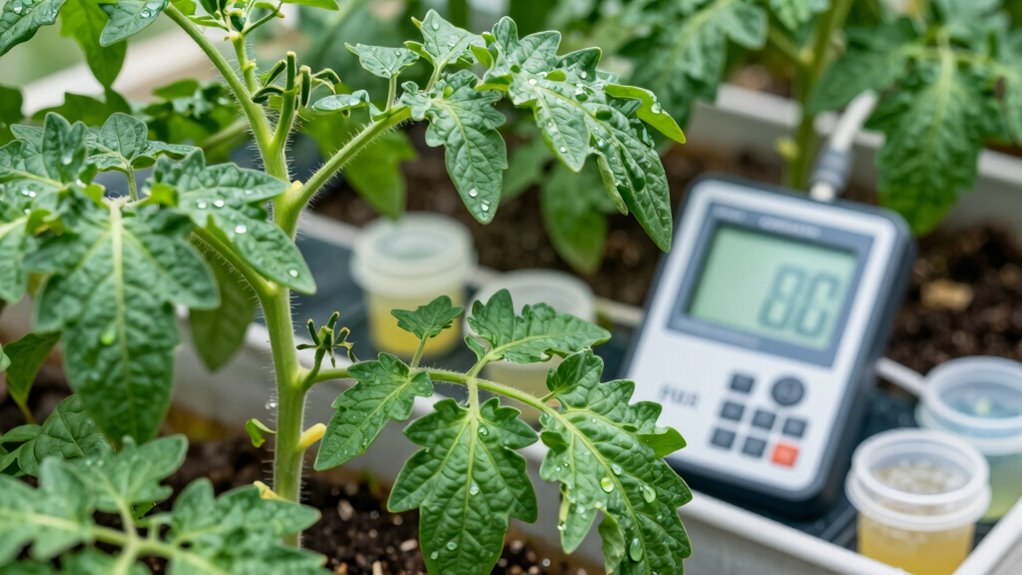
To effectively monitor pH and EC levels in your greenhouse, you need reliable testing methods and regular checks. Start with a digital pH meter and an EC meter, calibrating them regularly for accuracy. Collect water or nutrient solution samples, ensuring they’re well-mixed before testing. Consistent monitoring helps prevent plant disease and pest management issues caused by imbalanced nutrients. Keep detailed records of your readings to identify trends over time. If pH or EC levels stray from ideal ranges, adjust your nutrient solutions accordingly. Regular testing not only supports healthy plant growth but also minimizes stress that can lead to disease susceptibility. By staying vigilant with your measurements, you maintain a healthy environment that promotes vigorous growth and effective pest management.
The Ideal pH and EC Ranges for Common Greenhouse Crops

Understanding the ideal pH and EC ranges for your greenhouse crops is essential for peak growth and health. Most vegetables thrive in a pH between 5.8 and 6.5, while flowering plants like orchids prefer slightly more acidic conditions around 5.5 to 6.0. Maintaining proper EC levels—generally between 1.5 and 2.5 mS/cm—ensures plants receive adequate nutrients without risk of salt buildup. Adjust soil amendments accordingly to fine-tune pH and EC, promoting healthy root development. Proper nutrient balance also supports pest control by strengthening plant defenses, reducing vulnerability to pests and diseases. Regular monitoring helps you keep these ranges consistent, ensuring your crops grow vigorously and stay healthy throughout the season.
Troubleshooting Water pH and EC Problems

Even when you’ve set the ideal pH and EC levels, issues can still arise that affect plant health. pH fluctuations often occur due to nutrient imbalances or inconsistencies in water source, causing nutrient lockout or toxicity. To troubleshoot, regularly test your water and adjust pH promptly with appropriate amendments. EC management is equally critical; sudden changes may indicate over-fertilization or buildup of salts. If EC rises unexpectedly, flush your system to prevent root damage, and review your fertilization routine. Conversely, low EC suggests insufficient nutrients, which can stunt growth. Consistent monitoring helps you catch problems early. By maintaining stable pH and EC levels, you support *ideal* nutrient absorption and plant health, reducing the risk of stress and disease.
Essential Tools for Monitoring Water pH and EC

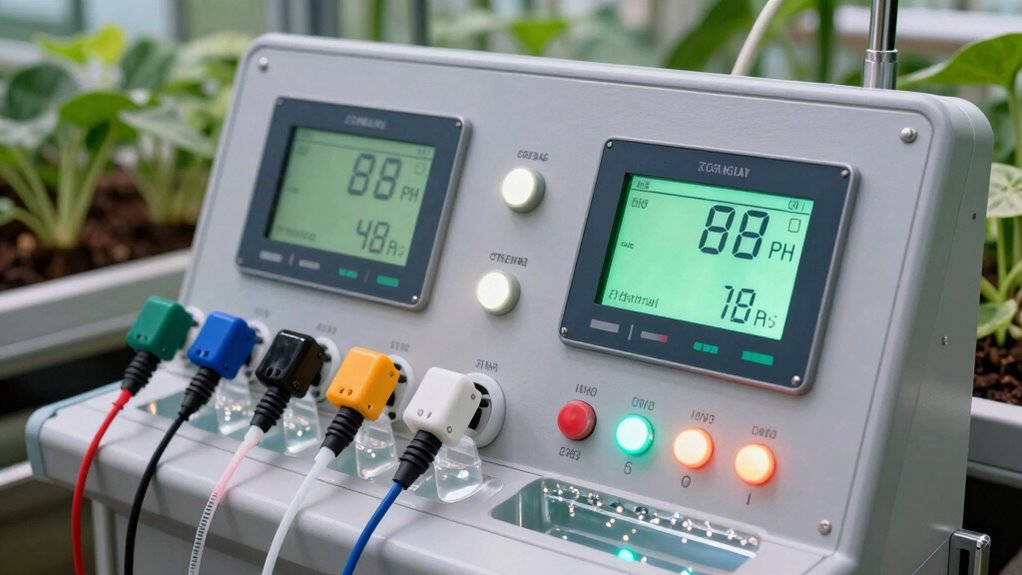
Having the right tools is essential for accurately monitoring water pH and EC levels in your greenhouse. A reliable digital pH meter allows you to quickly assess water acidity, ensuring perfect conditions for your plants. An EC meter helps you measure electrical conductivity, indicating nutrient concentration. To maintain water quality, incorporate water filtration systems that remove impurities, preventing pH fluctuations caused by contaminants. Using pH buffering solutions can stabilize water pH, reducing the need for frequent adjustments. Regular calibration of your meters ensures precision, while portable devices offer convenience for on-the-spot testing. Investing in these essential tools keeps your water parameters within ideal ranges, promoting healthy growth and preventing issues related to water quality. Accurate monitoring is key to a thriving greenhouse environment.
How Consistent Water Quality Monitoring Boosts Crop Yield

Consistent water quality monitoring guarantees your plants receive the ideal environment they need to thrive. When you regularly check pH and EC levels, you can identify issues early and make necessary adjustments. Proper water filtration removes impurities, preventing harmful buildup, while pH stabilization maintains best nutrient availability. Visualize your water system as:
- Clear, contaminant-free water flowing smoothly through your system
- Stable pH levels supporting healthy root development
- Consistent EC readings ensuring nutrient balance
Key Tips for Adjusting pH and EC Safely and Effectively

Adjusting pH and EC levels safely and effectively requires careful, incremental steps. Begin by testing your water and nutrient solution regularly to identify the current levels. Use soil amendments, such as lime or sulfur, to adjust pH gradually, avoiding sudden changes that stress plants. When increasing EC, add nutrients in small doses, monitoring plant response closely. It’s important to remember that pH and EC influence pest management strategies—healthy plants resist pests better, so maintaining ideal levels is vital. Always dissolve amendments thoroughly before application, and avoid overcorrecting, which can cause nutrient imbalances. Consistent monitoring and gentle adjustments help guarantee your crops grow healthy, while preventing issues that could compromise pest control or overall plant health.
Frequently Asked Questions
How Often Should I Test Water pH and EC Levels?
You should test your water’s pH and EC levels at least weekly to catch nutrient deficiencies early and maintain ideal plant growth. Regular testing helps you adjust nutrient solutions promptly, preventing deficiencies that could weaken your plants and make them more vulnerable to pests. Consistent monitoring also supports effective pest management, ensuring your greenhouse environment stays balanced and healthy for your crops.
Can Water pH and EC Levels Vary Throughout the Day?
Yes, water pH and EC levels can vary throughout the day due to pH fluctuation and EC variation. Factors like temperature changes, plant uptake, and water source can cause these levels to shift. You should regularly monitor both, especially during different times of the day, to guarantee ideal nutrient availability and plant health. Consistent testing helps you catch fluctuations early and make necessary adjustments.
What Are the Signs of pH or EC Imbalance in Plants?
You notice your plants yellowing or stunted, which hints at pH or EC imbalance. Nutrient deficiencies often cause leaf discoloration, while pest infestations may lead to curling or spots. If the pH is off, plants struggle to absorb nutrients, causing these issues. Similarly, improper EC levels can hinder growth, making plants weak and more susceptible to pests. Regular testing helps catch these signs early, keeping your plants healthy.
Are There Natural Methods to Adjust Water pH?
Yes, you can naturally adjust water pH using amendments like compost teas or organic acids such as citric or vinegar, which act as pH buffers. These natural methods help stabilize pH levels without harsh chemicals. Incorporate natural amendments into your water gradually, then test your pH regularly to make certain it stays within the ideal range. This approach promotes healthier plants and a more sustainable greenhouse environment.
How Do Water Source Changes Affect pH and EC Stability?
Imagine your water source as a river flowing into your greenhouse. As it changes, water source variability can disrupt your pH and EC stability, much like a river changing course. These shifts affect nutrient absorption dynamics, making it harder for plants to take in what they need. To maintain balance, monitor your water source regularly, and adjust your nutrient solutions accordingly, ensuring plants thrive despite shifting waters.
Conclusion
Think of your water’s pH and EC as the heartbeat of your greenhouse. When you keep these numbers in harmony, your plants thrive like a well-conducted orchestra. Regular monitoring is your tuning fork, ensuring each crop performs its best. With attentive care, you’ll cultivate a symphony of lush growth and bountiful harvests, turning each season into a masterpiece. Trust your tools and instincts—they’re your guiding stars in this green journey.
Fall yard work Picks
leaf blowers
As an affiliate, we earn on qualifying purchases.