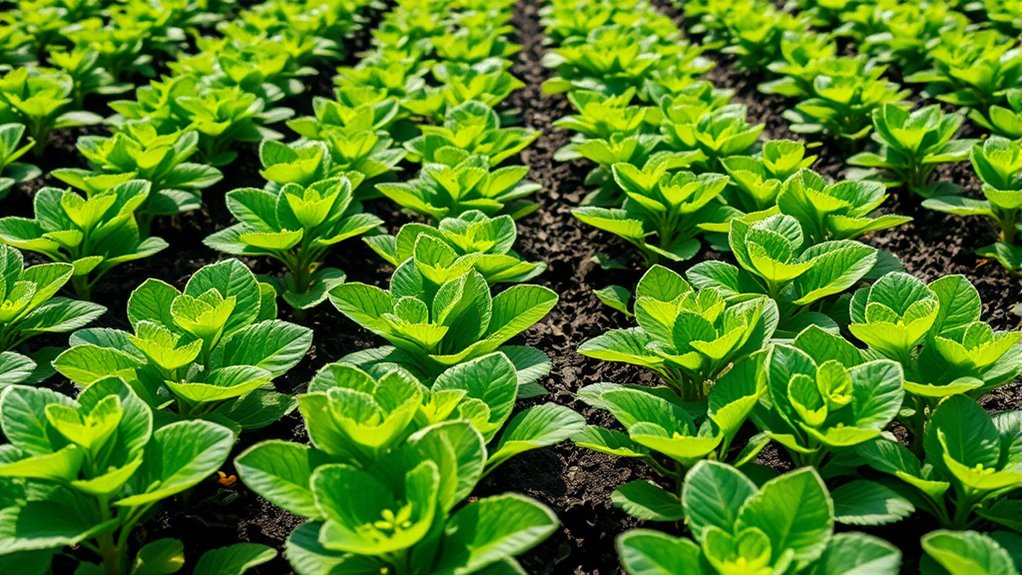

To optimize dense plantings, follow specific spacing guidelines based on plant type—small vegetables like lettuce need about 4 inches apart, while larger plants such as tomatoes require 18-24 inches. Proper soil preparation and companion planting help maximize space without sacrificing plant health. Guarantee each plant gets enough light, air, and water, and adjust spacing as plants grow. For more tips on creating a thriving, high-yield garden, keep exploring how to plan your layout effectively.
Key Takeaways
- Follow crop-specific spacing recommendations, such as 4 inches for leafy greens and 18-24 inches for larger plants.
- Incorporate organic matter into soil to support healthy root growth in dense plantings.
- Ensure adequate light, airflow, and water access for each plant to prevent overcrowding stress.
- Use companion planting strategies to optimize space and provide mutual benefits among plants.
- Regularly monitor plant health and adjust spacing as needed to maintain vigor and prevent disease.
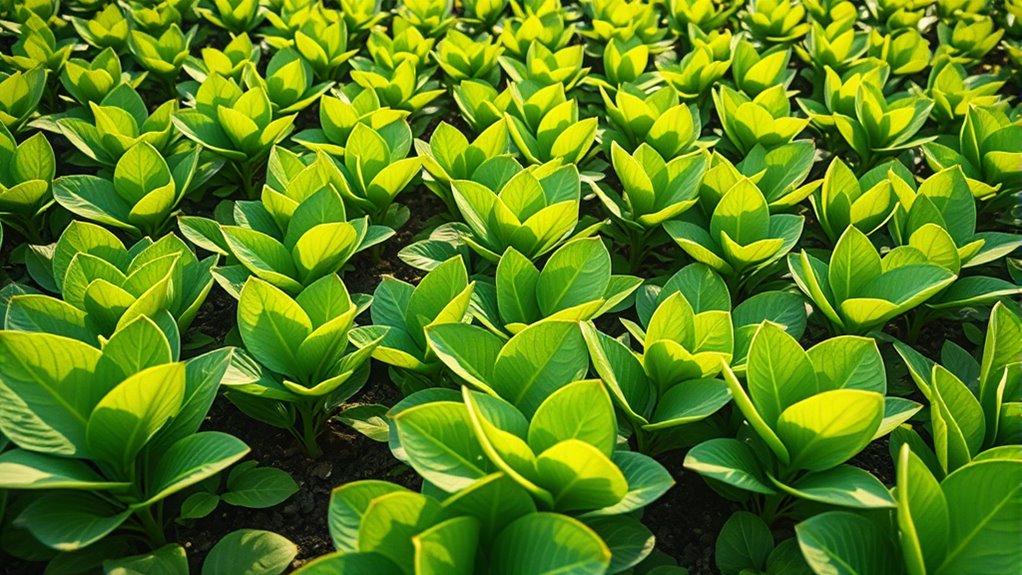
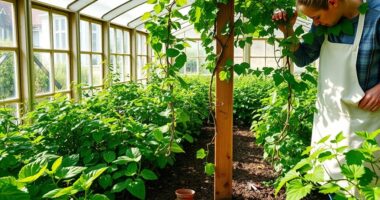
Proper plant spacing is fundamental for ensuring healthy growth and maximizing yield in your garden or farm. When you’re planning dense plantings, it’s essential to understand how spacing impacts not only individual plant health but also the overall productivity of your space. One key aspect to consider is companion planting, which involves placing certain plants near each other to promote mutual benefits like pest control, improved pollination, and better nutrient uptake. Grouping compatible plants close together can often allow for denser arrangements without compromising their growth, but only if you pay attention to their specific spacing needs.
Before you start planting, soil preparation becomes a critical step. Healthy, well-prepared soil provides the foundation for dense plantings by ensuring your plants have access to the nutrients and drainage they need to thrive. Incorporate organic matter, such as compost or aged manure, to improve soil fertility and structure. When your soil is properly prepared, plants can grow more vigorously, even in tighter spaces. Proper soil preparation also reduces the risk of disease and pest problems, which can become more prevalent in dense plantings if the soil is poor or compacted. Additionally, understanding market demand can help you plan the optimal density for your crops to meet consumer needs and maximize profitability.
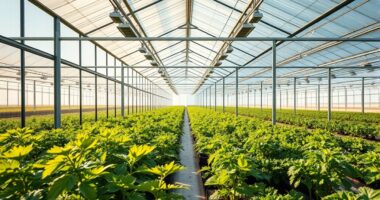
To maximize your garden’s density without sacrificing plant health, you need to understand the specific spacing requirements of each crop. Vegetables like lettuce and spinach can be planted quite close together, sometimes as little as 4 inches apart, because they don’t need much room to grow. Conversely, larger plants like tomatoes or peppers require more space—often 18 to 24 inches apart—to develop properly. When you incorporate companion planting principles, you can sometimes reduce these distances by pairing plants that benefit from each other’s proximity. For example, planting basil near tomatoes can improve flavor and repel pests, allowing you to make better use of limited space.
It’s also essential to consider light, airflow, and water when spacing plants densely. Proper spacing ensures each plant receives enough sunlight and air circulation, which are necessary for preventing diseases and promoting strong growth. You should monitor how your plants develop and adjust spacing if you notice overcrowding or signs of stress. Remember, dense plantings aren’t just about cramming as many plants as possible into your space—they’re about strategic placement that leverages companion planting and soil preparation to boost yields while maintaining healthy plants. With careful planning, you’ll create an efficient, productive garden that thrives even with dense arrangements.
Frequently Asked Questions
How Does Soil Type Affect Plant Spacing Requirements?
Soil type directly impacts your plant spacing needs because fertile soil allows plants to grow vigorously, which may require more space to prevent competition. Well-draining soil prevents waterlogging, so you can space plants closer together without risking root rot. Conversely, sandy or less fertile soils might need wider spacing to reduce crowding, ensuring each plant gets enough nutrients and proper drainage for healthy growth.
Can Plant Spacing Be Adjusted During the Growing Season?
Yes, you can adjust plant spacing during the growing season by making seasonal spacing adjustments. Regular plant growth monitoring helps you identify overcrowding or gaps, allowing you to thin or transplant plants as needed. This proactive approach promotes healthy development, maximizes sunlight, and minimizes competition. Stay vigilant, observe growth patterns, and adapt spacing accordingly to make certain your garden thrives throughout the season.
What Are the Signs of Overcrowding in Dense Plantings?
You’ll notice signs of overcrowding when your plants’ health declines, such as yellowing leaves, stunted growth, or wilting. Overcrowding also attracts pests because dense foliage provides shelter and easy access. If you see increased pest activity or your plants seem stressed despite proper watering, it’s a clear sign they need more space. Adjusting spacing helps improve airflow, boosts plant health, and reduces pest attraction.
How Does Watering Frequency Influence Optimal Spacing?
Watering habits directly influence your plant spacing decisions. If you water frequently, plants need more space to prevent overwatering and root rot, especially if they have lower drought tolerance. Conversely, plants with higher drought tolerance can be spaced closer together, as they require less frequent watering. Modify your spacing based on your watering routine to ensure healthy growth, reduce competition for moisture, and prevent overcrowding issues.
Are There Differences in Spacing Needs for Organic vs. Conventional Gardening?
Yes, organic and conventional gardening often differ in spacing needs. Organic gardens benefit from closer spacing to promote companion planting and pest management, which enhances natural pest control and plant health. Conventional gardens may use wider spacing to reduce disease spread and allow chemical access. You should consider your gardening method, plant types, and goals, adjusting spacing to optimize plant growth, encourage beneficial interactions, and manage pests effectively.
Conclusion
Follow these plant spacing guidelines, and you’ll turn your garden into a lush jungle that could swallow a small town! Imagine walking through rows so dense, you might need a machete just to get through. Proper spacing guarantees your plants thrive and grow like they’re on steroids. Don’t cram them in—give each plant its throne, and watch your garden transform into the most breathtaking, overflowing paradise anyone has ever seen!