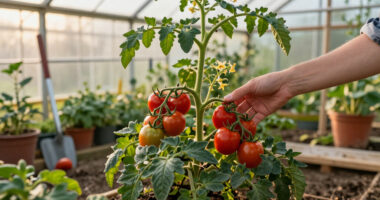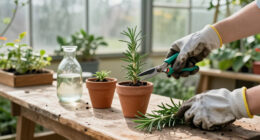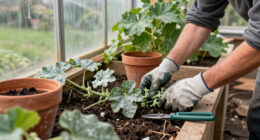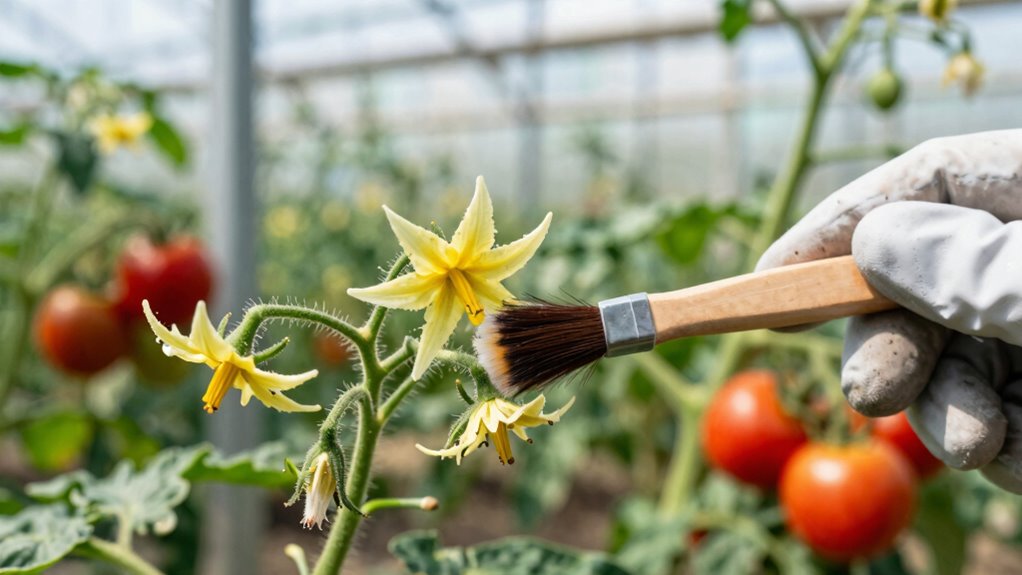

To help your greenhouse tomatoes set more fruit, use pollination aids like mechanical vibration or airflow devices during peak bloom. Apply these when flowers are most receptive, usually early morning or late afternoon, and guarantee environmental conditions like temperature and humidity are ideal. Proper timing and gentle application make a big difference. If you want to discover more about effective techniques to boost your tomato yield, continue exploring these strategies.

Get garden gear delivered free with Prime
- Fast, free delivery on millions of items
- Prime Video, Amazon Music and more included
- Member-only deals all year
Key Takeaways
- Use mechanical vibration tools or electric toothbrushes during peak flowering to increase pollen release and fruit set.
- Apply pollination aids during early morning or late afternoon when tomato flowers are most receptive.
- Maintain optimal environmental conditions, especially temperature (65-75°F) and humidity (50-60%), for effective pollination.
- Schedule regular pollination aid applications every 7-10 days during the flowering period.
- Combine pollination aids with proper pest and soil health management to optimize fruit development.
electric toothbrush for plant pollination
As an affiliate, we earn on qualifying purchases.
As an affiliate, we earn on qualifying purchases.
Why Greenhouse Tomatoes Often Need Help Setting Fruit

Greenhouse tomatoes often need extra help setting fruit because the controlled environment can limit natural pollination processes. Without outdoor wind and insect activity, pollen transfer slows down, reducing fruit set. To improve this, practicing crop rotation can help manage soil health and prevent pest buildup, which can interfere with flowering and pollination. Pest control is also essential, as pests like aphids and whiteflies can damage flowers, hindering fruit development. Keeping pests in check ensures healthier plants and more reliable pollination. Additionally, maintaining proper humidity and temperature levels encourages better flower development. By focusing on crop rotation and pest control, you create ideal conditions for pollination, helping your greenhouse tomatoes produce a richer, more abundant harvest.
How Pollination Aids Mimic Natural Pollination in Greenhouses
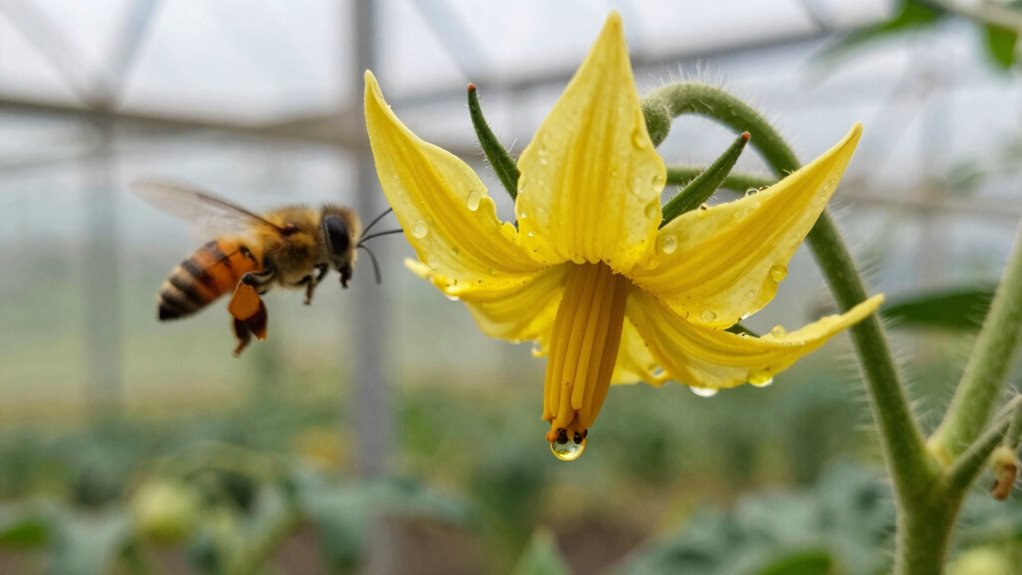
Since natural pollination agents like wind and insects are limited inside a greenhouse, you rely on pollination aids to replicate natural pollination. These aids improve pollination techniques by manually transferring pollen or vibrating flowers, mimicking insect movement. The greenhouse environment lacks the airflow and insect activity of the outdoors, so these methods guarantee fruit set. To understand better, consider this table:
| Pollination Method | Greenhouse Environment Impact | Effectiveness |
|---|---|---|
| Mechanical vibration | Enhances pollen release | High |
| Hand pollination | Precise control | Moderate |
| Artificial agents | Compensates for insect absence | Very high |
| Natural insects | Limited presence | Low |
| Wind simulation | Not feasible indoors | Low |
Additionally, pollination efficiency can be further improved by optimizing environmental conditions such as temperature and humidity, which influence pollen viability and flower receptivity. Maintaining the right pollination techniques and environmental conditions can lead to more reliable fruit production and healthier, more abundant tomato yields inside your greenhouse. Implementing these strategies effectively requires understanding the pollination process and how environmental factors impact it.
Step-by-Step Guide to Applying Pollination Aids Effectively

To guarantee your pollination aids work well, it’s important to choose the right type for your greenhouse conditions. Proper application techniques, including how and where you apply them, make a big difference. Also, timing and frequency are key—apply when flowers are receptive and follow recommended intervals for the best results. Incorporating cycling skills into your routine can help you develop a more steady and confident approach to managing your greenhouse environment.
Choosing the Right Pollination Aids
Choosing the right pollination aids is essential for guaranteeing your greenhouse tomatoes develop fully and evenly. The best pollination technology matches your greenhouse environment and promotes consistent fruit set. To select effectively, consider these factors:
- Compatibility with your greenhouse environment — ensure aids work well in humidity and temperature conditions.
- Efficacy of the pollination technology — choose aids proven to increase pollination success.
- Ease of use — select aids that are simple to apply and don’t disrupt your workflow.
- Cost and availability — opt for solutions that fit your budget without compromising quality. Additionally, understanding the importance of heat buffering can help prevent scorch and residue buildup during application, ensuring the aids work effectively. Incorporating pollination techniques that are suited for your specific greenhouse conditions can further enhance fruit set consistency and overall yield. Being aware of environmental factors can assist in selecting the most suitable pollination aids for your setup.
Proper Application Techniques
Once you’ve selected the right pollination aids for your greenhouse, applying them correctly is crucial for maximizing their effectiveness. Start by guaranteeing your soil health is ideal, as healthy soil promotes strong plant growth and better fruit set. Use clean equipment to distribute the aids evenly, avoiding over-application that could attract pests or harm beneficial insects. For best results, apply pollination aids during calm, dry conditions to prevent runoff and ensure adherence to flowering sites. Proper application can also support pest control by reducing the need for chemical interventions, as healthier plants are more resistant. Regularly monitor the application process to identify any uneven coverage or issues early. This careful approach helps your tomatoes set more fruit efficiently and sustainably.
Timing and Frequency
Timing and frequency are critical to ensuring pollination aids work effectively. You want to apply them when the plants are most receptive, typically during peak flowering. Regular applications prevent gaps that could hinder fruit set. Consider these steps:
- Monitor flowering stages and apply aids early in bloom.
- Schedule applications every 7-10 days to maintain consistent pollination.
- Integrate pollination with soil health practices to support overall plant vigor.
- Use pest management strategies to avoid pests disrupting pollination or damaging flowers.
- Ensuring proper plant stability can also improve pollination efficiency and fruit development.
Consistent timing helps optimize fruit development, while proper frequency reduces stress on plants. A healthy soil environment encourages better pollination, and pest control minimizes interference, ensuring your greenhouse tomatoes set more fruit effectively.
Which Pollination Aids Are Best for Greenhouse Tomatoes?
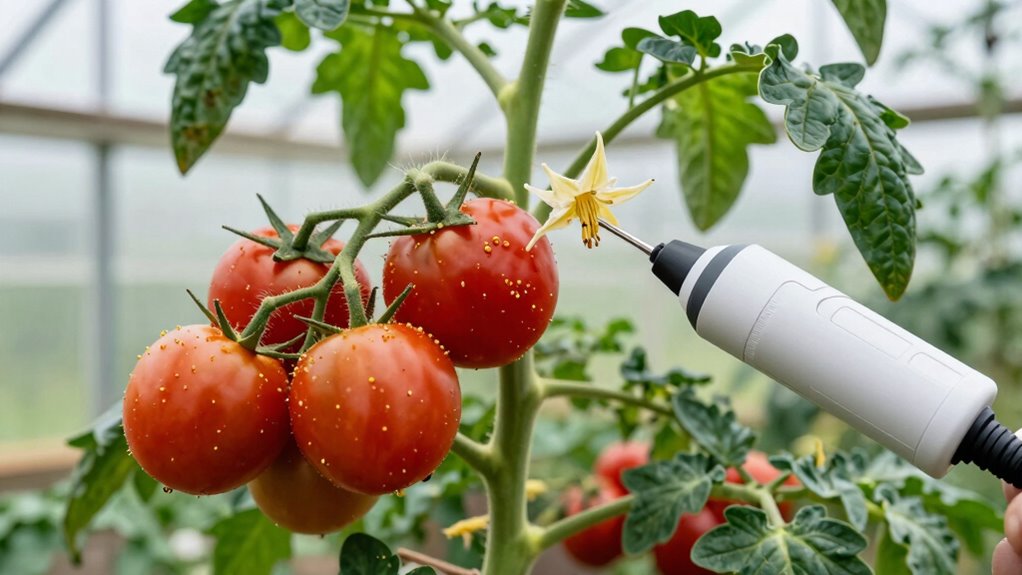
To guarantee successful pollination in greenhouse tomatoes, selecting the right pollination aids is essential. The best pollination technology depends on your greenhouse climate and specific conditions. Mechanical pollinators, like vibrating tools or electric toothbrushes, can mimic natural pollination by shaking pollen loose. For warmer, more humid environments, introducing airflow with fans or ensuring proper air circulation can improve pollen transfer. In cooler or more stable climates, manual shaking or tapping the plants can boost pollination. Some growers also use bee hives or natural pollinators, but these may be less effective indoors. Ultimately, choosing aids that complement your greenhouse climate and suit your setup will maximize fruit set and yield. Consistent use and proper calibration of these aids are vital for success. Additionally, understanding the digital landscape and how to utilize technology can enhance pollination strategies for optimal results, as digital tools can help monitor and adjust environmental factors for better pollination efficiency. Incorporating climate control systems can further optimize conditions for pollination success. Using pollination monitoring devices can provide real-time feedback to improve overall effectiveness.
When Is the Best Time to Use Pollination Aids?

Knowing the ideal moments to use pollination aids can greatly boost your greenhouse tomato yields. Timing is vital for maximizing pollination technology and supporting healthy fruit development. You should use pollination aids when:
Using pollination aids at the right time boosts tomato yields and ensures healthy fruit development.
- Flowers first open, as this is when pollen transfer is most effective.
- Temperatures are between 65-75°F, since warmth encourages pollen release.
- Humidity levels are moderate, around 50-60%, to prevent pollen from drying out.
- You notice a decline in natural pollination activity, such as fewer bees or airflow issues.
- Ensuring optimal pollen viability can significantly improve pollination success during these key stages. Additionally, maintaining proper environmental conditions helps ensure that pollen remains viable and capable of fertilizing flowers effectively. Regular monitoring of pollination timing can also help you adjust your strategies for maximum fruit set. Being aware of pollination windows allows for more precise application of aids, enhancing overall fruit production. Staying attentive to environmental fluctuations ensures that pollination efforts are timely and effective.
Common Mistakes to Avoid When Using Pollination Aids
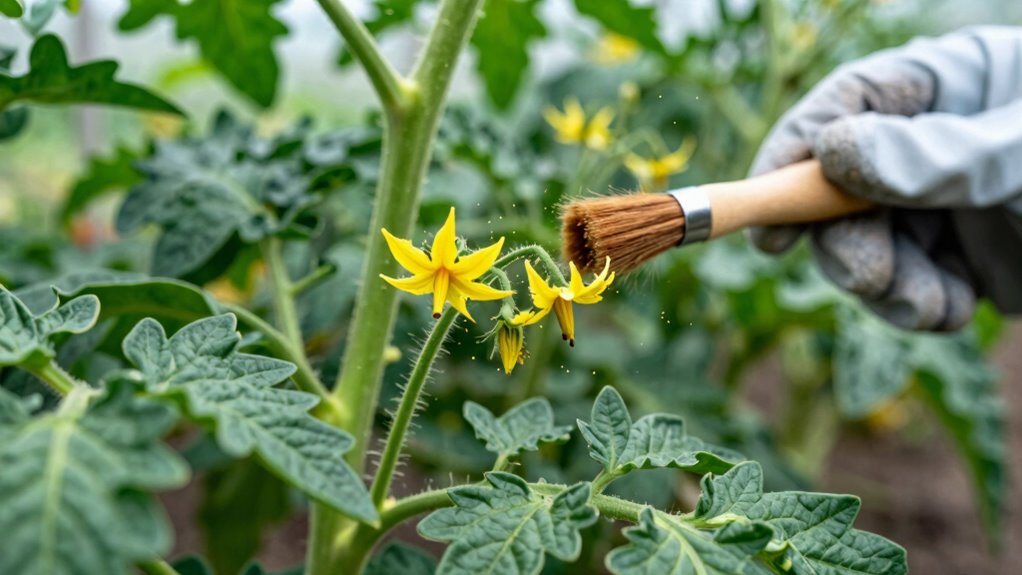
Using too many pollination aids can harm your plants, so avoid overapplication. Ignoring the specific needs of your tomato varieties or applying aids at the wrong time can reduce effectiveness. Pay attention to proper timing and plant requirements to get the best results. Additionally, understanding each plant’s pest-free needs helps maintain a healthy, thriving garden. Being aware of emerging trends in sports tech and fan engagement can also inspire innovative approaches to gardening tools and techniques that enhance productivity and monitoring. Incorporating traditional Indonesian decor masks into your garden or outdoor space can add a unique cultural element that fosters a serene and inspiring environment. Recognizing the importance of content quality and topical authority in your gardening information can further boost your success. Moreover, understanding the role of pollination aids in plant physiology can help optimize their use for better fruit set.
Overusing Pollination Aids
Have you ever thought that more isn’t always better when it comes to pollination aids? Overusing them can actually hinder flowering enhancement and fruit set. Too much intervention can cause stress or disrupt natural pollination processes. To avoid this, keep these tips in mind:
- Use pollination aids sparingly; follow recommended application rates.
- Don’t rely solely on aids; encourage natural pollination when possible.
- Observe your plants’ response before increasing frequency.
- Remember that excessive use can lead to pollen overload, reducing effectiveness.
- Implementing sound home soundproofing practices can help reduce environmental stressors that might impact plant health.
Using pollination aids thoughtfully helps maximize flowering enhancement without overwhelming your greenhouse tomatoes. Balance is key to ensuring healthy fruit development and avoiding the pitfalls of overapplication.
Ignoring Plant Specific Needs
Ignoring the specific needs of your greenhouse tomatoes can lead to ineffective pollination and even harm plant health. Each plant’s genetics influence how it responds to pollination aids, so understanding their unique requirements is essential. Some varieties may need more vigorous shaking or specific humidity levels, while others respond better to gentle techniques. Additionally, soil composition plays a key role; nutrient-rich, well-drained soil supports healthy growth and ideal fruit set. If soil lacks essential nutrients or has improper pH, even perfect pollination efforts may fail. Avoid applying a generic approach without considering the plant’s genetic traits or soil conditions. Tailoring your pollination methods to match these factors ensures better fruit production and healthier plants overall.
Neglecting Proper Timing
Timing is essential when applying pollination aids to greenhouse tomatoes; even a slight miscalculation can reduce fruit set or cause uneven ripening. If you apply too early, the flowers may not be receptive, and soil health could be compromised, impacting overall plant vigor. Waiting too long might mean missed opportunities for effective pollination, leading to poor fruit development. To avoid this, consider these tips:
- Monitor flowering stages closely before applying aids.
- Confirm pest control measures are in place, as pests can hinder pollination.
- Schedule applications during ideal temperature and humidity conditions.
- Maintain soil health to support strong, healthy plants that respond well to pollination efforts.
Proper timing maximizes fruit set and ripening consistency, boosting your greenhouse tomato yield.
How Can I Tell If My Tomatoes Are Setting More Fruit?

You can tell if your tomatoes are setting more fruit by observing the small, developing tomatoes on the plants. If you notice an increase in the number and size of these young fruits, it indicates successful pollination and fruit set. Keep an eye on the overall plant health, as proper pest management helps prevent damage that could hinder fruit development. Additionally, healthy seed dispersal from earlier flowering stages guarantees good fruit set, so fewer flowers drop without developing. Consistent fruit growth over several days shows your pollination efforts are working. If you see more uniform, well-formed tomatoes, it’s a clear sign your techniques are paying off. Monitoring these signs helps you gauge whether your pollination tricks are effectively increasing fruit production.
Troubleshooting Low Fruit Set Despite Using Pollination Aids
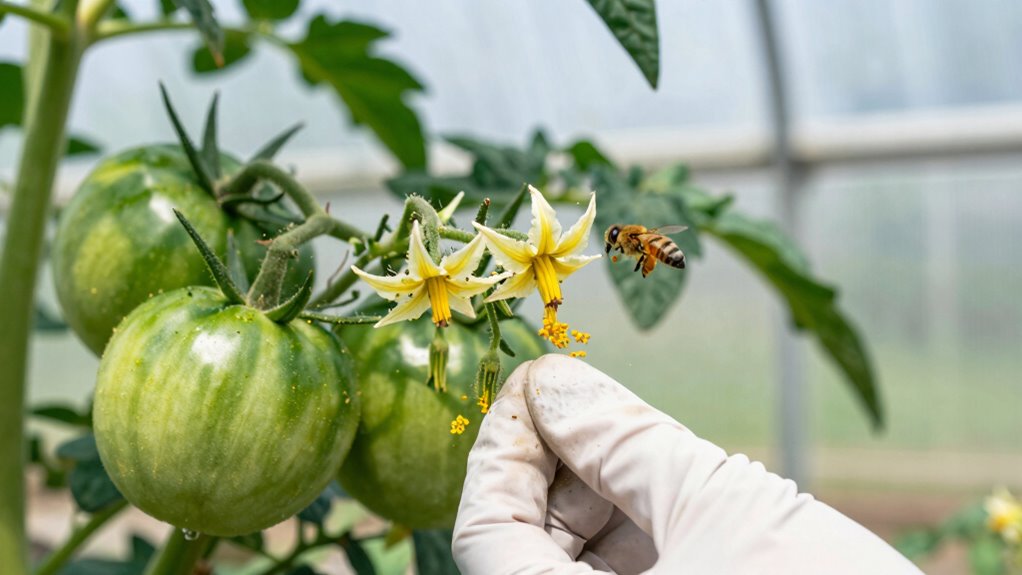
If your tomato plants aren’t setting fruit despite using pollination aids, the problem might be pollen viability. You should also check that you’re applying the aids at the right time and in the correct amount. Addressing these factors can help improve your fruit set effectively.
Identifying Pollen Viability Issues
When fruit set remains low despite using pollination aids, pollen viability often becomes the culprit. To identify pollen health issues, focus on key signs.
- Color and Texture: Healthy pollen is usually dry, powdery, and vibrant in color. Wet or sticky pollen indicates poor viability.
- Pollen Germination: Test pollen under a microscope; viable pollen should germinate and form tubes within hours.
- Environmental Conditions: High temperatures or humidity can impair pollen health, so monitor and adjust greenhouse conditions accordingly.
- Pollen Collection: Collect samples from flowers and assess their appearance and response to pollination technology. If pollen appears damaged or non-responsive, it’s likely non-viable.
Understanding these signs helps troubleshoot low fruit set caused by pollen viability issues, ensuring pollination technology is effectively supporting your greenhouse tomatoes.
Timing and Application Factors
Even with the right pollination aids in place, improper timing and application can still lead to low fruit set. Apply pollination aids when flowers are most receptive, typically during early morning or late afternoon. Guarantee soil health by maintaining proper drainage and nutrient levels, as weak soil can impair flower development. Also, avoid disrupting pest control measures; pests can hinder pollination and reduce fruit set. Timing is critical—missed windows mean missed opportunities for pollination. Apply aids consistently, following manufacturer instructions, to maximize effectiveness. Regularly monitor environmental conditions like humidity and temperature, which influence flower receptivity. Proper timing and application, combined with healthy soil and effective pest control, ensure your greenhouse tomatoes set fruit reliably and abundantly.
How Proper Pollination Boosts Tomato Quality and Yield

Proper pollination is vital for maximizing both the quality and yield of greenhouse tomatoes. When pollination occurs effectively, your tomatoes develop better shape, size, and flavor, leading to higher market value. Using advanced pollination technology, such as vibrating tools or bee hives, can improve fruit set and uniformity. Environmental factors like humidity, temperature, and airflow influence pollination success, so maintaining ideal conditions is important. Here are four ways proper pollination boosts your tomato crop:
- Increases fruit set and reduces misshapen tomatoes
- Enhances flavor, texture, and nutritional content
- Guarantees uniform ripening for better harvest efficiency
- Maximizes overall yield and profitability
Integrating Pollination Aids Into Your Greenhouse Management Plan
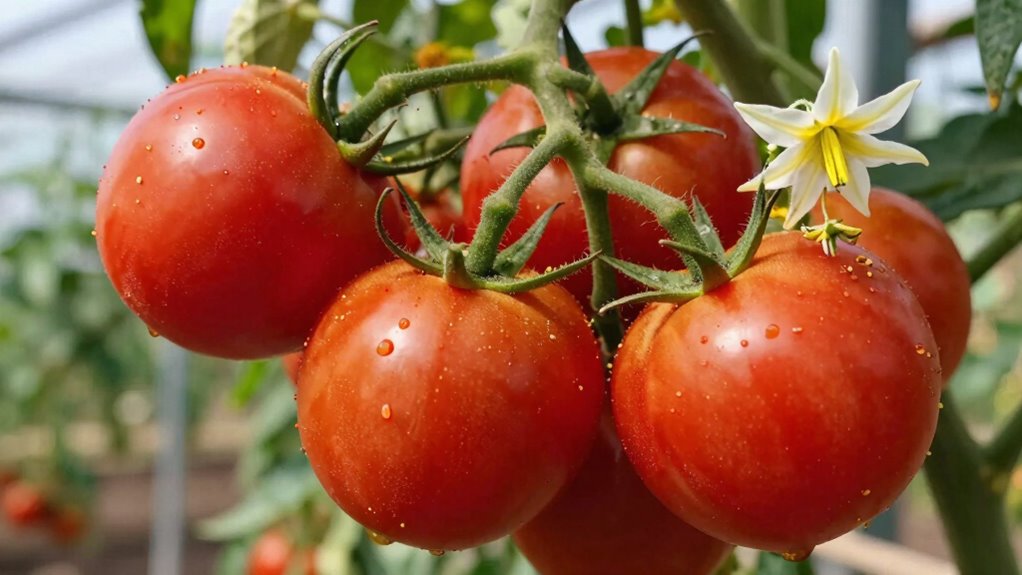
Effective pollination techniques directly impact the consistency and quality of your greenhouse tomato crop. To maximize results, integrate pollination technology seamlessly into your greenhouse environment. Use tools like electric pollinators or manual shaking devices to mimic natural pollination cues, especially when natural pollinators are limited. Adjust environmental factors such as humidity, temperature, and airflow to create ideal conditions for pollination. Regularly monitor and maintain these settings to ensure ideal pollen transfer. Incorporate pollination aids into your daily management routine, and educate staff on their proper use. By thoughtfully integrating these aids, you enhance fruit set and uniformity, leading to higher yields and better fruit quality. This strategic approach helps maximize your greenhouse’s productivity and efficiency.
Frequently Asked Questions
Are There Natural Alternatives to Pollination Aids for Greenhouse Tomatoes?
Yes, there are natural alternatives like using natural bee attractants to encourage pollination. You can also try hand pollination techniques, which involve gently transferring pollen from male to female flowers using a brush or your fingers. These methods promote fruit set without synthetic aids, helping you maintain a more organic approach. By attracting bees naturally or manually pollinating, you enhance greenhouse tomato yields effectively and sustainably.
How Does Temperature Affect Pollination Success in Greenhouses?
Temperature plays a vital role in pollination success in your greenhouse. If it’s too hot or cold, pollen may become less viable, reducing fruit set. You should focus on humidity control to maintain ideal conditions, ensuring pollen remains sticky and effective. Additionally, timing your pollination efforts with the right temperature range improves success. Proper temperature management, combined with careful pollination timing, helps your tomatoes set more fruit efficiently.
Can Overuse of Pollination Aids Harm Tomato Plants?
Overusing pollination aids might seem harmless, but it can pose pollination aid risks that impact plant health. Excessive application can lead to stress, nutrient imbalances, or interfere with natural processes. While aids boost fruit set, overdoing it may weaken tomato plants, making them more susceptible to diseases or pests. Use pollination aids prudently, following recommended guidelines, to guarantee you support healthy growth without risking plant health impacts.
Do Pollination Aids Work Equally Well for All Tomato Varieties?
Pollination aids don’t work equally well for all tomato varieties because different varieties respond uniquely to various pollination methods. Some may benefit more from vibration or manual shaking, while others require less intervention. You should experiment with different pollination techniques tailored to your specific tomato varieties for the best results. Understanding each variety’s needs helps optimize fruit set, ensuring healthier plants and higher yields.
How Long Does It Take to See Results After Applying Pollination Aids?
Think of pollination timing as planting a seed of hope—you’ll start to see results in about 7 to 14 days. Once pollination aids are applied, fruit development begins to accelerate, like a symphony reaching its crescendo. You can expect to notice initial signs of improved fruit set within this window, with full development unfolding over the next few weeks. Patience turns your greenhouse into a thriving garden of reward.
Conclusion
By using effective pollination aids, you can greatly boost your greenhouse tomato yields—studies show up to a 30% increase in fruit set. When you understand the best timing and techniques, you’ll enjoy healthier plants and tastier, more abundant tomatoes. Incorporating these methods into your regular greenhouse routine guarantees consistent results and maximizes your harvest. With a little effort, you’ll see your tomatoes thrive and your success grow!
Columbus Day / Indigenous Peoples' Day Picks
long weekend sales
As an affiliate, we earn on qualifying purchases.