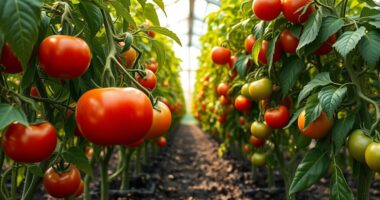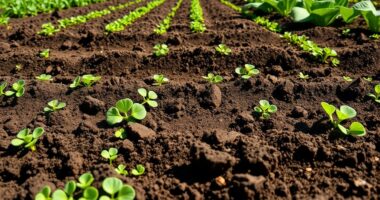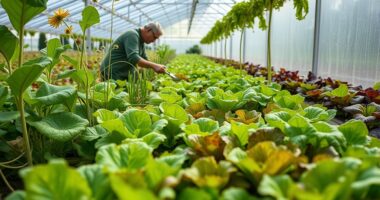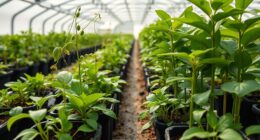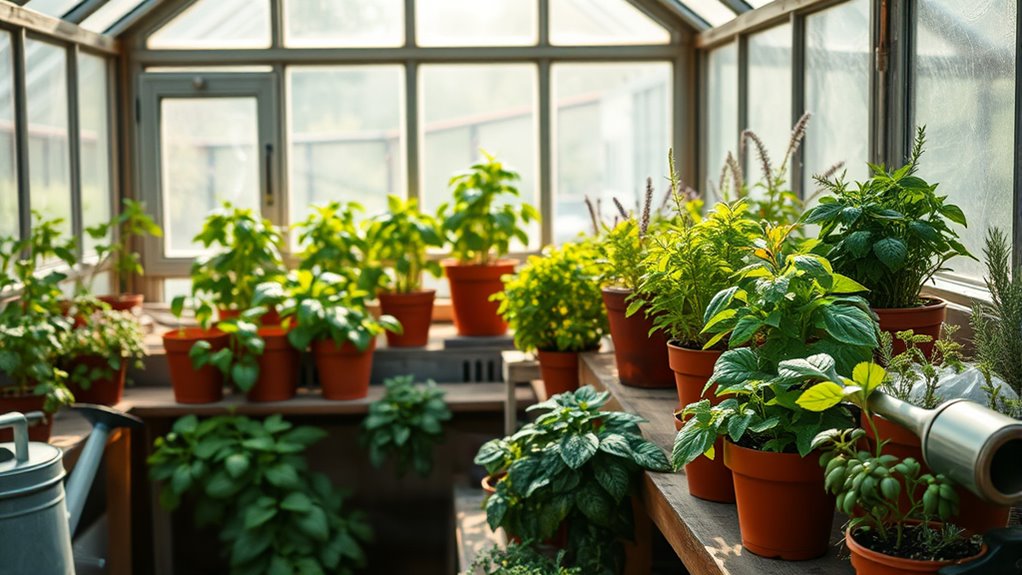

To grow herbs successfully in your greenhouse, choose varieties suited to your environment and consider companion planting for pest control and flavor synergy. Manage light, temperature, and humidity carefully with supplemental lighting and ventilation to keep conditions stable. Use well-draining soil in containers with proper drainage, and water uniformly to avoid overwatering. Regular pest checks, pruning, and fertilizing keep your herbs healthy and productive. Keep exploring for more tips to master your indoor herb garden.
Key Takeaways
- Select herb varieties suited to your environment and practice companion planting to enhance growth and pest control.
- Optimize light, temperature, and humidity with supplemental lighting, ventilation, and monitoring to create ideal growing conditions.
- Use well-draining soil, appropriate containers, and consistent watering techniques like drip irrigation for healthy roots.
- Regularly inspect for pests and diseases, and implement biological controls and sanitation to maintain plant health.
- Harvest regularly, prune appropriately, and follow fertilization schedules to promote vigorous, continuous herb growth.
Selecting the Right Herb Varieties for Your Greenhouse

Choosing the right herb varieties for your greenhouse is essential to guarantee healthy growth and a successful harvest. You’ll want to select herbs with flavor profiles that suit your culinary needs, whether you prefer aromatic basil or spicy oregano. Additionally, understanding cookie categories and how they impact your browsing experience can help you better manage online resources for gardening tips and supplies. Understanding how different herbs interact through companion planting techniques can improve growth and naturally repel pests. For example, basil benefits from proximity to tomatoes and can enhance flavor, while mint can deter pests from other herbs. Consider your growing conditions and how each herb’s specific requirements align with your greenhouse environment. Mixing herbs with complementary flavor profiles and compatible growth habits can maximize space and health.
Optimizing Lighting and Temperature Conditions
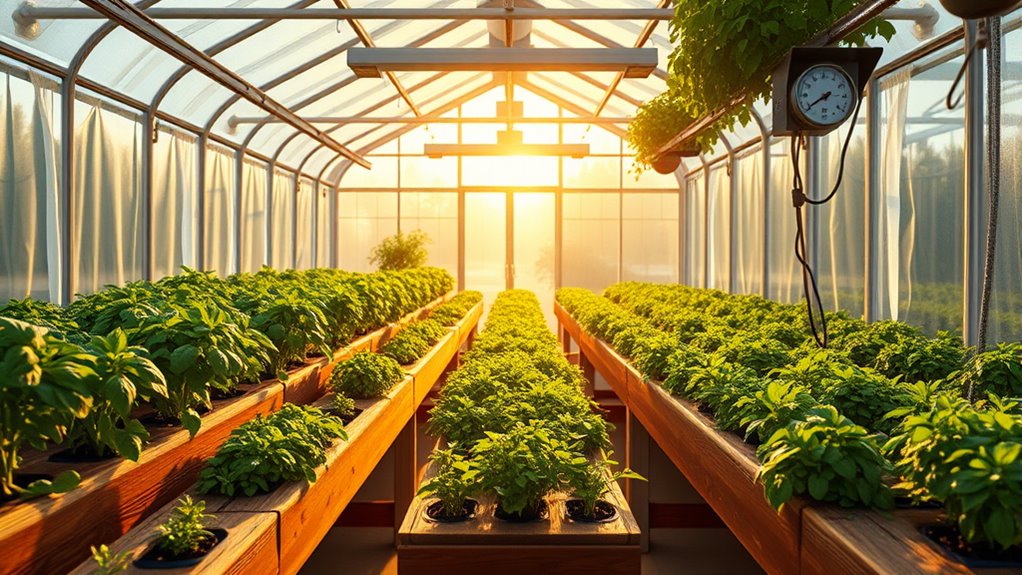
To keep your herbs healthy, you need to manage light intensity carefully, ensuring they get enough sun without overheating. Controlling temperature fluctuations is equally important, so your herbs stay consistent and thrive. Implementing proper automation technologies can help monitor and adjust environmental conditions efficiently. Additionally, maintaining stable climate control can prevent stress on your plants caused by sudden temperature swings. Incorporating mindfulness techniques into your gardening routine can help you stay attentive to your plants’ needs and reduce stress related to environmental management. Regular monitoring of market conditions and understanding precious metals trends can further enhance your investment success. For optimal results, consider tuning your greenhouse environment similarly to how Ford Tuning enhances vehicle performance, ensuring your herbs flourish under precisely controlled conditions.
Managing Light Intensity
Managing light intensity is essential for healthy herb growth in your greenhouse, as it directly influences photosynthesis and overall vigor. You need to monitor light measurement regularly to guarantee your herbs receive ideal amounts. During cloudy days or winter, artificial lighting can supplement natural light, maintaining consistent conditions. Adjusting light levels prevents etiolation or stunted growth. Use the table below to understand how different factors influence light management:
| Factor | Effect |
|---|---|
| Natural sunlight | Varies by season, affects plant growth consistency |
| Artificial lighting | Provides supplemental light, adjustable intensity |
| Light measurement tools | Help you gauge current light levels accurately |
Additionally, choosing the right watering pots can ensure your herbs receive proper hydration, supporting healthy growth alongside optimal lighting conditions. Proper lighting control techniques, including dimming or boosting artificial light, are crucial for maximizing herb health and yield. Recognizing how state tax laws impact your financial planning can help you allocate resources more effectively for your gardening setup. Implementing shade cloths or reflective surfaces can further optimize light distribution within your greenhouse environment. To achieve optimal results, understanding how light intensity interacts with plant growth stages can guide your adjustments over time.
Controlling Temperature Fluctuations
Controlling temperature fluctuations is key to maintaining a stable environment for your herbs, especially as light conditions change throughout the day and seasons. To achieve this, focus on effective ventilation management to prevent hot spots and cool drafts, ensuring consistent temperatures. Proper ventilation also helps regulate humidity control, which influences temperature stability and plant health. Use vents, exhaust fans, or automated systems to adjust airflow based on current conditions. During hot days, open vents to release excess heat; during colder periods, close them to conserve warmth. Monitoring temperature and humidity regularly allows you to respond quickly to fluctuations. Additionally, being aware of beauty store hours can help you plan shopping trips for gardening supplies and climate control equipment, ensuring your greenhouse stays in optimal condition. Understanding nutrient management can further support healthy herb growth by supplementing deficiencies that might be affected by environmental changes. Incorporating proper insulation can also help maintain consistent temperatures by reducing unwanted heat exchange with the outside environment. Implementing a climate control system can further automate temperature regulation, making it easier to sustain ideal conditions year-round. Regularly checking your thermostat settings can ensure that your system functions correctly and maintains the desired temperature range.
Choosing Suitable Soil and Containers for Herbs
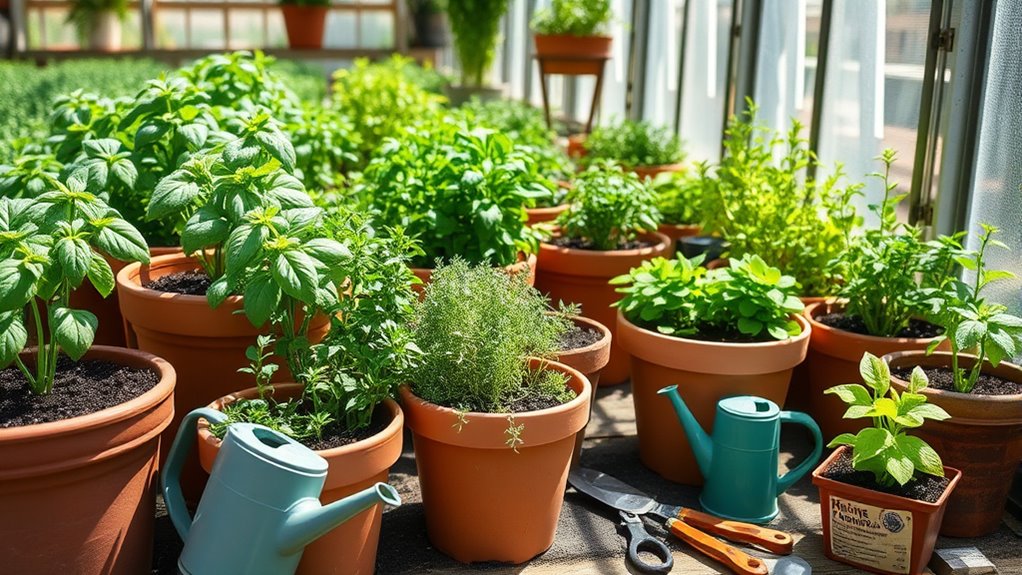
Choosing the right soil and containers is essential for healthy herb growth in your greenhouse. Use well-draining soil amendments to provide nutrients and prevent waterlogging. A mix of compost, perlite, and peat creates an ideal environment for most herbs. Incorporating sound vibrations into your gardening routine can also enhance cellular regeneration and overall plant health. When selecting containers, consider materials like terracotta, plastic, or ceramic. Terracotta allows air exchange but dries quickly, while plastic retains moisture longer. Ensure containers have drainage holes to avoid excess water, which can cause root rot. Match container size to the herb’s mature root system—too small stifles growth, too large can retain excess moisture. Proper soil and container choices set the foundation for vigorous, healthy herbs, making your greenhouse a thriving herb garden. Additionally, understanding AI security strategies can help protect your digital gardening tools and data from cyber threats. For optimal growth, consider soil pH levels specific to each herb, ensuring they receive the proper nutrient uptake. Monitoring soil moisture levels regularly helps maintain the ideal environment for your herbs to thrive.
Implementing Effective Watering and Humidity Strategies
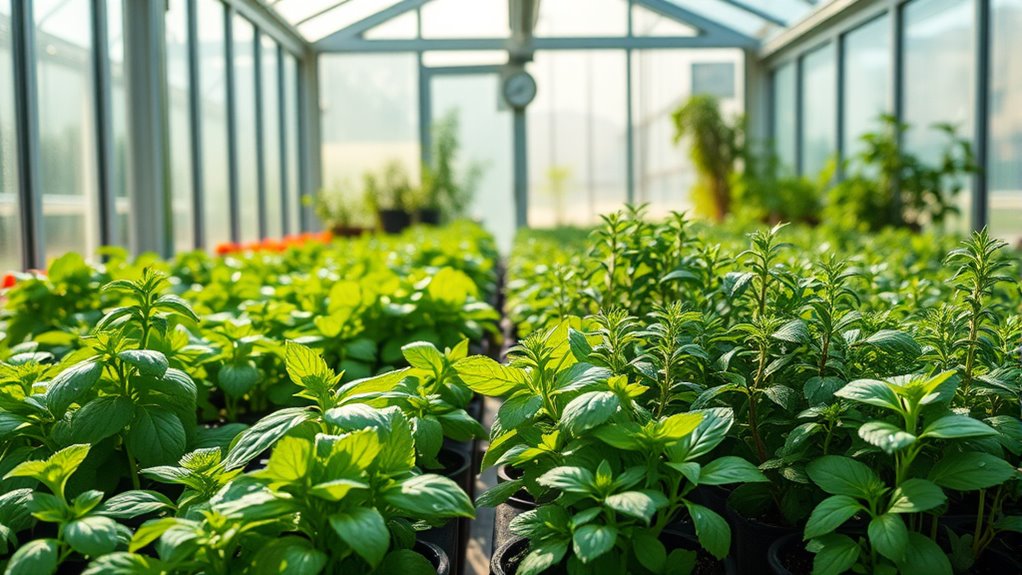
After selecting the right soil and containers, paying attention to watering practices and humidity levels helps your herbs thrive. Using drip irrigation ensures consistent moisture delivery, preventing overwatering or dryness.
Adjust your watering schedule based on the herb’s needs and environmental conditions. Humidity monitors are essential; they help you maintain ideal moisture levels, avoiding too dry or too humid air that can hinder growth.
Consider misting or using a humidifier during dry periods to promote healthy development. Keep a close eye on soil moisture and humidity levels daily to make timely adjustments.
Proper watering and humidity control reduce stress on your herbs, boost growth, and improve overall health. Implement these strategies consistently to create a stable, thriving greenhouse environment for your herbs.
Managing Pests and Diseases in a Controlled Environment
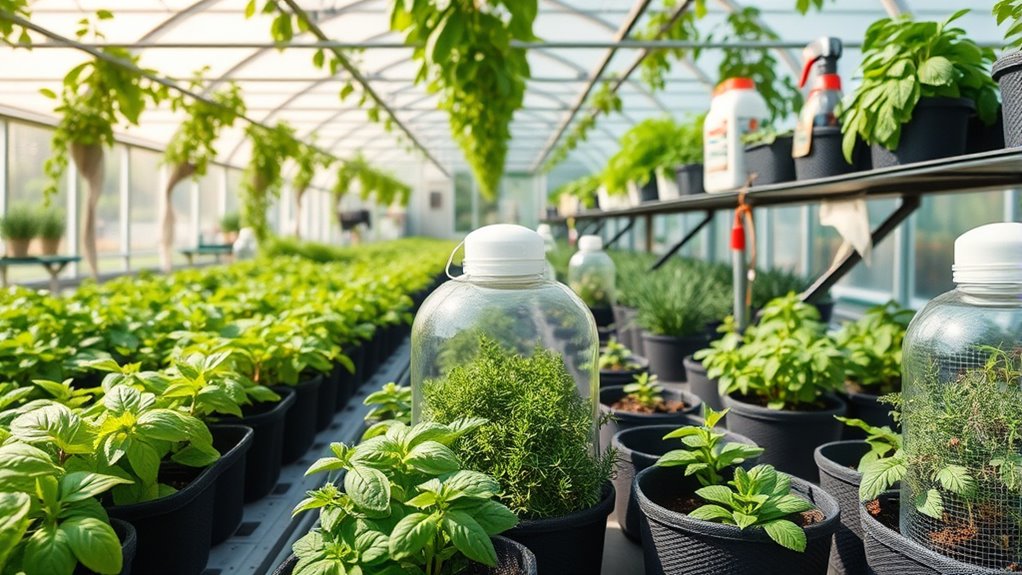
Maintaining a healthy greenhouse environment requires proactive management of pests and diseases, as they can quickly compromise your herbs’ growth. Start by selecting disease-resistant cultivars to reduce vulnerability.
Regularly inspect plants for signs of pests or disease, catching issues early before they spread.
Biological pest control methods, such as introducing beneficial insects like ladybugs or predatory mites, provide an eco-friendly way to manage pests without chemicals.
Keep your greenhouse clean, remove fallen leaves, and ensure proper airflow to minimize humidity that encourages disease development.
Quarantining new plants before adding them to your collection can prevent the introduction of pests and pathogens.
Combining resistant cultivars with biological control strategies helps create a resilient environment, keeping your herbs healthy and productive.
Harvesting and Maintenance Tips for Long-Term Growth
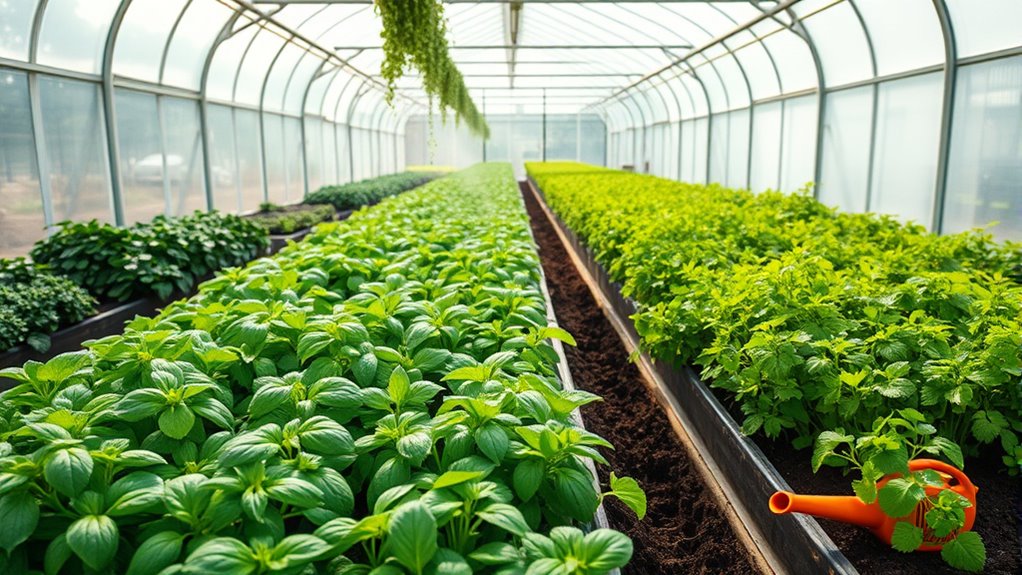
To guarantee your herbs thrive over the long term, regular harvesting and proper maintenance are essential. Implement effective pruning techniques to encourage bushier growth and prevent legginess.
Consistently follow fertilization schedules tailored to each herb’s needs to assure healthy development. When harvesting, cut just above a set of leaves to stimulate new growth.
Keep an eye on your plants for signs of overgrowth or disease, and prune accordingly. Additionally, regularly remove dead or yellowing leaves to maintain plant health.
Here are some tips to help you succeed:
- Use sharp scissors or shears for clean cuts
- Schedule fertilization every 4-6 weeks
- Prune lightly after harvesting to promote fullness
- Monitor for pests and diseases during maintenance
Following these practices will lead to abundant, flavorful herbs season after season.
Frequently Asked Questions
How Can I Prevent Herbs From Cross-Contaminating in a Shared Greenhouse Space?
To prevent herbs from cross-contaminating in a shared greenhouse, you should focus on plant separation and hygiene practices. Keep different herb varieties spaced apart to reduce the risk of spreading diseases or pests.
Regularly clean your tools, pots, and work surfaces to maintain hygiene. Also, wash your hands before handling each plant.
These steps help create a healthy environment, minimizing cross-contamination and promoting strong, flavorful herbs.
What Are the Best Methods for Propagating Herbs From Cuttings?
Imagine your herbs as delicate melodies waiting to harmonize, and your propagation station as the stage. Use herb cutting techniques like sharp scissors and clean tools to prevent disease.
Set up your propagation station with moist soil or water. Place cuttings in bright, indirect light, and keep humidity high.
With patience, your herbs will root, turning your greenhouse into a lush symphony of fresh flavors.
How Do Seasonal Changes Affect Greenhouse Herb Growth?
Seasonal changes markedly affect your greenhouse herb development by modifying seasonal temperature and daylight hours. When temperatures fall or increase, you need to modify your heating or cooling systems to maintain ideal conditions.
Longer daylight hours in summer enhance growth, so make certain your herbs receive enough light, possibly supplementing with grow lights during shorter winter days. Being mindful of these seasonal shifts helps you keep herbs healthy year-round.
Can I Grow Herbs Successfully Without Using Chemical Fertilizers?
You can definitely grow herbs successfully without chemical fertilizers by embracing organic gardening practices. Using natural fertilizers like compost, manure, or fish emulsion nourishes your herbs naturally and promotes healthy growth.
Not only does this approach avoid synthetic chemicals, but it also enhances soil health over time. With proper organic methods, you’ll enjoy flavorful, thriving herbs while supporting sustainable gardening and reducing environmental impact.
What Are Eco-Friendly Pest Control Alternatives Suitable for Greenhouses?
Did you know that over 60% of gardeners prefer eco-friendly pest control methods? You can use natural predators like ladybugs and nematodes to target pests without chemicals.
Botanical insecticides, made from plant extracts, provide effective control while being safe for your herbs and the environment. These options help maintain a healthy greenhouse ecosystem, ensuring your herbs grow lush and pest-free naturally.
Conclusion
By mastering these green-thumb secrets, you’ll turn your greenhouse into a lush oasis where herbs flourish like a vibrant symphony. With each careful step, you’re planting the seeds for a thriving culinary garden that grows stronger with your attention and care. Remember, tending your herbs is like nurturing a living tapestry—each leaf and aroma adding richness and flavor to your life’s vibrant mosaic. Keep nurturing, and watch your herbal paradise blossom endlessly.