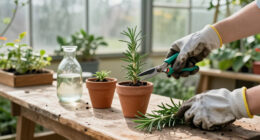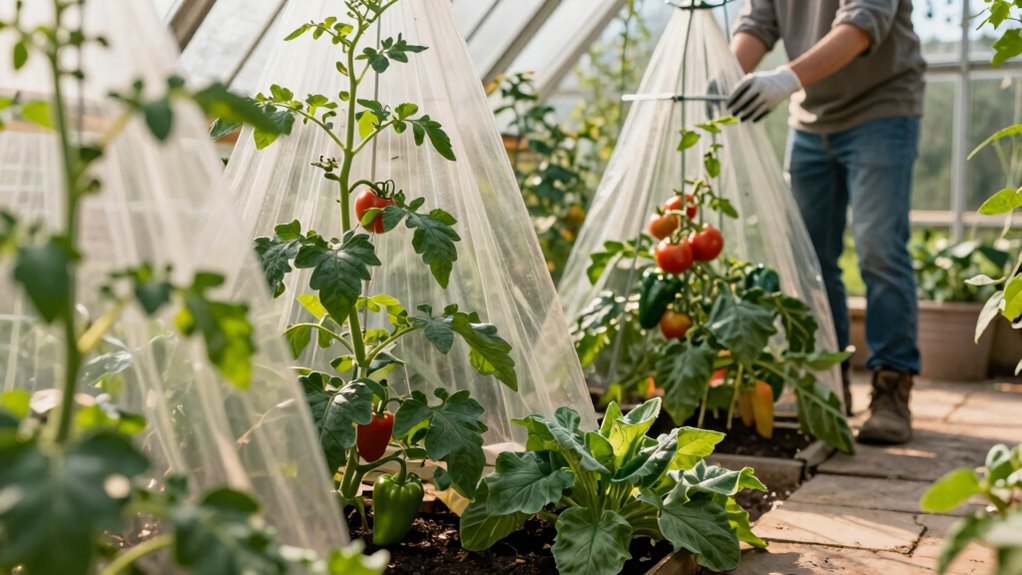
To shift greenhouse plants outdoors without shock, start by inspecting your plants for health and adjusting their light gradually. Begin with partial sun exposure, increasing it slowly over a week. Protect them from wind and temperature extremes by using shields or mulching. Make certain the soil is enriched and well-draining. Monitor closely for pests and stress, adjusting care as needed. If you choose to follow these steps, you’ll soon see your plants thrive outside with less risk of shock.

Get garden gear delivered free with Prime
- Fast, free delivery on millions of items
- Prime Video, Amazon Music and more included
- Member-only deals all year
Key Takeaways
- Gradually increase outdoor sunlight exposure over 1-2 weeks, starting with partial shade and extending time daily.
- Ensure plants are healthy, well-watered, and free of pests before moving outdoors.
- Shield plants from strong winds and extreme temperatures during initial transition days.
- Improve soil drainage and enrich with compost to support healthy root development outdoors.
- Monitor for stress signs and adjust watering, shading, or protection as needed to prevent shock.
As an affiliate, we earn on qualifying purchases.
Why Transferring Greenhouse Plants Outdoors Matters
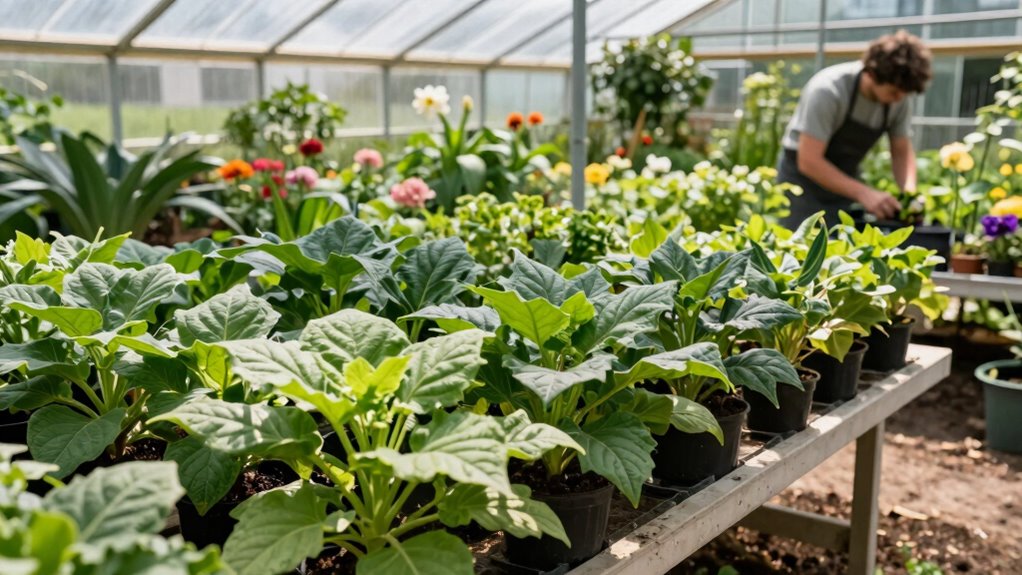
Transferring greenhouse plants outdoors is a crucial step in their growth cycle because it allows them to develop stronger, more resilient root systems and adapt to natural conditions. When you move plants outside, they access fresh air, sunlight, and natural soil, which enhances their overall health. Proper plant nutrition becomes easier, as outdoor soil often provides essential nutrients that boost growth. Additionally, pest management improves naturally—outdoor environments help keep harmful pests in check and reduce the risk of disease. This shift encourages plants to strengthen defenses, making them less dependent on artificial inputs. Understanding how to optimize environmental conditions can further support their transition and long-term vitality. Recognizing the importance of plant acclimation helps ensure a smoother adjustment process. By understanding why this move matters, you set the stage for healthier, more vigorous plants that thrive long-term, ultimately leading to better yields and more robust growth.
How to Tell Which Plants Are Ready for Outdoor Transition
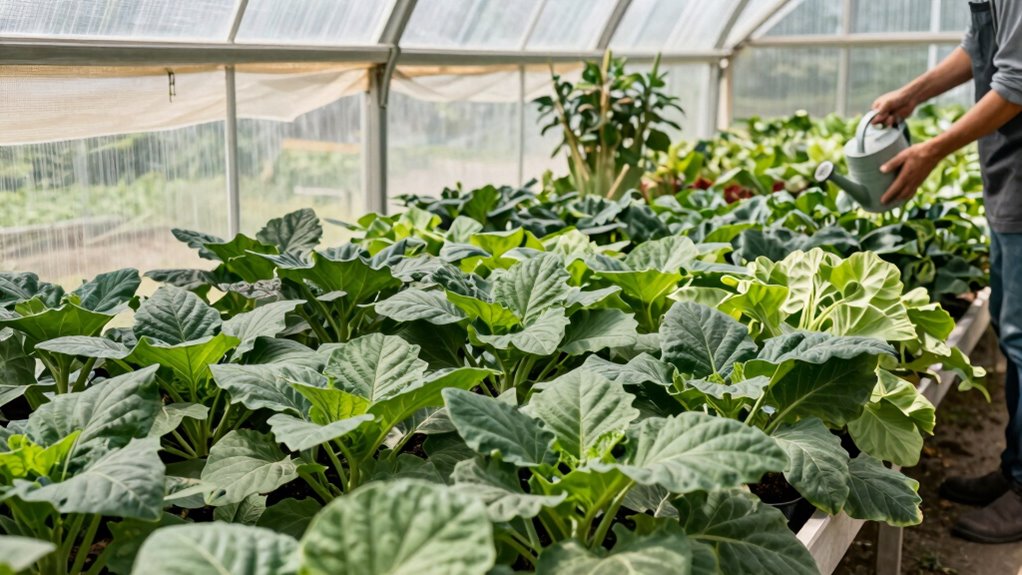
Before you move your greenhouse plants outdoors, it’s important to recognize when they’re truly ready. Look for signs like healthy, vigorous growth and stable leaves. Check if your plants have adapted to outdoor conditions by gradually increasing their exposure. Perform plant pruning to remove dead or weak growth, encouraging stronger development. Also, ensure pest management has been effective; plants free of pests are better prepared for transition. Use the following table to evaluate readiness:
| Indicator | Action |
|---|---|
| Healthy, steady growth | Ready for outdoor placement |
| No signs of pests | Safe to relocate |
| Strong stems and leaves | Resilient to outdoor stress |
| Proper plant pruning | Reduces shock risk |
| Established root system | Supports outdoor adaptation |
Additionally, understanding cookie categories can help you manage your browsing experience while researching plant care. Regularly monitoring plant health indicators ensures a smoother transition and minimizes the risk of shock when moving plants outside. Recognizing the importance of environmental conditions can further improve your success rate. For example, some plants with higher horsepower ratings from electric dirt bikes demonstrate greater resilience and faster adaptation, which can be analogous to selecting more robust plants for outdoor transition. Paying attention to these factors ensures a more successful outdoor transition and helps your plants thrive.
Preparing Your Plants for Moving Outdoors
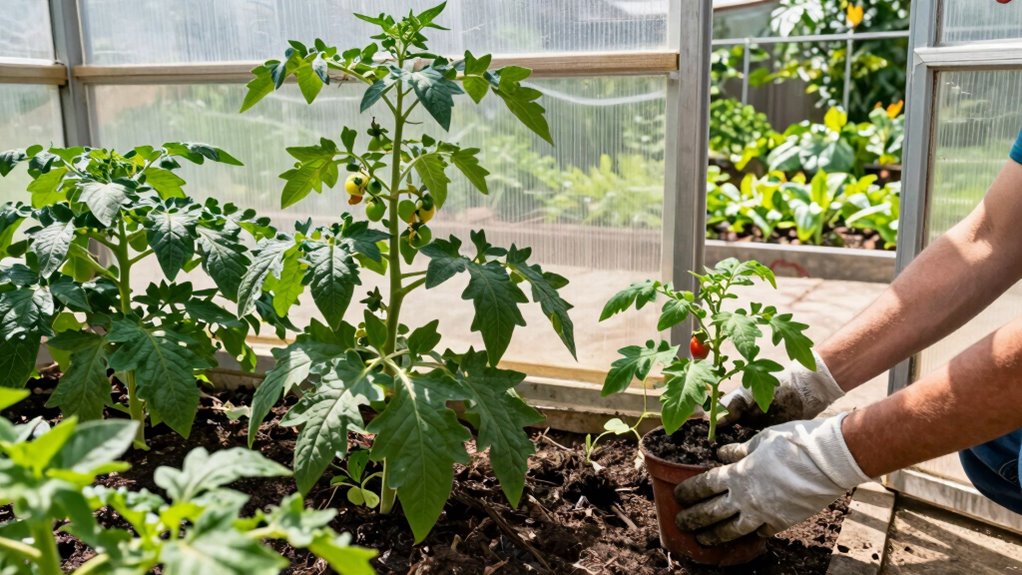
To guarantee your plants adjust smoothly to outdoor conditions, you need to prepare them properly before moving them outside. Start by inspecting each plant and perform plant pruning to remove dead or damaged growth, encouraging healthy new development. This also helps reduce stress during the transition. Next, focus on soil enrichment; improve your soil with compost or organic matter to ensure it’s nutrient-rich and well-draining. Healthy, enriched soil supports root growth and resilience against outdoor elements. Avoid transplanting plants into poor soil, which can hinder adaptation. Additionally, water your plants thoroughly before moving them, so they’re hydrated and less prone to shock. Using proper watering techniques can further minimize transplant shock and promote quick acclimation. Incorporating soil preparation into your routine can also help create an optimal environment for your plants’ transition. You can also consider adjusting the light exposure gradually to prevent sunburn or stress. Ensuring proper air circulation around the plants can help prevent diseases and promote healthy growth as they adapt. Being mindful of plant health monitoring during this period can further help catch any issues early and ensure a successful transition.
Gradually Introducing Sunlight to Prevent Shock

To prevent shock, start by exposing your plants to partial sun for a few hours each day. Gradually increase the sunlight exposure over a week or two, watching how they respond. Keep an eye out for signs of stress and adjust the light levels accordingly. Incorporating performance parts like flywheels and engine upgrades can optimize your vehicle’s response, much like how proper light management enhances plant adaptation. Additionally, selecting native plants for your outdoor space can help your plants adapt more easily and thrive in their new environment. Using appropriate containers can also aid in controlling soil conditions and temperature during the transition. To further ensure a smooth adaptation, understanding the importance of heat buffering techniques can help protect your plants from extreme temperature fluctuations during their transition outdoors.
Start With Partial Sun
Introducing your greenhouse plants to full sunlight too quickly can cause stress or sunburn. To prevent this, start with partial sun, gradually increasing exposure over several days. Place your plants in a shaded area or use a sheer curtain to filter the light initially. During this shift, focus on plant pruning if needed to promote healthy growth and reduce stress. As your plants adapt, slowly extend their time in direct sunlight, monitoring for signs of stress like wilting or leaf scorch. This careful process also helps with pest prevention, since healthy, stress-free plants are less vulnerable. Keep a close eye on moisture levels and avoid overexposure. Taking these steps guarantees your plants adjust smoothly without shock, supporting their overall health and growth.
Increase Light Gradually
After your greenhouse plants have become accustomed to partial sun, it’s important to increase their exposure gradually. This helps prevent shock and promotes healthy growth. Each day, extend their time outdoors by a few hours, monitoring their response. During this process, consider plant pruning to remove damaged or weak leaves, which can improve light absorption and airflow. Additionally, watch for pests, as increased sunlight can encourage pest activity. Proper pest prevention, like inspecting leaves and applying natural deterrents, keeps plants healthy. To visualize this process, here’s a simple guide:
| Stage | Duration | Key Focus |
|---|---|---|
| Week 1 | 2-3 hours daily | Light exposure, pruning |
| Week 2 | 4-6 hours daily | Pest prevention, monitoring |
| Week 3 | Full sun | Adjust as needed |
Implementing a gradual transition ensures your plants adapt safely to outdoor conditions. Considering the light exposure levels and adjusting accordingly can further help in preventing shock.
Monitor Plant Response
Monitoring your plants’ response as you increase their sunlight exposure is essential to prevent shock and guarantee healthy adaptation. Watch for signs of stress, such as wilting or discoloration, and adjust the light gradually. Keep soil amendments in mind—healthy soil supports better resilience during this shift. Check for pest issues that might arise as plants become more exposed and address pest management promptly. Incorporate seasonal variations into your plan to better understand how different conditions affect your plants. Consistently observe how your plants react to each increase in sunlight, and don’t rush the process. If you notice any adverse effects, reduce the sunlight exposure and reintroduce it more slowly. This careful monitoring helps your plants adapt smoothly, ensuring they develop strong roots and leaves without unnecessary stress or damage. Additionally, utilizing specialized gardening tools can aid in precisely measuring and adjusting sunlight exposure for optimal results. Recognizing market trends in plant varieties can also guide you in selecting resilient species that better withstand environmental changes. Being aware of Pinball machines’ weight can be surprisingly helpful, especially if you plan to move larger plants or install them in different locations. Paying attention to plant response signals can further improve the success of your transition.
Controlling Temperature and Wind During Transition

To protect your plants during their outdoor shift, focus on gradually adjusting the temperature to prevent stress. Shield them from strong winds that can cause damage or dehydration, especially in the early days outside. Keep a close eye on weather forecasts so you can respond quickly to temperature drops or gusty conditions. Additionally, understanding ethics in genetic testing can help you select the most resilient and suitable plant varieties for outdoor transition.
Gradual Temperature Adjustment
When shifting your greenhouse plants outdoors, controlling temperature and wind is essential to prevent shock and stress. To ensure a smooth transition, gradually adjust the environment by exposing plants to outdoor conditions over several days. During this process, monitor indoor humidity levels to prevent dehydration and reduce pest attraction.
Key tips include:
- Slowly increase outdoor exposure time each day
- Keep plants in shaded, sheltered spots initially
- Watch for signs of stress or dehydration
This gradual approach helps plants adapt without sudden temperature swings or wind damage. It also supports pest prevention by avoiding sudden environmental changes that can attract pests. By controlling these factors carefully, you’ll help your plants settle in healthy and strong.
Shield Plants From Wind
Wind can quickly stress or damage your plants during their outdoor shift, especially when they’re still adjusting to new temperatures. To shield them, set up windbreaks like fences, burlap screens, or plant tall, dense shrubs nearby. This reduces wind speed and prevents physical damage. Regular plant pruning helps remove weak or damaged branches that are vulnerable to wind breakage. Keep a close eye on pest control, as windy conditions can stress plants and make them more susceptible to pests. Covering plants with lightweight cloths or row covers during gusty days offers extra protection. These steps help your plants acclimate gradually, minimizing shock and ensuring stronger, healthier growth once fully outdoors.
Monitor Weather Conditions
Keeping an eye on daily weather forecasts helps you manage temperature fluctuations and unexpected wind gusts that can stress your plants. Monitoring weather conditions allows you to adjust your shift schedule accordingly, reducing the risk of shock. Pay attention to temperature swings, wind speeds, and humidity levels, especially indoor humidity, which can influence plant health. Sudden cold snaps or high winds can damage tender foliage, while high indoor humidity may encourage pests. To minimize risks:
- Cover plants during cold nights or wind gusts
- Use windbreaks or temporary shields
- Check forecasts regularly to time outdoor exposure
Staying informed helps you prevent pest problems and ensures your plants acclimate gradually, leading to healthier, stronger outdoor growth. Proper monitoring is key to a successful transition.
Monitoring Your Plants’ Health in the Outdoors
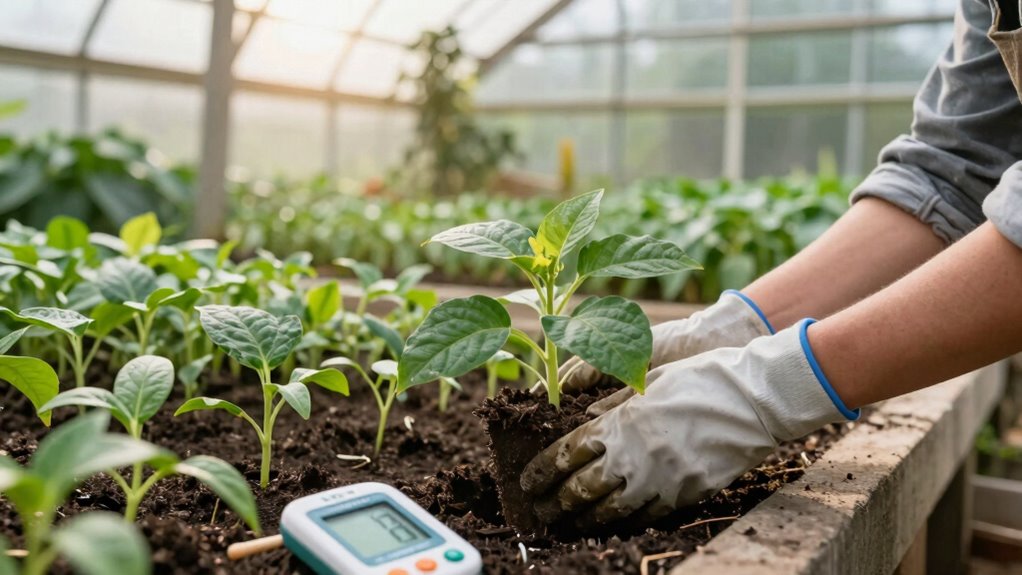
Monitoring your plants’ health in the outdoors is essential to catching problems early and ensuring their successful shift. Regularly inspect your plants for signs of pests or disease, and address issues promptly with effective pest management strategies. Keep an eye out for discolored, wilting, or damaged leaves, which can indicate stress or nutrient deficiencies. Use appropriate fertilization techniques to support healthy growth, providing nutrients as needed based on plant type and soil conditions. Consistent monitoring helps you adjust watering, fertilization, and pest control, preventing minor issues from becoming serious problems. By staying vigilant, you’ll promote strong, resilient plants that adapt well to their new environment and thrive outside.
Setting Up the Perfect Outdoor Environment
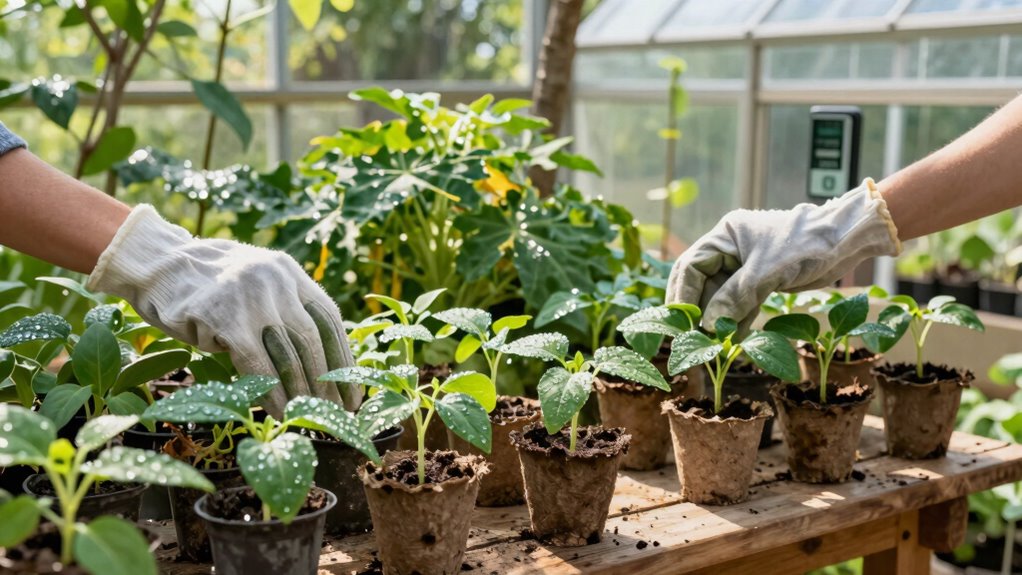
Creating the ideal outdoor environment for your greenhouse plants begins with selecting a suitable location that offers ample sunlight, proper drainage, and protection from harsh elements. Ensuring your plants are safe from indoor pests and harsh weather will help them thrive. Prepare the soil with appropriate amendments to improve fertility and drainage, making the shift easier. Protect young plants from wind and direct sun initially, gradually increasing exposure.
Choose a sunny, sheltered spot and improve soil for healthy, resilient greenhouse plants.
- Choose a spot shielded from strong winds and extreme heat
- Use soil amendments to enhance nutrient content and drainage
- Consider adding mulch to regulate soil temperature and retain moisture
Watering and Soil Tips for Outdoor Growth
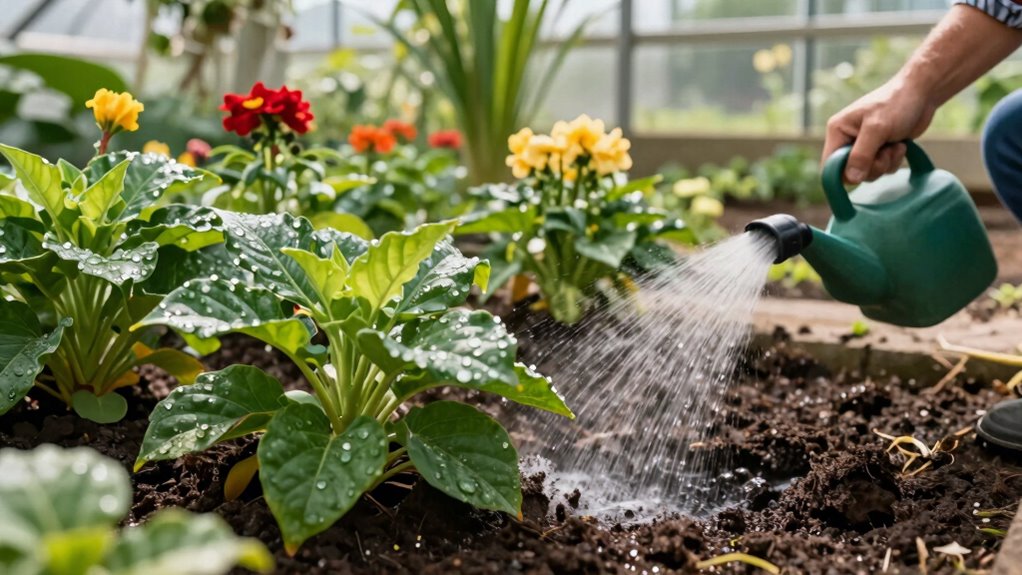
To guarantee your outdoor plants thrive, mastering proper watering and soil management is essential. Start by enriching your soil with appropriate soil amendments, such as compost or organic matter, to improve drainage and nutrient content. These amendments boost soil health, helping plants establish quickly. Develop a consistent water scheduling routine; avoid overwatering or underwatering by checking soil moisture regularly. Water deeply when the top inch feels dry, encouraging roots to grow deeper. Mulching around plants also helps retain moisture and regulate soil temperature. Keep in mind that outdoor conditions vary, so adjust watering based on weather and plant needs. Proper soil amendments combined with attentive water scheduling create a strong foundation for your plants’ healthy growth and resilience outdoors.
Troubleshooting Common Problems During Transition

Are you prepared for the common problems that can arise when shifting greenhouse plants outdoors? Transitioning can lead to issues like pest infestations, nutrient deficiencies, or shock. To avoid setbacks, monitor plants closely for pests and implement pest management strategies early. Adjust fertilization schedules to match outdoor conditions, ensuring plants receive balanced nutrients without overfeeding. Keep an eye out for signs of stress, such as wilting or discoloration, and act promptly.
- Regularly inspect for pests and diseases
- Adjust fertilization based on plant response
- Gradually introduce plants to outdoor conditions
Addressing these problems quickly helps prevent long-term damage and encourages healthy growth outdoors. Staying vigilant during this transition phase is key to successful, shock-free planting.
Long-Term Tips for Healthy, Outdoors-Grown Plants
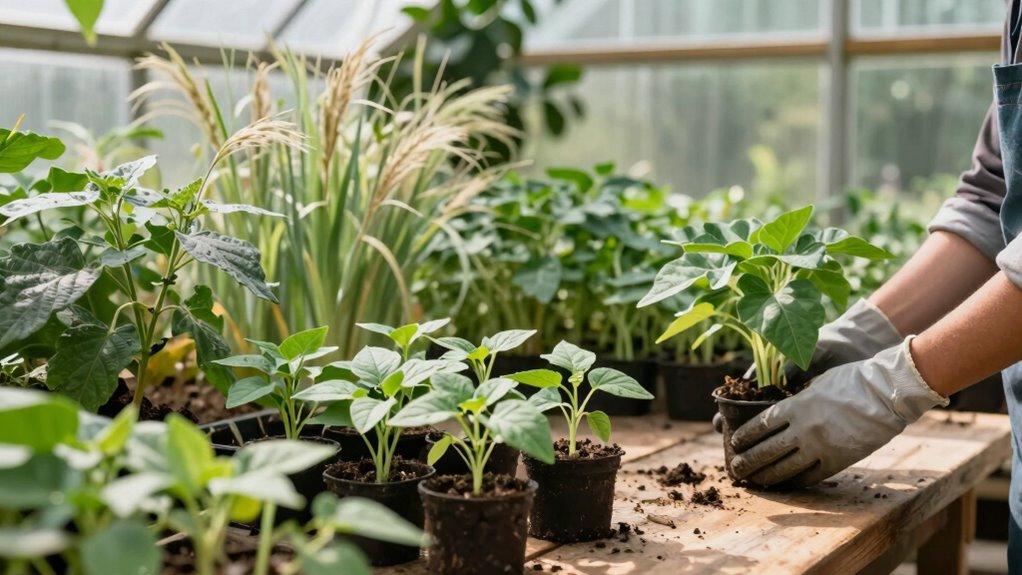
Maintaining healthy, outdoors-grown plants requires consistent care and proactive strategies. To guarantee long-term health, regularly evaluate your soil and add soil amendments like compost or organic matter to improve fertility and drainage. Healthy soil supports vigorous growth and resilience against pests and diseases. Implement pest control measures early, such as natural predators or organic sprays, to prevent infestations from becoming severe. Keep up with watering schedules, adjusting for weather conditions, and mulch around plants to retain moisture and control weeds. Monitor plant growth closely, pruning dead or diseased foliage to promote airflow and reduce disease risk. Staying attentive and making these adjustments will help your plants thrive outdoors, ensuring they remain vigorous, healthy, and productive year-round.
Frequently Asked Questions
How Long Should I Keep Greenhouse Plants Indoors Before Outdoor Transition?
You should keep your greenhouse plants indoors for about one to two weeks to allow for indoor acclimation. During this time, gradually adjust the temperature to match outdoor conditions, helping plants adapt without shock. Slowly introducing outdoor elements, like increased sunlight and airflow, supports a smooth shift. Monitor your plants closely during this period, and avoid sudden temperature changes, ensuring they build resilience before full outdoor exposure.
Can I Speed up the Outdoor Transition Process for My Plants?
Yes, you can speed up the outdoor shift process, but you should do it carefully. Focus on seasonal adjustments and plant acclimatization by gradually increasing outdoor exposure over a week or two. Move plants to a shaded, protected spot first, then slowly introduce more sunlight. Keep an eye on weather conditions, and if frost threatens, bring plants back indoors. This method helps prevent shock while speeding up the process safely.
What Signs Indicate My Plants Are Stressed During Outdoor Transition?
You’ll know your plants are stressed during outdoor shift when you see exaggerated stress symptoms like wilting, yellowing leaves, or rapid leaf drop—these signs tell you they’re struggling with plant acclimation. If your plants seem overly droopy or their growth stalls dramatically, it’s a clear warning. Keep an eye out for these symptoms, and adjust their exposure gradually; ignoring stress symptoms can lead to long-term damage.
Are There Specific Fertilizers Recommended During Outdoor Adaptation?
You should choose fertilizers that meet your plants’ specific nutrient requirements during outdoor adaptation. A balanced, slow-release fertilizer, like a general-purpose or organic blend, is ideal to provide consistent nutrients without overwhelming your plants. Avoid heavy doses of high-nitrogen fertilizers, which can stress plants. Focus on fertilizer types that support root development and overall health, helping your plants establish smoothly in their new outdoor environment.
How Do I Protect Plants From Pests After Moving Them Outside?
To protect your plants from pests after moving them outside, start with pest prevention by inspecting plants regularly and removing any early signs of pests. Use natural repellents like neem oil, garlic spray, or insecticidal soap to deter insects without harming beneficial insects. Keep your garden clean, remove debris, and encourage natural predators like ladybugs. Combining these methods helps guarantee your plants stay healthy and pest-free during their outdoor shift.
Conclusion
By carefully planning and easing your greenhouse plants into the outdoors, you give them the best chance to thrive in their new environment. Remember, patience is key—think of it as your botanical Renaissance, where time and gentle care turn green thumbs into expert gardeners. Keep a close eye on their needs, and soon you’ll enjoy lush, healthy plants basking happily in the sun. With these tips, your garden will flourish like a well-tuned symphony—no more planting like a medieval alchemist!
Fall yard work Picks
leaf blowers
As an affiliate, we earn on qualifying purchases.