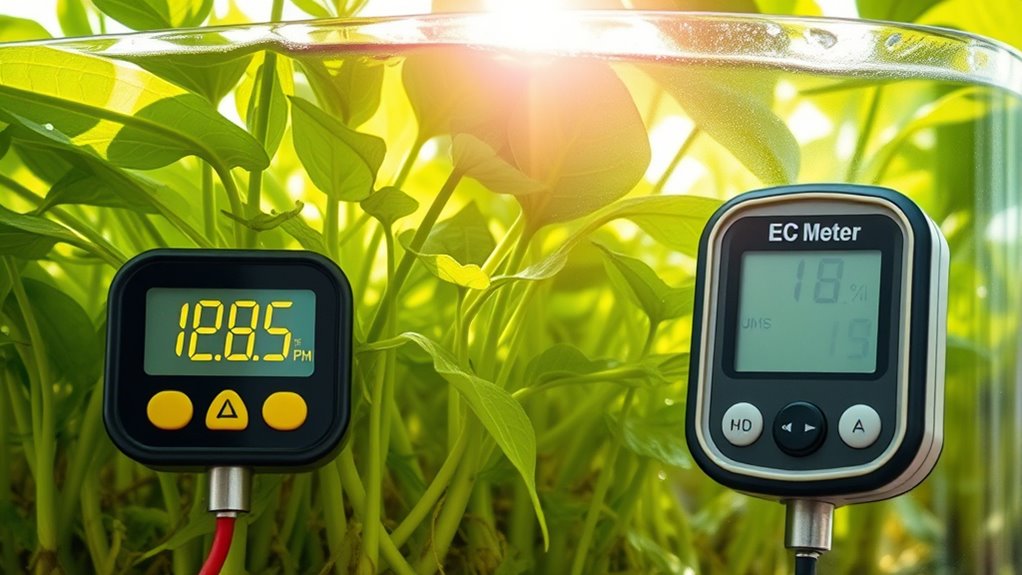

To manage pH and EC levels for ideal growth, regularly test your water or nutrient solution with reliable meters and adjust pH to stay within 5.5–6.5, preventing nutrient lockout. Keep EC in balance to avoid over- or under-feeding your plants, guaranteeing healthy roots and vigorous growth. Consistent monitoring and fine-tuning help prevent issues like salt buildup or deficiencies. Staying proactive in these adjustments ensures your plants thrive, and you’ll discover more tips as you continue.
Key Takeaways
- Regularly test pH and EC levels with reliable meters to ensure accuracy.
- Maintain pH within the 5.5–6.5 range for optimal nutrient availability.
- Adjust pH using pH up or down solutions based on test results.
- Keep EC levels appropriate for plant growth stage to prevent nutrient lockout or burn.
- Monitor and fine-tune pH and EC frequently to support healthy root and overall plant development.
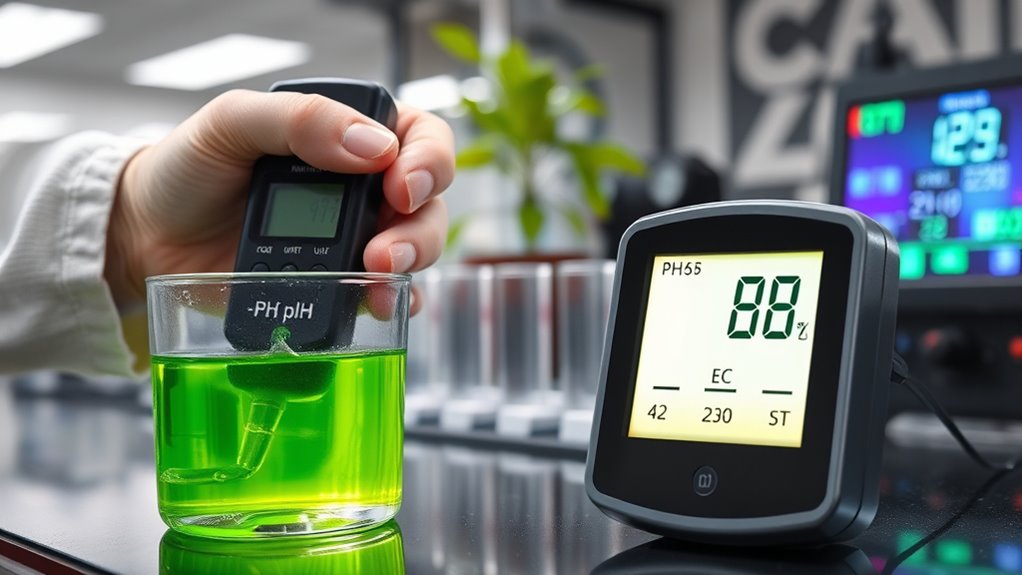
Maintaining proper pH and EC levels is crucial for healthy plant growth and ideal nutrient uptake. When these levels are out of balance, your plants can suffer from nutrient lock, where essential nutrients become unavailable, or from root health issues that hinder overall development. By carefully managing your pH and electrical conductivity (EC), you guarantee that your plants receive the right nutrients in the right amounts, promoting vigorous growth and preventing common problems.
Your pH level influences how nutrients dissolve in your growing medium or water. If the pH is too high or too low, certain nutrients may become insoluble, leading to nutrient lock — a condition where plants can’t absorb vital elements like iron, manganese, or phosphorus. This nutrient lock can cause deficiencies that stunt growth, yellowing leaves, or malformed development. To avoid this, regularly test your pH with reliable meters and adjust it accordingly. Typically, most plants thrive within a pH range of 5.5 to 6.5, depending on the species. Keeping it within this range ensures nutrients remain available and minimizes the risk of lockout.
Maintaining proper pH ensures nutrient availability and prevents deficiencies like iron and phosphorus lockout.
EC measures the concentration of nutrients in your solution. If the EC is too high, your plants may suffer from nutrient burn, where excess salts damage roots and impede water uptake. Conversely, if the EC is too low, your plants lack enough nutrients for ideal growth. Striking the right balance involves monitoring EC levels and adjusting nutrient concentrations accordingly. Start with a baseline recommended for your plant type, then fine-tune as your plants grow. Be cautious with sudden increases, as high EC levels can stress your plants and compromise root health. Consistent measurement and adjustment are key to maintaining stable EC levels that support robust root systems and healthy foliage.
Root health is directly impacted by pH and EC management. Roots need a clean, oxygenated environment to thrive, but imbalanced nutrient levels can lead to salt buildup, root rot, or other issues that weaken the root system. When nutrient lock occurs due to improper pH, roots can’t absorb essential nutrients, resulting in poor growth and increased vulnerability to disease. By ensuring your pH remains within the ideal range and your EC is balanced, you promote a healthy root environment that allows roots to absorb nutrients efficiently and grow strong. Regular flushing and monitoring help prevent salt buildup, maintaining the delicate balance necessary for root vitality.
Additionally, understanding the importance of testing tools and proper calibration can significantly improve your ability to maintain optimal levels. Ultimately, managing pH and EC isn’t a one-time task but an ongoing process. Daily or weekly checks keep you aware of changes and enable quick adjustments. This proactive approach helps prevent nutrient lock, supports healthy root development, and leads to better overall plant health and higher yields. With consistent effort and attention to detail, you’ll create an ideal environment where your plants can flourish from root to shoot.
Frequently Asked Questions
How Often Should Ph and EC Levels Be Tested?
You should test your pH and EC levels at least once a week to maintain a healthy monitoring schedule. During active growth periods or if you notice changes in plant health, increase testing frequency to every few days. Consistent testing helps you catch fluctuations early, ensuring your plants stay in ideal conditions. Regular checks enable precise adjustments, promoting stronger growth and preventing nutrient imbalances.
Can Fluctuating Ph and EC Harm Plants?
A stitch in time saves nine, and that’s true with fluctuating pH and EC levels. When these levels vary, you risk soil mineralization and nutrient imbalances that can harm your plants. Sudden changes can lead to root stress, poor nutrient uptake, and stunted growth. Keep pH and EC stable to prevent these issues, ensuring your plants stay healthy and thrive. Regular testing helps catch fluctuations early.
What Are Natural Ways to Adjust Ph Levels?
You can naturally adjust pH levels by using organic solutions like compost tea or adding natural amendments such as crushed limestone to raise pH, or sulfur or peat moss to lower it. pH buffering helps stabilize levels, while mineral adjustments like applying dolomite lime or elemental sulfur provide gradual changes. These methods are eco-friendly and safe, ensuring your plants thrive without chemical interference.
How Do Different Plant Types Affect Optimal Ph and EC?
Did you know that some plants, like blueberries, thrive at a pH of 4.5–5.5, while others, like spinach, prefer 6.0–7.5? Different plant types require plant-specific adjustments to pH and EC levels based on crop variations. You should tailor nutrient solutions accordingly and monitor levels regularly, ensuring each plant’s unique needs are met for ideal growth and health.
Are There ECo-Friendly Products for Managing Ph and EC?
Yes, you can find eco-friendly solutions for managing pH and EC levels. Organic amendments like compost, peat moss, or limestone help naturally adjust pH, while organic fertilizers and seaweed extracts can regulate EC levels. These products are environmentally safe, biodegradable, and reduce chemical runoff. Using eco-friendly solutions not only maintains suitable plant health but also supports sustainable gardening practices, ensuring your grow space stays healthy and eco-conscious.
Conclusion
By mastering pH and EC levels, you hold the secret to thriving plants that grow faster than a rocket launch. Keep a close eye on these levels, adjust promptly, and your plants will thank you with lush, vibrant growth. Neglecting this balance is like trying to sail a ship without a compass—destined for chaos. Stay vigilant, stay consistent, and watch your garden transform into a paradise of unparalleled beauty and vigor.