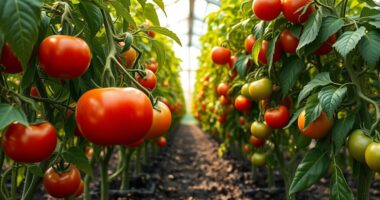
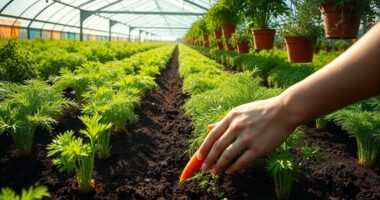
To effectively pollinate greenhouse crops, combine manual methods like shaking flowers or using brushes with encouraging natural bee activity. You can attract bees by providing diverse flowering plants and creating a welcoming environment, while also ensuring hives are well-placed and stress-free. Managing environmental factors such as temperature, humidity, and minimizing pesticides enhances natural pollination. If you want to explore more tips to boost yield and efficiency, there’s plenty to discover below.
Key Takeaways
- Combine natural bee activity with strategic hive placement to enhance pollination in greenhouses.
- Use manual pollination techniques, such as brushing or vibrators, to supplement natural methods when bee activity is low.
- Maintain optimal environmental conditions—temperature, humidity, and minimal pesticides—to encourage bee foraging and effective pollination.
- Introduce diverse flowering plants at different stages to attract bees and ensure continuous pollination coverage.
- Monitor bee behavior and environmental factors regularly to adjust methods and maximize crop pollination efficiency.

Greenhouse crop pollination is a vital process that directly impacts fruit and seed production. When you understand how bees behave, you can better harness their natural tendencies to improve pollination efficiency. Bees are fascinating creatures with specific behaviors that influence how effectively they transfer pollen. They tend to visit flowers based on factors like flower color, scent, and nectar availability. If you’re managing a greenhouse, observing bee behavior allows you to optimize conditions for their activity, ensuring they visit your crops more frequently and thoroughly. For example, placing hives strategically near high-value crops encourages bees to focus their efforts where they’re most needed. Additionally, providing a variety of flowering plants can attract and retain bees longer, increasing pollination efficiency. This behavioral insight helps you create an environment that aligns with their natural foraging patterns, resulting in better pollination outcomes.
Moreover, understanding bee behavior helps you identify potential challenges, such as disoriented or inactive bees, which could reduce pollination efficiency. If bees aren’t visiting flowers as often as expected, it might be due to environmental factors like temperature, humidity, or the presence of pesticides. Adjusting these conditions can encourage more active bee behavior, leading to more effective pollination. For instance, maintaining suitable temperature ranges and minimizing disruptive chemicals ensures bees remain healthy and motivated to forage. You may also consider introducing bee-friendly plants that bloom at different times, encouraging continuous activity throughout your crop’s flowering period. This strategy ensures a steady supply of pollinators, maximizing pollination efficiency naturally.
In addition, managing bee behavior involves creating a safe and welcoming environment. Bees are sensitive to disturbances, so minimizing excessive noise or sudden movements near hives helps keep them calm and focused on pollinating your crops. Proper hive placement is essential—placing hives at the right height and distance from flowering plants encourages frequent visits and reduces stress for the bees. You should also monitor hive health regularly; healthy bees are more active and efficient in their pollination efforts. By paying attention to their behavior and environmental needs, you can greatly enhance pollination efficiency without relying solely on manual methods.
Frequently Asked Questions
What Are the Benefits of Using Bees Over Manual Pollination Methods?
Using bees over manual pollination boosts efficiency because bees naturally target flowers, ensuring thorough and consistent pollination. This reduces manual labor markedly, saving you time and effort. Bees work quickly and effectively, especially in large greenhouses, leading to higher yields and better fruit quality. Plus, natural bee activity minimizes the need for human intervention, making your pollination process more sustainable and cost-effective in the long run.
How Do Environmental Factors Affect Natural Pollination Success?
Environmental factors markedly impact natural pollination success by affecting pollination efficiency and the overall environmental impact. You’ll notice that temperature, humidity, wind, and rainfall influence how effectively pollinators like bees can do their job. High temperatures or strong winds can reduce pollination efficiency, while rainfall might wash away pollen or hinder pollinator activity. Managing these factors helps optimize pollination, minimizing the environmental impact and boosting crop yields.
Can Pollination Techniques Be Adapted for Organic Greenhouse Crops?
Yes, you can adapt pollination techniques for organic greenhouse crops by focusing on natural methods and organic practices. You should encourage natural pollinators like bees and butterflies, creating habitats that attract them. Additionally, you can use natural agents like planting companion flowers or employing natural attractants. This natural adaptation not only supports organic standards but also enhances pollination efficiency, reducing the need for manual intervention and promoting sustainable crop production.
What Are the Costs Associated With Manual Versus Natural Pollination Methods?
Manual pollination usually costs more due to higher labor expenses, as you need to dedicate workers to perform the task repeatedly. In contrast, natural pollination relies on insects or wind, so your costs are generally lower, mainly for habitat maintenance or attracting pollinators. The cost comparison depends on crop type, greenhouse size, and how effectively natural methods can be implemented, but manual methods tend to be more labor-intensive and expensive overall.
How Can Crop Yield Be Maximized Through Effective Pollination Strategies?
You can maximize crop yield by leveraging pollination technology and promoting crop diversity. Use advanced tools like robotic pollinators or targeted natural methods to guarantee every flower gets pollinated. Diversify your crops to attract a variety of pollinators, boosting overall productivity. Actively managing these strategies creates a pollination powerhouse, transforming your greenhouse into a thriving ecosystem where every flower’s potential is fully realized. Your harvest will be bountiful beyond your wildest dreams!
Conclusion
Remember, a little effort goes a long way. Whether you choose manual or natural pollination methods, your attention makes all the difference. By nurturing your greenhouse crops and embracing effective techniques, you’ll see healthier plants and better yields. Don’t forget, “The early bird catches the worm”—so start implementing these methods today. With dedication and care, you’ll turn your greenhouse into a thriving, productive space where crops flourish.