TL;DR

Get garden gear delivered free with Prime
- Fast, free delivery on millions of items
- Prime Video, Amazon Music and more included
- Member-only deals all year
Chicken manure can add nutrients and organic matter to garden soil, but its strength varies and excess can damage plants or add more nutrients than the soil needs. The Grow Organic guide advises gardeners to check treatment details, use soil tests and product labels to set rates, and follow raw-manure harvest intervals when safety is uncertain.
Grow Organic’s chicken-manure guide advises gardeners to match application rates to soil needs, verify how manure was treated and allow enough time before harvesting edible crops. The guidance matters because manure can supply useful nutrients and organic matter, but fresh or overapplied material can pose food-safety risks or damage plants.
Poultry manure supplies nitrogen, phosphorus and potassium, along with other nutrients. It also adds organic matter, which can improve soil structure and water retention. Its nutrient strength is not fixed: bedding, storage and processing affect what a particular product supplies. The guide cites a University of Nevada resource for benefits and risks, but does not provide a universal nutrient analysis for chicken manure.
Grow Organic distinguishes fresh, aged, composted and pelleted manure. Fresh manure may carry germs that cause illness. Simply storing or drying it does not prove those germs are gone, and pellet form alone is not evidence of safe treatment. A managed composting process uses appropriate moisture, air, heat and organic materials; gardeners should check the producer’s processing information rather than rely on appearance or smell.
There is no single application rate for every product or garden. The guide recommends testing soil, then using the product label or a manure test to match nutrients to crop needs. Nitrogen is not the only consideration: applying enough manure to meet a nitrogen target can add excess phosphorus. Count earlier applications as part of the garden’s nutrient history, measure by weight when instructions specify pounds, and keep a record of dates and amounts.
Balancing Soil Benefits and Risks
The practical issue is not whether chicken manure contains plant nutrients, but whether a specific garden needs them and whether the material has been handled safely. Excess salts or ammonia can burn plants, while concentrated pockets may expose roots to damaging levels. Too much manure can also add nutrients the soil already has, so a richer application is not automatically a better one.
Food gardeners also need to plan around the source and treatment of the manure. The guide reports USDA minimum intervals for raw manure in organic food production: 120 days before harvest when edible parts touch soil or soil particles, and 90 days when they do not. Soil splash counts as contact, and the interval runs from incorporation to harvest—not from planting. These intervals provide planning guidance for home gardens, but are not a substitute for checking applicable rules or product instructions.
chicken manure fertilizer for gardens
As an affiliate, we earn on qualifying purchases.
As an affiliate, we earn on qualifying purchases.
Treatment Changes How Manure Is Used
The guide frames manure use as part of ordinary soil and crop planning rather than as a fixed recipe. Soil tests and product directions help determine whether manure is appropriate and how much to apply. Its sample calculation illustrates arithmetic, not a recommendation: if a suitable label calls for five pounds per 100 square feet, a 32-square-foot bed would take 1.6 pounds at that rate.
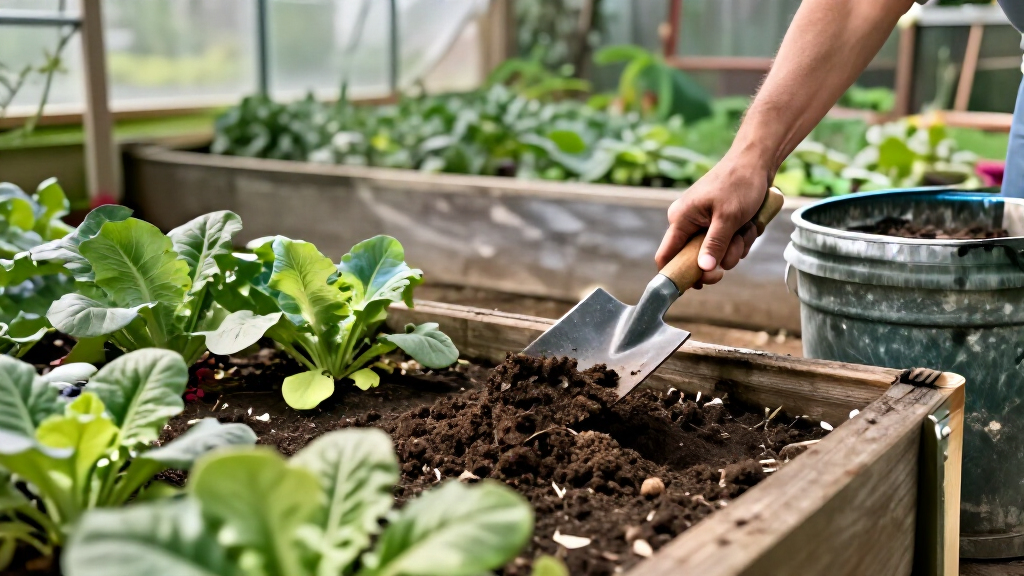
For bed preparation, the source describes spreading a measured amount evenly and mixing it into soil as directed, avoiding concentrated clumps near roots. For established plants, it recommends using only a suitable treated product, keeping it off stems and edible parts, and following label directions. It also cautions against applying manure to frozen, flooded or saturated soil; runoff should be kept away from crops and water sources.
“There is no single rate for every product or vegetable garden.”
— Grow Organic guide
What Labels Cannot Tell Gardeners
The source does not identify a single product, manure analysis or soil-test result, so it cannot establish a rate suitable for a particular garden. Nutrient content varies, and the guide’s example rate is explicitly illustrative rather than a recommendation. Gardeners need the current label or a manure test and relevant soil results to plan an application.
It is also not clear from a product’s dry texture, mild smell or pellet shape whether it has received treatment that meets food-safety standards. The guide provides no specific processing details for any named product; those should be confirmed with the manufacturer. The raw-manure intervals it cites concern USDA organic food-production guidance, while processed materials may be subject to different requirements.
Check Soil and Product Instructions
Before applying manure, gardeners should test their soil, review crop nutrient needs and check the product’s current label and treatment information. If treatment cannot be verified, the guide advises treating the material as raw and planning harvest timing accordingly. Apply measured amounts evenly, avoid runoff and contact with edible parts, and wear gloves; wash hands and clean tools after handling.
Keep a record of the application date and quantity to help prevent nutrient buildup over time. The next decision is specific to each garden: whether its soil needs manure at all, which treated form is appropriate, and whether enough time remains before harvest.
Key Questions
How much chicken manure should I add to garden soil?
Use soil-test recommendations and the product label or a manure test. Nutrient levels vary, so there is no single rate that fits every garden; avoid applying more than the soil and crop need.
Can fresh chicken manure go directly onto vegetables?
Fresh manure may carry germs that cause illness. The guide advises against putting fresh manure on crops close to harvest and gives raw-manure harvest intervals of 120 days for edible parts that contact soil and 90 days when they do not.
Is aged chicken manure safe to use?
Not necessarily. Storage and drying do not prove harmful germs are gone. Check treatment details; if the process is unknown, the guide says to treat the manure as raw.
Do pellets mean chicken manure has been treated safely?
No. Pellet shape alone does not establish treatment or safety. Check current package instructions and processing information before using a product around food crops.
What precautions should I take when applying it?
Measure and spread it as directed, keep it off edible parts and stems, and prevent runoff to crops and water sources. Wear gloves, wash your hands and clean tools after handling manure.
Source: rss
Fall yard work Picks
leaf blowers
As an affiliate, we earn on qualifying purchases.