Before construction, you should carefully select a site that maximizes natural light and minimizes environmental impact, considering biodiversity and ecosystem health. Choose sustainable, insulated building materials and plan for renewable energy sources like solar and wind power to reduce long-term costs and carbon footprints. Incorporate water conservation strategies such as rainwater harvesting and drip irrigation from the start. Engaging local experts and planning your design early guarantees a resilient, eco-friendly greenhouse; uncover more ways to optimize your project.

Get garden gear delivered free with Prime
- Fast, free delivery on millions of items
- Prime Video, Amazon Music and more included
- Member-only deals all year
Key Takeaways
- Conduct site assessments to optimize orientation for natural light and passive solar heating.
- Engage stakeholders early to incorporate sustainable materials and renewable energy options.
- Plan water conservation strategies like rainwater harvesting and drip irrigation from the outset.
- Design for climate resilience with shading, reflective surfaces, and adaptable features.
- Integrate sustainability goals into the overall project planning to ensure long-term efficiency and environmental benefits.
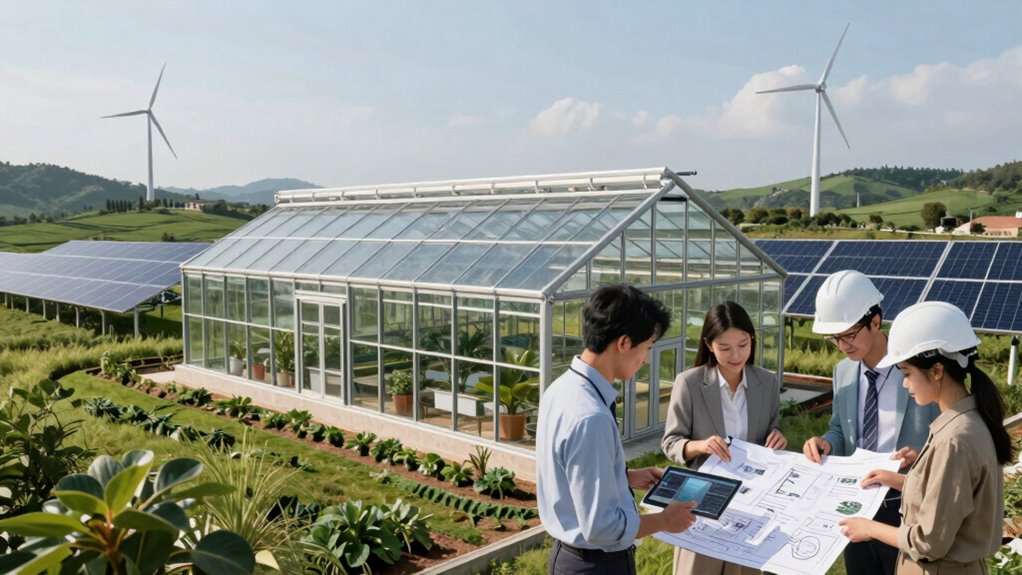
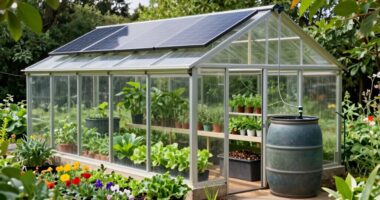
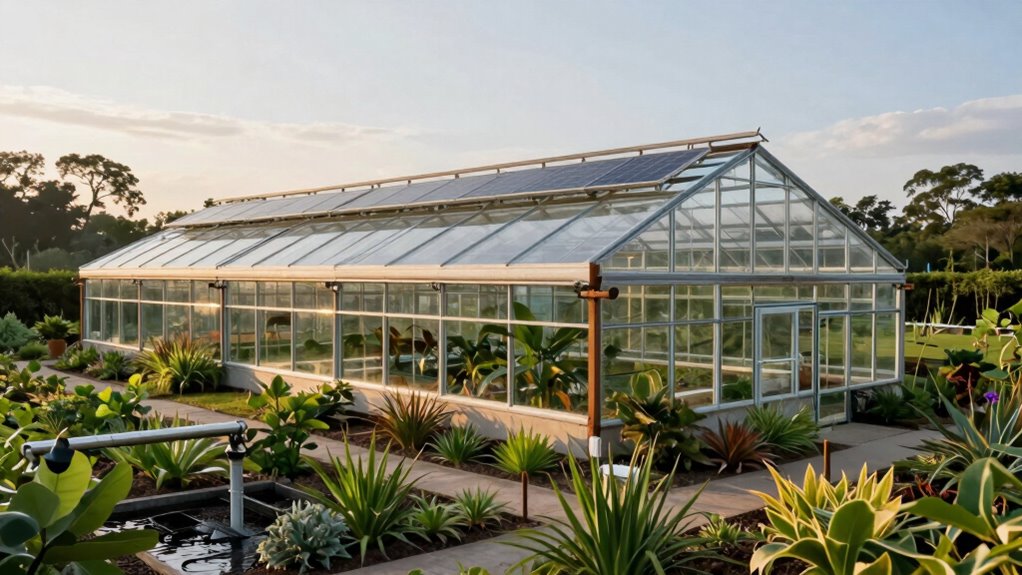
Have you ever wondered how to balance productivity with environmental responsibility when building a greenhouse? The answer starts before you even lay the foundation. Making sustainable decisions early on sets the tone for a project that’s both efficient and eco-friendly. First, consider integrating renewable energy sources to power your greenhouse. Solar panels are the most common option, capturing sunlight and converting it into electricity, reducing reliance on fossil fuels. Wind turbines can also supplement energy needs, especially if your location experiences consistent breezes. These renewable energy systems might require upfront investments, but they greatly decrease ongoing operating costs and carbon footprints, aligning your greenhouse with sustainable goals.
Water conservation is another critical aspect to address before construction begins. You want to design your greenhouse with water efficiency in mind, ensuring minimal waste while maintaining ideal growing conditions. Installing rainwater harvesting systems allows you to collect and store rainwater, reducing dependence on municipal water supplies. Incorporate drip irrigation and moisture sensors to deliver water directly to plants’ roots, avoiding excess runoff and evaporation. These methods conserve water and reduce your bills, making your greenhouse more sustainable and cost-effective over time. Additionally, selecting sustainable building materials can further enhance your greenhouse’s environmental profile.
Thinking about site placement is equally important. Position your greenhouse to maximize natural light, which decreases the need for artificial lighting and heating. Proper orientation can also help in harnessing passive solar heat, reducing your energy consumption. Incorporate shading structures or reflective surfaces to control temperature and light levels, further decreasing the need for mechanical climate control systems. When selecting building materials, opt for insulated, eco-friendly options that enhance energy efficiency and reduce heating and cooling demands. Additionally, understanding biodiversity and its role in ecosystem health can inform your site selection and plant choices, promoting a balanced environment. Creating a sustainable landscape around your greenhouse can also improve local biodiversity and natural pest control, contributing to overall ecosystem health. Considering climate-resilient design strategies can help your greenhouse adapt to changing weather patterns and extreme conditions, ensuring long-term sustainability. All these decisions—energy, water, and materials—should work together to create a cohesive, sustainable design.
Engaging with local experts and suppliers who prioritize sustainability can guide you in choosing the right technologies and materials. They can help you assess your site’s specific conditions and recommend tailored solutions that maximize renewable energy use and water conservation. Planning ahead with these considerations ensures your greenhouse operates sustainably from day one, avoiding costly retrofits later. It’s about making smart, environmentally conscious choices early in the process that benefit both your productivity and the planet. By focusing on renewable energy and water conservation from the start, you set a strong foundation for a green, efficient, and environmentally responsible greenhouse that can thrive for years to come.
As an affiliate, we earn on qualifying purchases.
Frequently Asked Questions
How Do Local Climate Conditions Influence Greenhouse Design Choices?
You should consider local climate conditions because they directly impact your greenhouse design choices. Climate adaptation guarantees your greenhouse maintains ideal temperatures and humidity levels, reducing energy use. You’ll want to enhance your design for factors like sunlight, wind, and rain, which vary by location. This approach helps you create a sustainable, efficient greenhouse that withstands local weather patterns, ultimately saving costs and improving plant growth.
What Are the Initial Costs Versus Long-Term Savings of Sustainable Greenhouses?
You’ll find that sustainable greenhouses cost more upfront but save money long-term through energy efficiency and water conservation. For example, a greenhouse in California invested in solar panels and drip irrigation, increasing initial costs but reducing energy bills and water use. Over time, these savings outweigh the initial investment, making sustainable features financially smart. Embracing these strategies helps you cut costs and supports environmental goals.
Which Eco-Friendly Materials Are Most Effective for Greenhouse Construction?
You should prioritize renewable materials like bamboo and sustainably sourced wood for the greenhouse frame, as they’re eco-friendly and durable. Recycled resources, such as reclaimed metal or recycled plastic panels, also make excellent choices for insulation and cladding. These options reduce environmental impact and promote sustainability. By selecting these effective, eco-friendly materials, you’ll build a greenhouse that’s not only better for the planet but also cost-efficient in the long run.
How Can Greenhouses Support Local Biodiversity and Ecosystems?
Think of your greenhouse as a crucial habitat, inviting nature’s chorus to thrive. You support local biodiversity by creating wildlife corridors that connect natural areas, allowing animals to roam safely. Incorporate native planting around your greenhouse, turning it into a sanctuary for local pollinators and birds. These efforts weave your greenhouse into the ecosystem’s fabric, fostering resilience and harmony with the environment—making your project a living, breathing piece of the wild.
What Permits or Regulations Are Required for Sustainable Greenhouse Projects?
You need to navigate permitting processes and guarantee regulatory compliance for your sustainable greenhouse project. Start by researching local, state, and federal regulations that apply to construction, water use, and environmental impact. Submit necessary permits, such as building, environmental, and zoning approvals. Staying proactive and organized helps you avoid delays, and consulting with authorities early ensures your project aligns with all environmental and safety standards, making it easier to move forward smoothly.
Conclusion
By making sustainable choices before construction begins, you guarantee your greenhouse is eco-friendly and cost-efficient long-term. Some might think these measures are too costly or complicated, but the reality is, early planning saves money and effort down the line. You’ll create a resilient, environmentally conscious space that benefits both your crops and the planet. Start with smart decisions today, and you’ll reap sustainable rewards for years to come.
Halloween Picks
halloween
As an affiliate, we earn on qualifying purchases.