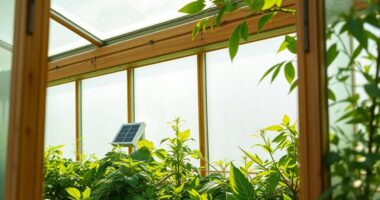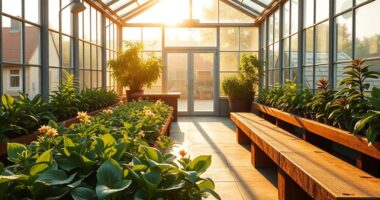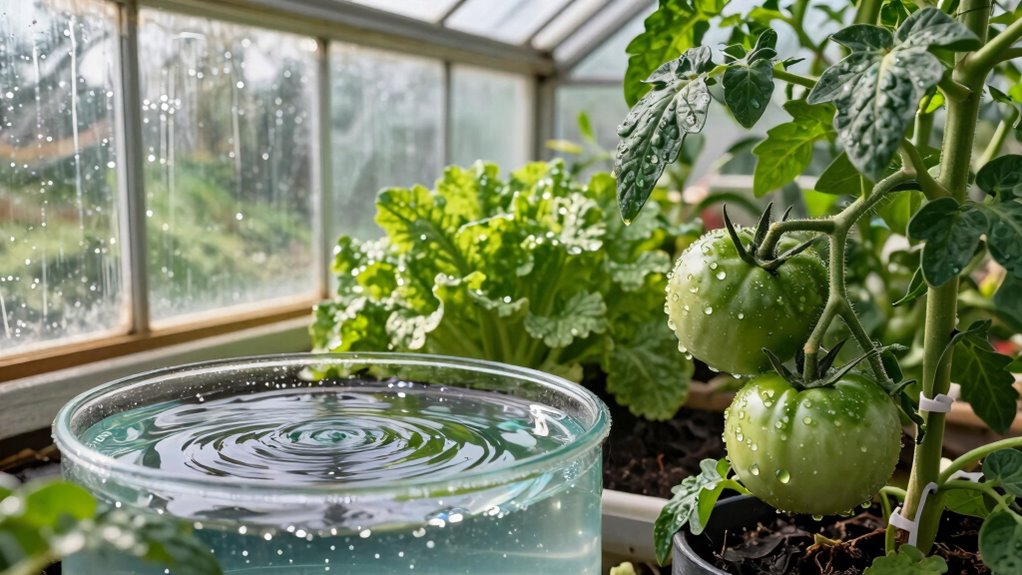

Water storage matters more in greenhouses because it provides a reliable water source during dry periods, ensuring your plants stay healthy and grow consistently. It helps stabilize climate conditions and reduces reliance on external sources, making your operations more sustainable. Proper storage also safeguards water quality and supports climate control, especially in unpredictable weather. If you want to discover how strategic water storage can boost your greenhouse’s efficiency, keep exploring these essential concepts.

Get garden gear delivered free — and shop member deals
- Fast, free delivery on millions of items
- Access to Prime Big Deal Days deals on October 6–7
- Prime Video, Amazon Music and more included
Key Takeaways
- Greenhouses rely heavily on stored water for consistent plant care regardless of weather fluctuations.
- Water storage enables climate control, ensuring optimal growing conditions year-round.
- It supports sustainable practices like rainwater harvesting and drip irrigation, minimizing waste.
- Continuous water supply from storage prevents disruptions in plant growth during droughts or dry periods.
- Proper water management in greenhouses enhances efficiency, resource conservation, and overall productivity.
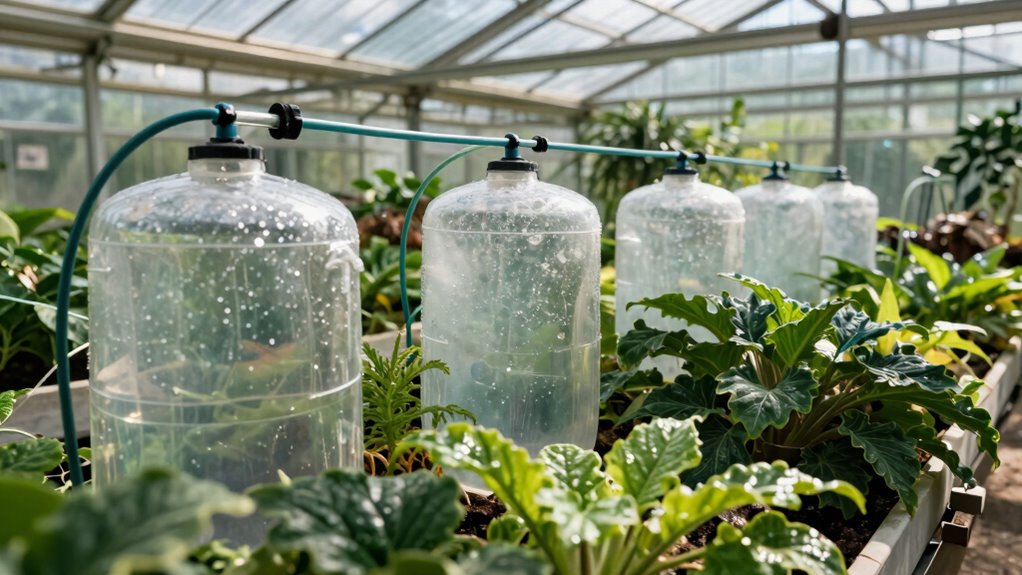
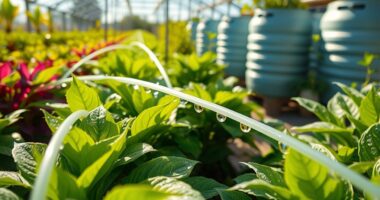
Have you ever wondered how greenhouses efficiently manage water to support plant growth? The answer lies in the smart strategies they use to store and conserve water, which are often much more essential here than in typical gardens. Unlike outdoor gardens that rely on natural rainfall and have more forgiving water needs, greenhouses face unique challenges that demand precise control over water sources. One of the most effective methods they employ is rainwater harvesting. By collecting rainwater from the greenhouse roof, you can create a sustainable water supply that reduces dependency on external sources. This captured rainwater can be stored in large tanks and used during dry spells, guaranteeing your plants always have access to clean, chemical-free water. Rainwater harvesting not only conserves resources but also minimizes runoff and pollution, making it an eco-friendly solution that benefits your entire operation.
In addition to harvesting rainwater, greenhouses rely heavily on drip irrigation systems. Unlike traditional watering methods that can waste a lot of water through runoff or evaporation, drip irrigation delivers water directly to the roots of your plants. This targeted approach conserves water and maximizes its absorption, which is essential in controlled environments where every drop counts. When combined with stored rainwater, drip irrigation can be highly efficient, allowing you to automate watering schedules and reduce manual labor. You can set your system to deliver precise amounts of water at specific times, ensuring your plants receive consistent moisture without overwatering. This precision not only supports healthy growth but also prevents issues like root rot or nutrient leaching, which can occur with improper watering. Additionally, implementing water management strategies helps optimize usage and enhances sustainability in greenhouse operations. Proper water storage techniques also play a vital role in maintaining a stable environment, especially during unpredictable weather patterns. It is also important to regularly inspect your stored water for contamination to prevent potential issues that could affect plant health. Furthermore, investing in water quality monitoring can help ensure that stored water remains safe and suitable for your plants, preventing potential problems caused by contaminants.
Furthermore, the importance of climate control in greenhouses underscores the need for reliable water storage to support environmental stability. Water storage in greenhouses isn’t just about having a reserve; it’s about creating a reliable, efficient system that supports ideal plant health. During periods of low rainfall or unexpected droughts, stored water becomes your lifeline, maintaining the stability of your growing environment. The combination of rainwater harvesting and drip irrigation exemplifies the importance of strategic water management tailored to greenhouse needs. This dual approach ensures you’re prepared for fluctuations in weather and helps you make the most of every drop. Ultimately, water storage in greenhouses is more than just a backup — it’s an essential component of sustainable, productive agriculture that keeps your plants thriving year-round.
rainwater harvesting tank for greenhouse
As an affiliate, we earn on qualifying purchases.
As an affiliate, we earn on qualifying purchases.
Frequently Asked Questions
How Does Water Storage Impact Plant Growth in Greenhouses?
Water storage impacts your greenhouse plant growth by ensuring consistent access to high-quality water. When you have ample storage capacity, you can collect and hold water during rainy periods, maintaining stable water quality. This reliable supply prevents stress from droughts or irregular watering, promoting healthier roots and robust growth. Proper storage also allows you to manage water quality effectively, reducing contaminants and ensuring your plants thrive in ideal conditions.
What Are the Best Materials for Greenhouse Water Storage Tanks?
Think of your water storage tank as the backbone of your greenhouse. For the best durability, consider materials like food-grade polyethylene or fiberglass, which withstand the elements and resist corrosion. Proper tank placement ensures stability and easy access for maintenance. These choices safeguard your water supply, guaranteeing plant health and growth. Selecting the right material and position transforms your greenhouse into a resilient, efficient environment—an oasis built to last.
Can Water Storage Systems Help Manage Greenhouse Temperature?
Yes, water storage systems help manage greenhouse temperature through temperature regulation and water conservation. You can use stored water to cool the environment by evaporative cooling or shading, preventing overheating during hot days. Additionally, consistent water availability reduces the need for frequent watering, conserving water and maintaining stable temperatures. This efficient system guarantees your plants stay healthy, and your greenhouse operates smoothly, especially during extreme weather conditions.
How Often Should Greenhouse Water Tanks Be Cleaned?
You should clean your greenhouse water tanks regularly, ideally every 4 to 6 weeks, to maintain water quality and prevent algae buildup. Consistent tank maintenance guarantees clean water, reduces the risk of disease, and keeps your plants healthy. Regular cleaning involves draining the tank, scrubbing surfaces, and checking for debris. Prioritize water quality and tank maintenance to sustain a reliable water supply and promote ideal plant growth.
Are There Eco-Friendly Water Storage Options for Greenhouses?
Yes, you can choose eco-friendly water storage options for your greenhouse. Rainwater harvesting systems let you collect and store natural rain, reducing reliance on mains water. Additionally, biodegradable containers for water tanks or plant pots are sustainable choices that break down naturally, minimizing environmental impact. These options help you maintain an eco-conscious greenhouse, conserve water, and support healthier plant growth while reducing your carbon footprint.
Conclusion
You now see why water storage is essential in greenhouses—it guarantees your plants stay healthy even during droughts. Did you know that greenhouses can reduce water use by up to 50% compared to traditional gardens? By investing in proper water storage, you’re not just conserving resources but also creating a resilient environment for your plants. So, prioritize water storage to boost your greenhouse’s productivity and sustainability—your plants will thank you!
Fall yard work Picks
leaf blowers
As an affiliate, we earn on qualifying purchases.